
• In The Shop
  • Build
  • Restore
  • Electrify

Category: Projects

  • BRENDA KAY

    BRENDA KAY

    BRENDA KAY

    29′ Beals Island lobster boat (2010)

    BRENDA KAY is a cold-molded reproduction of a 1950’s Beals Island lobster boat. The original boat, re-named DIANA after a 2001 restoration here at Hylan & Brown, was designed and built by Alvin Beal in 1952. She plied the waters of Downeast Maine for nearly a half a century until she came to us for a complete restoration and conversion to yacht standards. Lines were taken and plans worked up in the hope that someone might be drawn to the classic lines and much-proven seaworthiness of the type.

    In 2009 a customer from Virginia, having admired DIANA, commissioned a reproduction. To the eye, BRENDA KAY is a perfectly accurate copy of the original, belying the modernization of her construction and equipment. Her hull – with 8” of additional beam for space and stability – is cold molded, and she is powered by a 110hp Yanmar diesel engine turning an Evolution Marine Shaft System.
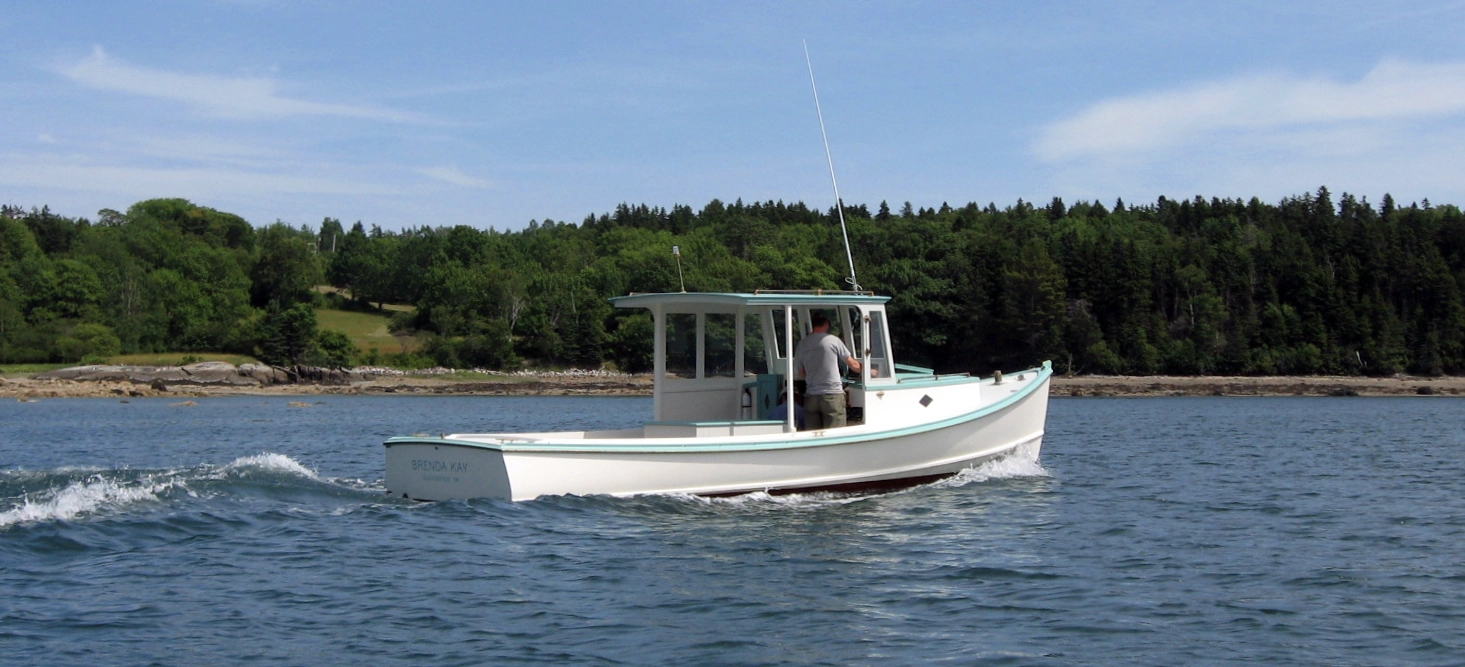
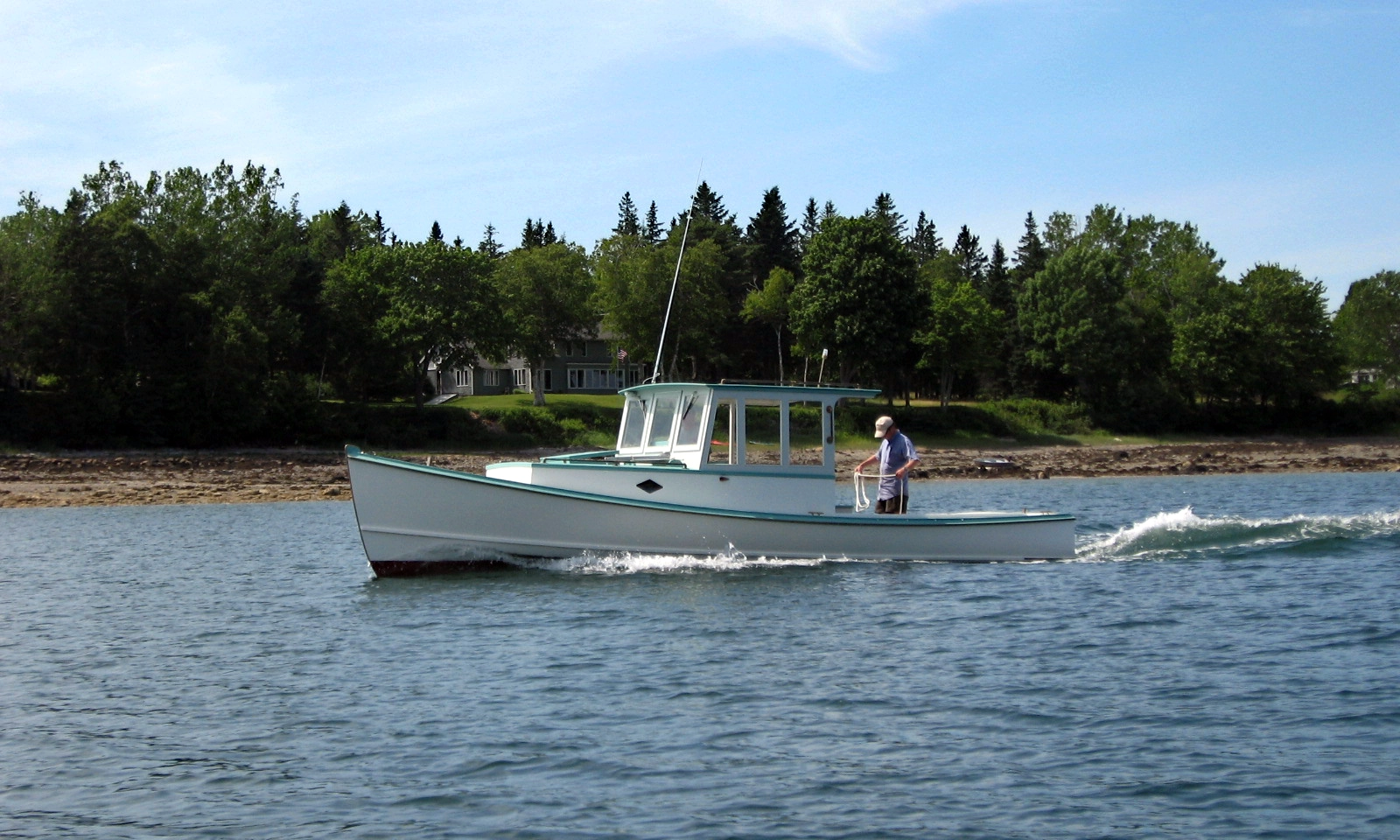
    BRENDA KAY won First Place for Professionally Built Powerboat at the 2010 WoodenBoat Show in Mystic, CT.

    BRENDA KAY is perfectly suited to short cruises with her simple yet comfortable accommodations, and her cockpit provides ample room for guests on day trips. At speeds up to 16 knts she cruises with comfort, safety and traditional style.

    Particulars

    LOA28′ 8″
    Beam8′ 9″
    Draft2′ 3″
    MotorYanmar 4JH4-HTE 110 hp diesel
    Tankage68 gal fuel
    Top speed16 kts
  • AIDA

    AIDA

    AIDA

    33′ centerboard yawl (1926, 2008)

    Designed and built by Herreshoff Manufacturing Co. in 1926, AIDA is a 33′ centerboard yawl. Both interior and exterior were fully restored, sensitive to Herreshoff techniques, restoring the boat as much as possible to “as built” condition. Refinished spars, a new diesel, and new sails were also part of the first major refurbishment of the boat since launch.

    Prior to her recent sale, AIDA was owned for over 40 years by Herreshoff historian and author Maynard Bray and his wife Anne. Bray oversaw the restoration of AIDA together with the owner’s representative, Steve Corkery, from Shelter Island, NY.

    Photo: Maynard Bray
    Photo: Maynard Bray

    Particulars

    LOA33′ 6″
    LWL27′ 0″
    Beam9′ 2″
    Draft3′ 1″ (board up)
    Disp.11,000 lbs
    DesignerN.G. Herreshoff
    BuilderHerreshoff Mfg. Co., Bristol, RI
    Sail area520 sq ft
    Aux. power25 hp Beta

  • PENOBSCOT

    PENOBSCOT

    PENOBSCOT

    37′ R-class sloop (1923, 2013)

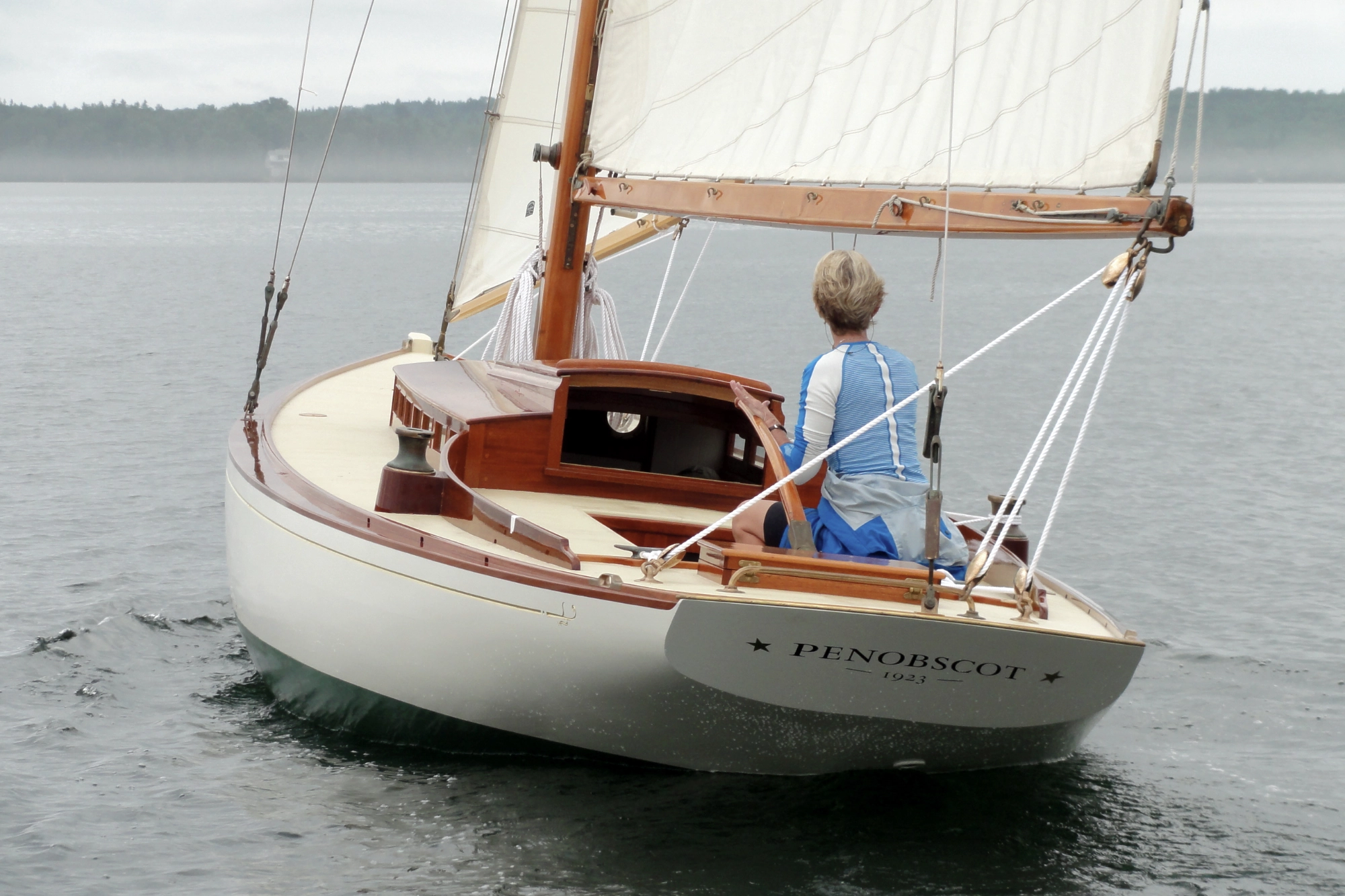
    PENOBSCOT is an R-class keel sloop designed by C. D. Mower and built in 1923 by Hodgdon Bros. She was completely restored, both structurally and cosmetically, in our shop.

    Particulars

    LOA36′ 8″
    LWL25′ 6″
    Beam8′ 10″
    Draft5′ 11″
    Disp.12,000 lbs
    DesignerCharles D. Mower
    BuilderHodgdon Bros., East Boothbay, ME
    Sail area620 sq ft
    Aux. power18 hp Yanmar
  • BAGATELLE

    BAGATELLE

    BAGATELLE

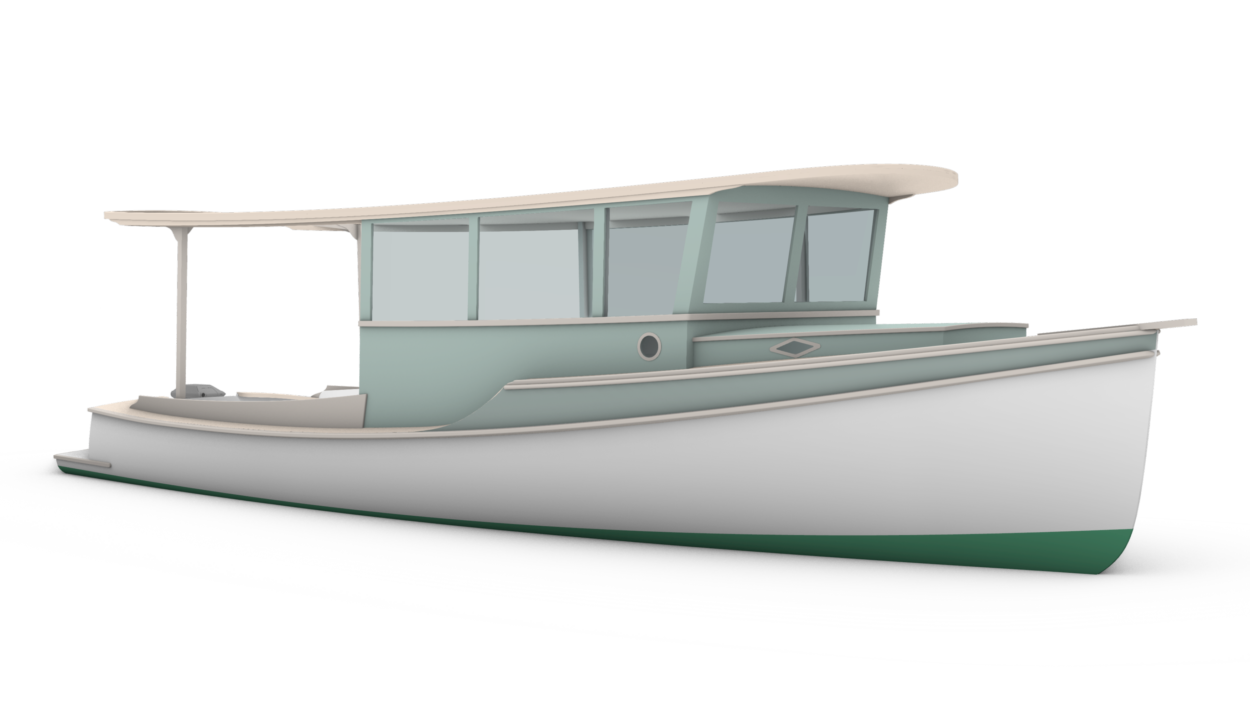
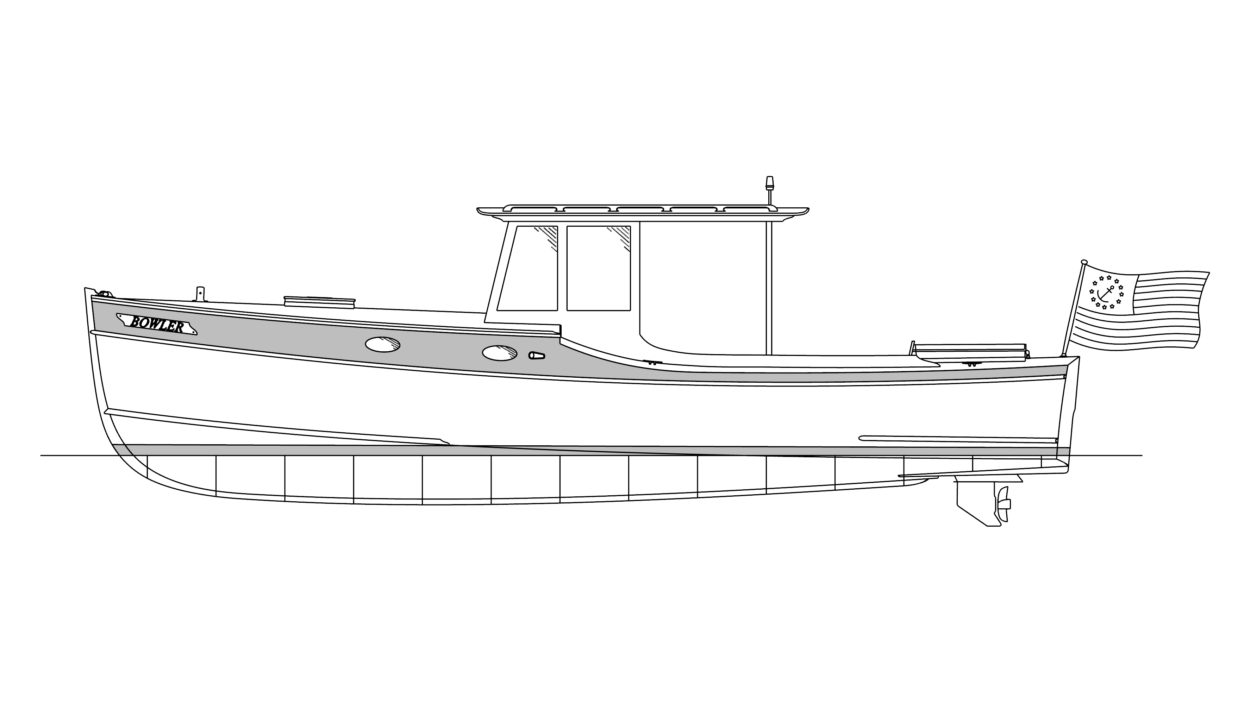
    Bowler (2014)

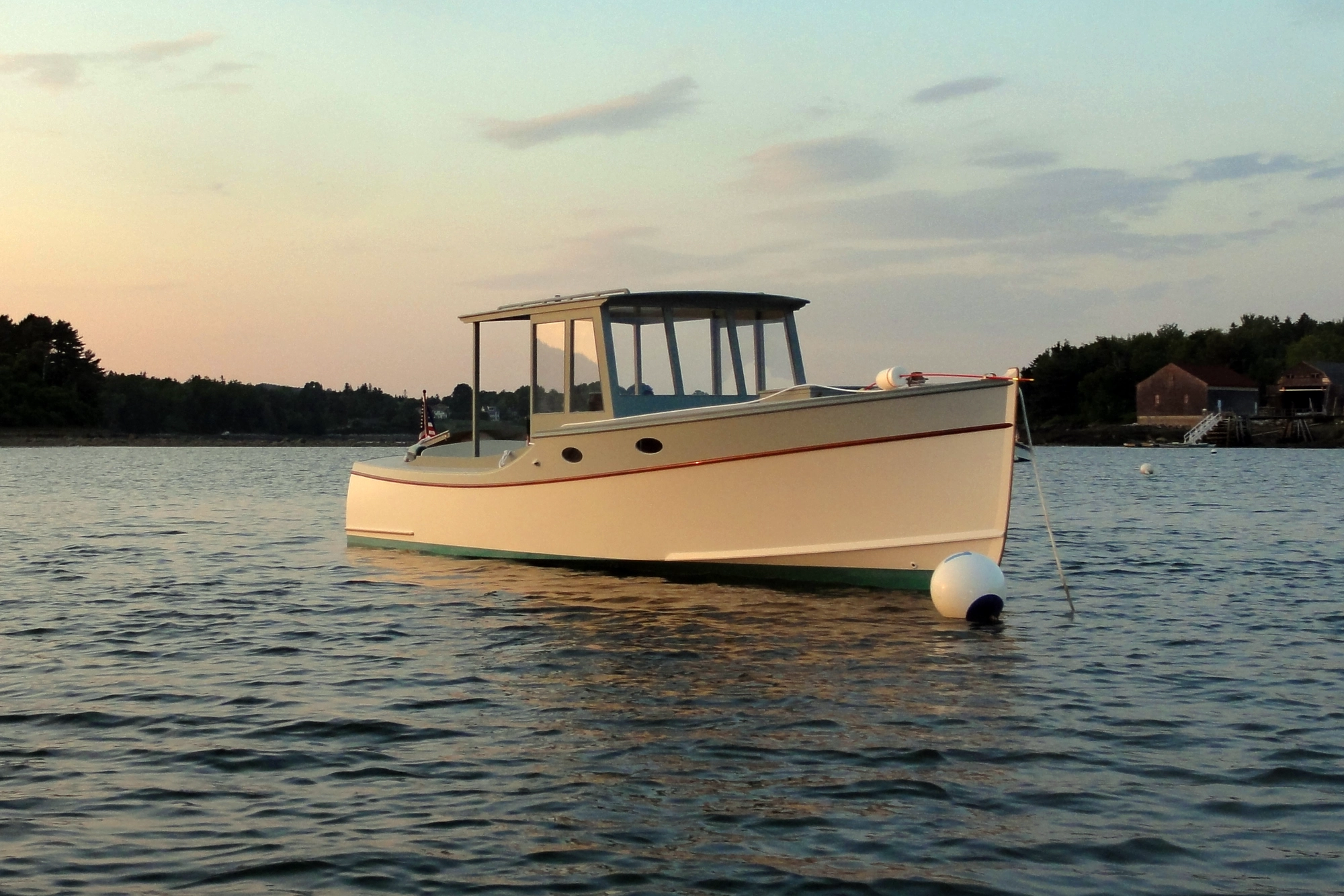
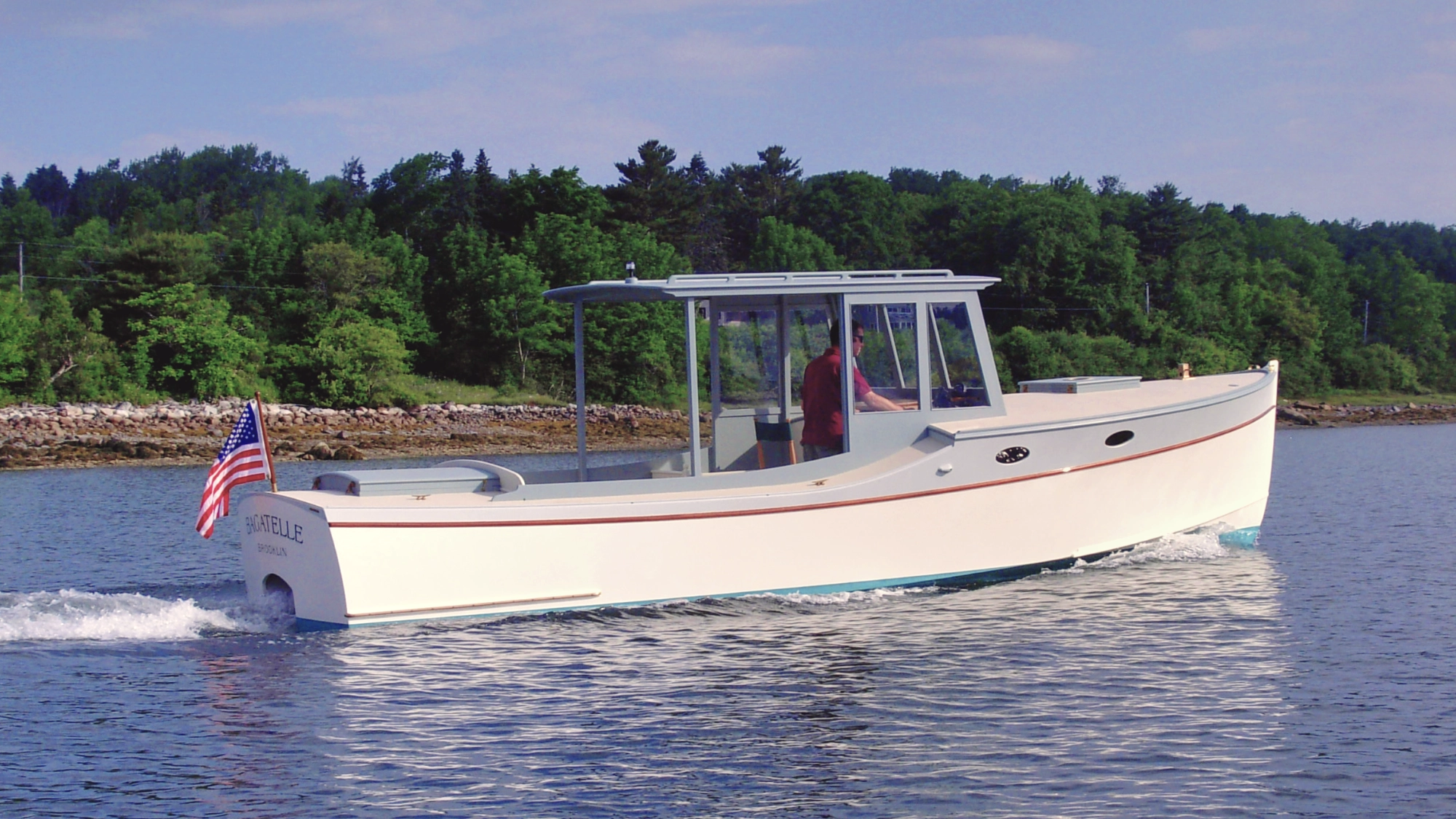
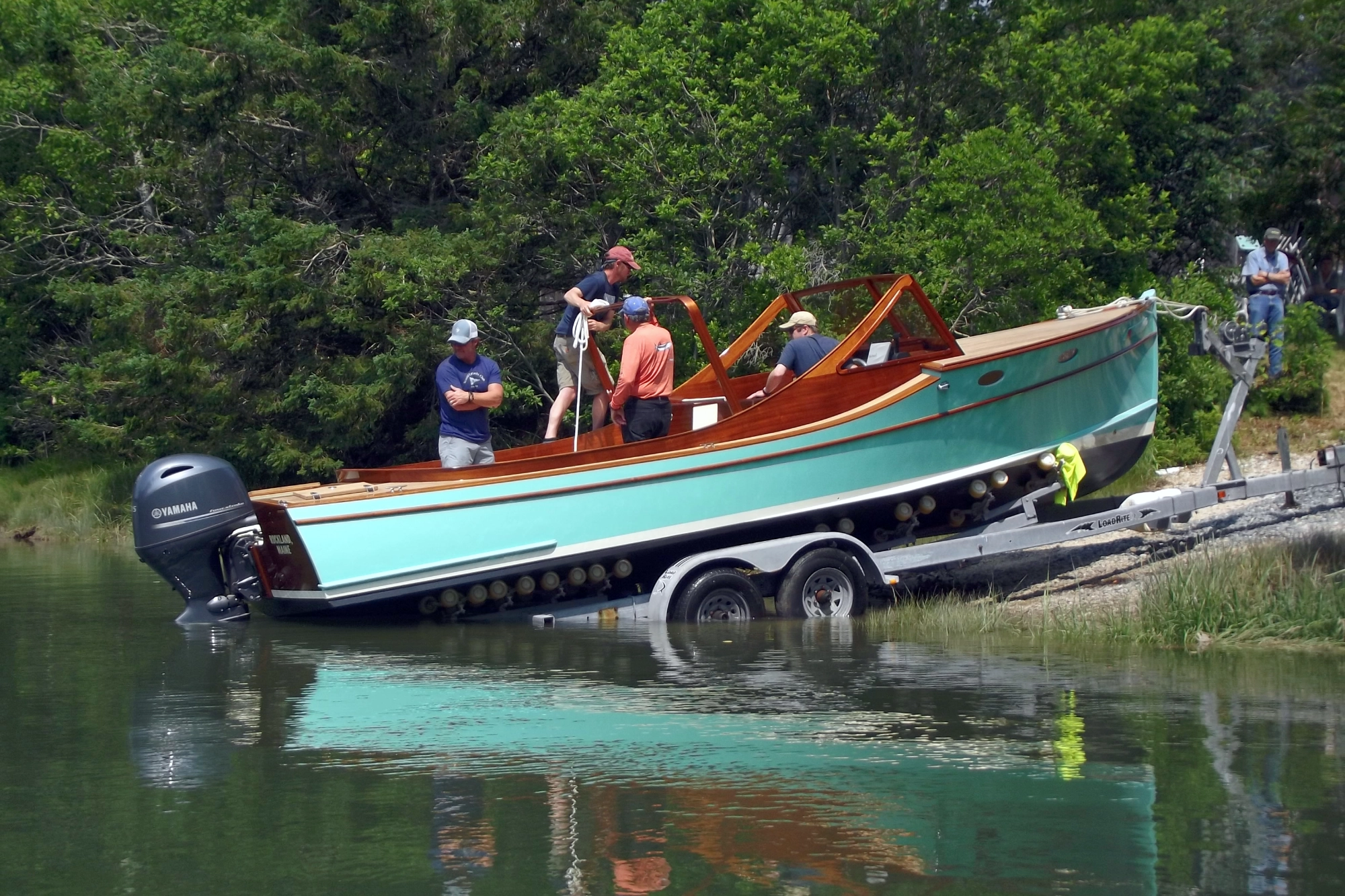
    Shortly after we launched the prototype of Doug’s Top Hat design in 2002, he sketched another version along the same lines but with a higher topsides, a windshield and shelter top. The idea was to provide better protection from the elements and more accommodations space for short cruises.

    Eleven years later a couple approached Doug about a small lobster boat design for day use and weekend cruises. On a whim he showed them his sketch and they were smitten.

    The new boat has a lot in common with Top Hat: a narrow twisting V-bottom with a fine entry and fairly flat run for good sea keeping, fuel efficiency and semi-planing speed; shapely topsides with flared bow sections transitioning gracefully to tumblehome at the quarters and a radiused transom; powered by an outboard in a well for quiet, fuel efficiency, economy and space saving.

    There are plenty of differences too: The sheathed strip plank construction method allowed us to do away with the sawn frames which saved labor and space; a cored foredeck eliminates the need for deck beams providing more head room down below; the main bulkhead was moved aft allowing space for a toilet opposite a sink and cupboards aft of the V-berth; and of course the higher raised deck sheer with windshield and shelter top.

    We’re excited about the looks and the capabilities of this little cruiser. From their home port in Brooklin, her owners will be a day’s cruise or less from countless friendly harbors, quiet coves, and islands to explore. They’ll cruise safely, quietly, and comfortably. They’ll get there in good time but they won’t break the bank on the fuel bill. And they’ll do it in style!

    Particulars

    LOA26′ 6″
    LWL25′ 5″
    Beam8′ 2″
    Draft16″
    Disp.3680 lbs
    MotorEvinrude 60 hp E-TEC outboard
    Tankage35 gal fuel, 12 gal water
    Top speed17 kts
    Cruise12 kts
  • GATSBY

    GATSBY

    GATSBY

    2018

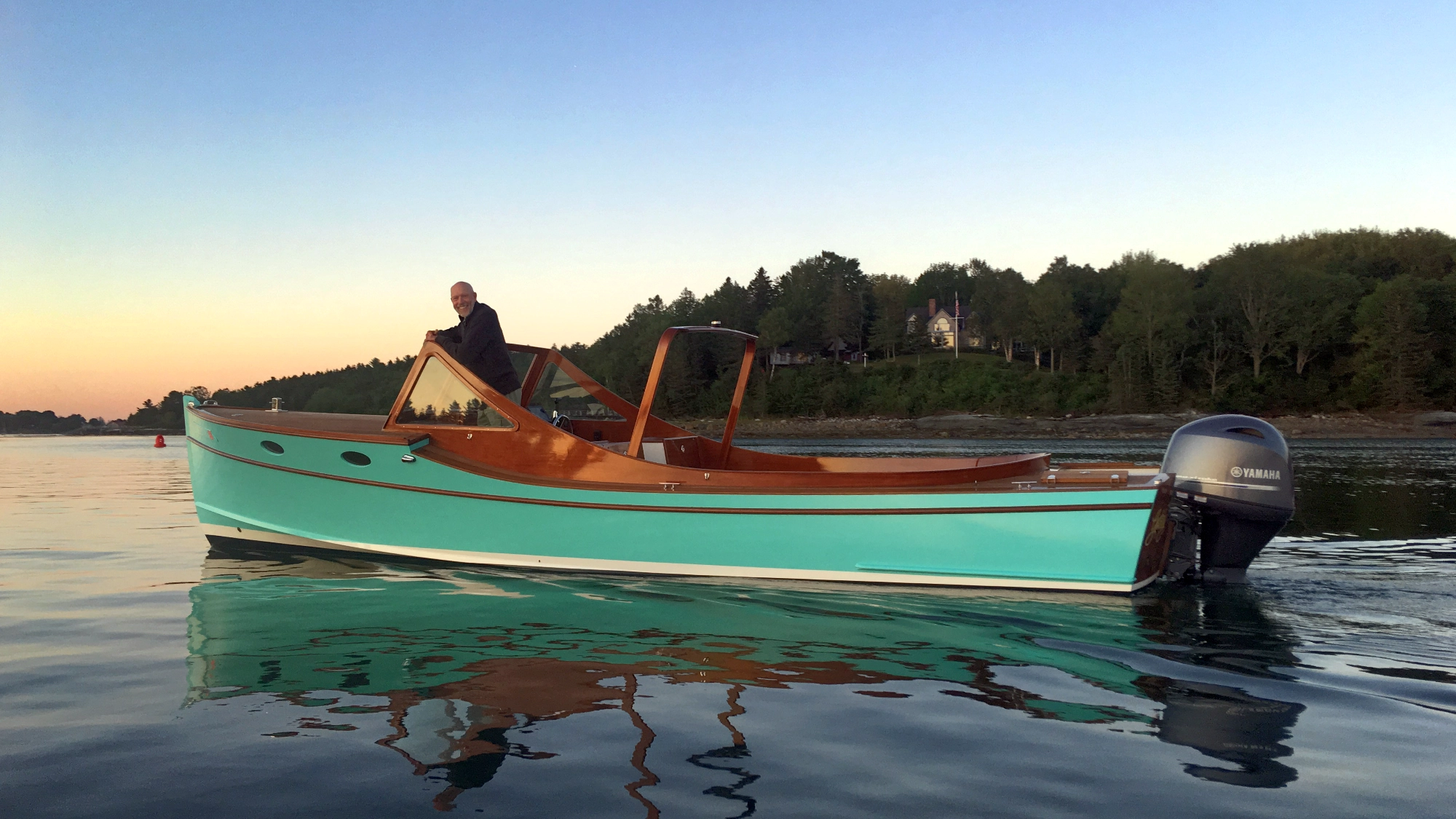
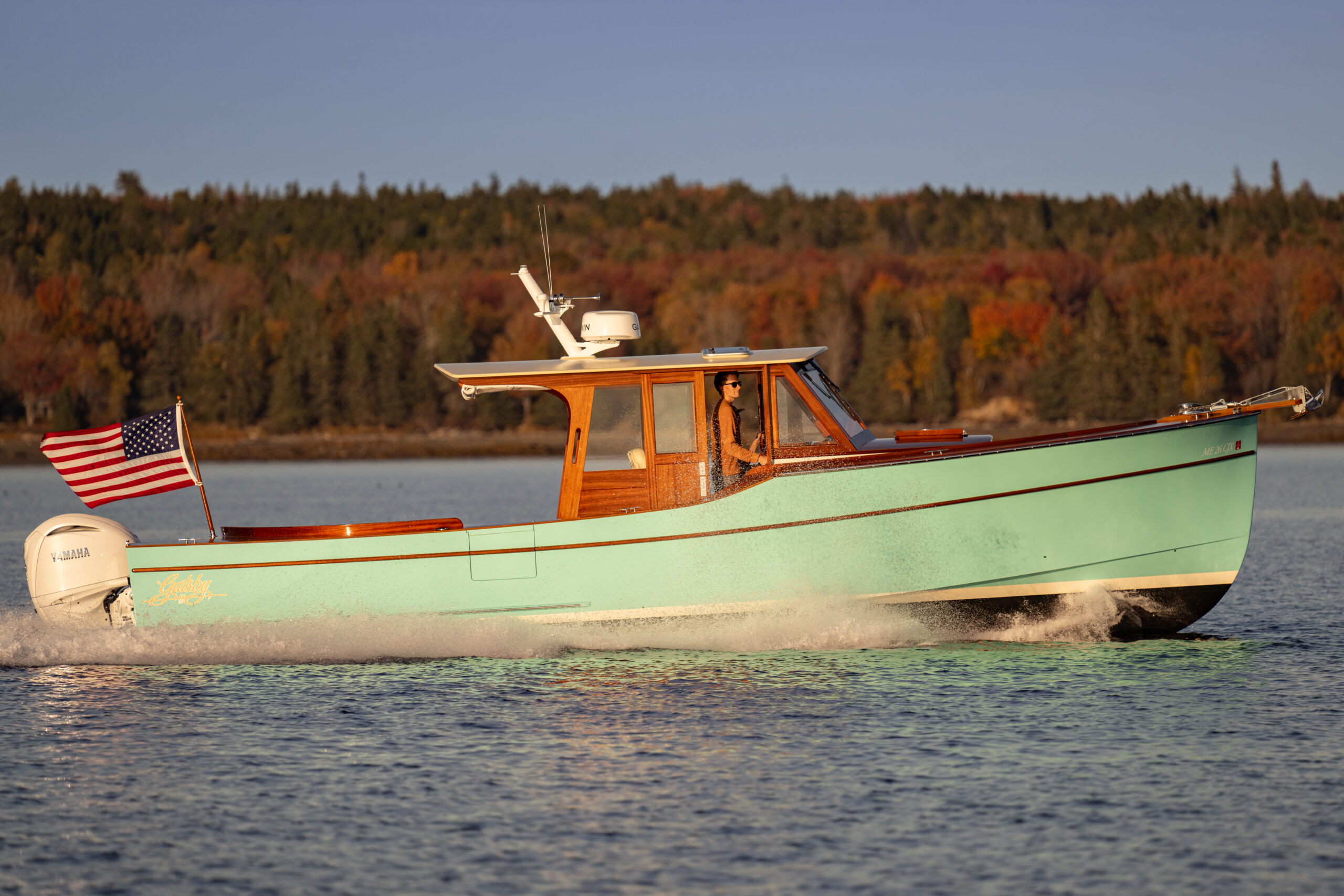
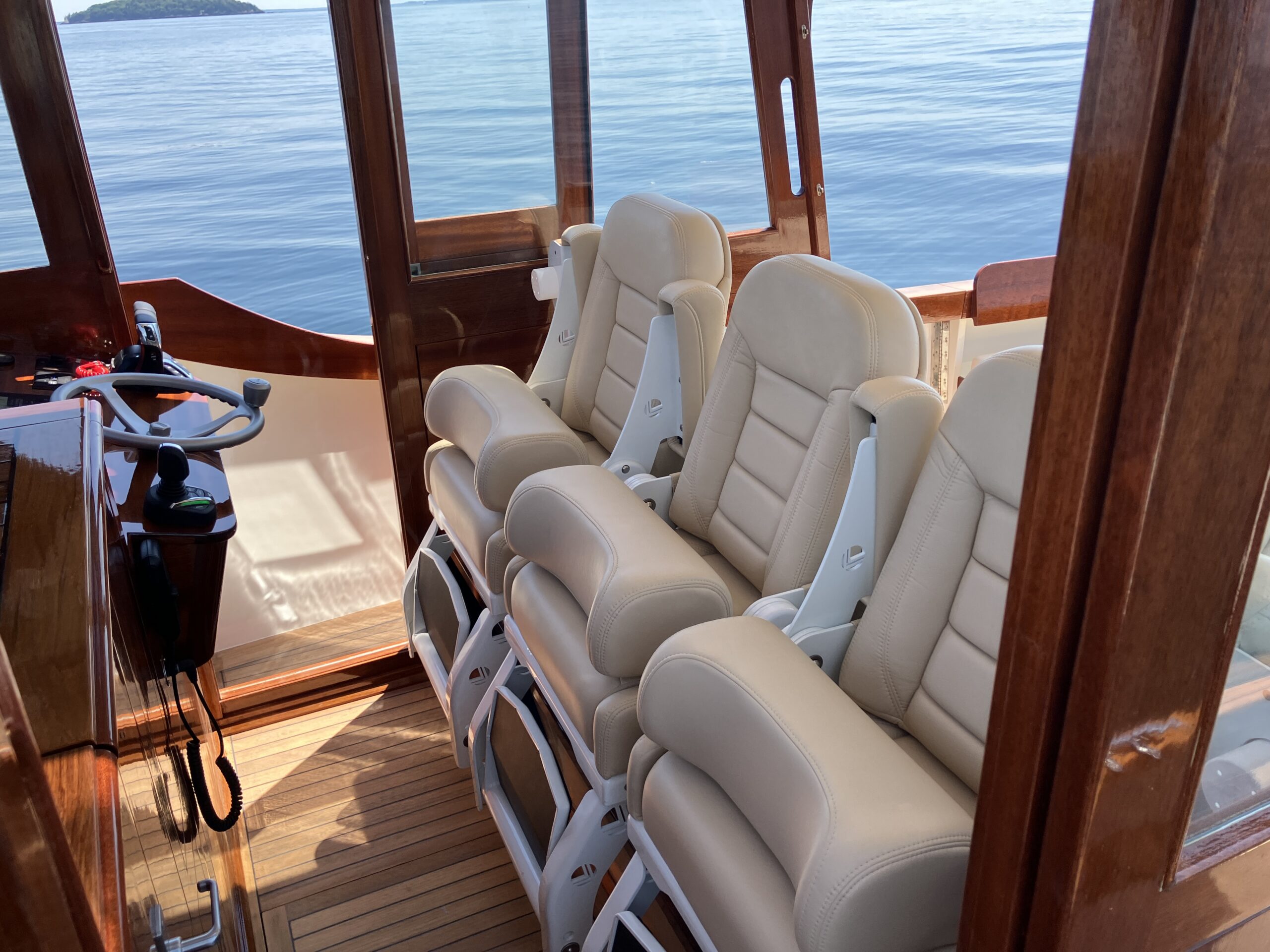
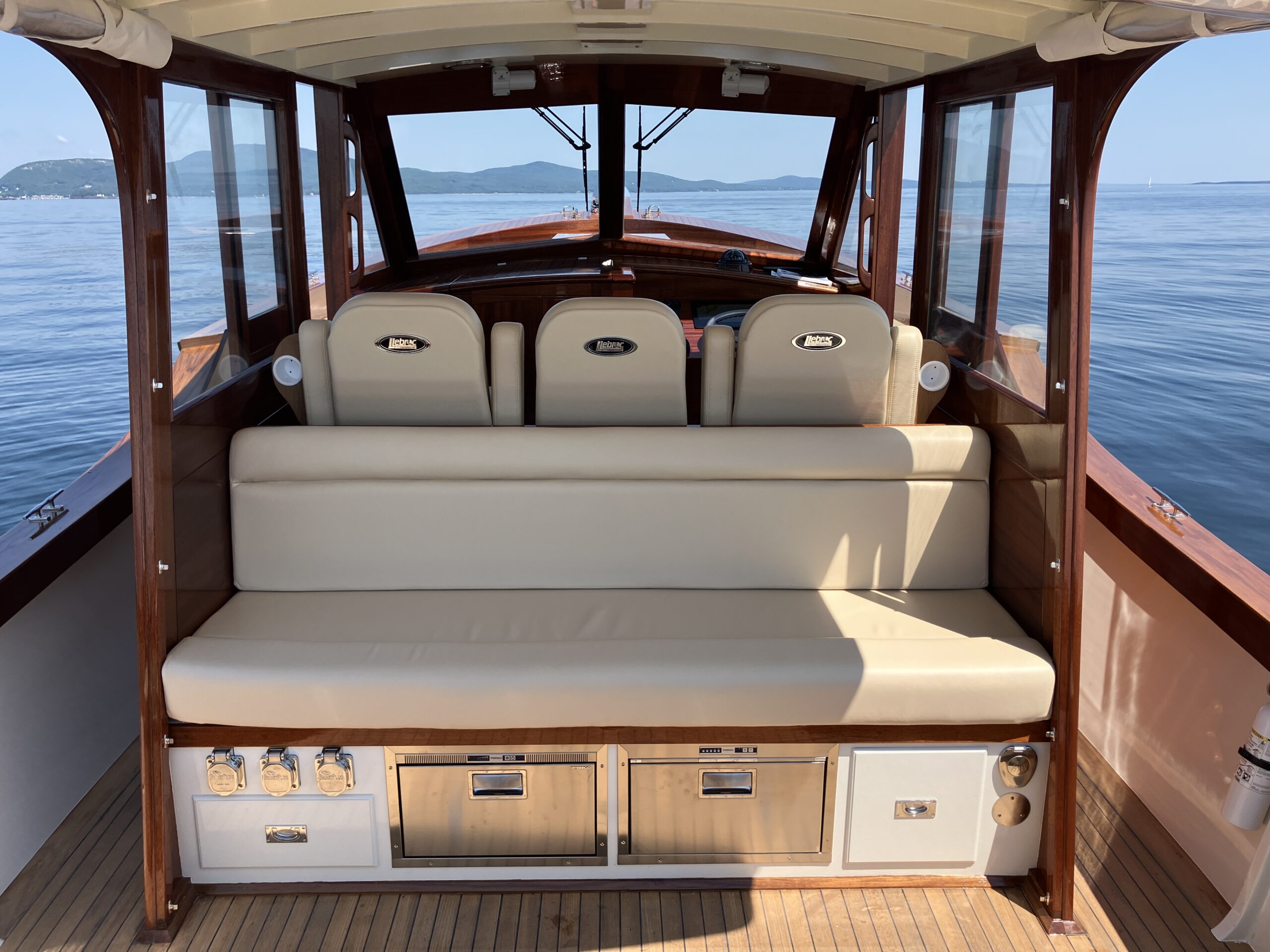
    GATSBY’s hull is essentially the same as Doug’s Bowler and Top Hat designs. But each of the three designs has different sheer heights and main bulkhead locations. GATSBY’s sheer was lowered from Bowler’s to achieve a sleeker profile, and her main bulkhead is further forward to provide for an ample cockpit. With her raised foredeck, flaring bow, tumblehome stern and radiused transom, GATSBY’s topsides are a feast for the eyes.

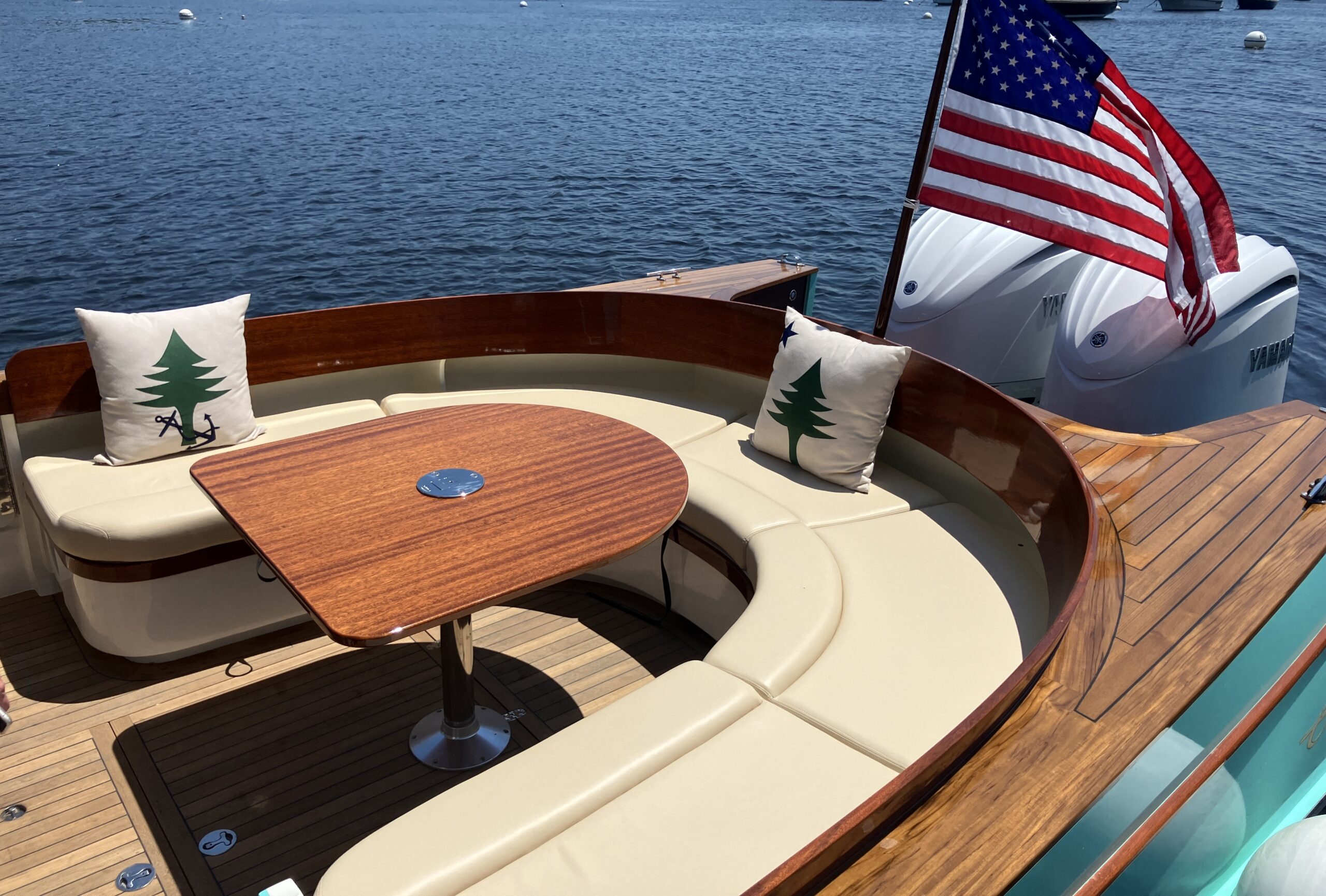
    Forward of the windscreen and under the raised foredeck is a simple V-berth with plenty of storage beneath and a private head. A varnished mahogany windscreen fairs into a continuous coaming that establishes an inviting aft seating and social area. Along with the two fore and aft seat consoles further forward, GATSBY can comfortably seat as many as eight. A drop in mahogany table quickly converts the aft seating to a perfect space in which enjoy a chilled glass of wine, which is at the ready in the built-in refrigerator. The wonderfully curvaceous mahogany joinery is a joy to behold. Whether it’s in your gaze, under your hand, or against your back, the craftsmanship throughout is unmistakable. Topped off with custom colors and a brushed finish GATSBY cannot be missed!

    Underwater the narrow twisting v-bottom transitions from a fine entry to a fairly flat run, resulting in a wholesome combination of good sea keeping, semi-planing speeds and fuel efficiency. A 115 HP Yamaha engine provides quiet and reliable propulsion at speeds up to 30 mph.

    GATSBY was launched on July 2, 2018 in Hawkin’s Cove. Despite our best efforts to keep our launching plans under wraps, a small crowd of friends and family assembled to witness GATSBY’s first dip. It was all business as we checked bilges, scrutinized her trim, trialed systems and got underway for her first sea trial. But within 30 min we were already feeling really good about this boat and we were glad for the hugs and high fives that awaited us at the dock. As we have sorted out details and fine tuned her performance in the past few weeks, it has become clear to all of us involved that this is a special boat, and a shining example of how a collaborative process can really pay off.

    GATBY’s owner is an experienced boater but new to Maine waters. An avid fisherman, his experience aboard a wide variety of sport fishing boats informed his decision making throughout the process. But from the start it was clear that this boat wasn’t about fishing, it was about family. There were conference calls involving multiple generations with a variety of opinions and perspectives, hundreds of drawings and photos exchanged covering everything from freeboard to color scheme, visits, lunch meetings, and a few last minute text messages. It all amounted to a very successful process and a vessel in which every one involved feels a great deal of pride.

    Particulars

    LOA26′ 6″
    Beam7′ 11″
    Draft17″
    Disp.3400 lbs
    MotorYamaha 115 hp outboard
    Tankage44 gal fuel, 12 gal water
    Top speed26 kts
    Cruise20 kts
  • DELIVERANCE

    DELIVERANCE

    DELIVERANCE

    43′ Workboat-inspired cruiser (2011)

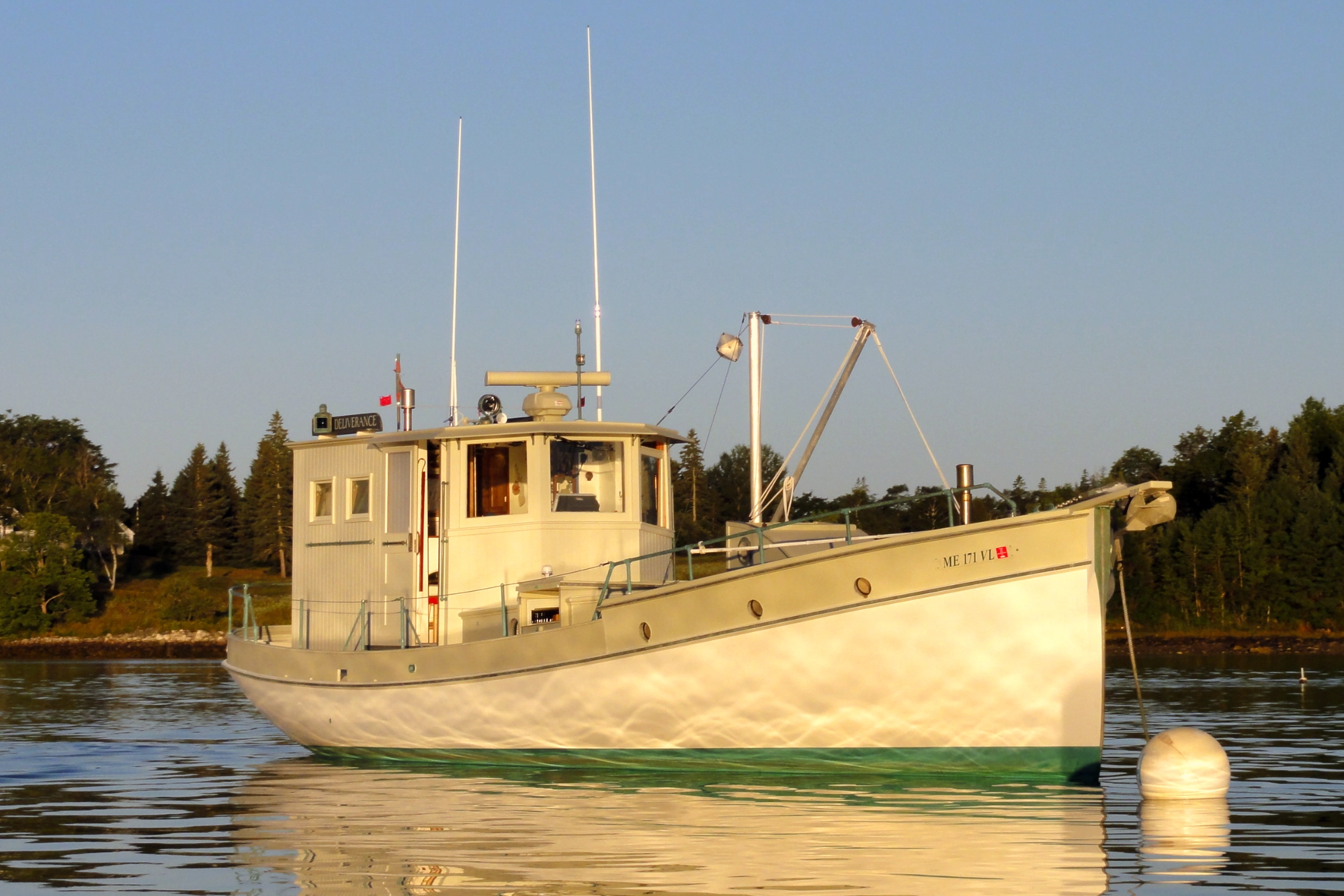
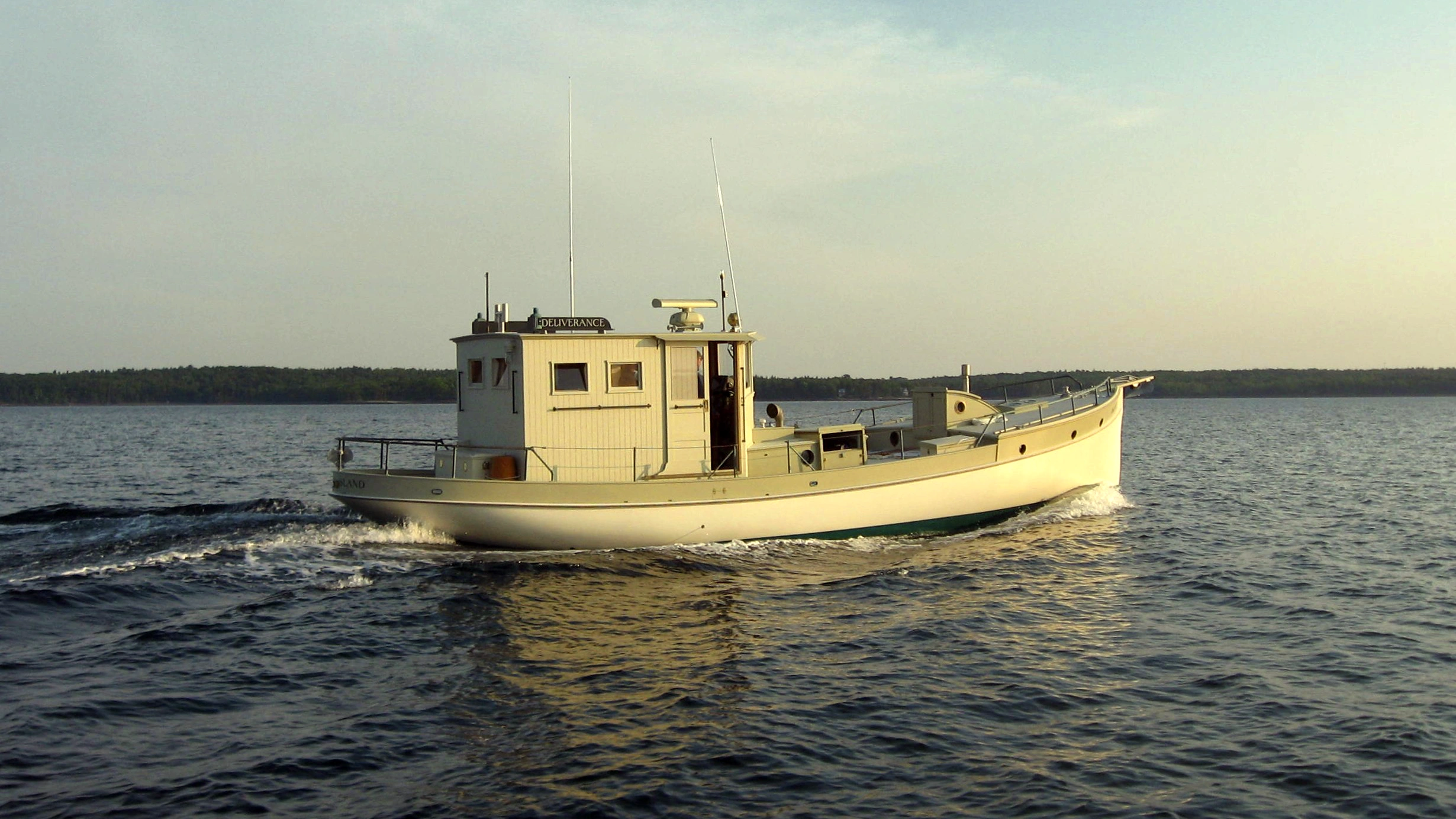
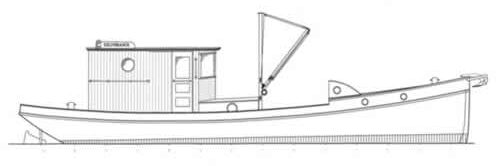
    DELIVERANCE’s story began when a long time customer saw the design for MANATEE, a tiny coastal cargo vessel, originally published in The Rudder magazine in 1921. We extensively reworked her lines – beam and length were increased, draft and displacement reduced, her forward deck raised for better accommodations, and her forefoot cut away for better handling is a seaway. But her handsome workboat origins and classic detailing remain dominant.

    DELIVERANCE is a good example of what Hylan & Brown Boatbuilders has become known for: re-interpreting classic designs, and building them using the best combination of traditional and modern construction methods.

    Boat steaming at sunset
    Boat at mooring in harbor
    Outboard profile drawing of boat

    Particulars

    LOA43′
    LWL38′ 5″
    Beam11′ 2″
    Draft3′ 8″
    Disp.24,000 lbs
    ConstructionCarvel-planked Douglas fir over oak backbone
    Tankage360 gal fuel, 340 gal water
    Cruise8 kts
    Range1000 nm
  • TOODLIN’

    TOODLIN’

    TOODLIN’

    19‘ Glen-L Runabout (1999, 2026)

    We first met TOODLIN’s new owners when they visited the yard with one of our existing electric-boat clients.  They joined us for a sea trial on the Benjamin River, and while they enjoyed the boat we were aboard, they were especially drawn to several other boats in the harbor.  Fortunately, those boats were ours, too, and the conversation about building something together began there.

    The Albury Runabout caught their eye for its handsome lines, practical size, and inviting layout.  Their boat, however, would live on a Minnesota lake and be used mostly for swimming, relaxing, and “toodlin’” around.  They envisioned a sleek, curvy runabout with lower freeboard, better suited to their protected waters.  It would be powered by an electric motor, of course.  They understood the benefits immediately: no vibration, no smelly exhaust, and no more lugging fuel containers down the steep steps to their dock.

    Photo: Nick Parson
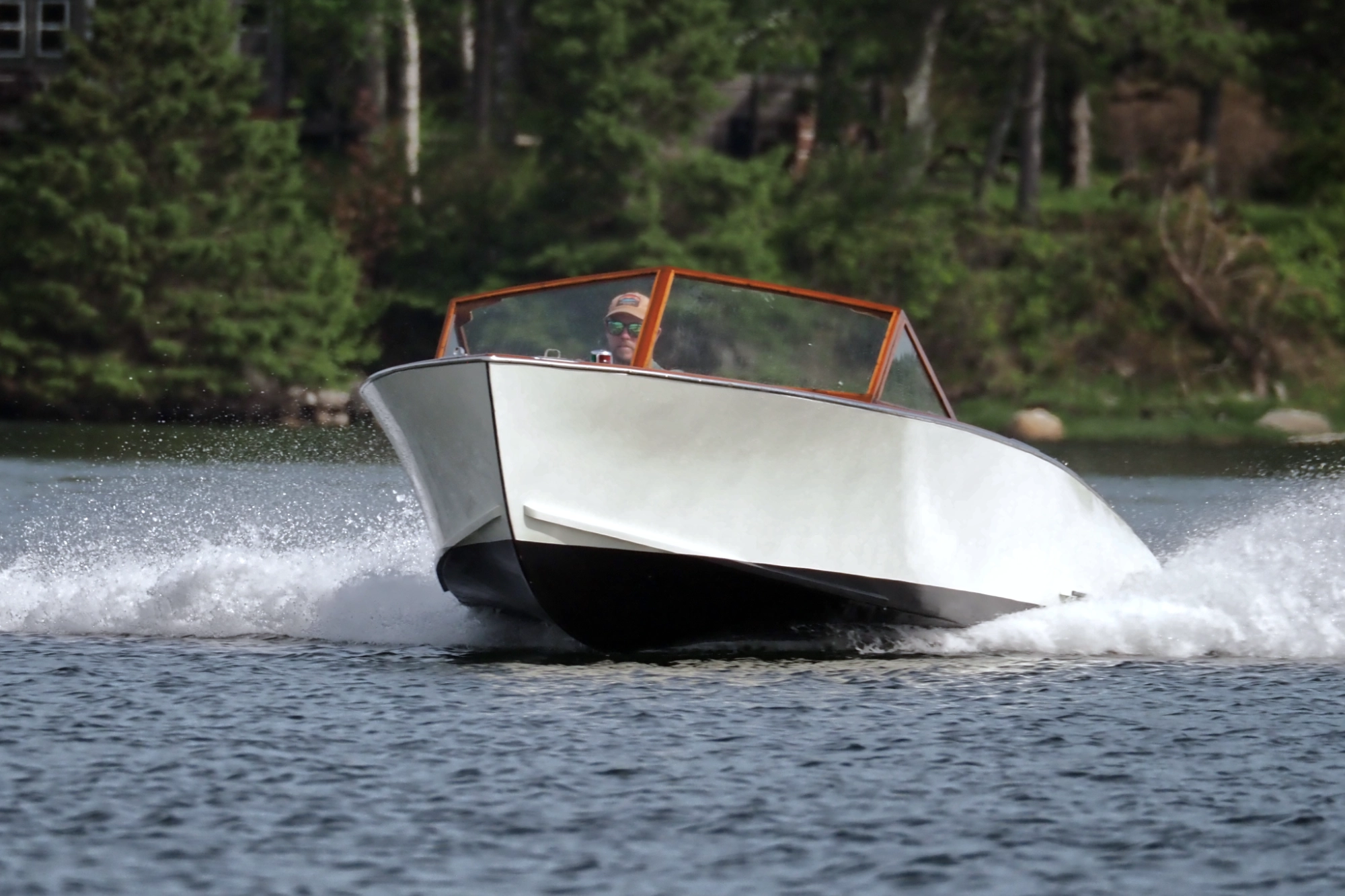
    Fast electric boat on the water

    We found them a strong candidate for conversion: a 1999 Glen-L runabout.  It was a home build, but capably done, with graceful topsides and a modified V-hull that could climb onto plane efficiently with modest power.  The engine she came with was anything but modest: a 5.4L V8 inboard.  Set amidships beneath a massive, varnished engine hatch, it dominated the boat and separated the two small cockpits.

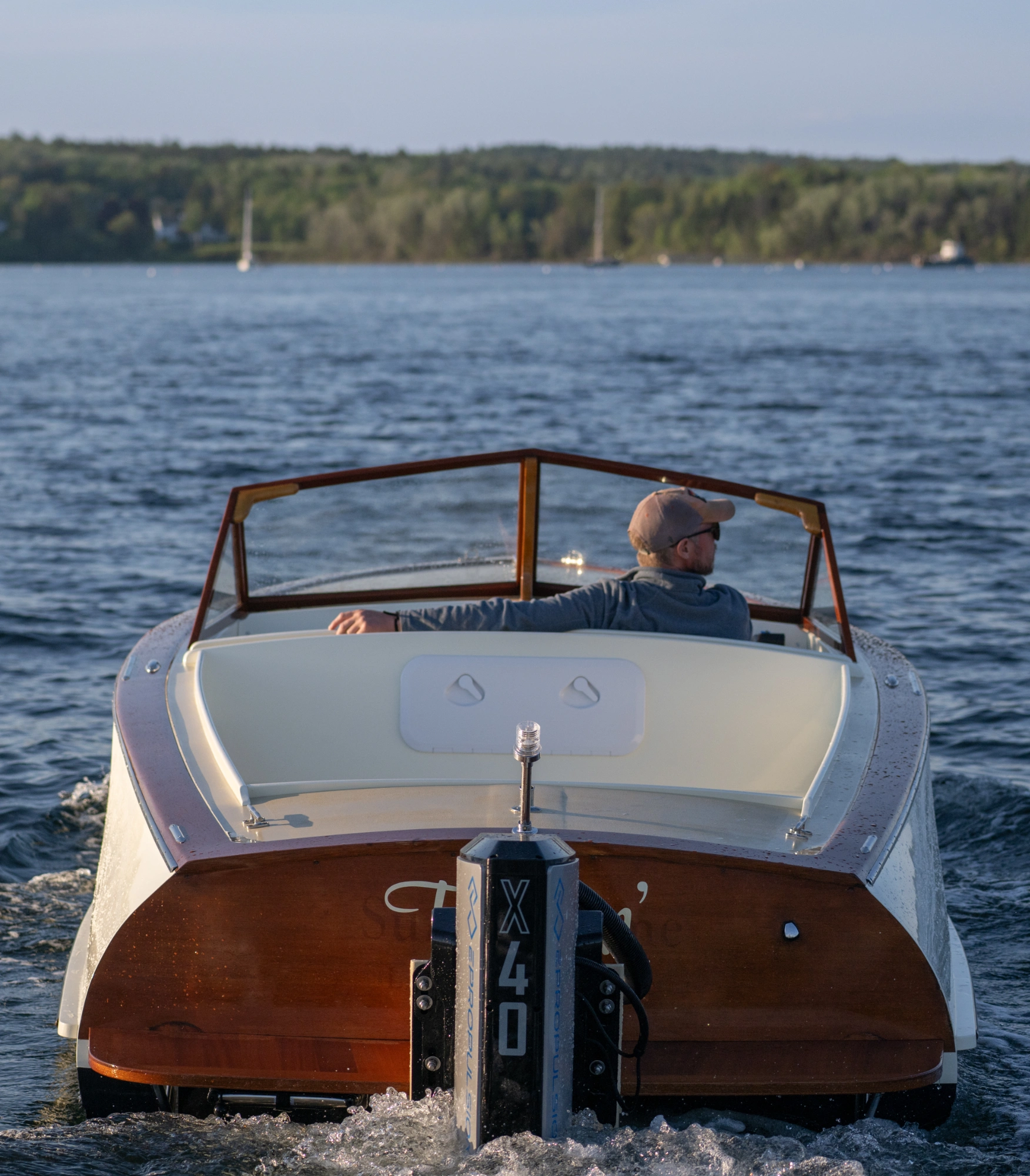
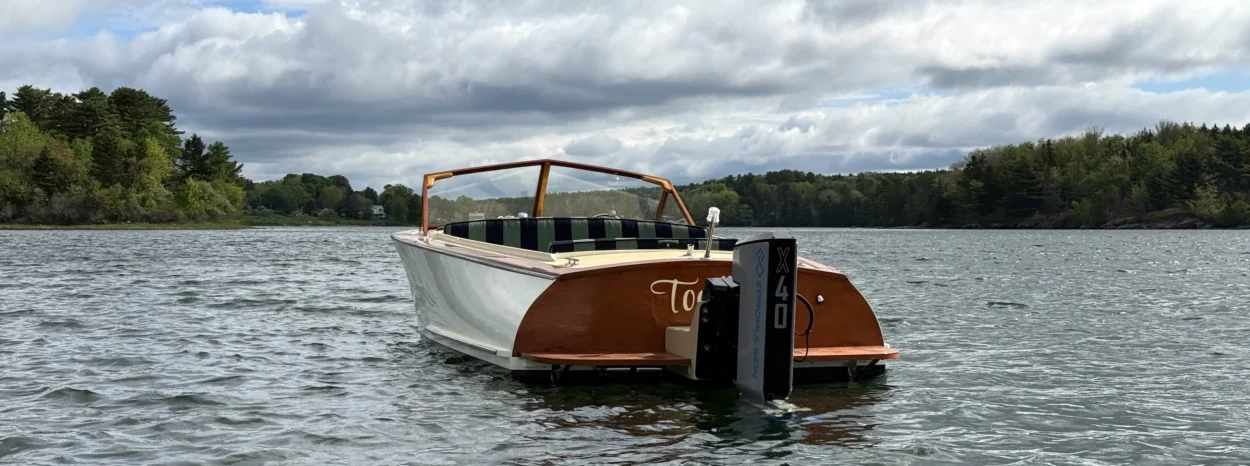
    Together, we developed a plan to remove the inboard engine and open up the cockpit for more comfortable seating and lounging space.  Power would come from an electric outboard mounted on an Armstrong bracket flanked by swim platforms – preserving as much usable interior space as possible, while keeping the eye-catching varnished transom intact.

    Most of the owners’ time on the lake would be spent just toodlin’ around, but speed still mattered.  Based on their performance goals, we selected ePropulsion’s X40 motor, powered by two of its large 96V G102-230 batteries.  At 54 inches long and 400 pounds each, the batteries were a tight fit in a 19′ boat.  Combined with a 220-pound motor mounted on a 20-inch offset bracket, the conversion demanded careful weight studies to ensure the boat would trim properly after such a significant reallocation of mass.

    After a long road trip from Maine, she is now being enjoyed on a lake in Minnesota, where her wooden construction, hand-crafted detailing, and near-silent performance are attracting attention – and, we hope, winning a few more converts to electric power.

    Particulars

    LOA21′
    LWL19′ 10″
    Beam6′ 6″
    Draft10″ / 21″
    Disp.3100 lbs
    MotorePropulsion X40 (40 kW, 96V)
    BatteriesePropulsion G102-230 (x2, 46 kWh)
    Top Speed24 kts
    Range50 nm at 6.5 kts, 23 nm at 20 kts
    Electric boat underway with lots of spray
    26.5.26 Toodlin’ for Hylan & Brown-5

  • SPRAY

    SPRAY

    spray

    Albury Runabout

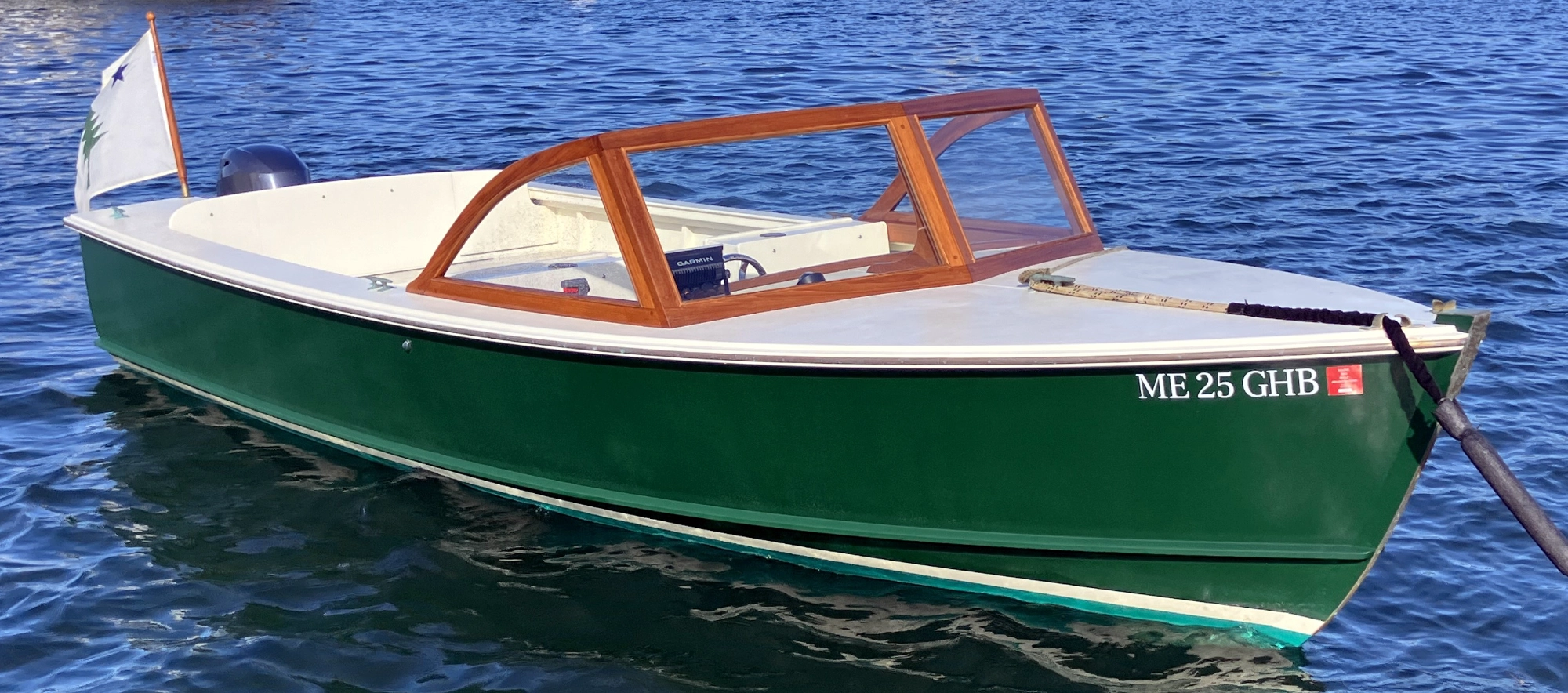
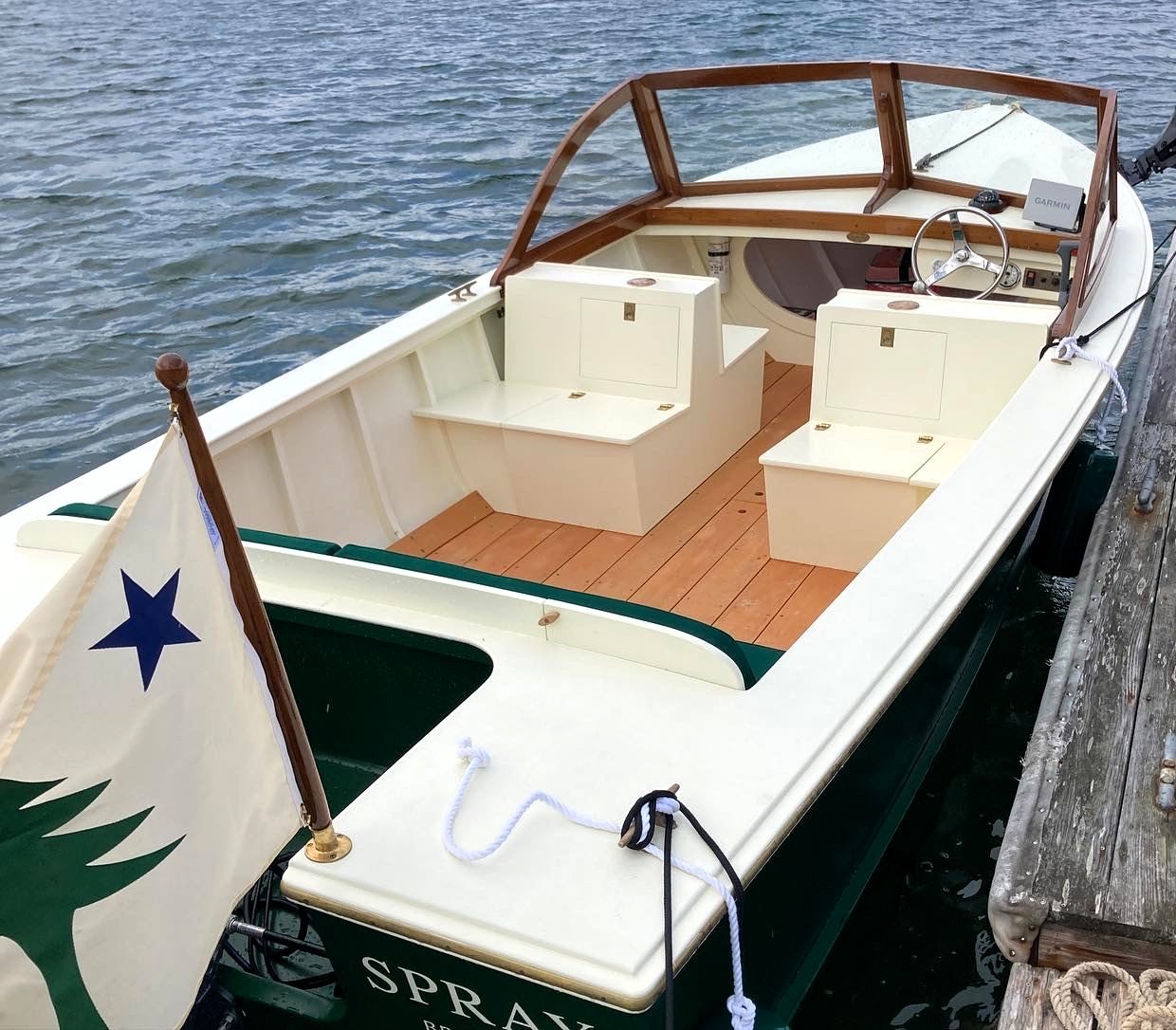
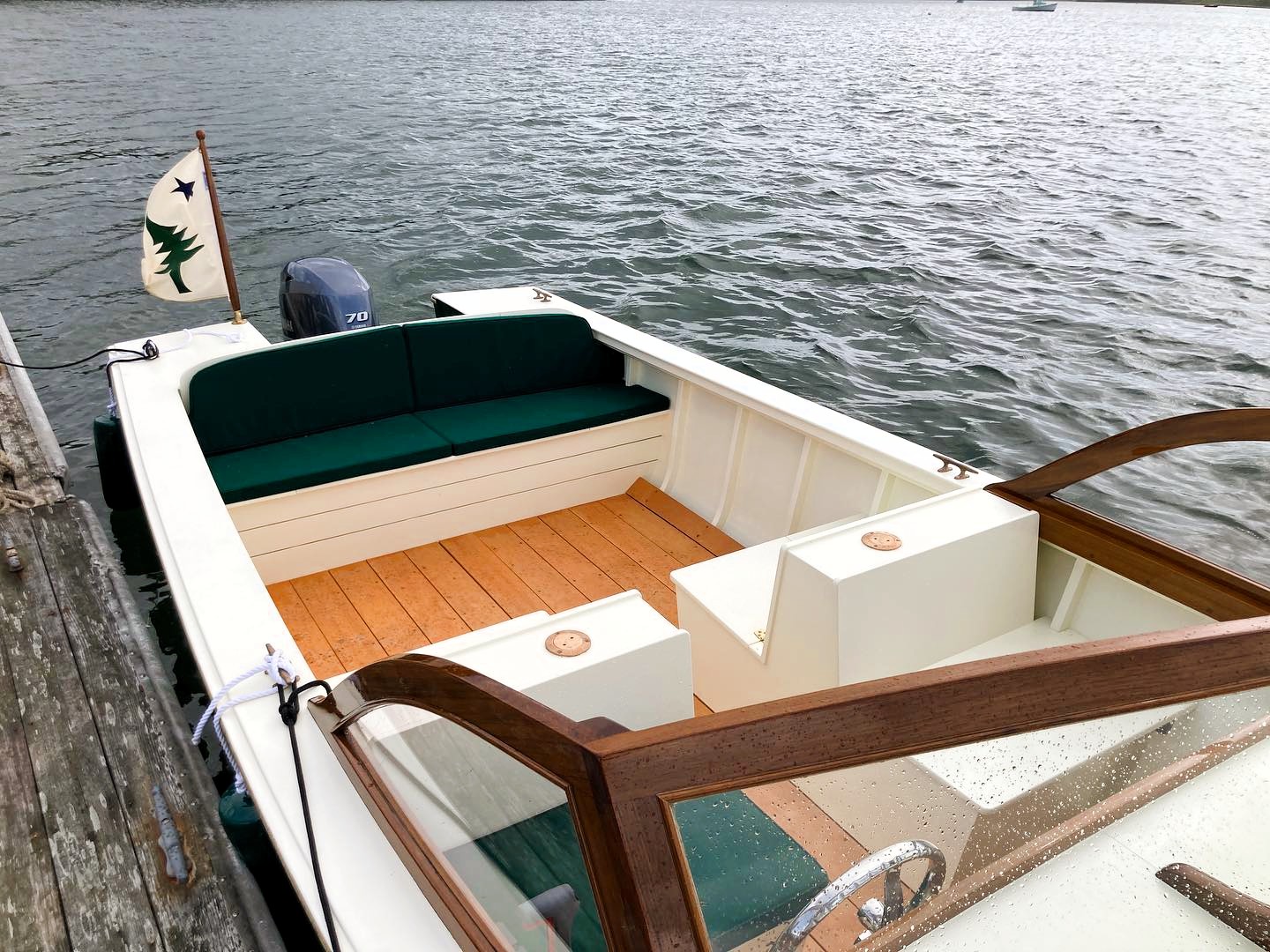
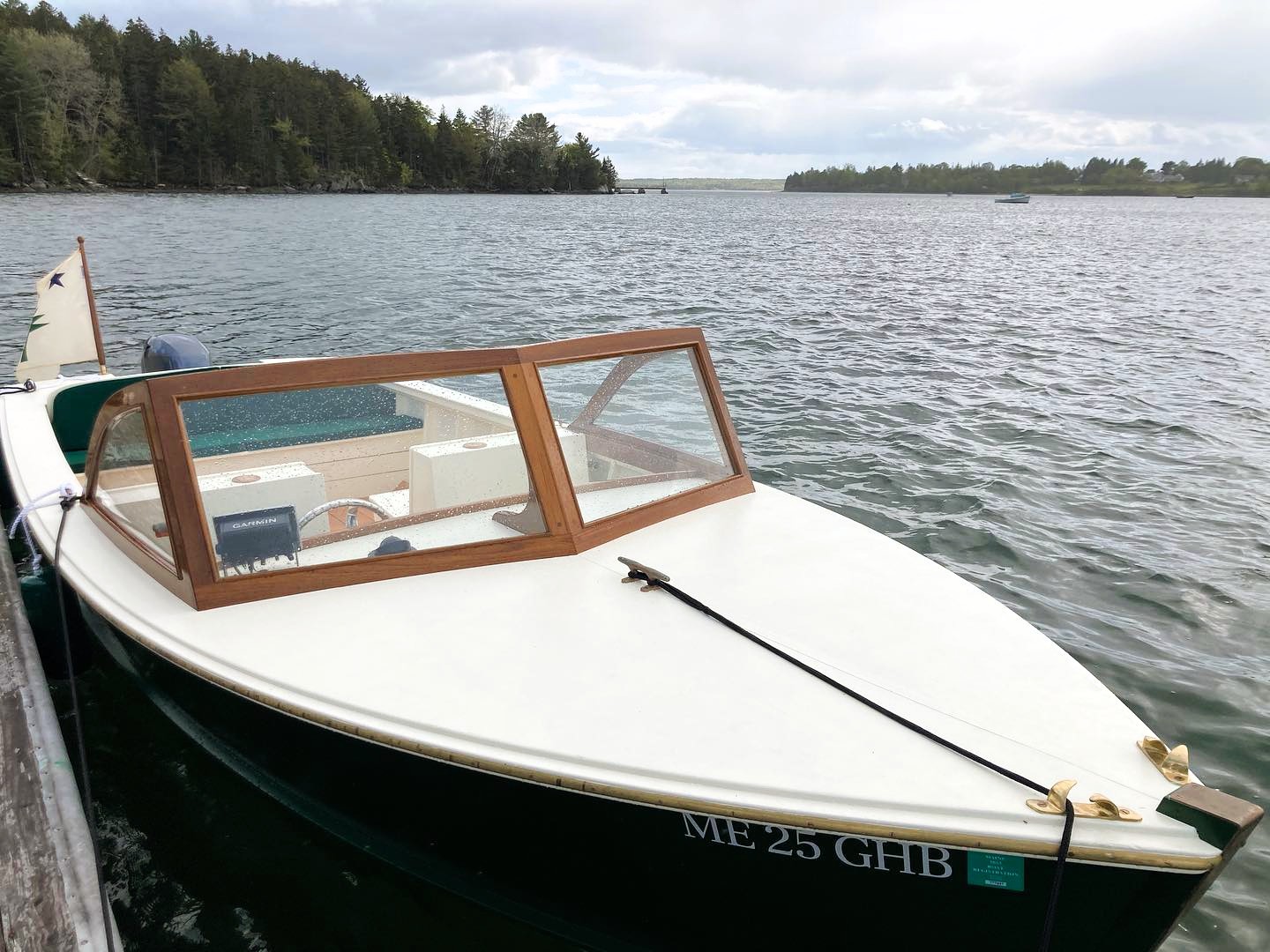
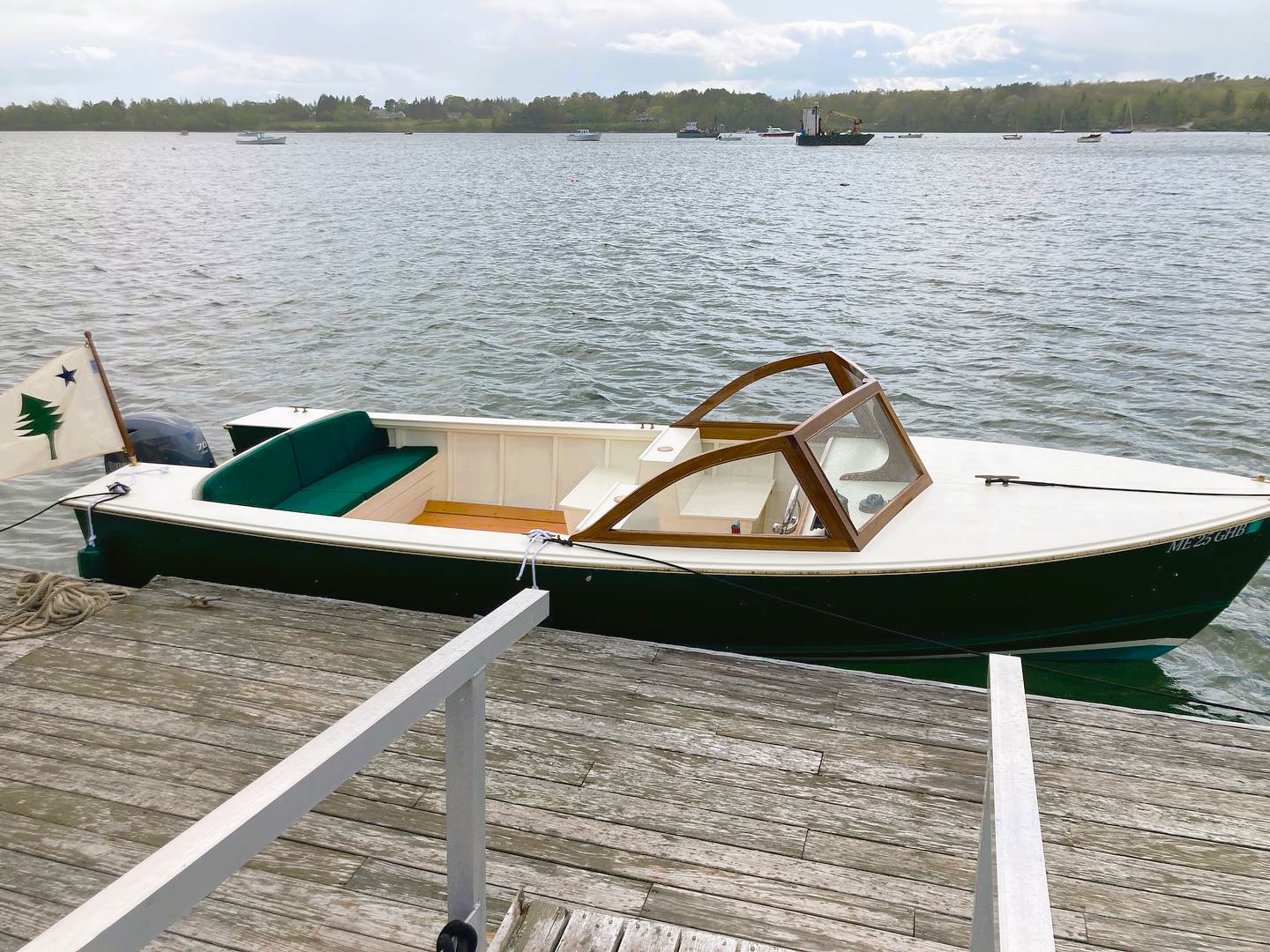
    SPRAY is a new Albury Runabout, built to Doug’s plans for a Brooklin couple. Doug’s plans are based on lines taken from what Willard Albury considered his optimal boat.

    This boat has already proven to be optimal in her home waters. Departing Benjamin River, she is rugged and capable enough for spur of the moment jaunts to Isle au Haut, Fox Island Thoroughfare, Swans Island, Stonington or any of the hundreds of hidden hike and picnic spots in between.

    For this new Albury we added a pair of aft facing seats and a more comfortable aft bench seat with seat back.

    FURTHER READING: Albury Brothers Runabout

    Albury Runabout SPRAY
    Spray1

    Particulars

    LOA19′ 7″
    LWL17′ 9″
    Beam6′ 10″
    Draft13″
    Disp.2400 lbs
    MotorYamaha 70 hp outboard
    Fuel capacity18 gal
    Top Speed28 kts
    Cruise20 kts
  • SEIWA

    SEIWA

    SEIWA

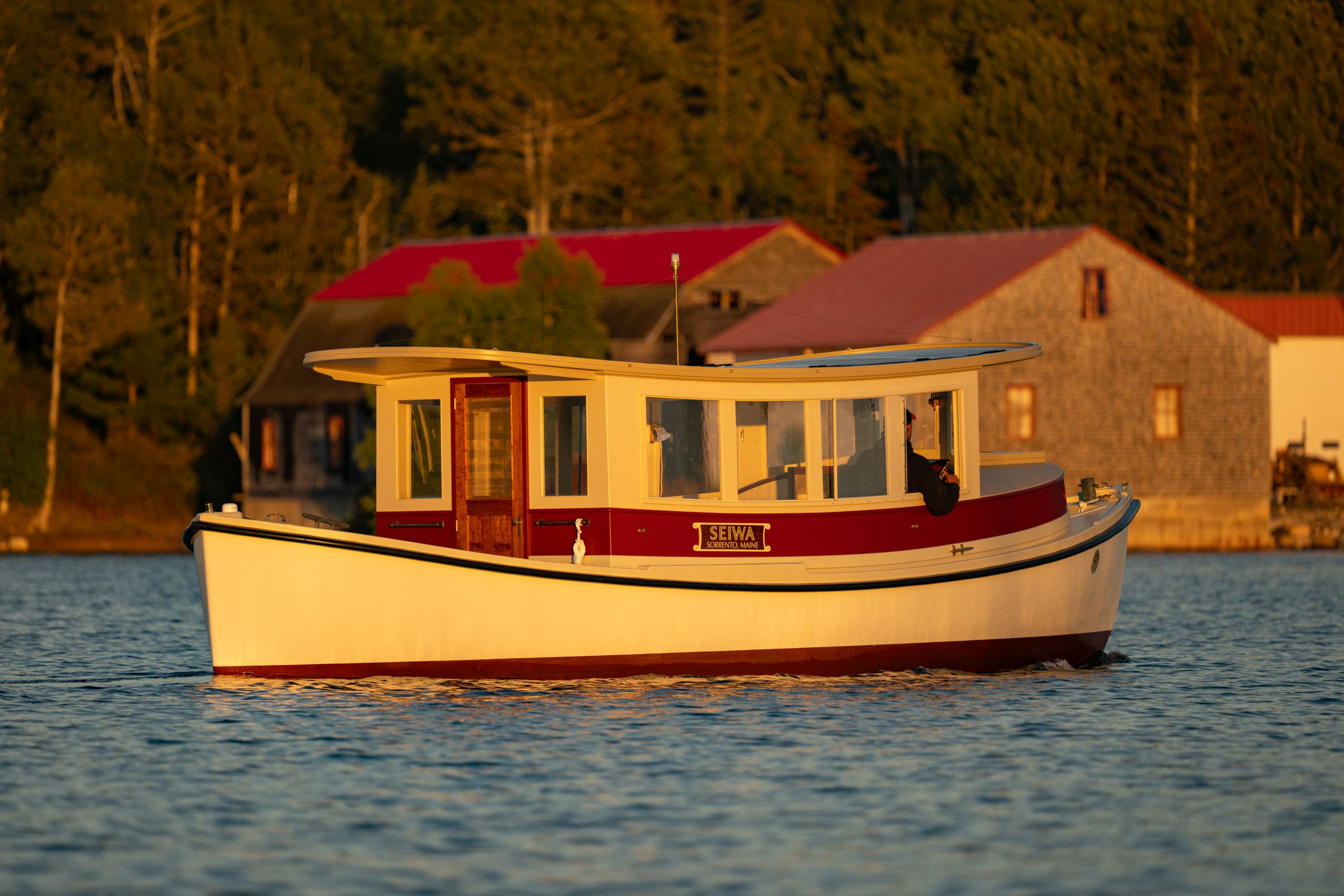
    26‘ Navy Whaleboat (1969, 2025)

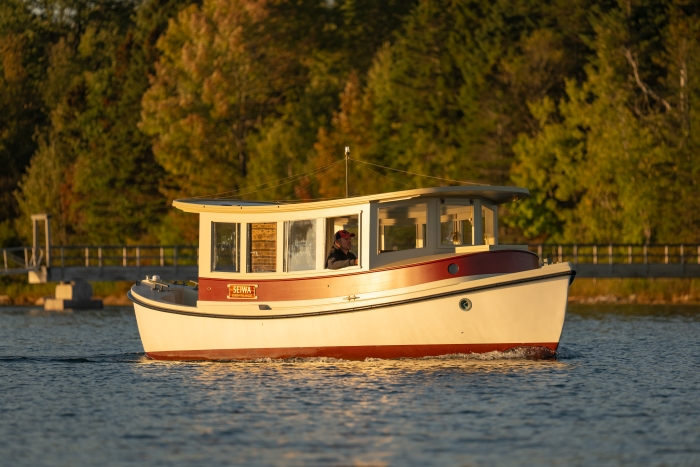
    After the success of VEGA’s electrification in 2023, her owner came back to us with a new project in mind.  He enjoyed using VEGA for day trips with friends and family, but wanted another boat to venture further afield in, with simple overnight accommodations for up to two people.  Sorrento to Isle au Haut without plugging in was the challenge he gave us – and he already had a boat in mind.

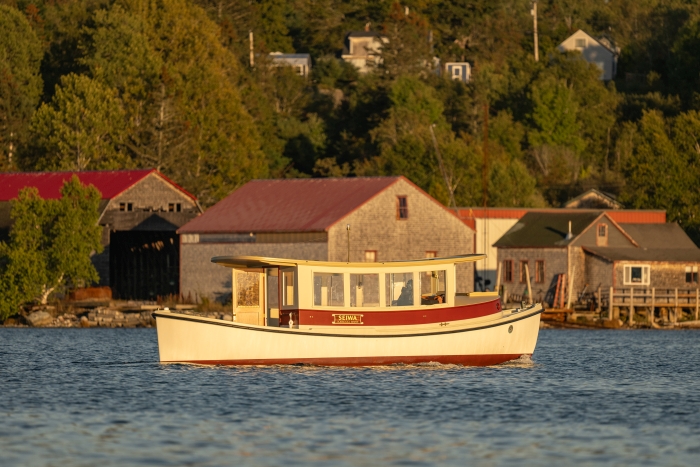
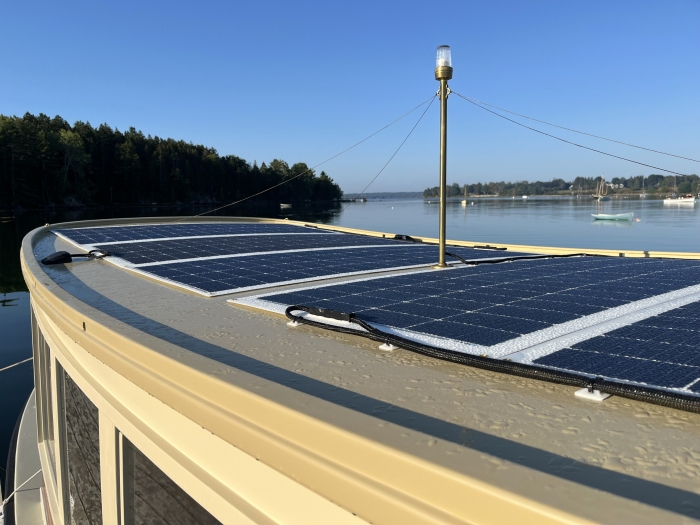
    Built in 1969 by Uniflite in Bellingham, WA, this former Navy motor whaleboat was a good candidate for efficient electric cruising.  With a double-ended hull designed for displacement speeds, she slips through the water with ease and can easily carry the weight of a large battery bank.  The design Doug came up with called for gutting the boat and building a new superstructure, with a long hardtop for solar panels, good protection from the weather, and lots of glass for unrestricted visibility.

    Photo: Nick Parson
    Photo: Nick Parson

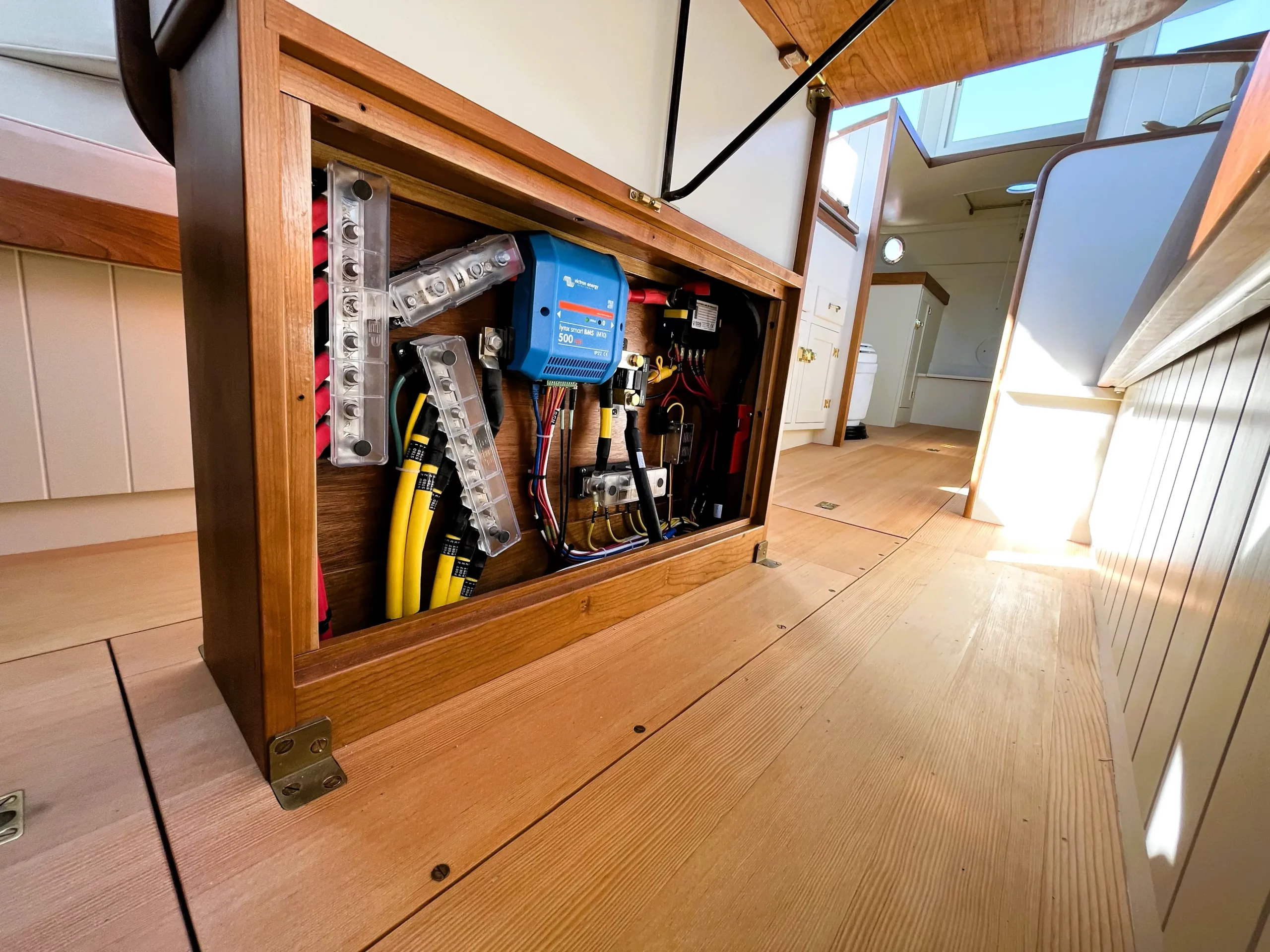
    For propulsion, we installed a 15 kW pod from Rim Drive Technology, paired with a 60 kWh Victron battery bank.  The result is smooth, silent operation with extremely low maintenance requirements.  Six 200 W solar panels mounted on the cabin top continuously recharge the batteries while underway, enabling what we call “solar sailing”: traveling at a speed determined by available sunlight rather than by drawing down the battery bank.  At modest cruising speeds, SEIWA can run comfortably all day, and under favorable conditions, with very little battery use at all.

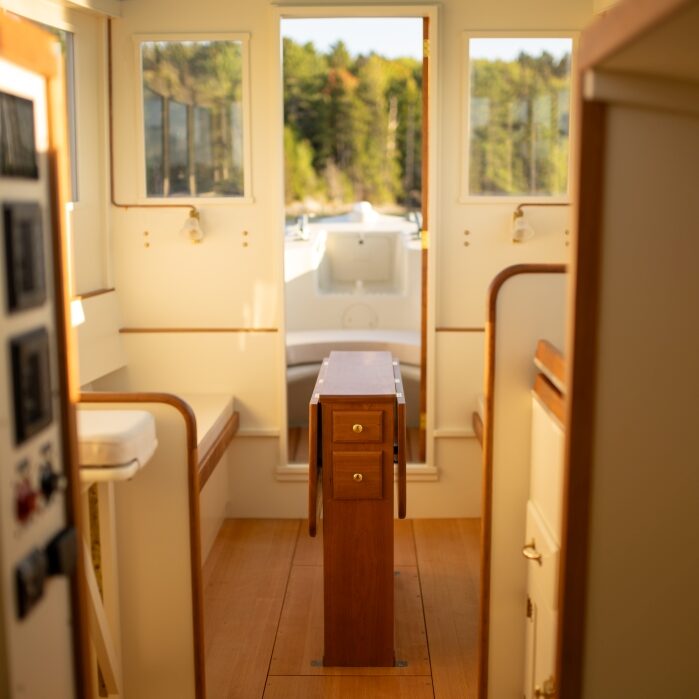
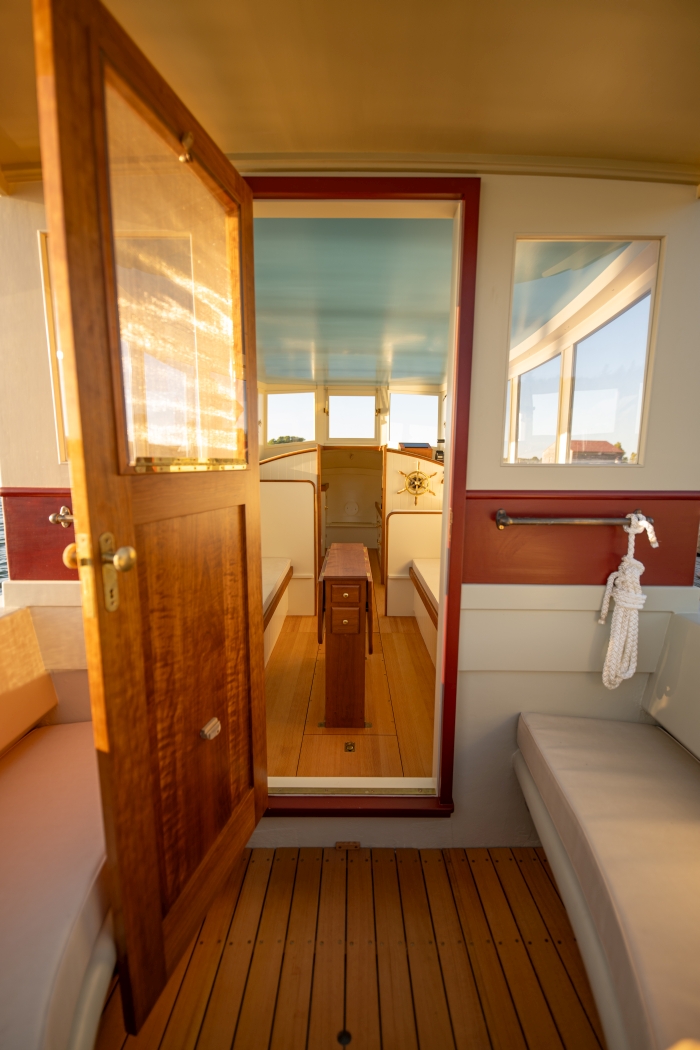
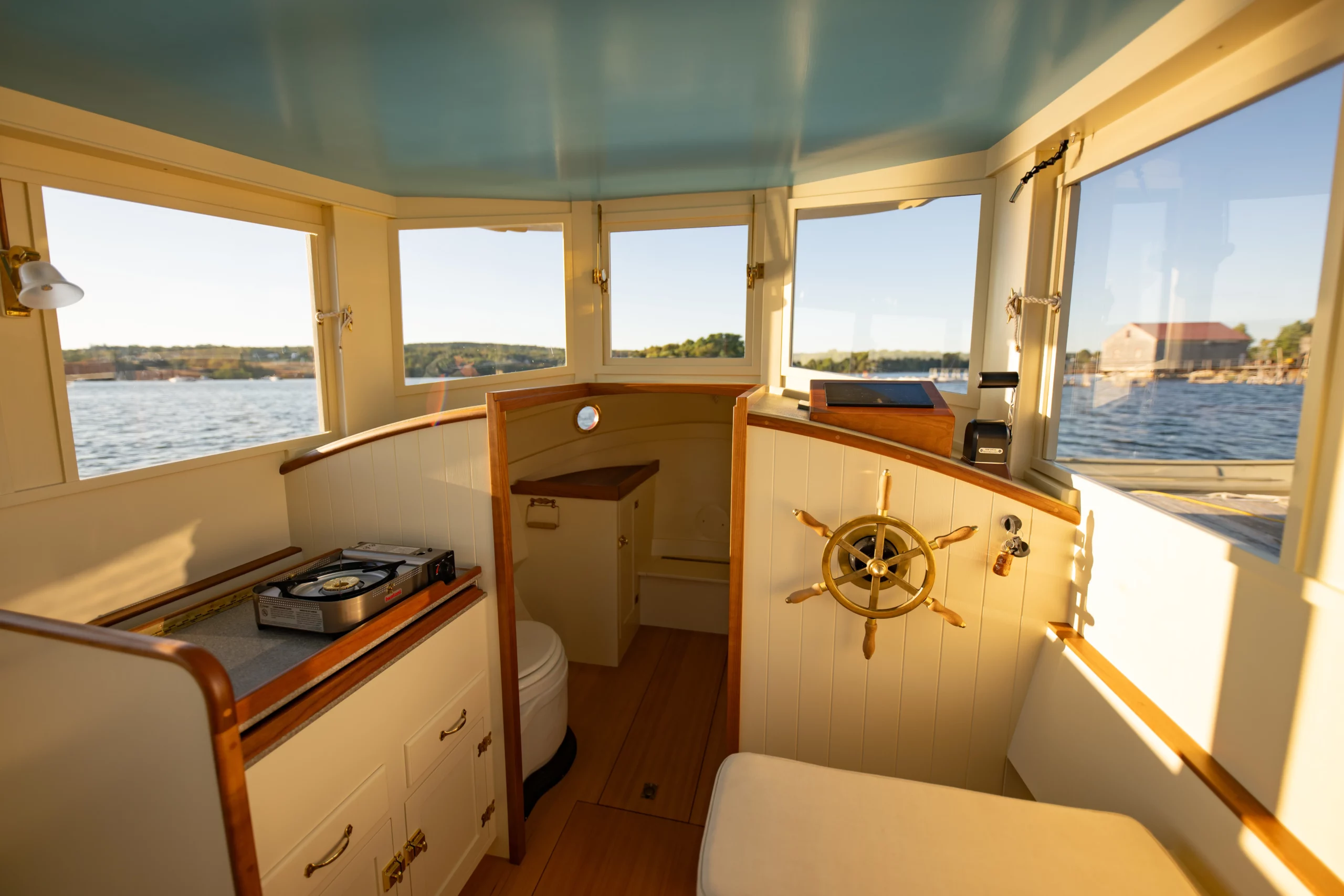
    Inside, we focused on simplicity, with accommodations tailored to her owner’s vision of minimalist coastal exploration.  Two settees convert to comfortable sleeping berths, and the compact cabin includes a Laveo waterless head and a clever galley with a folding single-burner stove that reveals a sink beneath.

    With planning, multi-day trips using nothing but the power of the sun are a real possibility in a boat like this.  For sailors transitioning away from sail, or cruisers looking for a quieter, less demanding way to explore, SEIWA offers an effortless and environmentally responsible alternative.  For us, the boat stands as a proof of concept: with the right hull, thoughtful design, and carefully-selected solar-electric systems, electric cruising isn’t just possible – it’s practical, peaceful, and deeply rewarding.

    Particulars

    LOA26′
    LWL25′
    Beam8′ 5″
    Draft2′ 2″
    Disp.7400 lbs
    MotorRim Drive Technology POD 15.0 (15 kW, 48V)
    BatteriesVictron LFP (60 kWh)
    Top Speed6.5 kts
    Cruise4 kts
    Range80 nm at 4 kts, 30 nm at 6.5 kts
    Range w/ solar130 nm at 4 kts, 33 nm at 6.5 kts
    Photo: Nick Parson
    25.9.15-Seiwa-8
  • GATSBY II

    GATSBY II

    GATSBY II

    2024

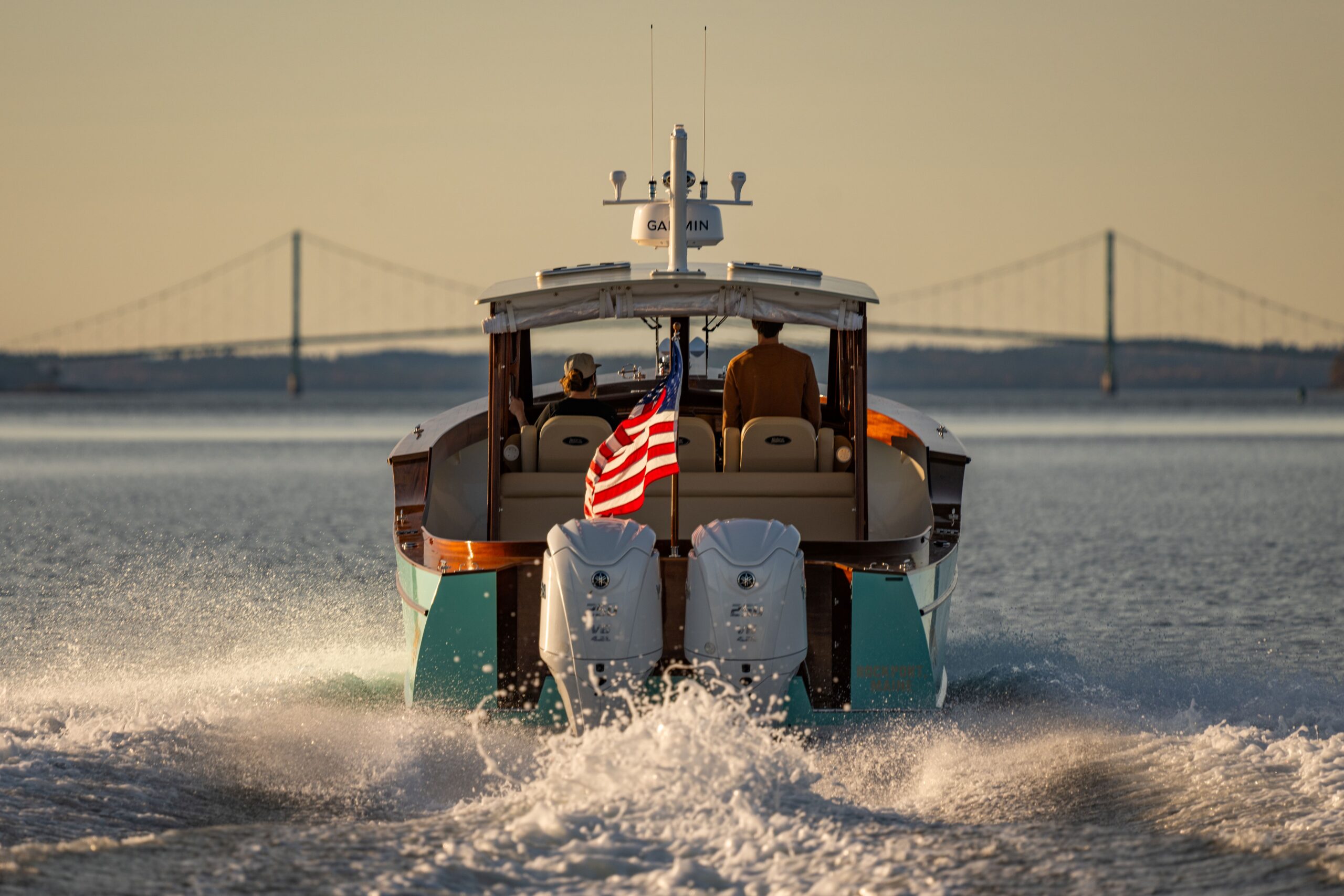
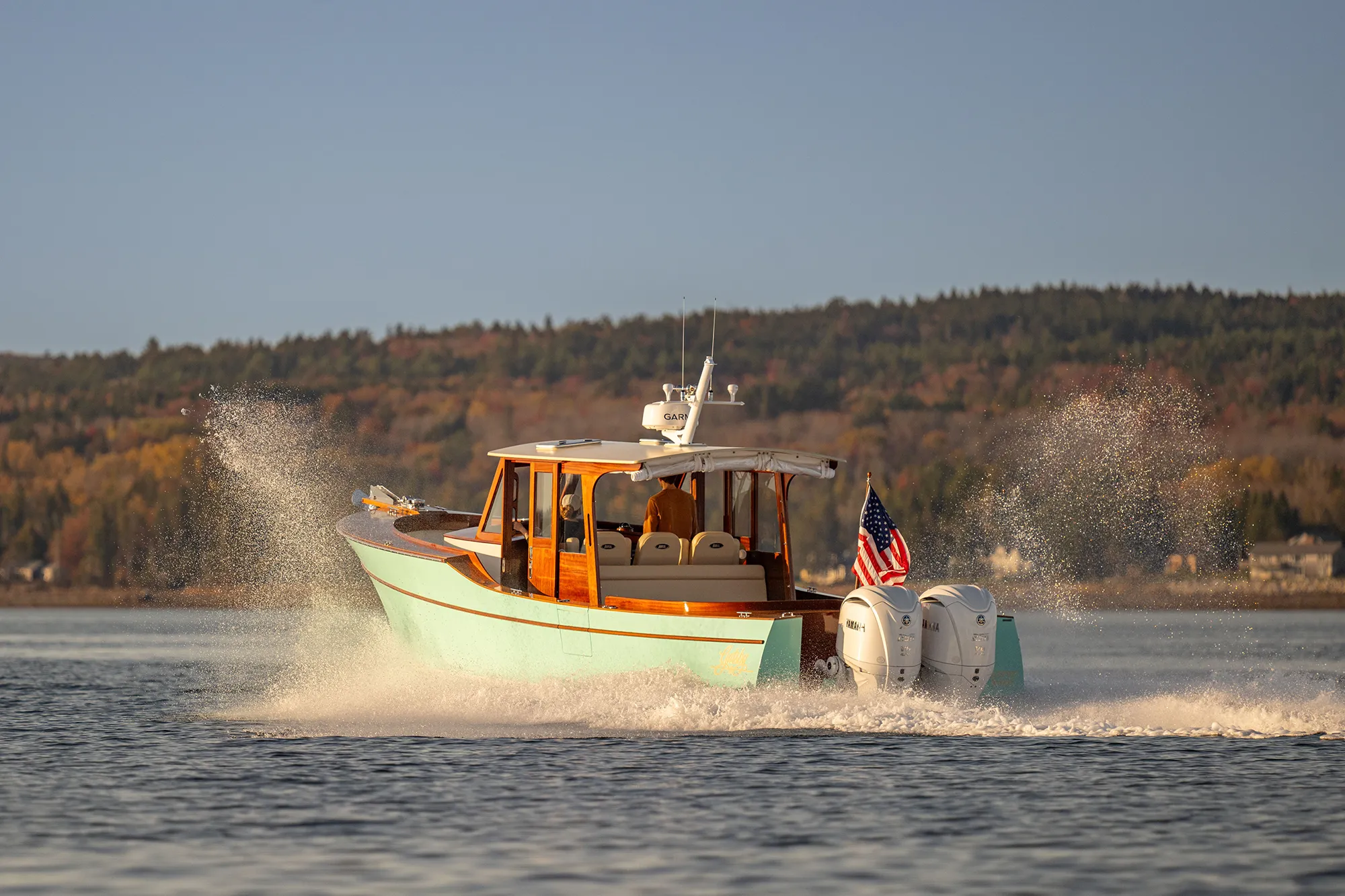
    In 2018 we designed and built GATSBY for a family with a new summer home in Rockport Maine. Since then, they have loved her dearly and used her extensively for picnics and day trips around Penobscot Bay. As they discovered all the wonderful places to see and explore by boat, they began to realize they needed a boat with a bit more size, range, speed, capacity and comfort in a range of conditions.

    A conversation began in 2021, and we brought in Matthew Smith, N.A. to develop the design. He worked closely with Ellery and the owners to ensure the new boat would build upon what they loved about GATSBY while also providing a whole new boating experience. Lead Builder Matthew Elwell and Designer/Systems Architect Ben Parson worked out the myriad details. Kit Macchi headed up hull and pilot house construction and Alina Johns worked tirelessly to make her shine!

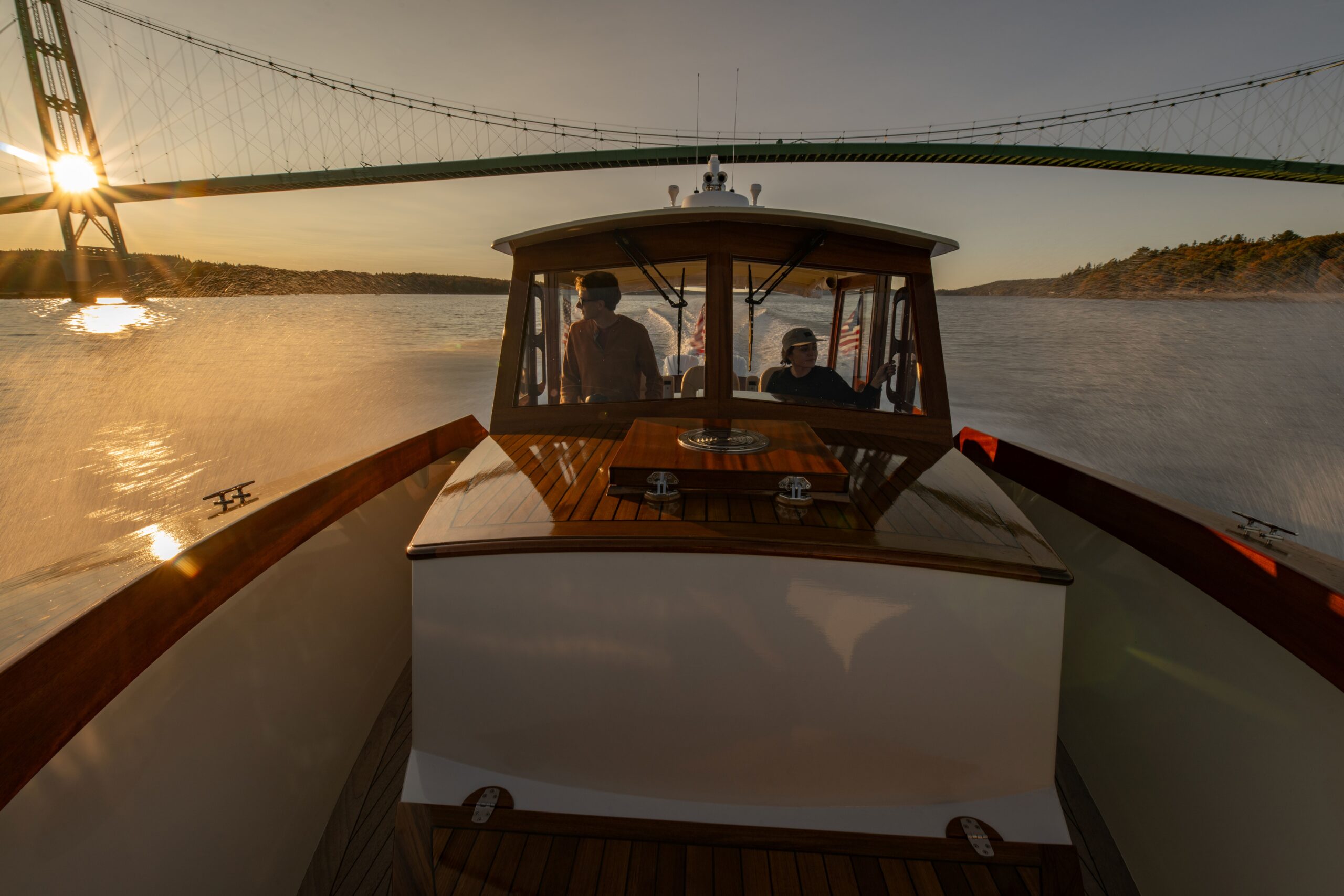
    GATSBY II heading under the Deer Isle BridgePhoto: Nick Parson
    GATSBY II on the waterPhoto: Nick Parson

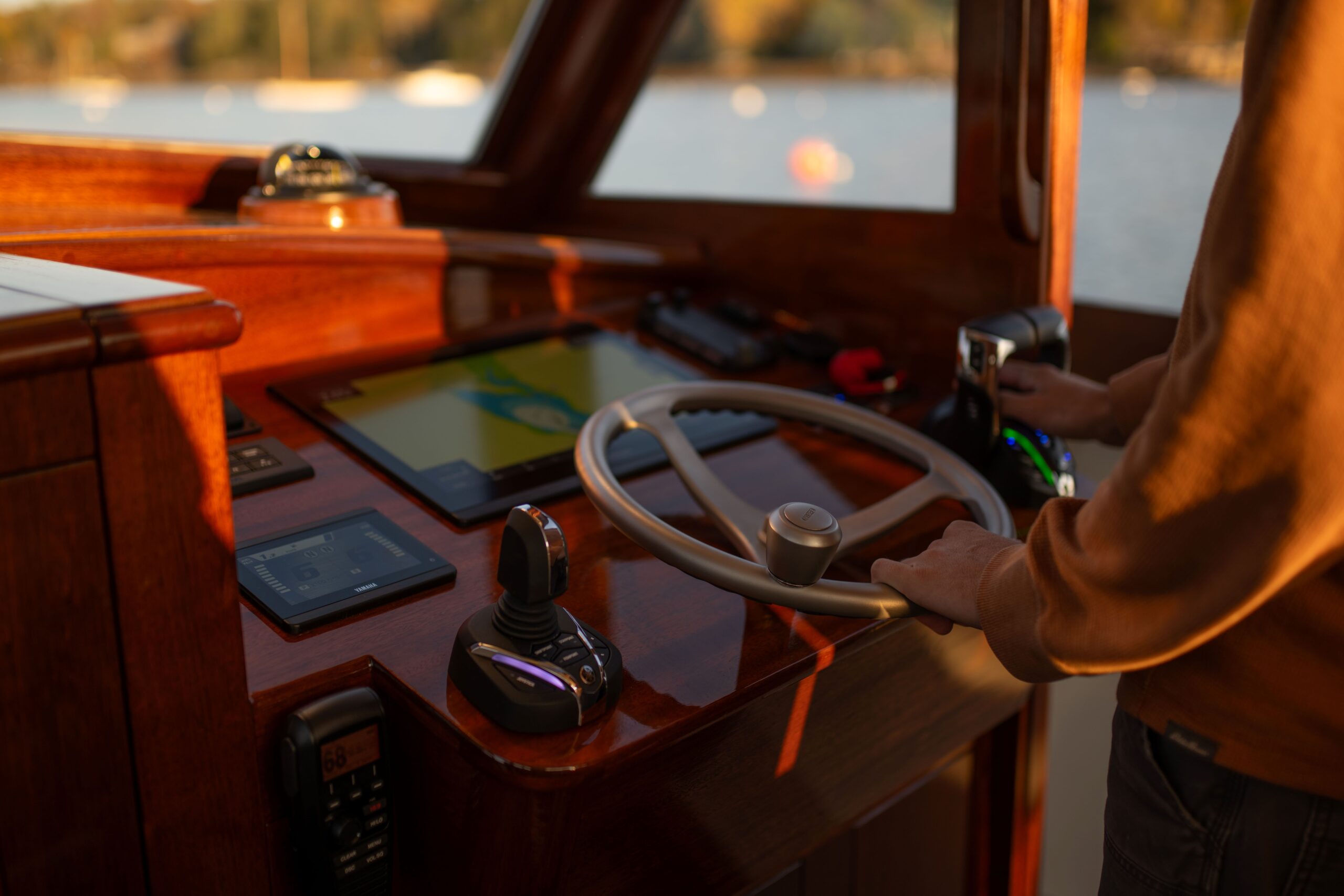
    At 31′ 6″ on deck, with a 10′ 4″ beam, and displacing approximately 10,000 lbs, GATSBY II is nearly three times larger than GATSBY. But part of the challenge was to design a boat that was easier to use and handle in all ways, despite going up substantially in size. This was achieved with thoughtful design and well-placed technology: Hull doors and a “walk around” layout for moving in/out and around the boat with ease and safety; the latest technology from Yamaha provided joystick controls with bow thruster integration for effortless and intuitive docking and in-harbor handling; a SeaKeeper gyrostabilizer for comfort and stability at anchor and low speeds; a Zipwake dynamic trim control system for comfort and efficiency at speed; autopilot; electric windlass and much more.

    Particulars

    Full spec sheet available upon request.

    LOA31′ 6″
    LWL30′
    Beam10′ 6″
    Draft18″ / 26″
    Disp.10000 lbs
    MotorTwin Yamaha 250 (DES, joystick control)
    Fuel200 gal
    Top Speed35 kts
    Cruise26 kts
    Range250 nm at cruise
    Slide 3