Our expertise with both original designs and the development of plans from existing craft (often historically significant) can bring your ideas to life.
Hylan & Brown is a custom yacht design and construction company specializing in traditionally-inspired designs created with the highest standards of craftsmanship. Whether we are building a 13′ 100 lb peapod or a 43′ 12-ton power cruiser, we are committed to producing heirloom quality watercraft that indulge one’s senses and inspire rich experiences. We offer the rare opportunity to bring your custom yacht from vision, to design, to reality, all under one roof. Our design and construction portfolio includes numerous examples of unique new construction, accurate and sensitive restoration of historically significant vessels, and tastefully customized and updated versions of classic yachts.
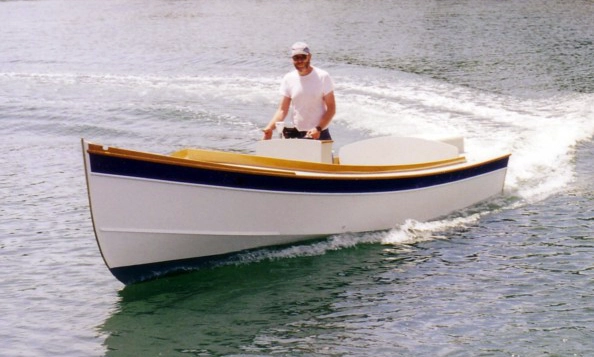
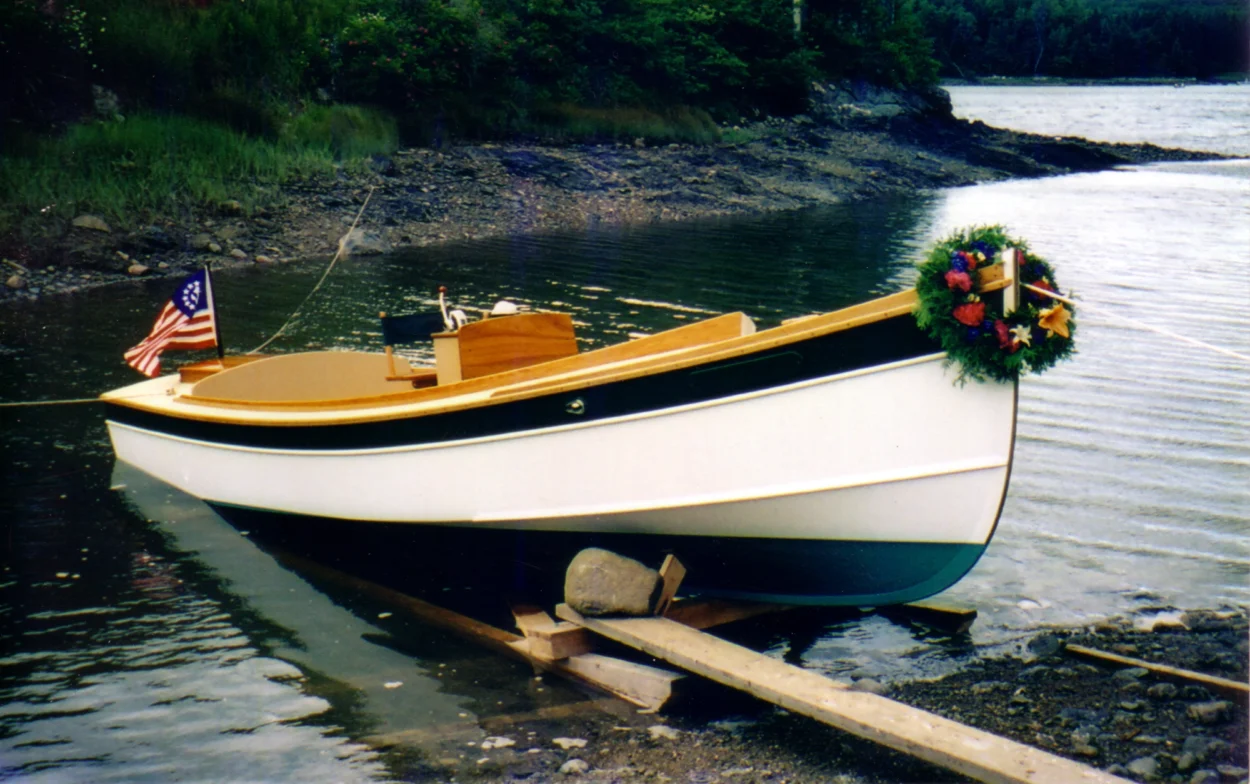
21′ Harry Bryan design, one plank-on-frame, three molded plywood
Designer Harry Bryan put together this excellent design by combining elements of William Hand’s seaworthy and easily driven V-bottom launches with modern four cycle outboard technology.
The result is a power boat that is fuel efficient, quiet, handsome and able.
We have built four of these boats, the first strictly to Harry’s design, and the later three modified to be built using marine plywood. For more information about this design, see Harry’s web site.
Sailors particularly like these boats as they combine many of the features they love about sailing.
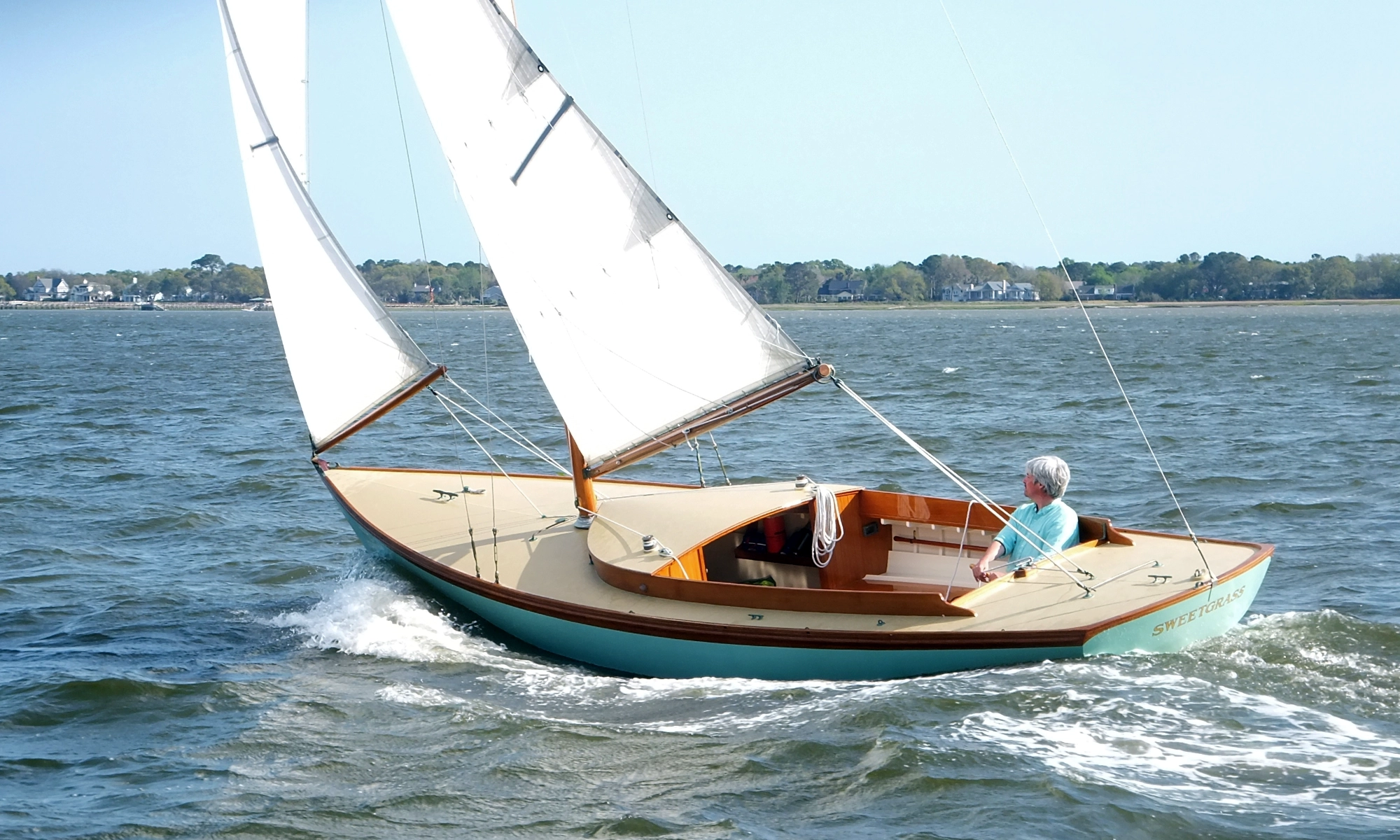
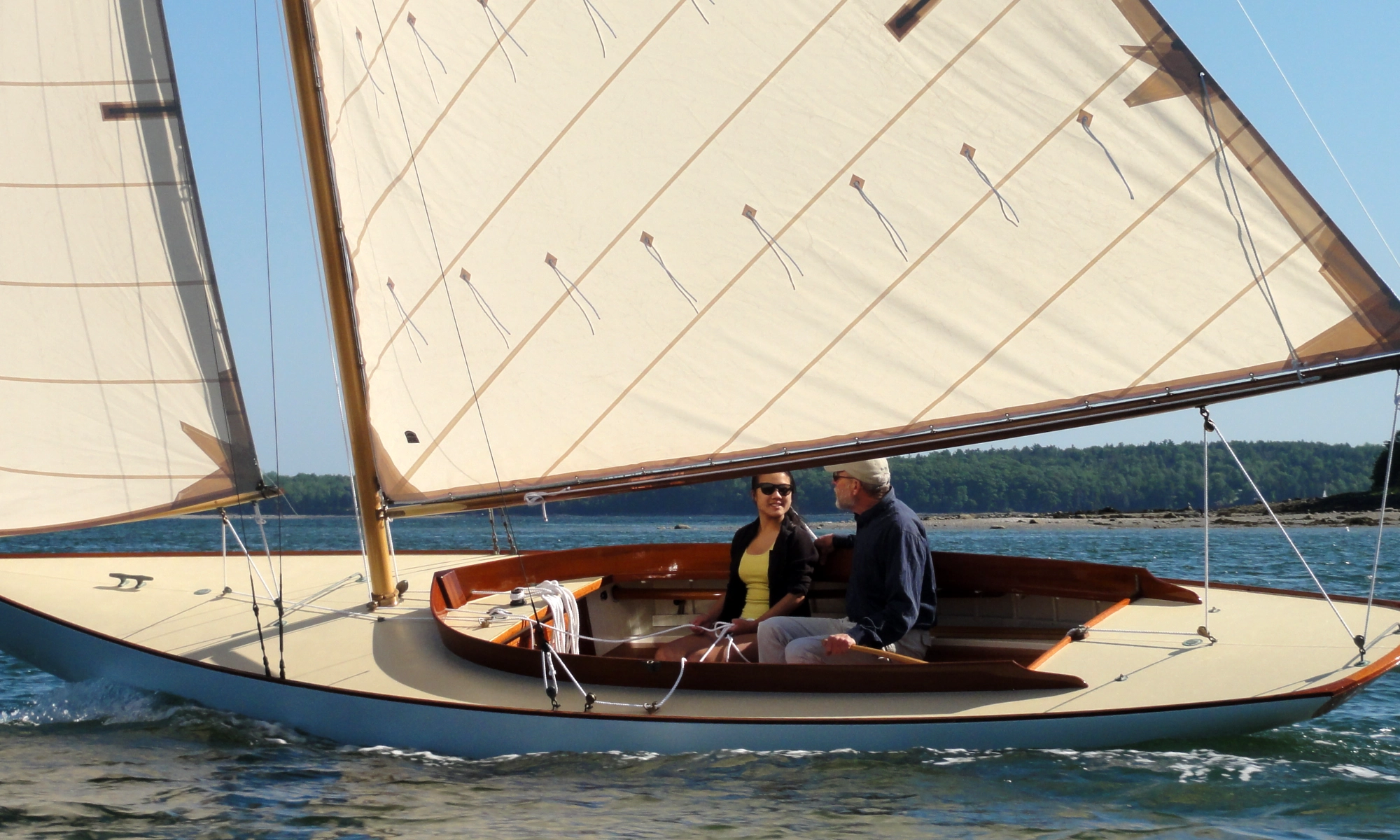
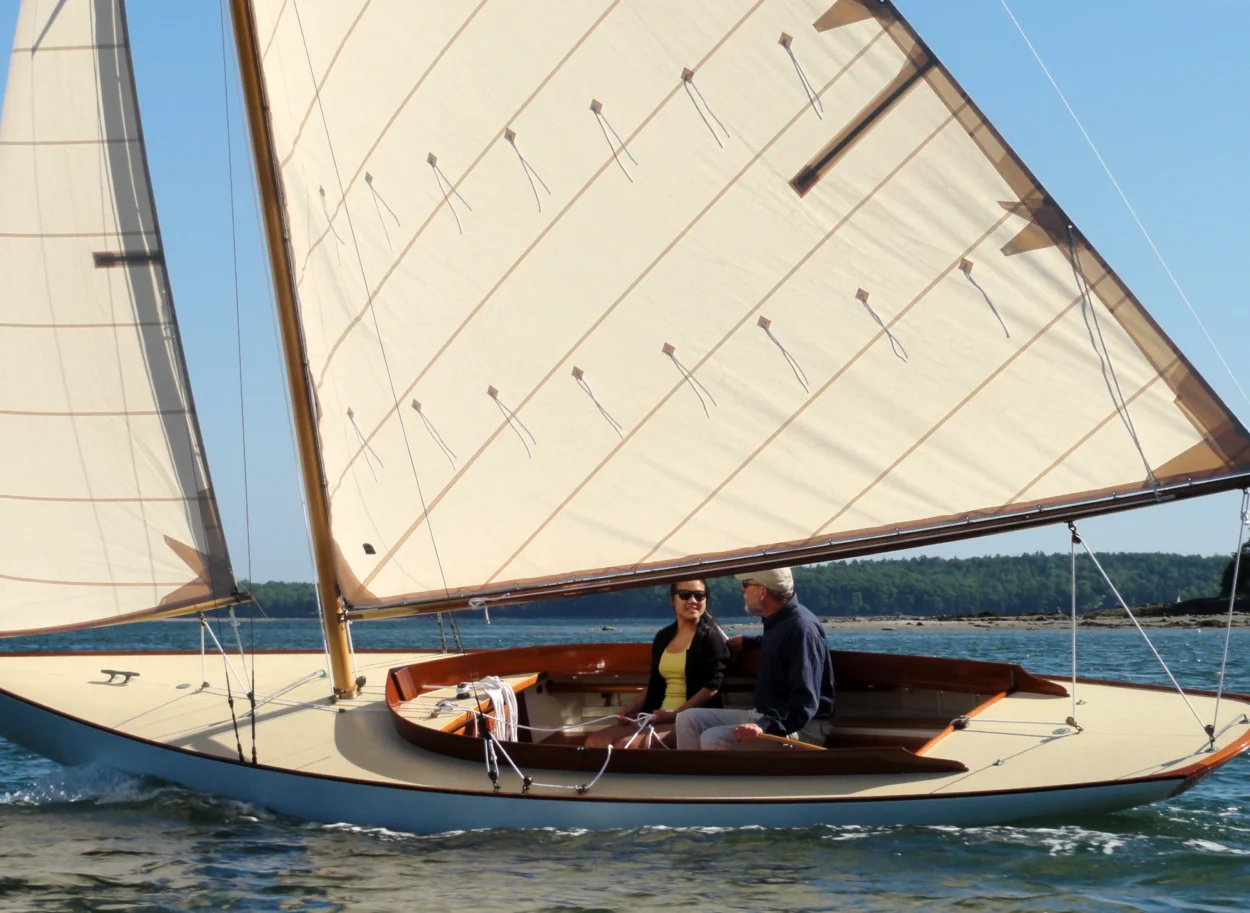
Designed in 1914, Sadie is a tweaked verion of Herreshoff’s Alerion centerboard daysailer. Seven inches longer on the same 21’9″ waterline, she is also slightly beamier and deeper.
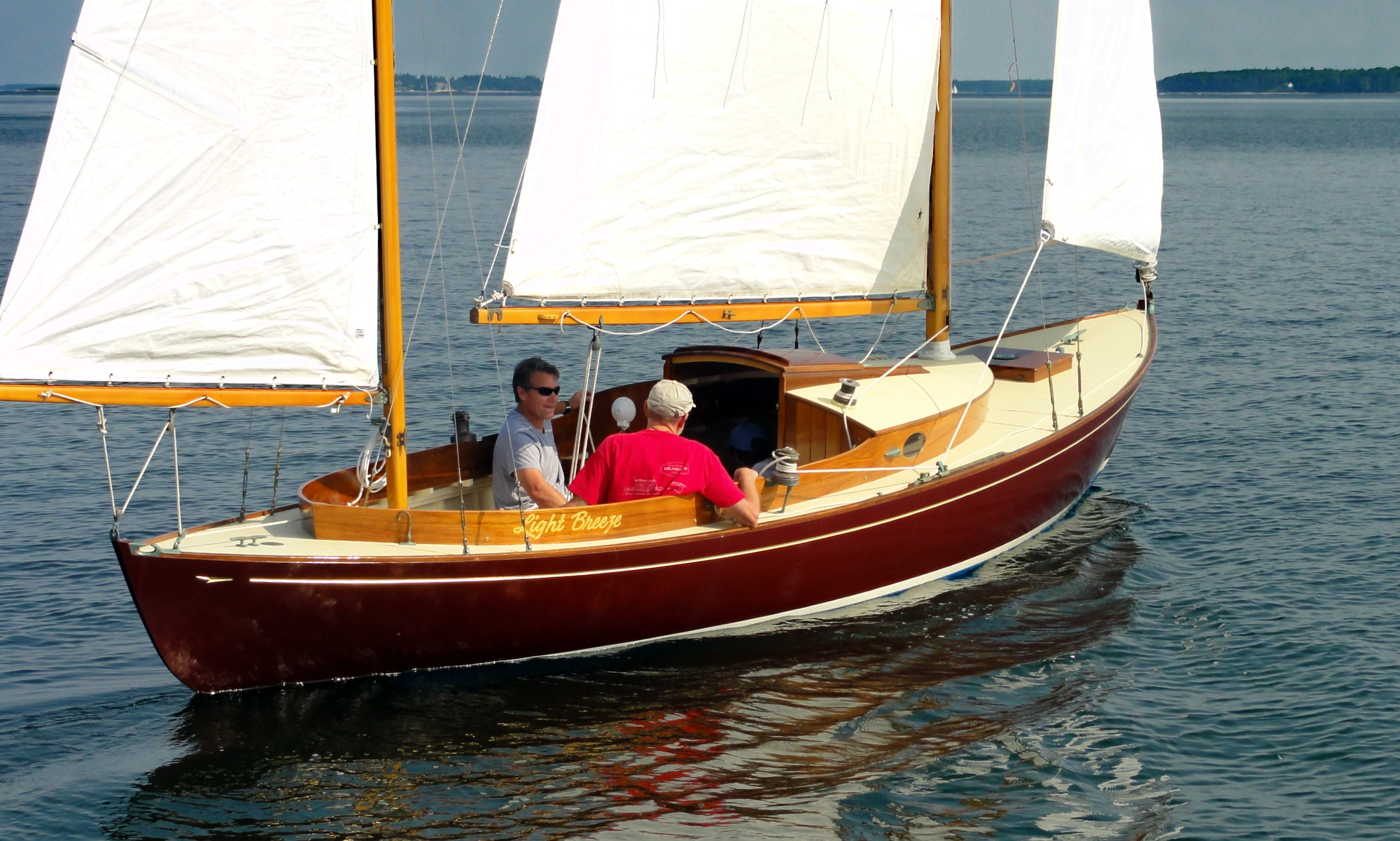
LIGHT BREEZE is a development of L. Francis Herreshoff’s well-loved Rozinante design.
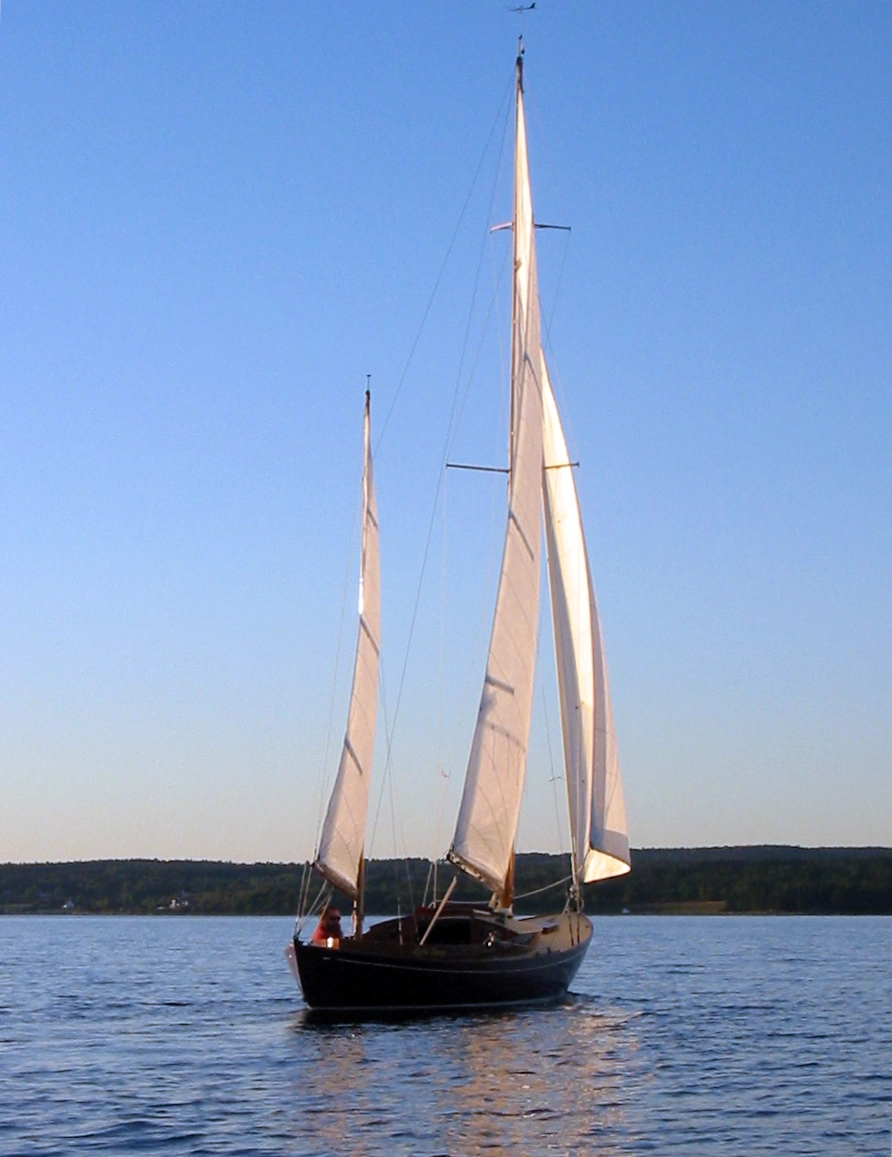
She carries the same yawl rig we designed for RED HEAD, in order to move the mizzen out of the cockpit.
LIGHT BREEZE’s beam and draft were also increased slightly to increase her stability and make her a bit more user-friendly.
LIGHT BREEZE was built with the finest materials: clear vertical-grain Atlantic cedar strip-planking over black locust steam-bent frames and white oak backbone.
Particulars
LOA
28′
LWL
24′
Beam
6′ 8″
Draft
4′ 2″
Disp.
6700 lbs
Sail area
352 sq ft
In the Press
Tom Jackson wrote about MOLLY B. in the “Around the Yards” section of the Sept/Oct 2016 issue of WoodenBoat.
Ellery Brown discusses the complete restoration of MOLLY B. and similar “basket cases” that are eminently worthy of restoration in The Case for the “Basket Case” in Maine Boats, Homes and Harbors 145.
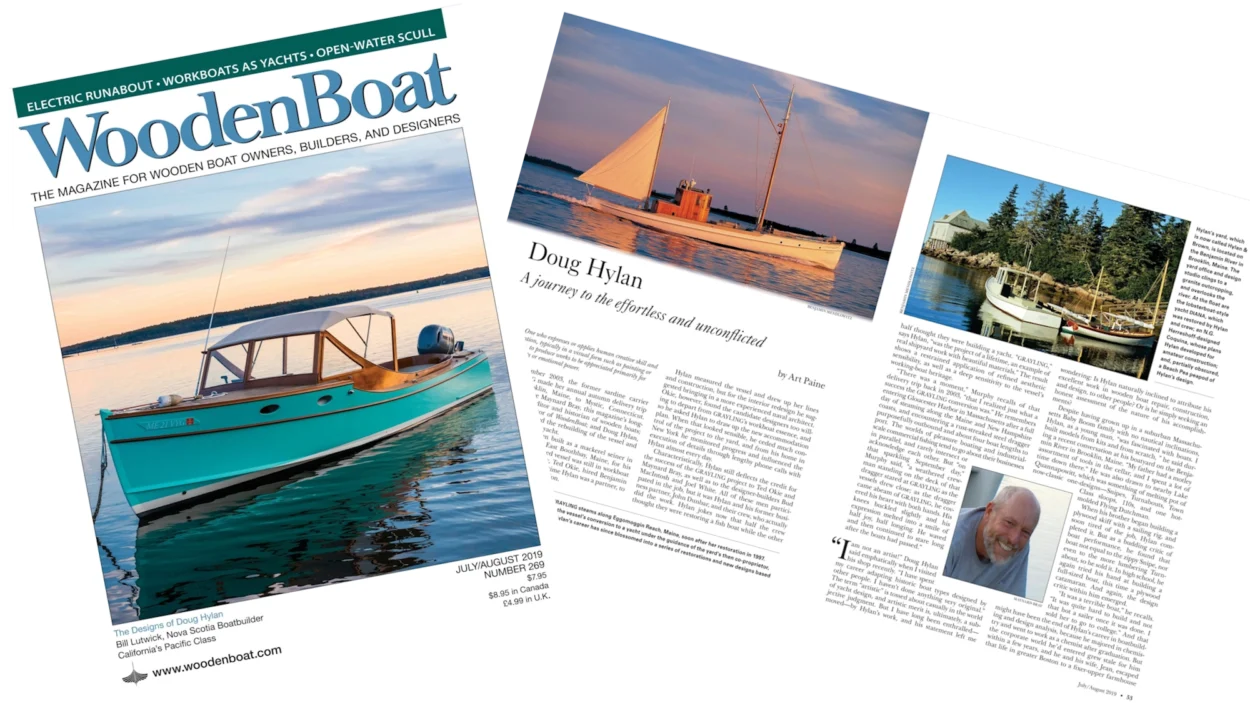
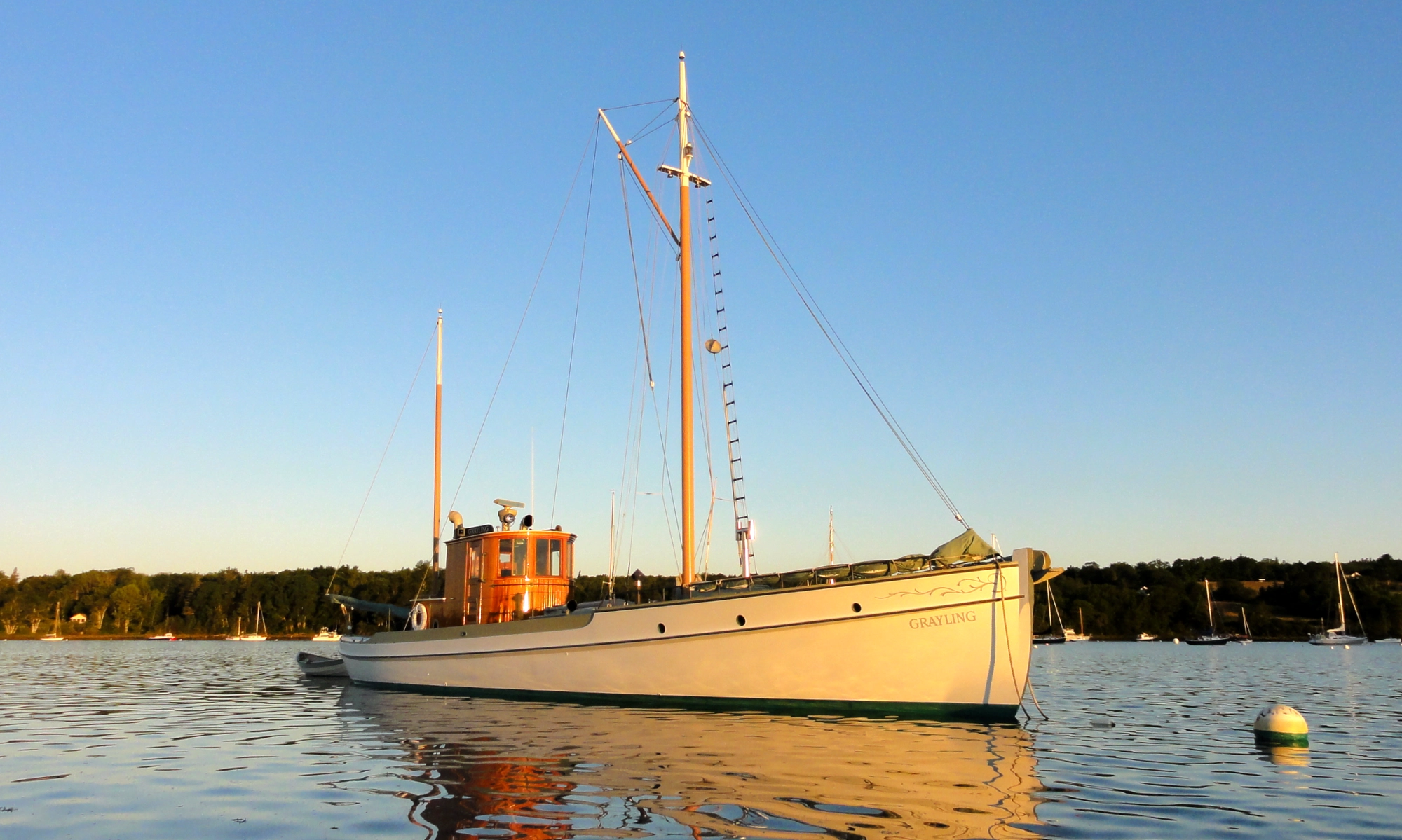
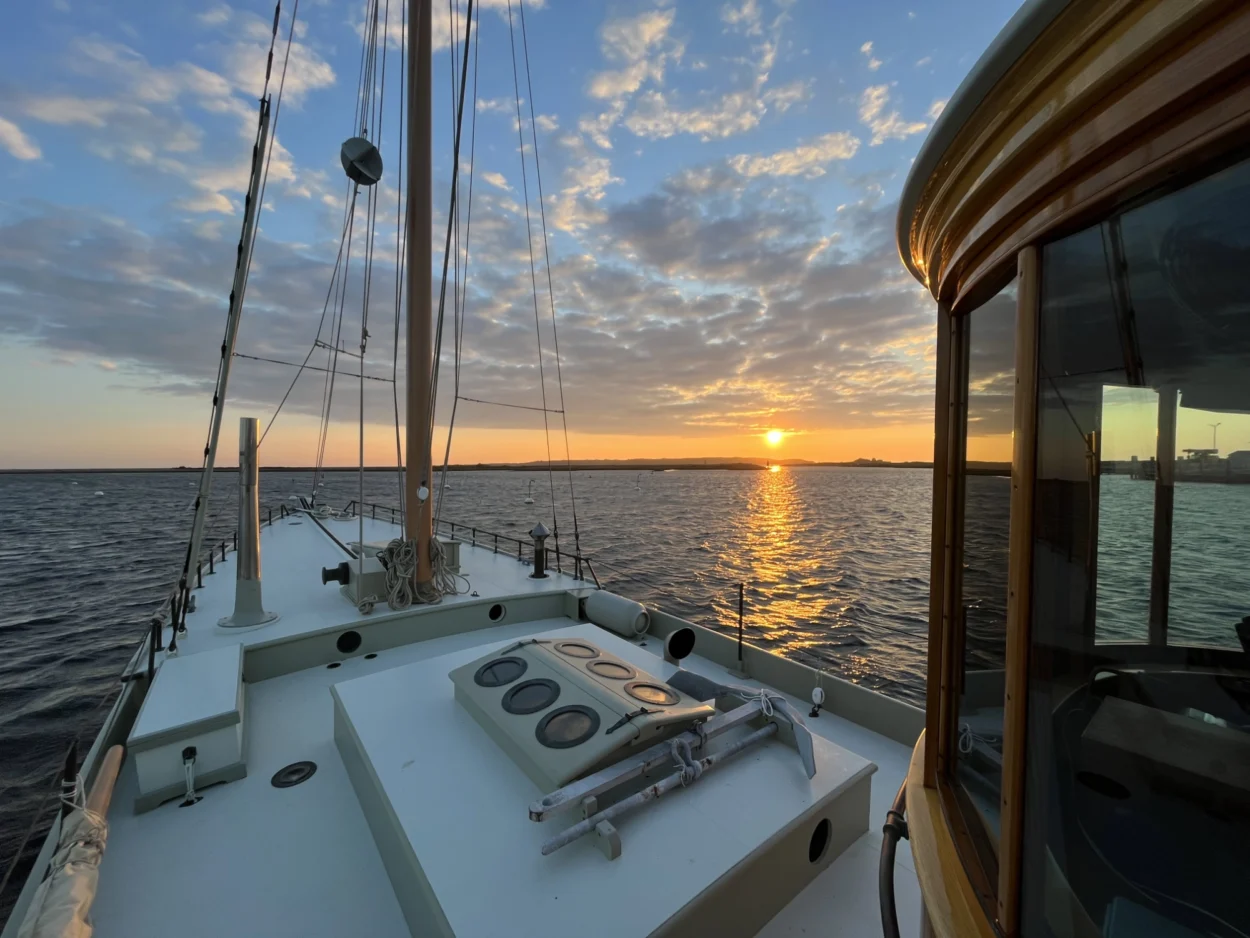
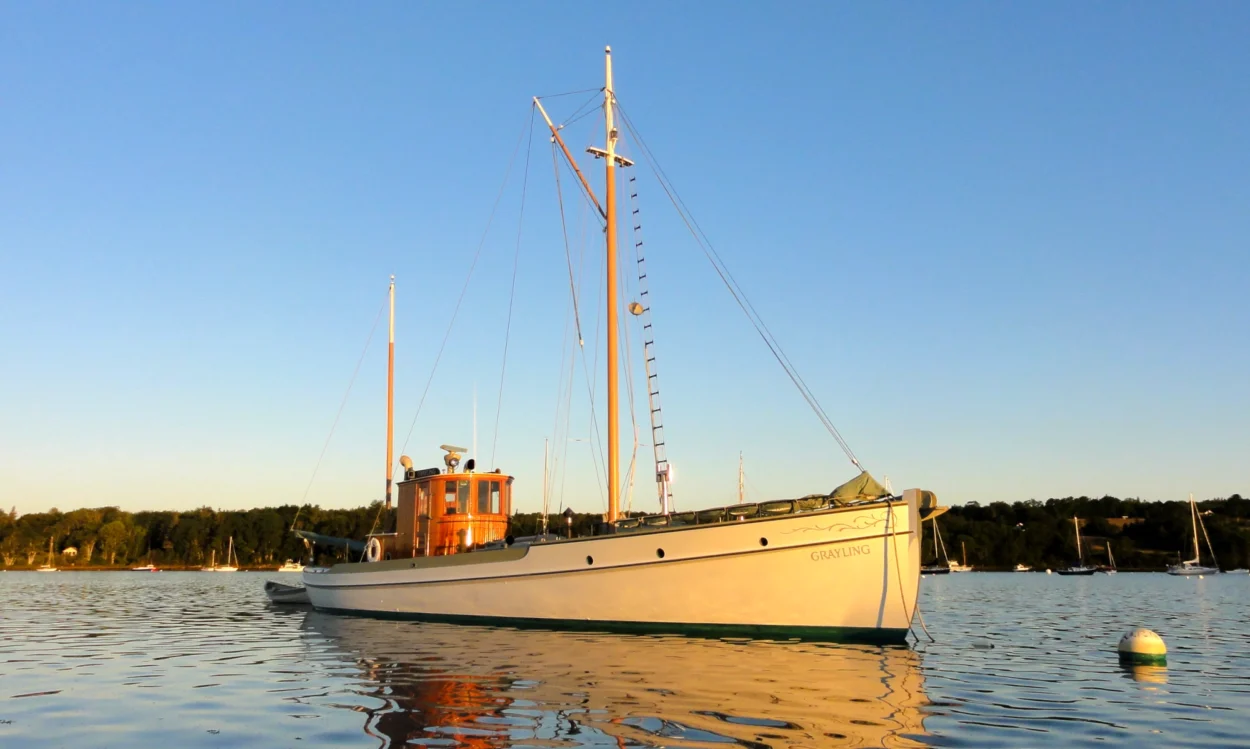
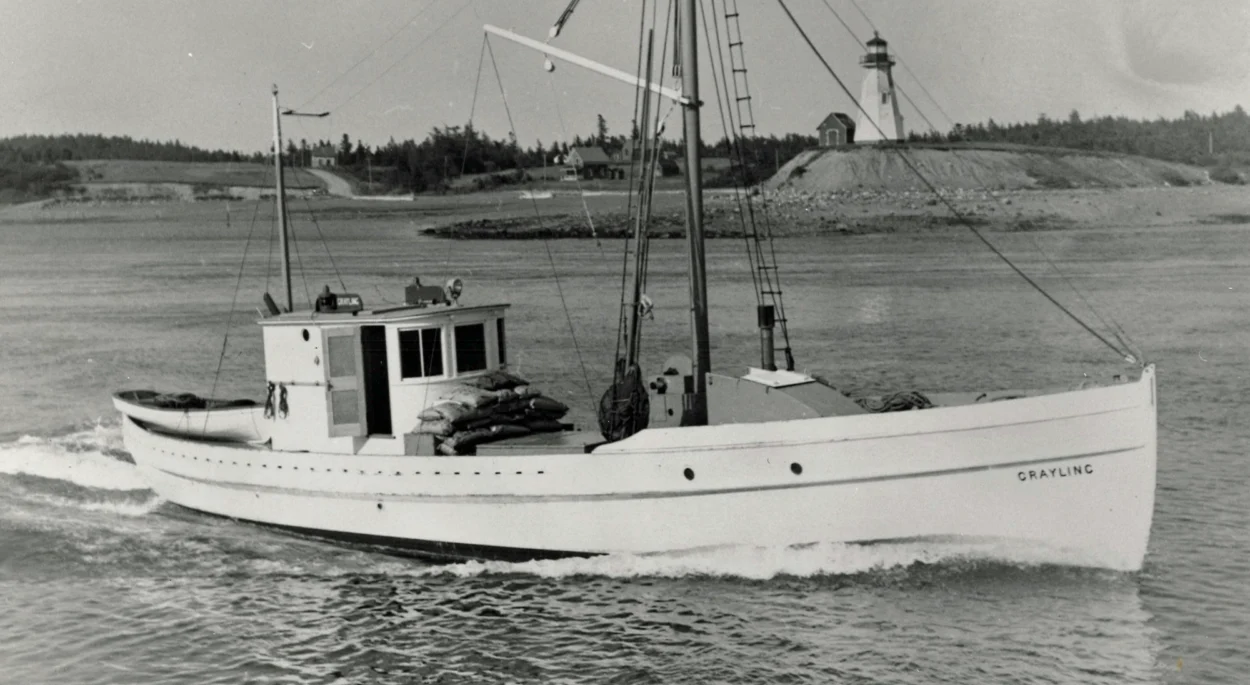
GRAYLING was built by Frank Rice of East Boothbay, Maine, for use by his brother George Rice in seining for herring and mackerel. In 1920 she was sold into the sardine industry where she spent the next seven decades as a cannery owned carrier out of Eastport, Maine.
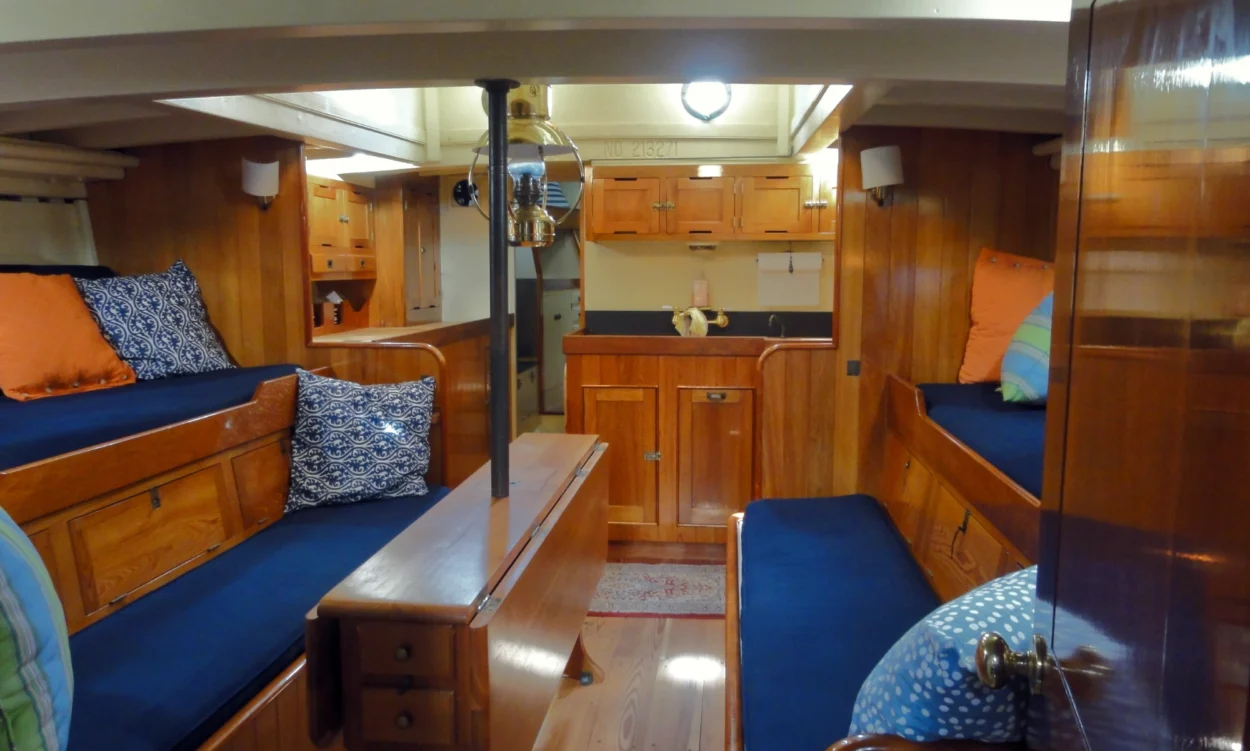
Plans were produced for GRAYLING as an historical documentation of her construction prior to her restoration and conversion to yacht use in 1996. Further drawings were made of her accommodations as converted. Many sheets were produced, including lines plan, original construction and layout, yacht accommodations, pilothouse, and sail plans.
These plans will be of interest to model builders and those involved in researching or rebuilding similar craft. Please contact Doug Hylan regarding what plans are available and their cost.
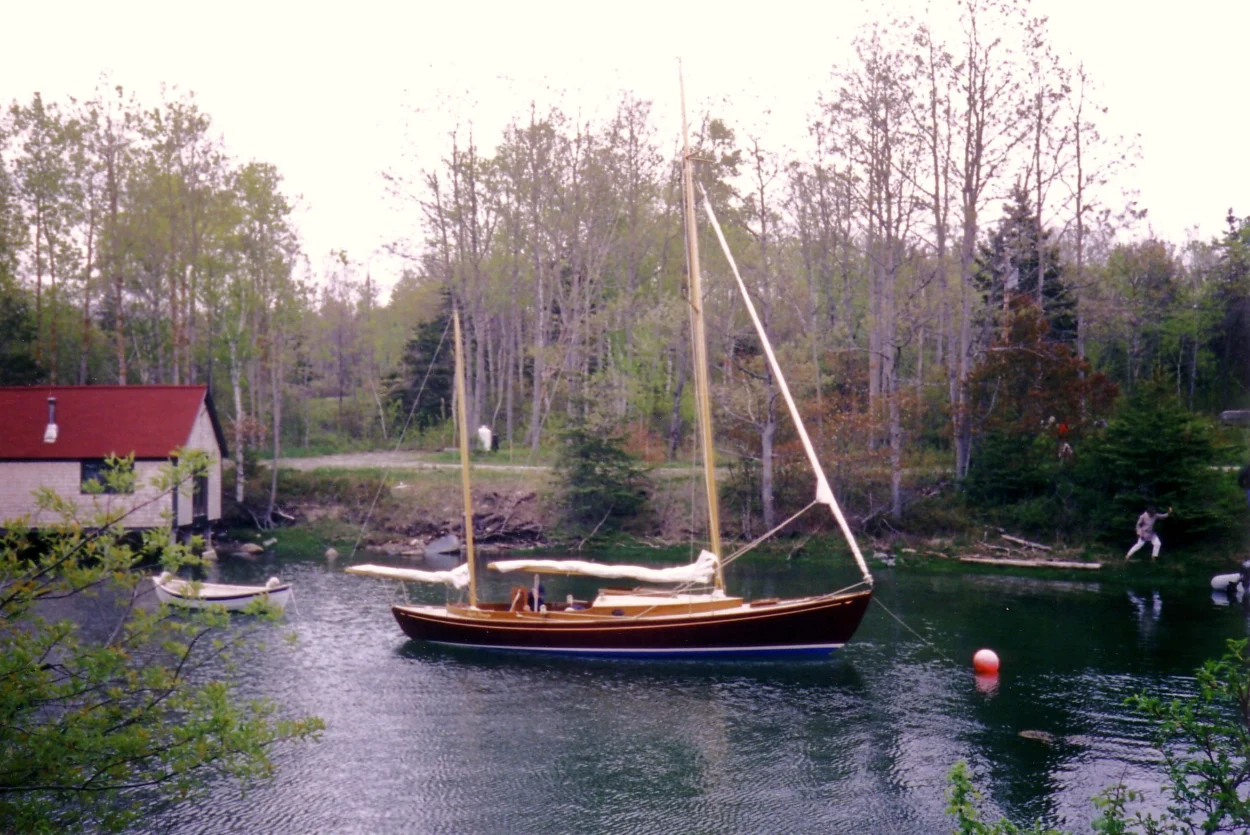
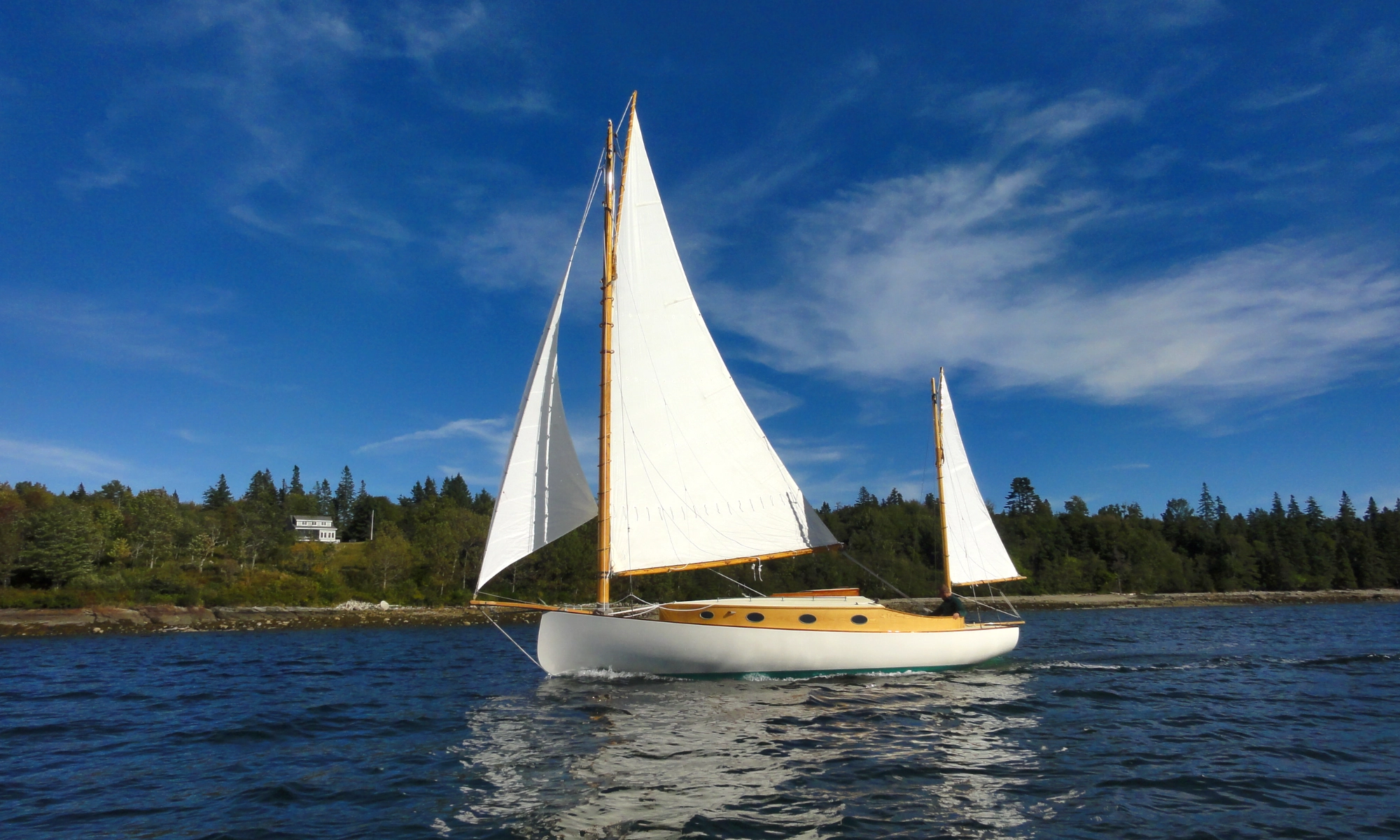
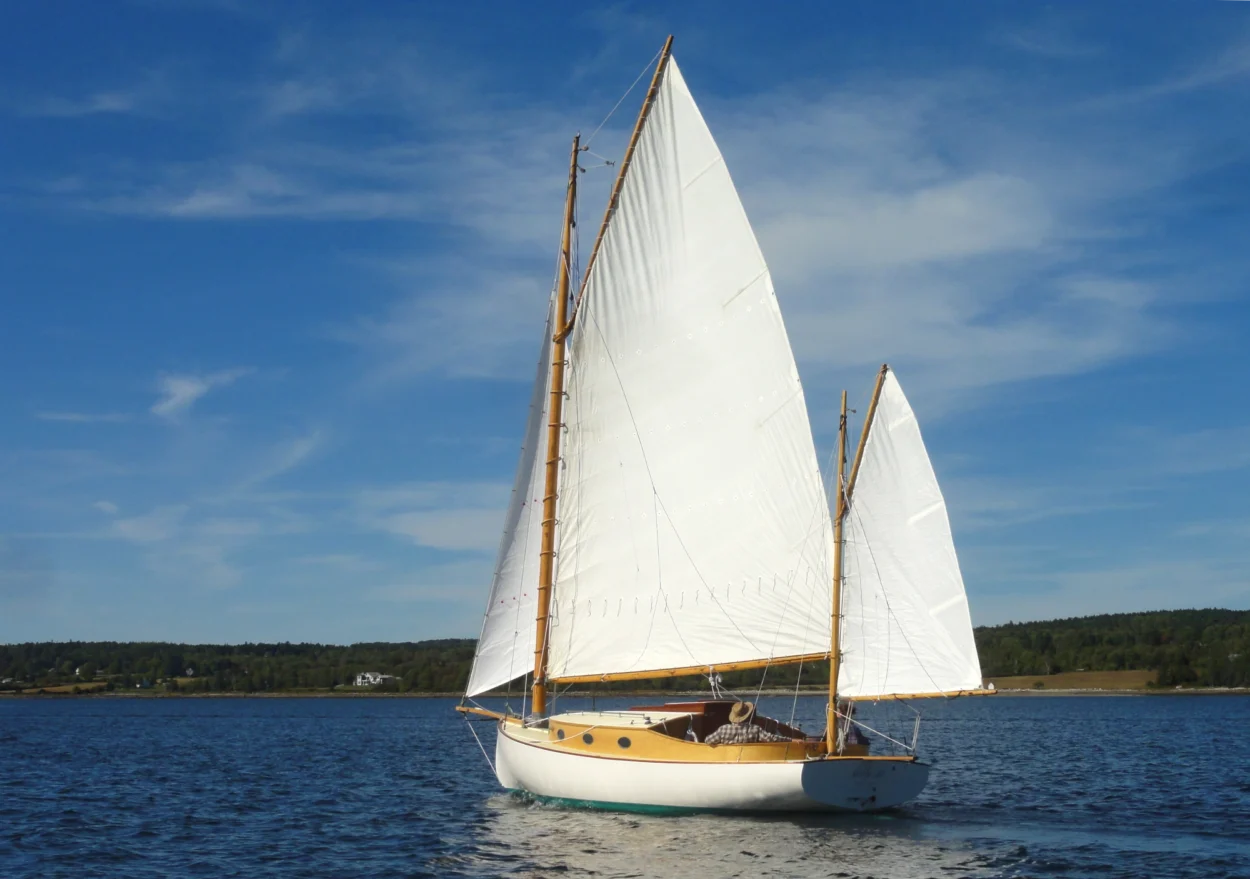
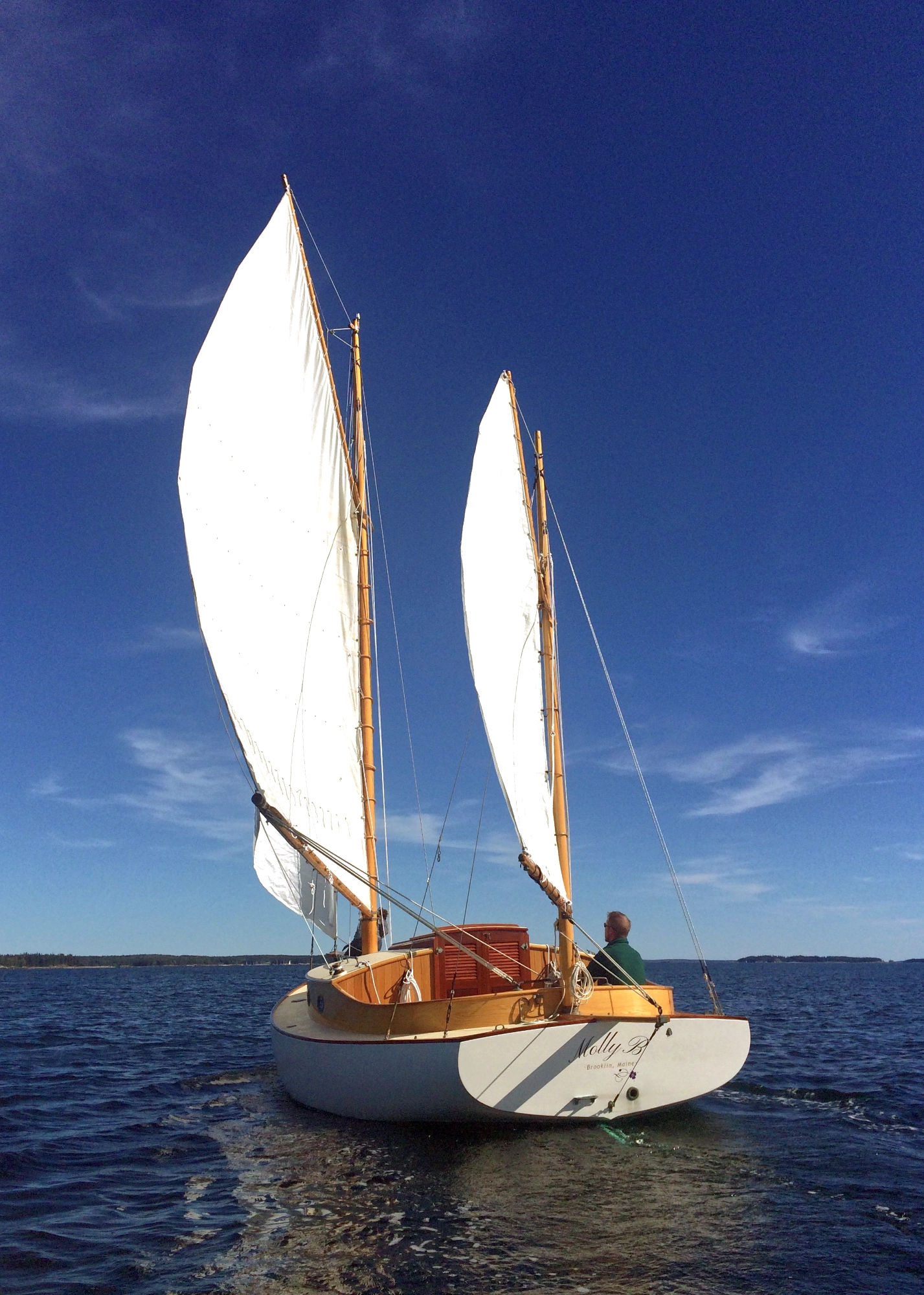
MOLLY B. is a 28′ cruising cat boat with a cat yawl rig. She was designed and built by C.C. Hanley in 1927, and was one of his last design/ builds. Her rig is quite conservative as compared with some of the extreme racing cats with which Hanley earned his reputation. Hanley was a very prolific designer in his time, even producing an America’s Cup contender that was essentially an enormous cat boat. N.G. Herreshoff reportedly once said of Hanley “he was the toughest nut I had to crack.”
MOLLY B. is a special boat with a rich history and lots of character. One of her many interesting traits is the reverse rake in the stem that was signature of many of C.C. Hanley’s designs. MOLLY B.’s restoration took place in stages beginning in 2009, and she launched, fully restored, in the summer of 2016. Benjamin River remains her sailing home, so keep a look out for her on Eggemoggin Reach each summer. She’s hard to miss!
Particulars
LOA
28′
LWL
24′ 6″
Beam
11′ 9″
Draft
2′ 6″ / 6′ 2″
In the Press
Tom Jackson wrote about MOLLY B. in the “Around the Yards” section of the Sept/Oct 2016 issue of WoodenBoat.
Ellery Brown discusses the complete restoration of MOLLY B. and similar “basket cases” that are eminently worthy of restoration in The Case for the “Basket Case” in Maine Boats, Homes and Harbors 145.
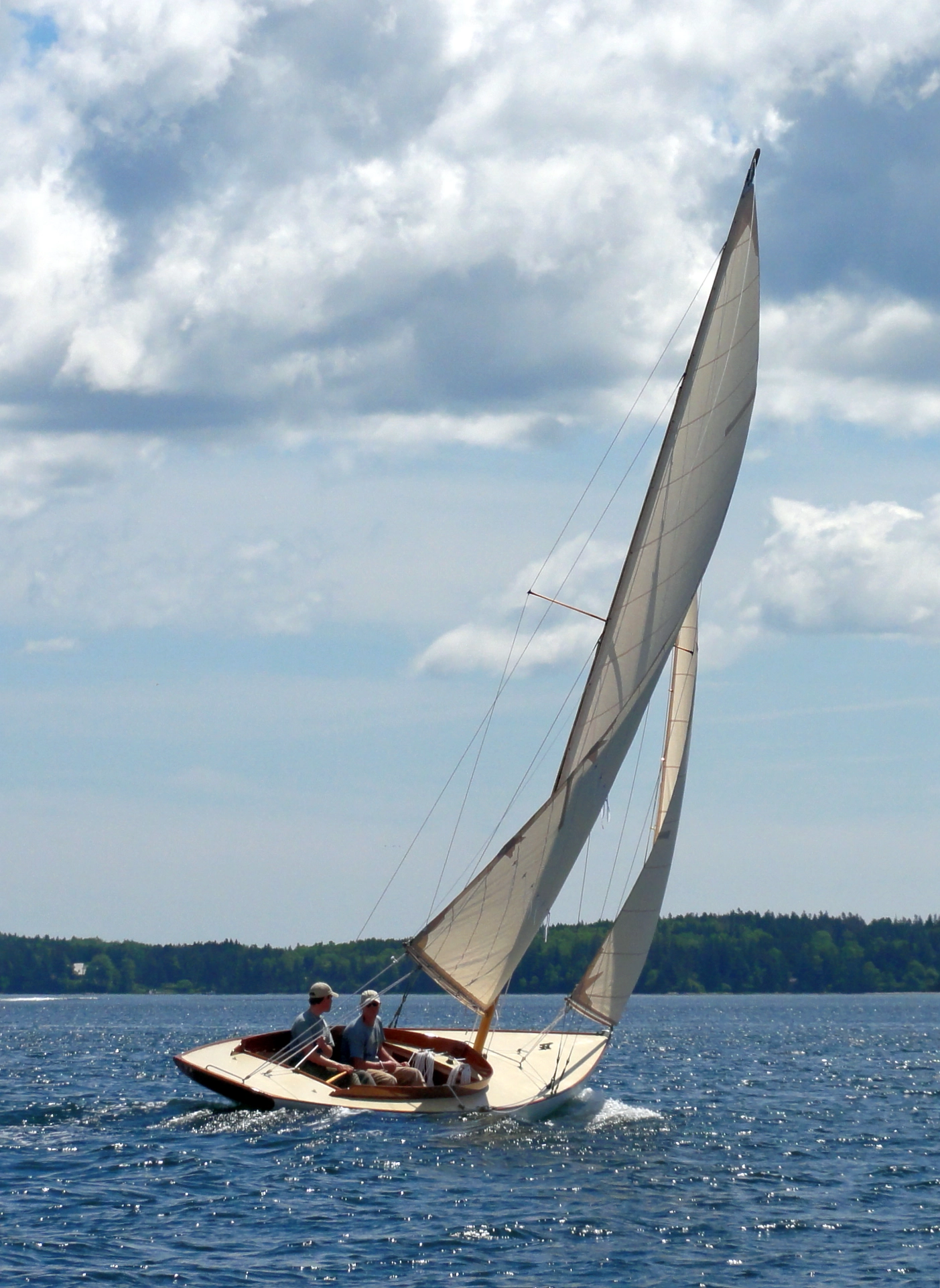
The Watch Hill 15 was designed by N.G. Herreshoff and built at the Herreshoff Manufacturing Company beginning in 1923. The design evolved out of the Buzzards Bay 15. Some of the differences include: slightly increased freeboard, pointed instead of round cockpit coamings, and a marconi instead of gaff rig.
This WH-15 (HMCo hull # 890) was originally called TOBASCA, then BLACK ARROW, GERALDINE, and most recently KRISTIN.
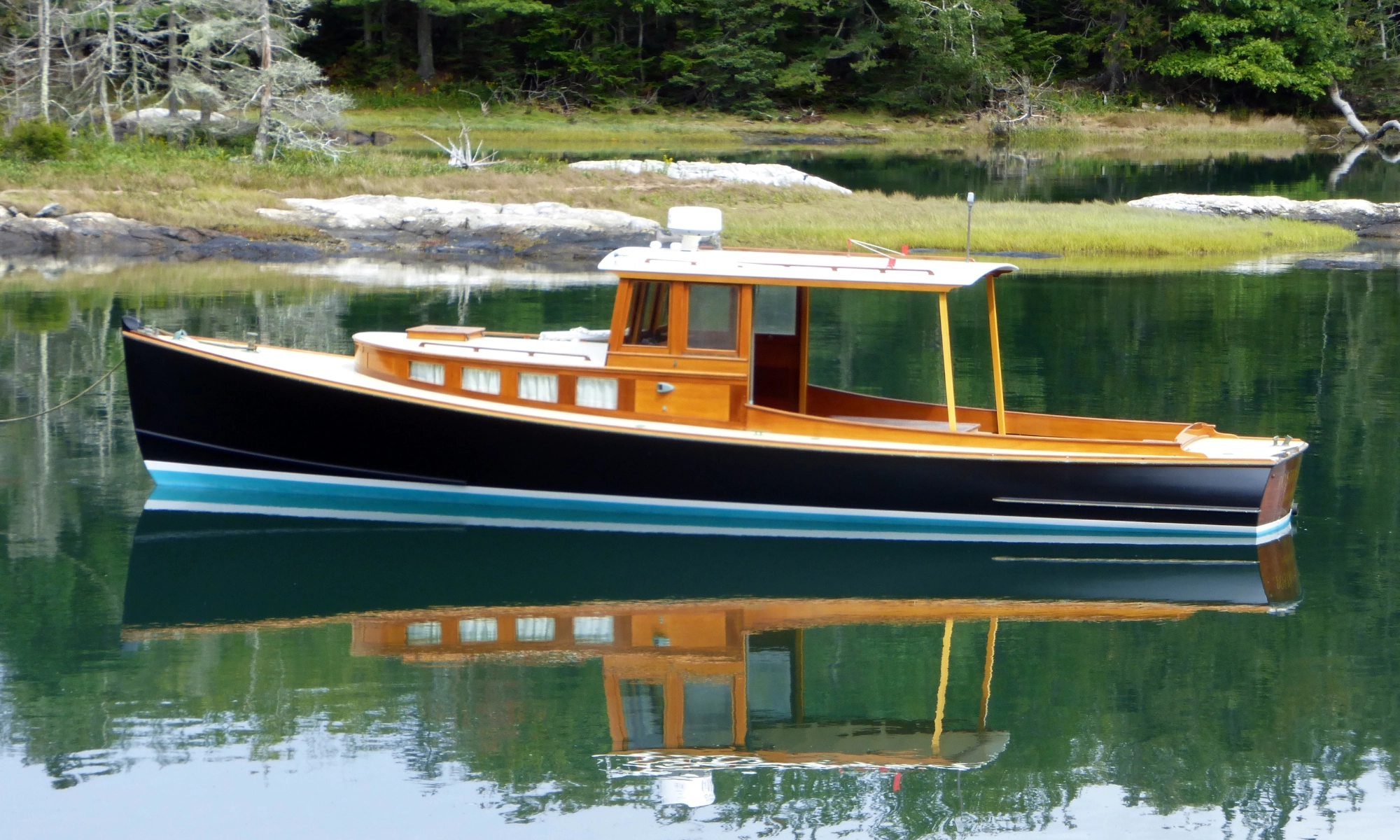
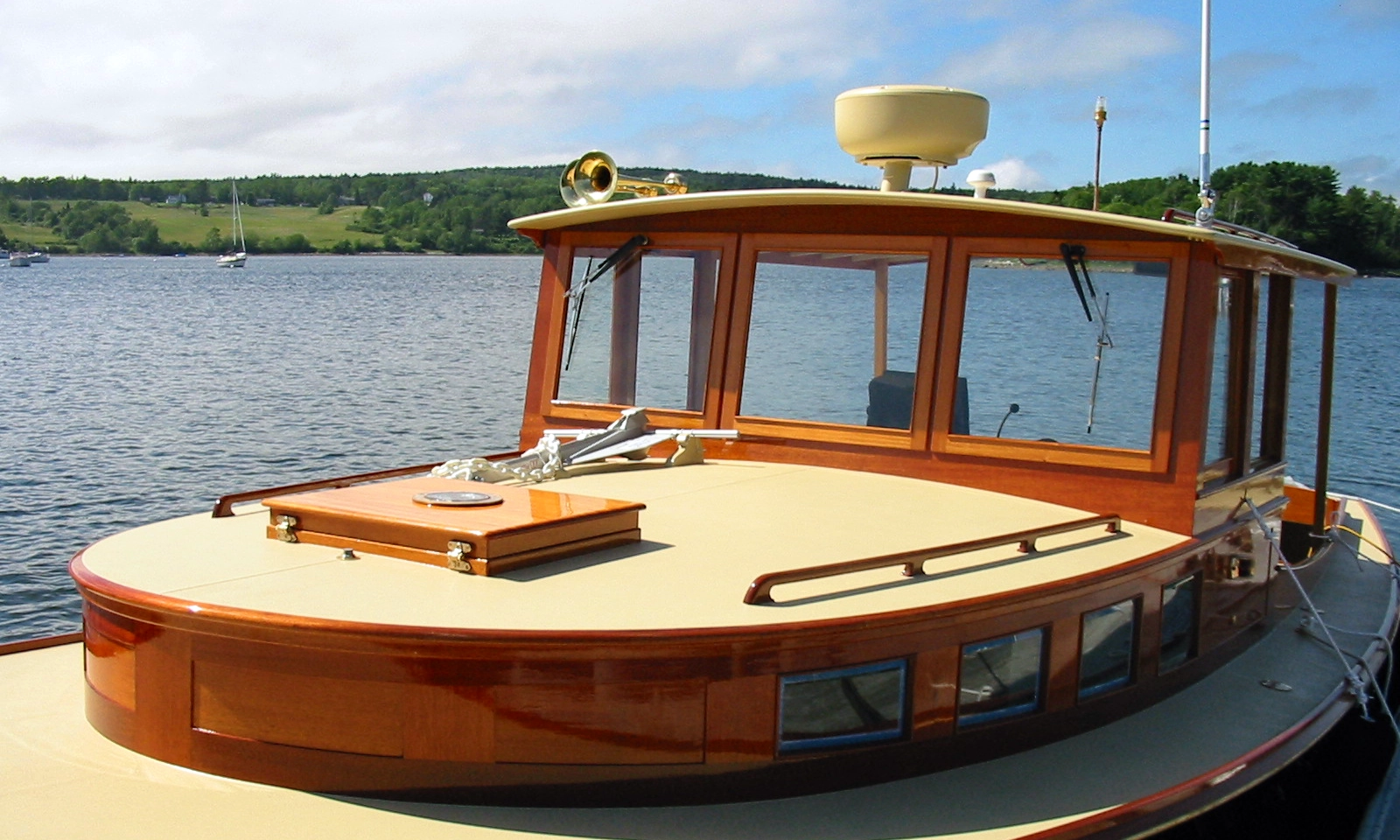
POSTHASTE IV is a 34′ lobsterboat-inspired day cruiser.
Her owner, an experienced Maine yachtsman, came to us with the basic concept, which we then took from drawing board through construction to final launching and shakedown.
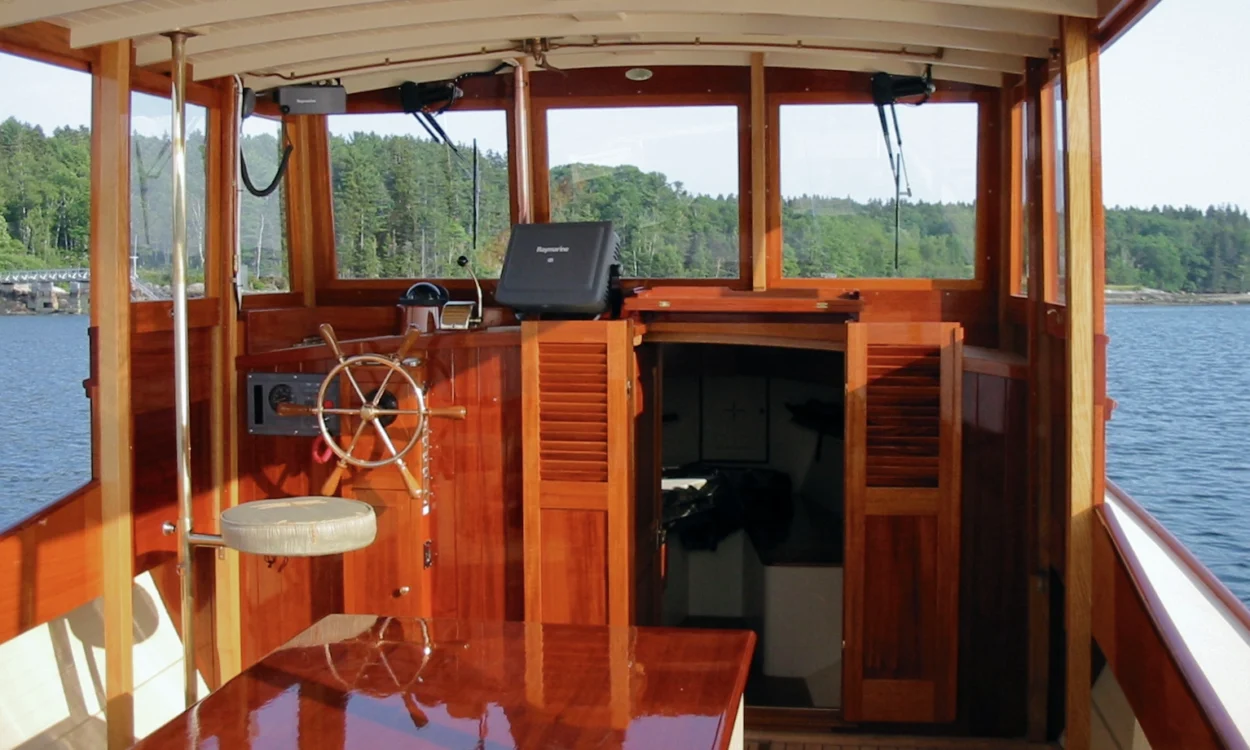
The cockpit provides a beautiful environment to explore the coast or simply enjoy an evening at anchor. A bronze wheel and custom helmsman’s seat provide a traditional look, and full electronics were included: radar, GPS, depth sounder, and VHF. Varnished mahogany and oak complement the teak sole.
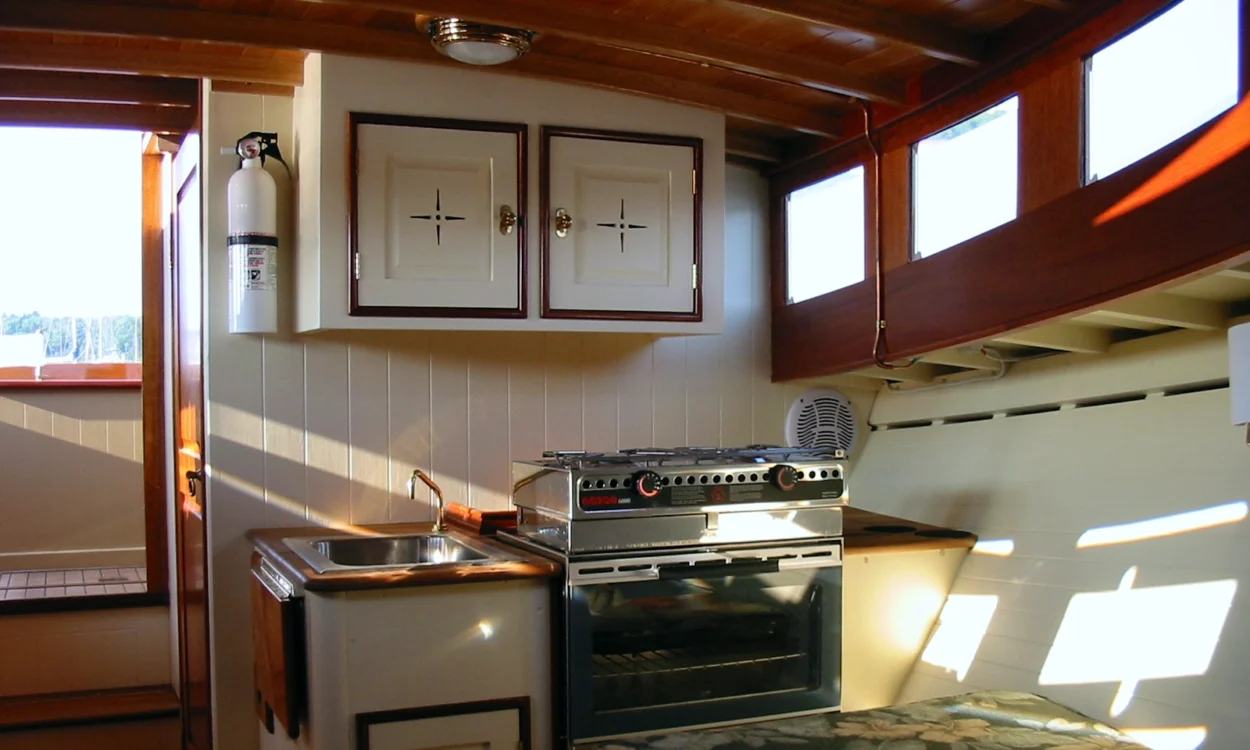
Satin varnish and a custom soft off-white are used extensively below decks. Large beveled glass windows – they’re too large to really be called “ports” – add to the light and airy interior.
The curved cabin sides were laminated from mahogany with inner laminations of Meranti plywood for stiffness and stability. They were then varnished inside and out. Curved windows were custom made for POSTHASTE with cut bevelled edges.
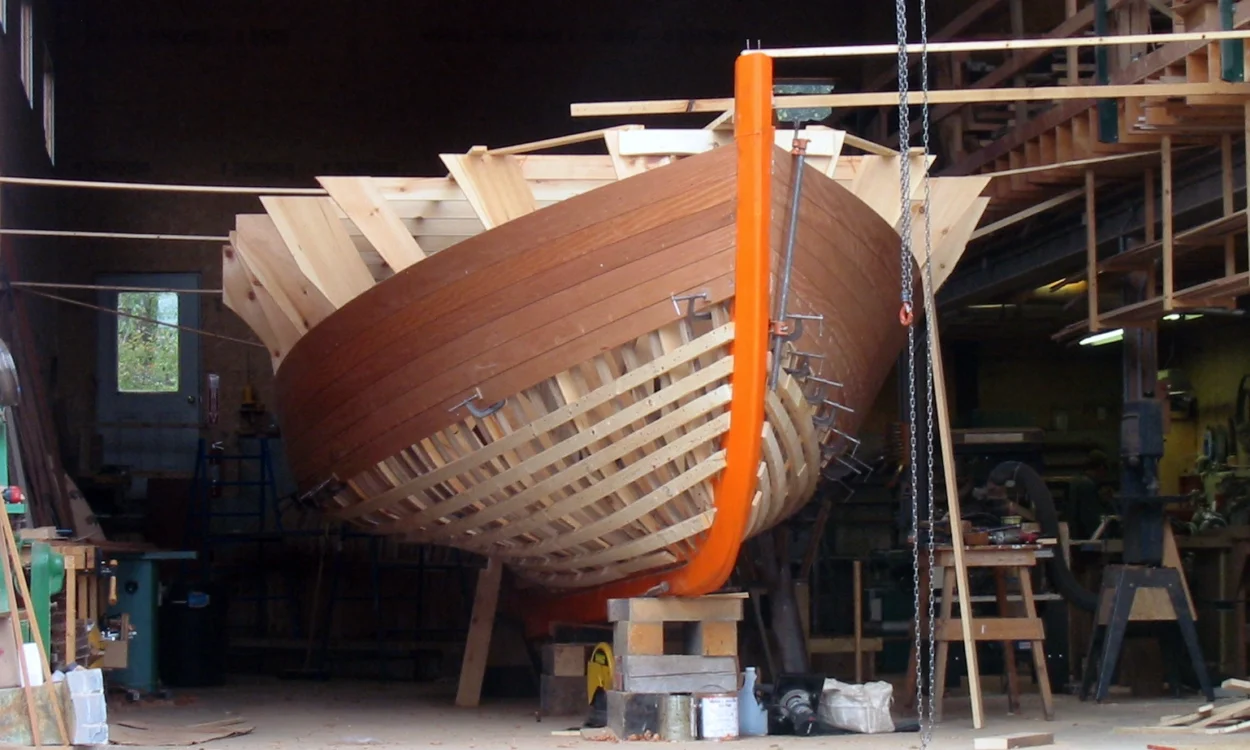
POSTHASTE IV was built in traditional lobster-boat fashion, with steam-bent white oak frames bent inside ribbands. The planking and backbone were both made from sustainably-harvested Central American hardwoods: the planking is Wana and the backbone is Angelique. As planking proceeds, the ribbands are removed. Planking started at the sheer and moved down the hull. Shortly after this photo was taken, we began planking from the keel up, leaving a “shutter plank” as the final plank to put on.
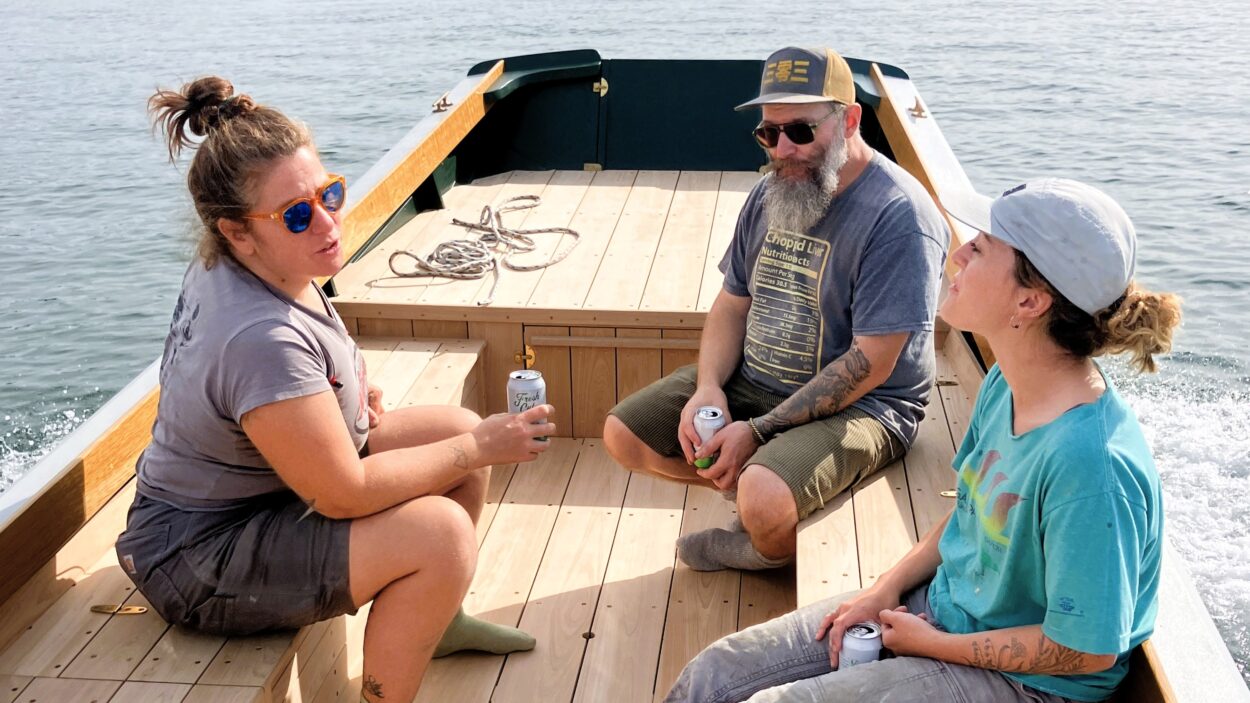
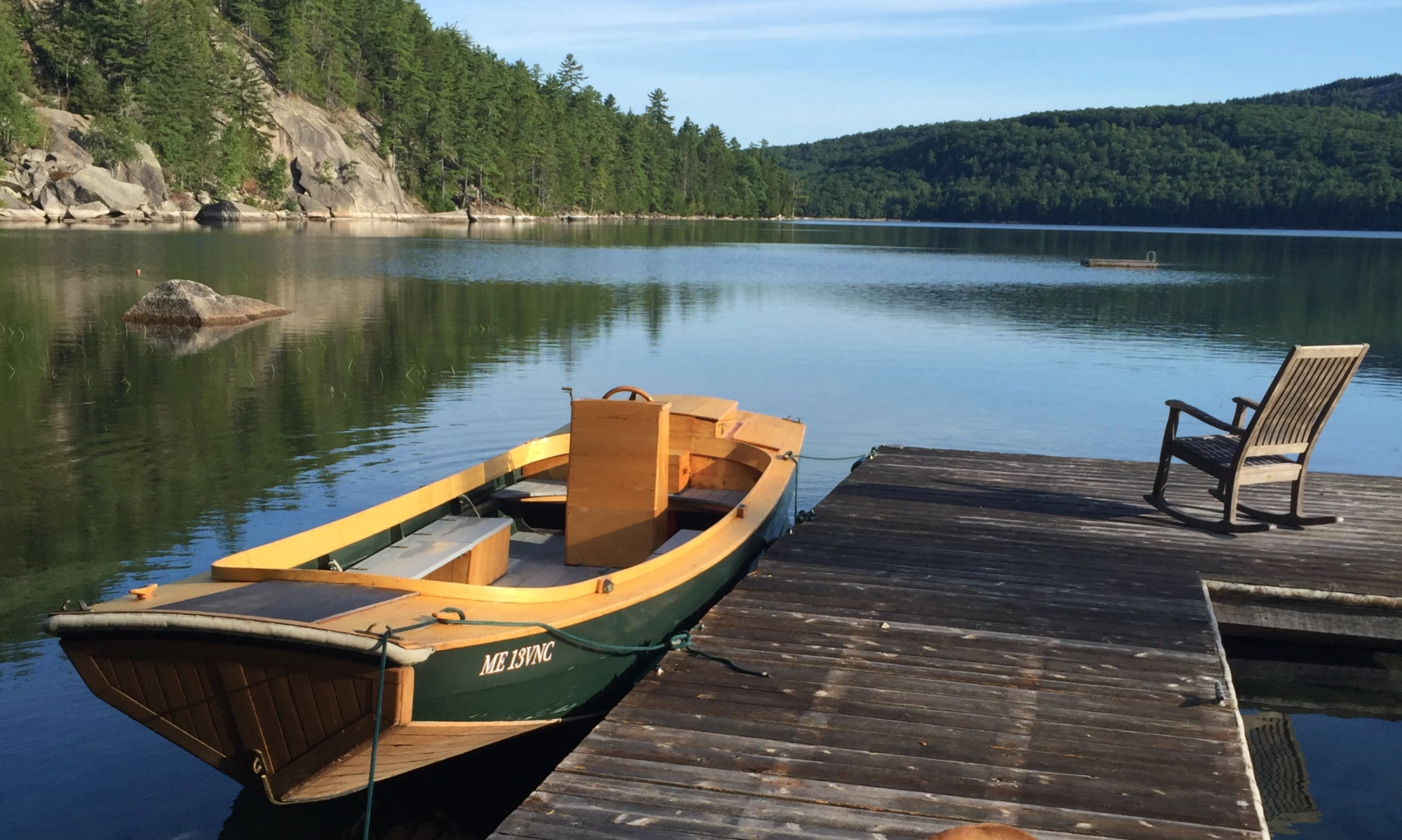
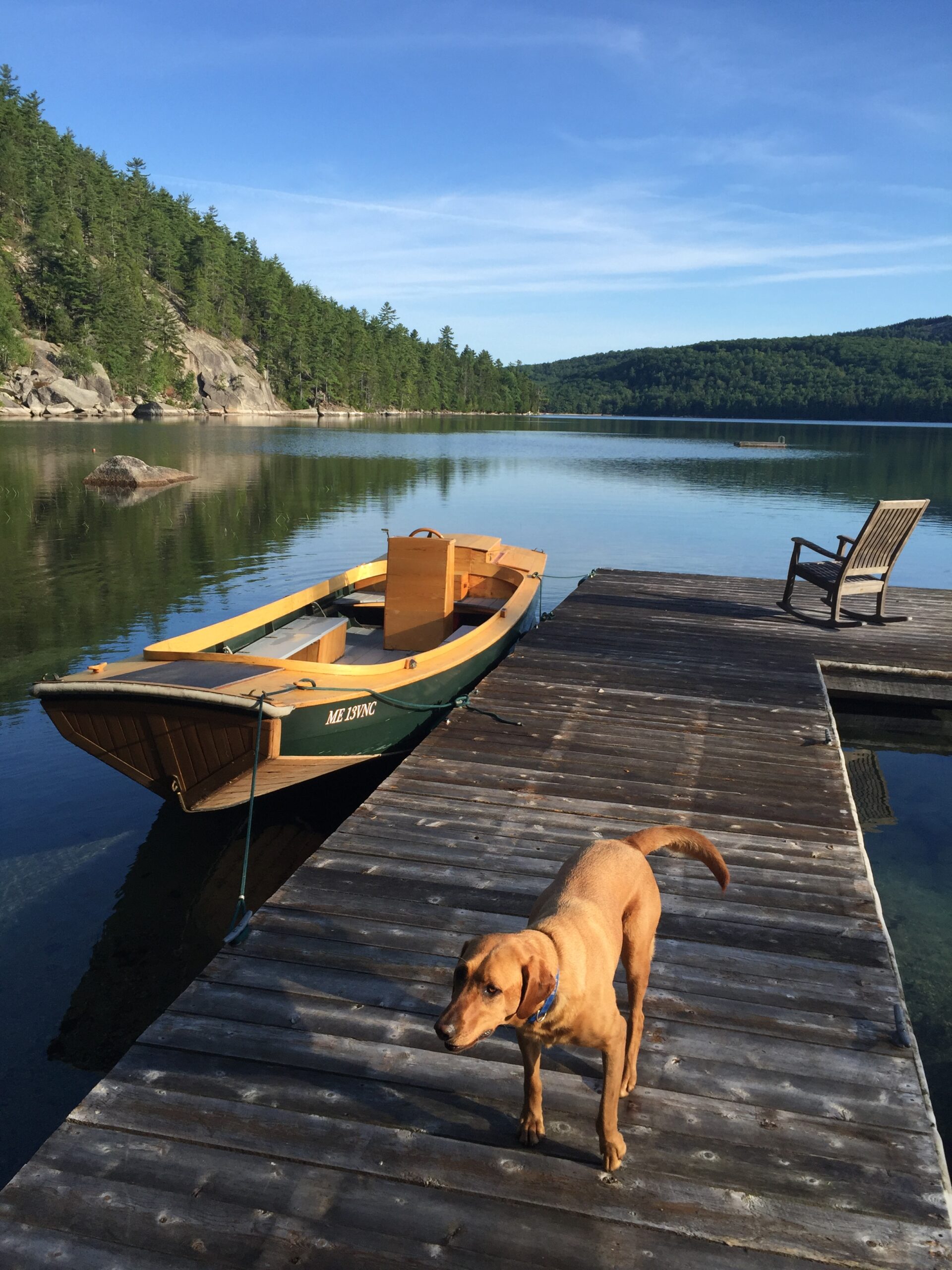
SARDINE’s owner enjoys his Harry Bryan-built garvey on a crystal clear pond in Downeast Maine. The beloved boat is the epicenter of cherished family gatherings throughout the summer. SARDINE has always been quiet with a 4-stroke Honda in an insulated motor well. But switching to electric propulsion has provided the new and remarkable experience of silent, emissions-free swimming, stargazing, and exploring on the pristine pond.
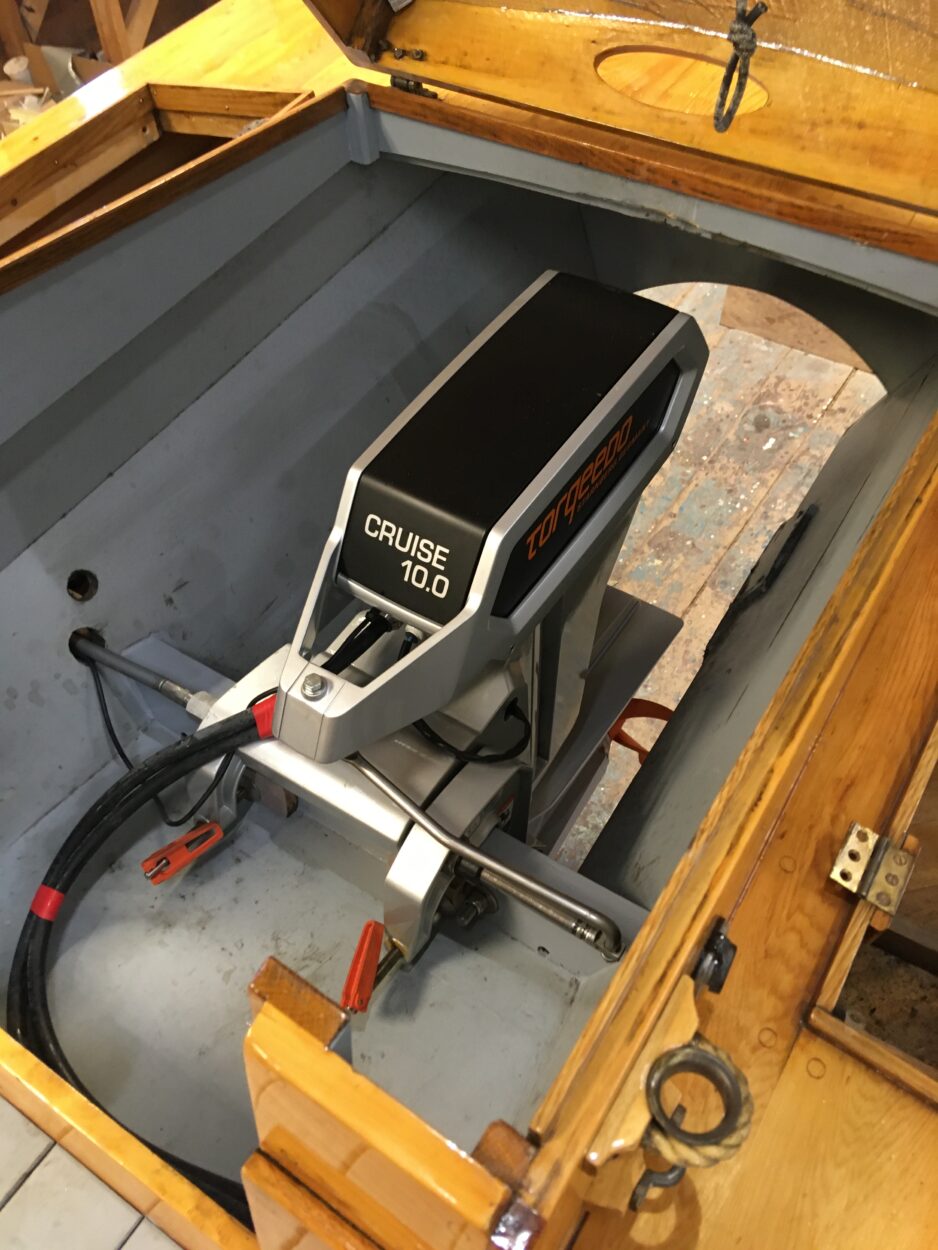
We installed a Torqeedo Cruise 10.0 with two 5 kW Torqeedo lithium batteries and a 240V fast charger. With her new electric system SARDINE was capable of better acceleration and slightly better top speed than with her 20 hp Honda.
A pond/ lake house like this has proven to be the perfect venue for the latest developments in “e-mobility on the water.” Working with a talented crew from Nate Holyoke Builders and master electrician Matt Davis, a 240V shore power post was built on the dock that is in keeping with the aesthetic of the cottage. After an excursion on the pond, SARDINE can plug in as easily as making off a dock line, and can charge her batteries from flat in 2 hours.
Photo / Video produced by Hemmings House Pictures Ltd., an impact film company.
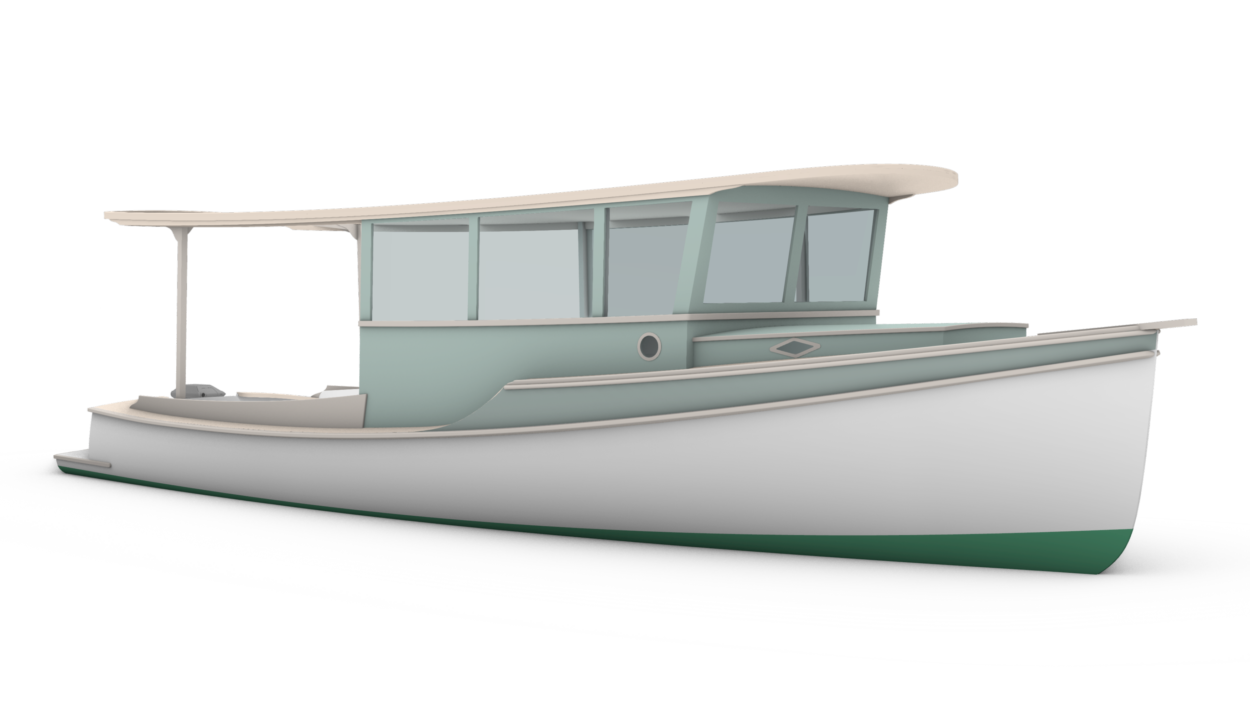
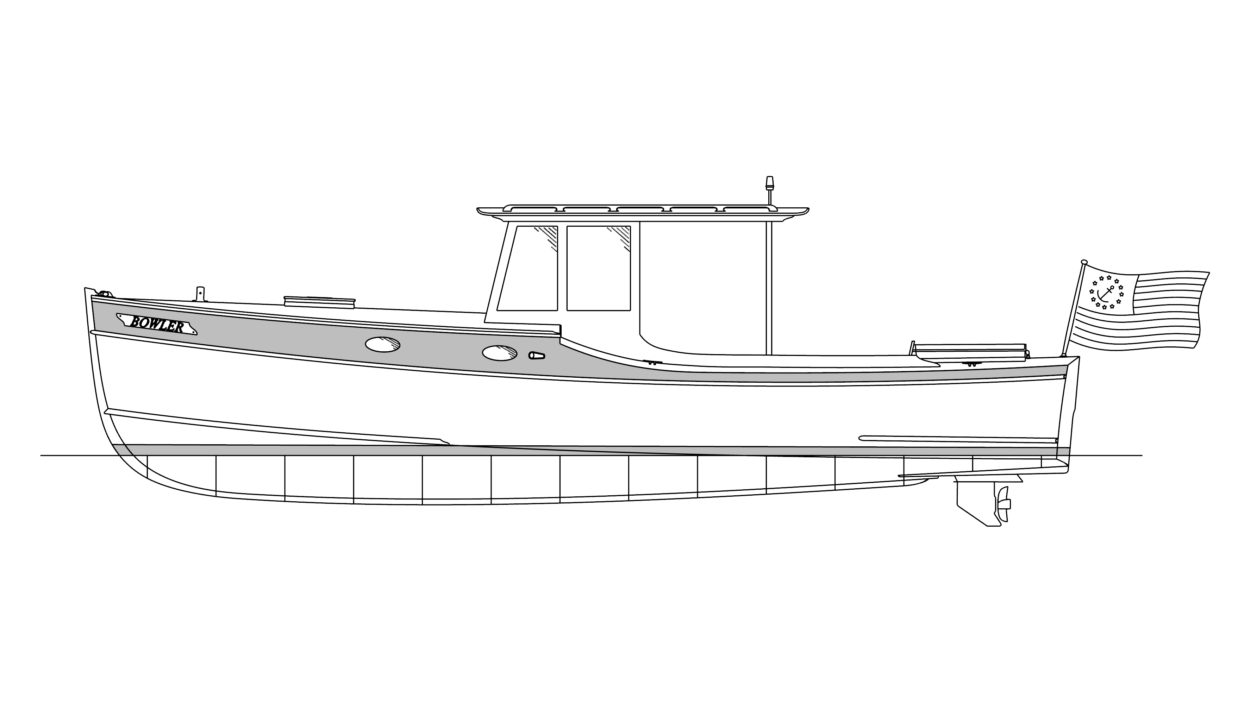
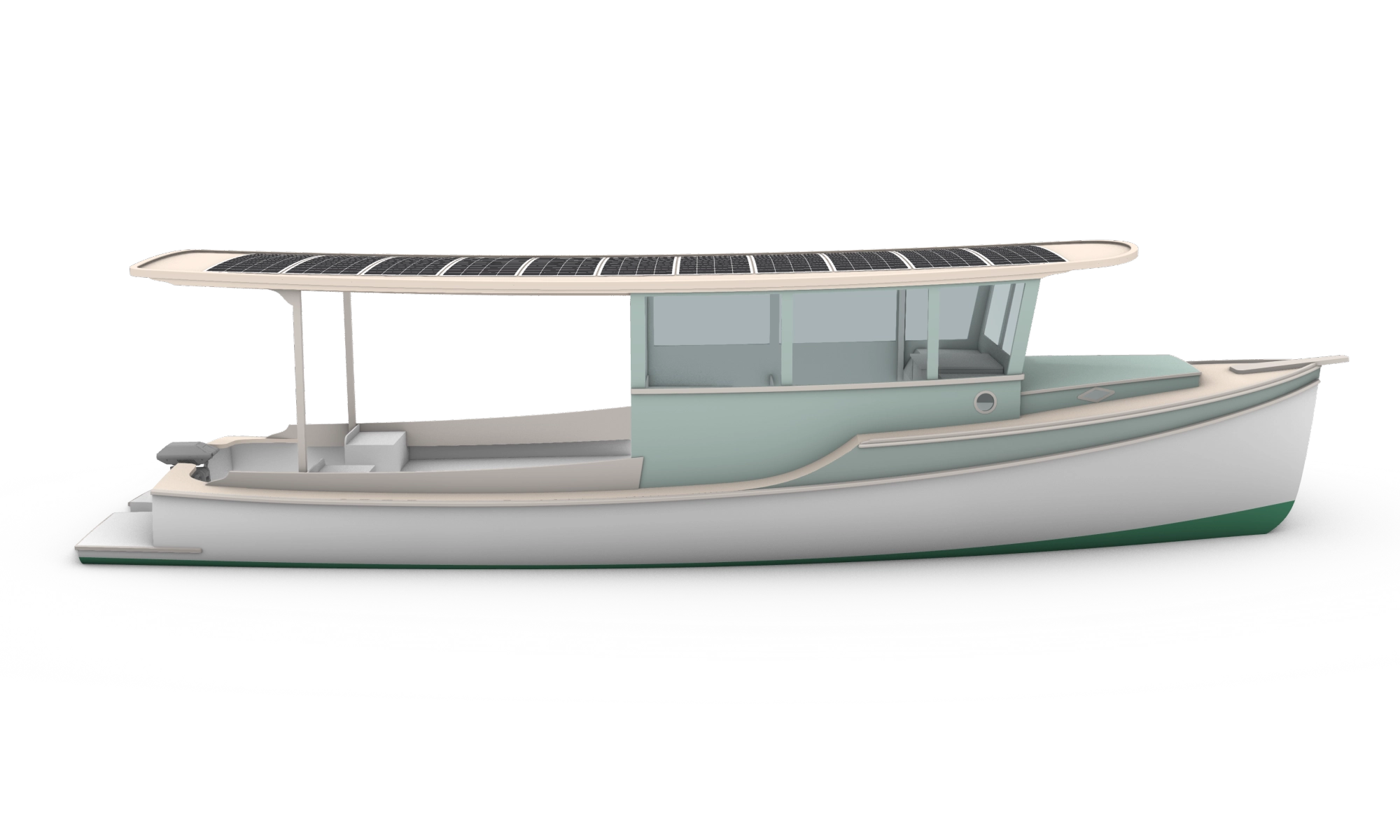
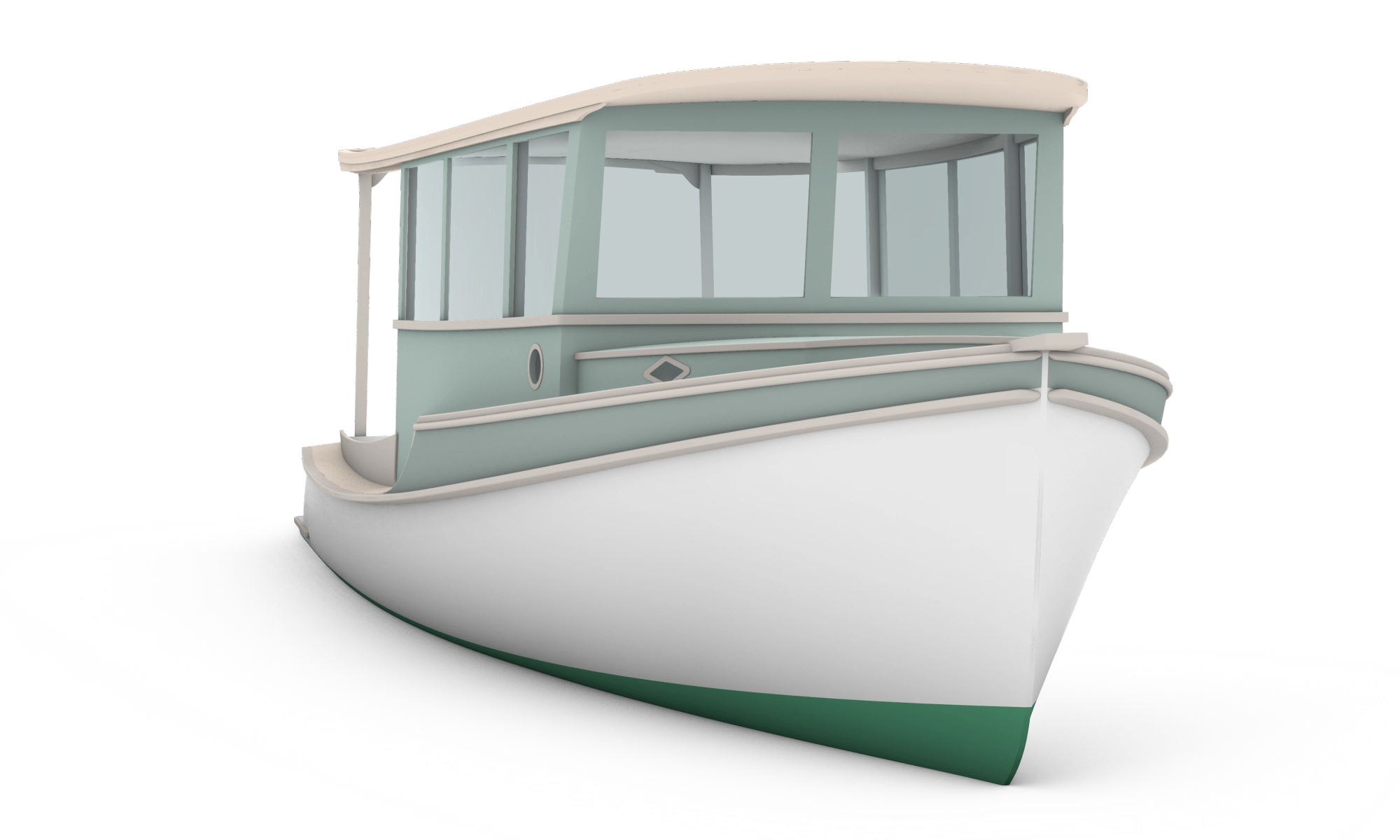
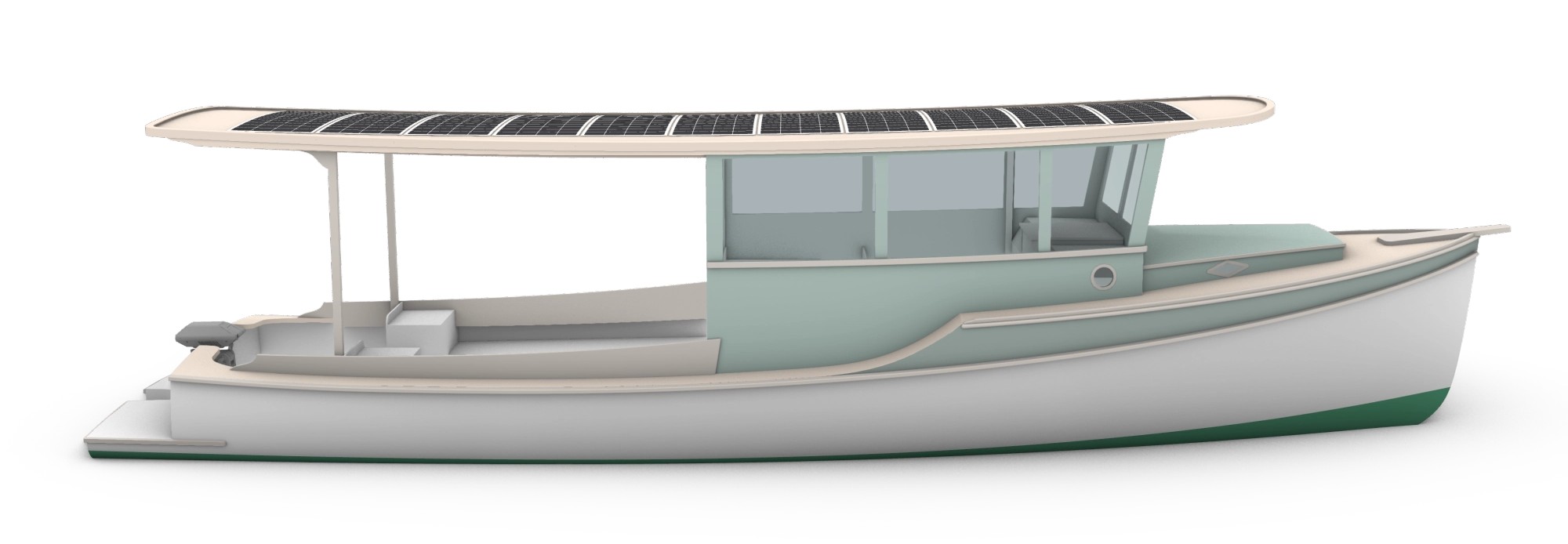
Early in 2024, we were approached by an experienced Australian boatman who had heard of our work with electric propulsion. He sent along a design brief that demonstrated that he knew boats and was familiar with the advantages and constraints that go with marine electric propulsion. We don’t often take design commissions for construction in other shops, but this one meshed perfectly with my interest in the possibilities for low impact, quiet cruising.
Historically, the development of power boats has always been about going faster. Cheap petroleum and advances in internal combustion fostered this trend, despite the fact that high speed boating is among our most energy intensive and polluting pursuits. Batteries still have a long way to go before they can pack the power density of a good sized fuel tank, but low speed boating can be very efficient indeed.
Hull shapes that are optimized for high speeds are inefficient at lower speeds — you have to go back almost 100 years for designs that are optimized for the upper hull speed range that is so wonderful for electric boating. Atlantic Canada’s Cape Island boats and Sam Crocker’s small fishing vessels were the mode for the hull shape for this design. A large solar canopy will allow true solar sailing on the sunny days around the summer solstice, extend battery range, and mean fewer stops for marina shore power. As batteries get lighter and cheaper, each of our new electric projects seems to include more of them.
The design brief for this boat called for a boat large enough for spartan cruising for one or two people, with a beam narrow enough to avoid extra permits on Australian roads, and light enough to be towed behind the owner’s vehicle. A large solar canopy and traditional styling were also called for. With these parameters set, the rest is just details! Construction will start in the winter of 2025, at Denman Marine in Tasmania.
At Hylan & Brown, we feel fortunate to have found a group of committed people who are interested in slowing down and enjoying the peace and quiet that comes with electric power boating. We enjoy the challenge of working with a variety of electric propulsion suppliers to figure out the best components to meet their needs and work hard to keep abreast of the best combination of new and reliable in this rapidly evolving technology.
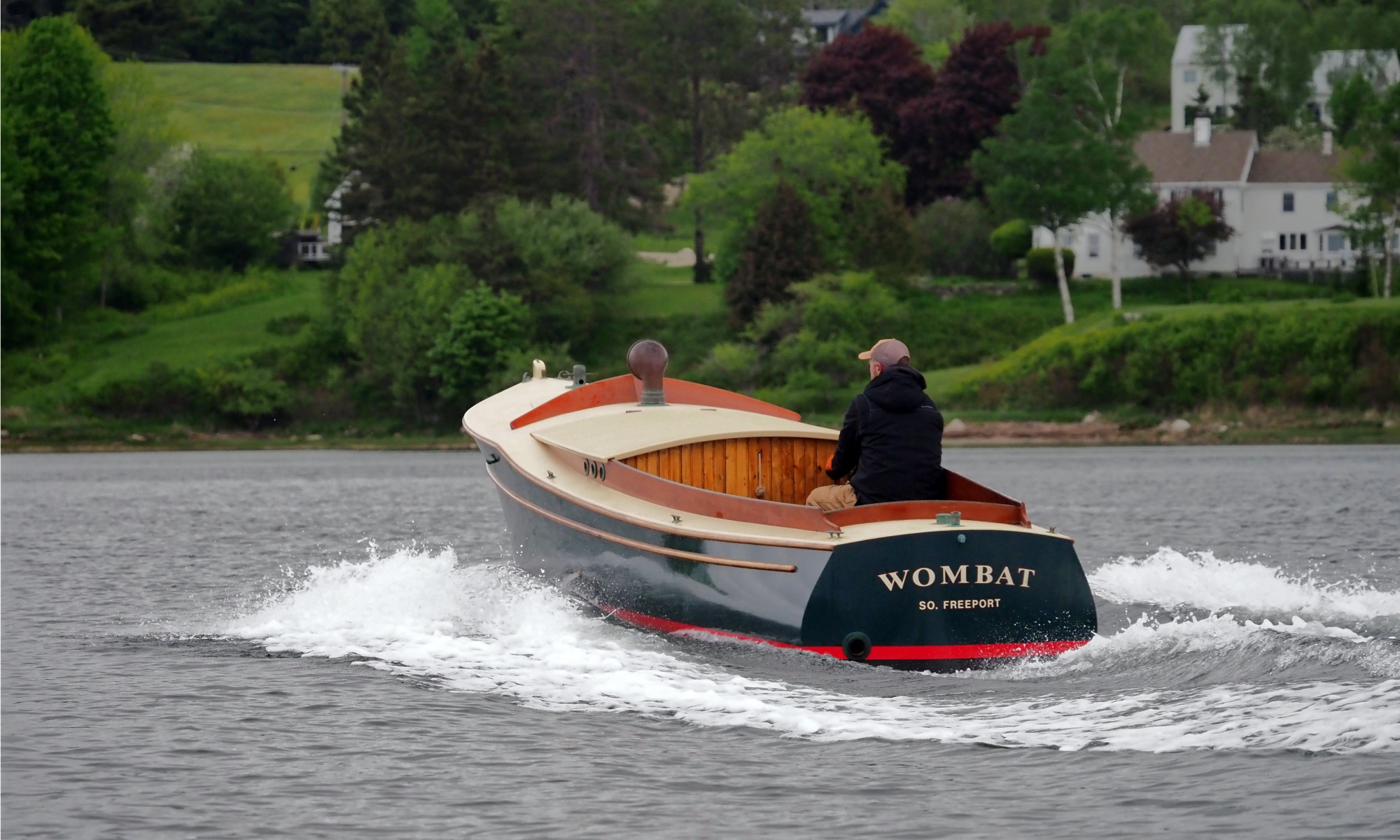
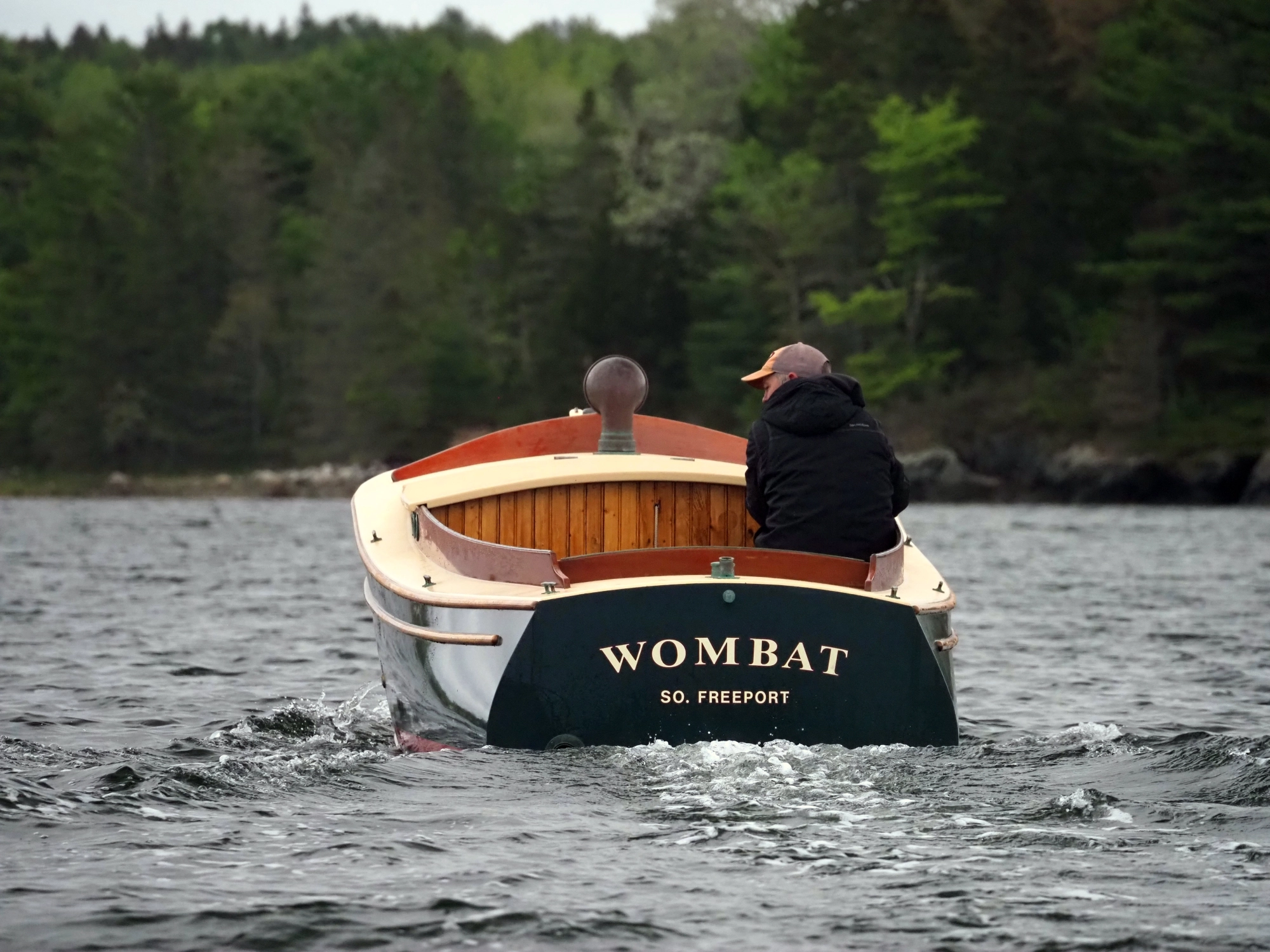
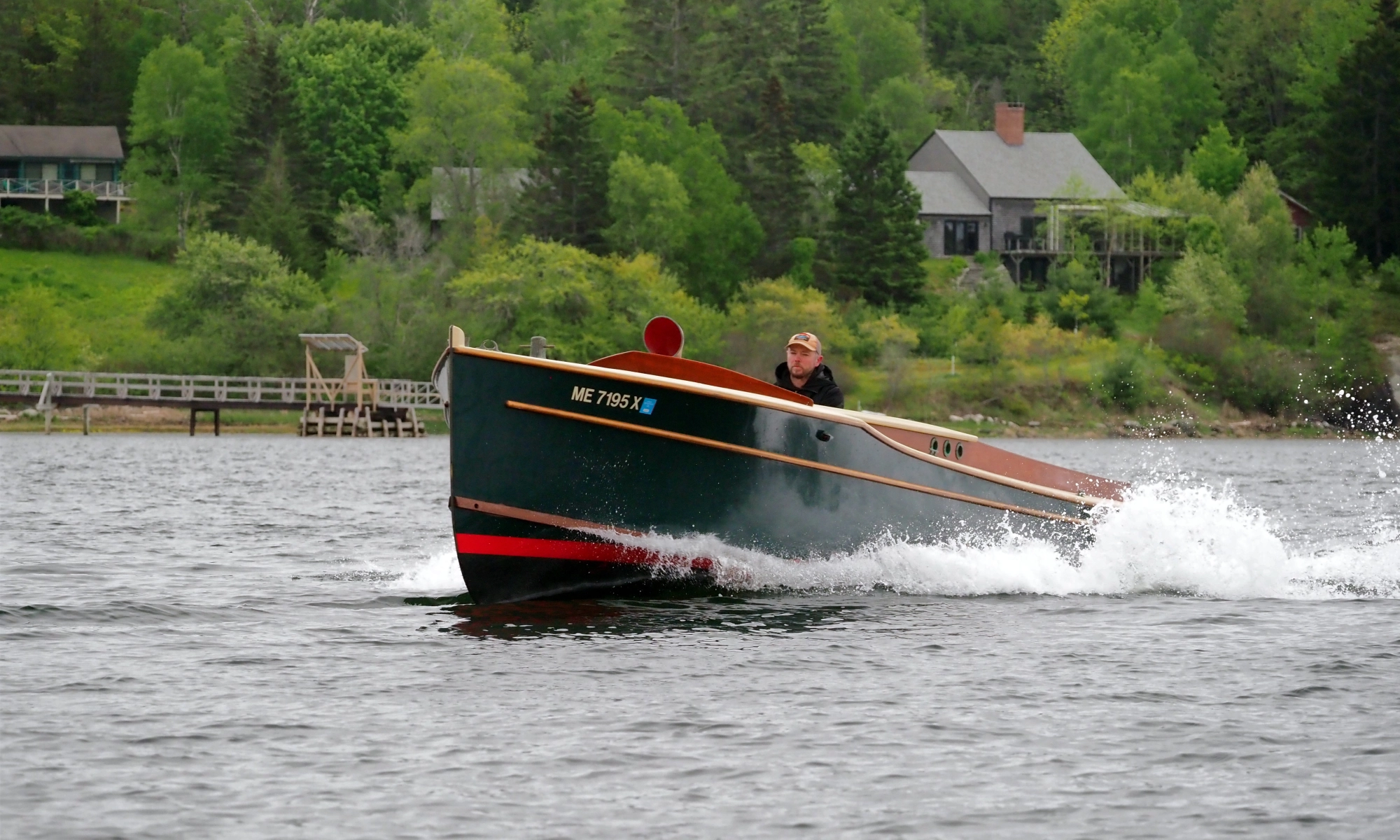
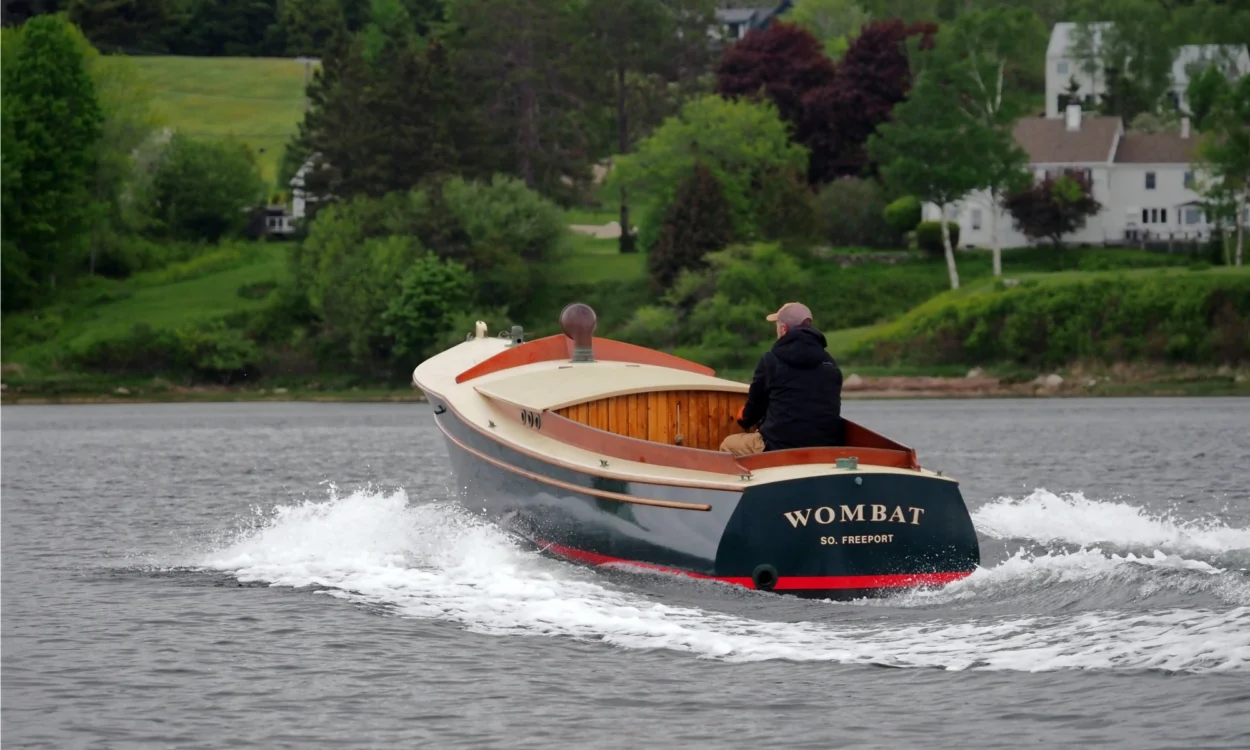
WOMBAT is a cold-molded version of William Hand’s Piute III design, built by H&H Boat Works in 1992. When she arrived at our shop, she had already been converted to electric propulsion, but her owner was not getting the reliability or performance he expected. The existing system overheated frequently, and the temporary fix was to reduce the motor’s maximum output from 15 kW to 10 kW. Even before that reduction, the boat had fallen short of his speed and range goals.
With those goals in mind, we designed a new system to deliver the power, range, and confidence he was looking for. Estimating the right motor size required some careful judgment: WOMBAT’s hull design dates back to the early era of planing boats, and the old motor never produced enough power for meaningful testing at higher speeds. Our experience with Harry Bryan’s Handy Billy – a similar boat we have built several times – provided the best guide. Though those boats can typically reach about 15 knots with modest power, WOMBAT is longer and more than twice as heavy. After weighing the variables, we determined that 40 kW was the right target.
For the repower, we selected ePropulsion’s I40 inboard: a water-cooled, 96V, 40 kW motor, paired with two ePropulsion G102-230 batteries providing 23 kWh each. Nautilus Marine supplied a new stainless steel shaft and bronze propeller. In anticipation of higher speeds, WOMBAT’s owner also asked us to add full-length spray rails and wedges.
Sea trials in late May confirmed the system was the right fit. After a small propeller pitch adjustment, WOMBAT performed flawlessly, reaching nearly 17 knots at full throttle. She trimmed well on plane with help from the wedges, and stayed dry in all but the steepest chop.
Now back in southern Maine, WOMBAT is ready for the final carpentry phase, where her owner will build cockpit benches around the batteries and box in the prop shaft through the cabin space. We’re looking forward to seeing those finishing touches come together – and even more to seeing WOMBAT back on the water, delivering the quiet cruising, simple operation, and satisfying speed her owner envisioned.