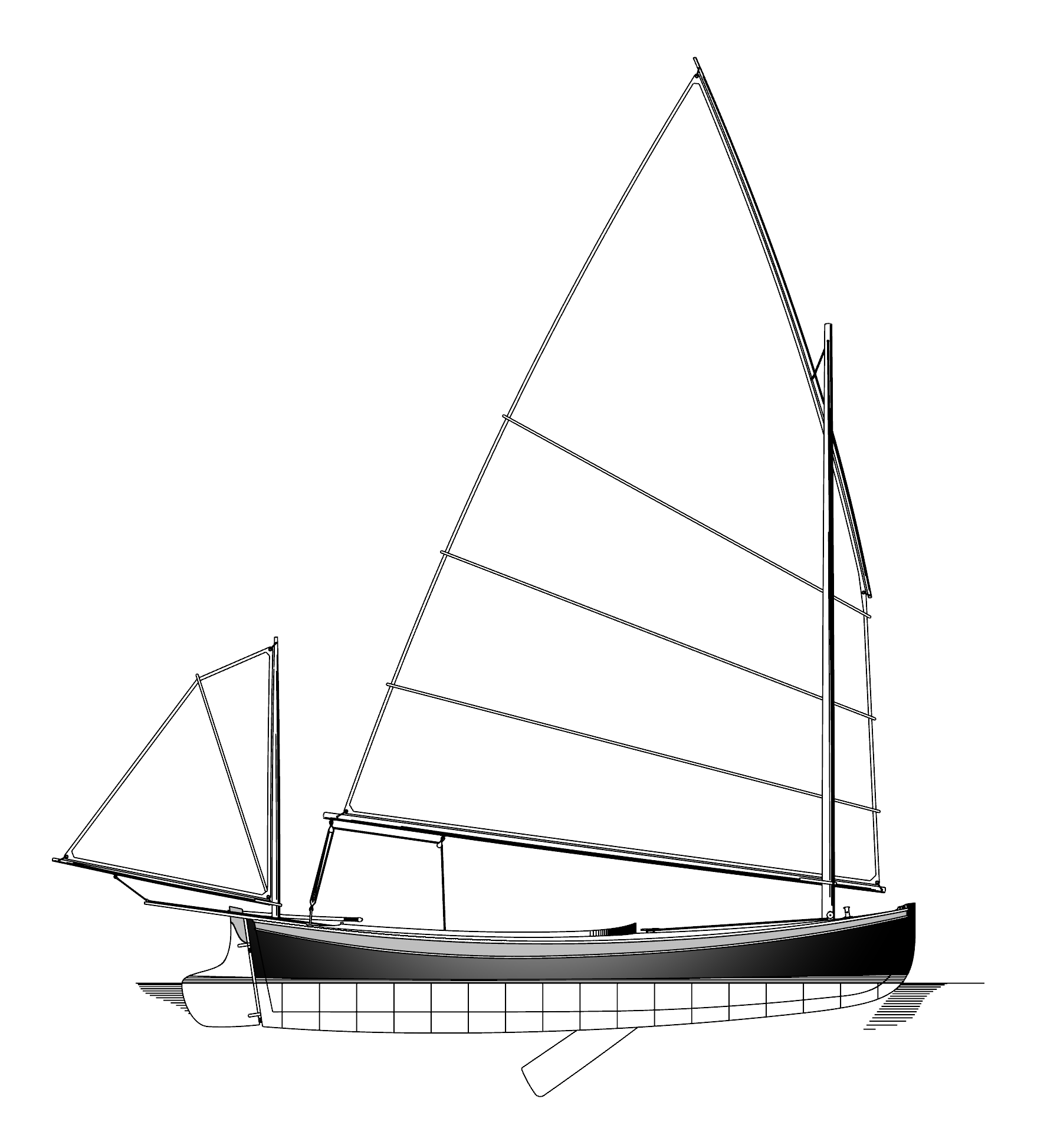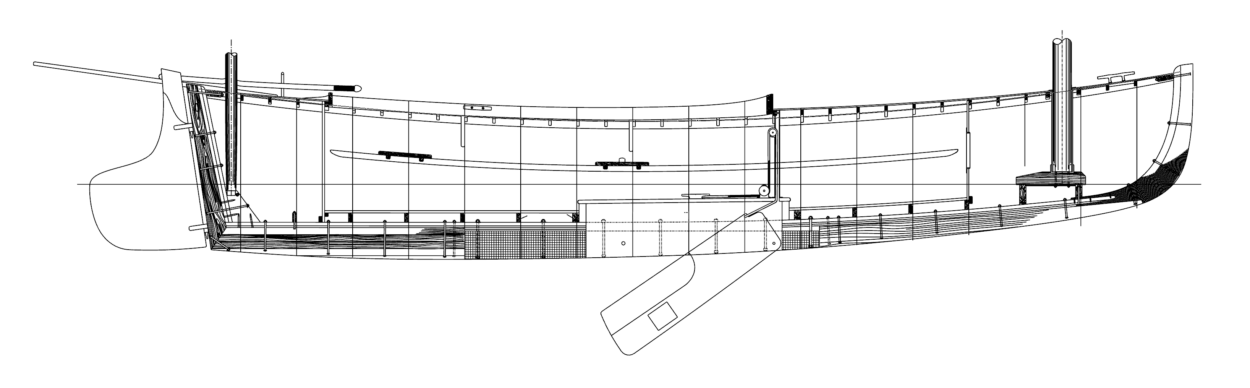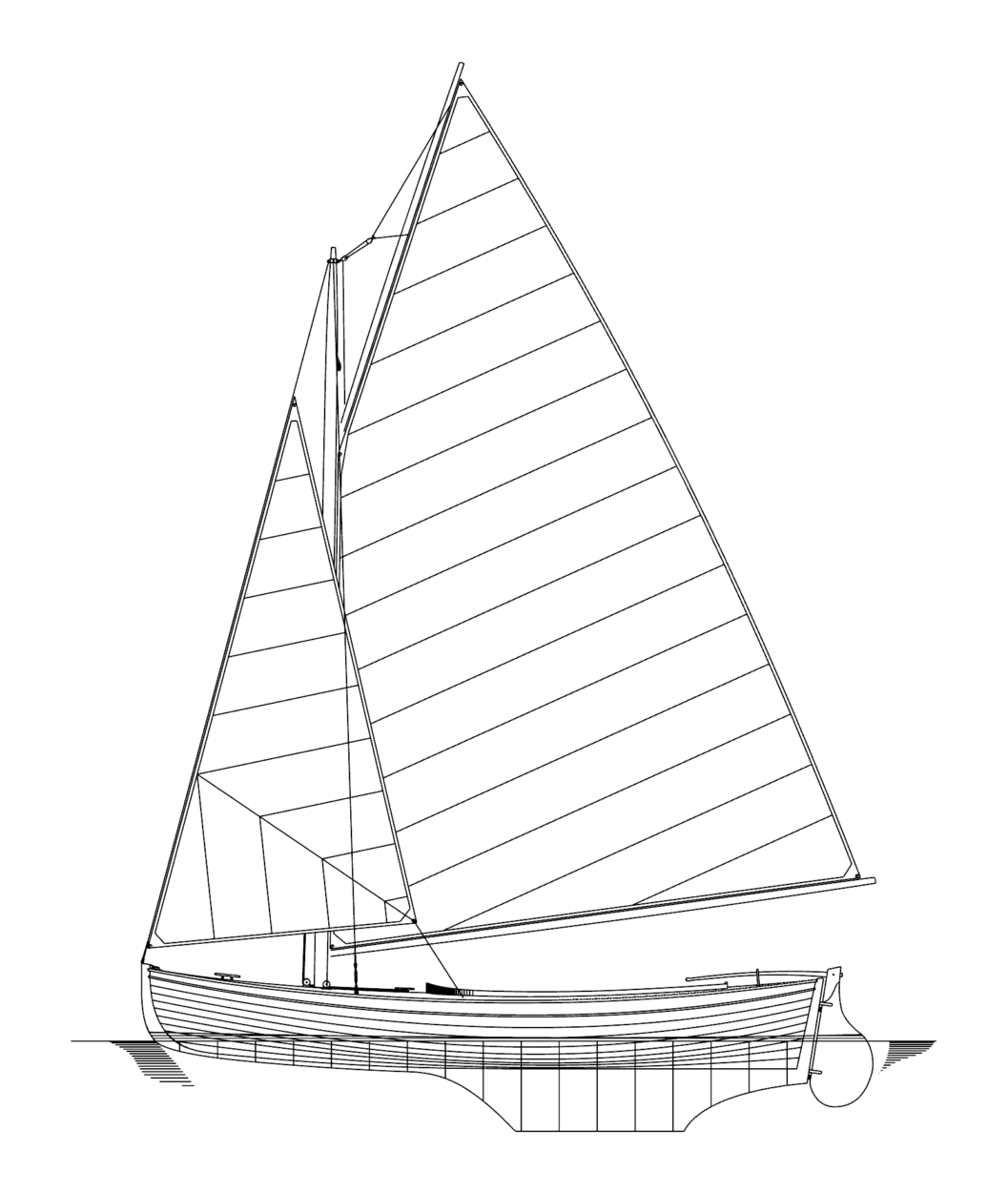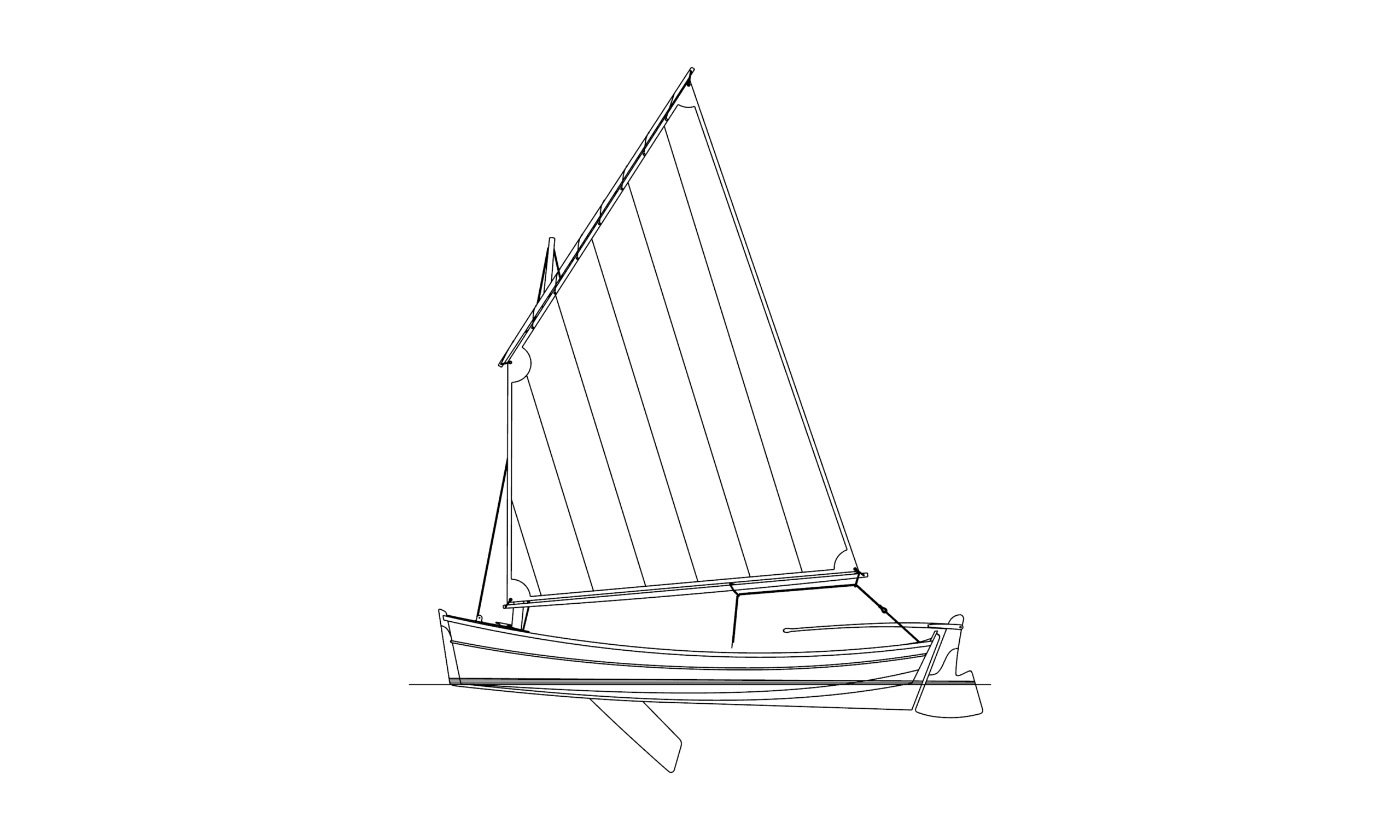

• In The Shop
  • Build
  • Restore
  • Electrify

Category: Plans

  • Westport Skiff

    Westport Skiff

    Westport Skiff

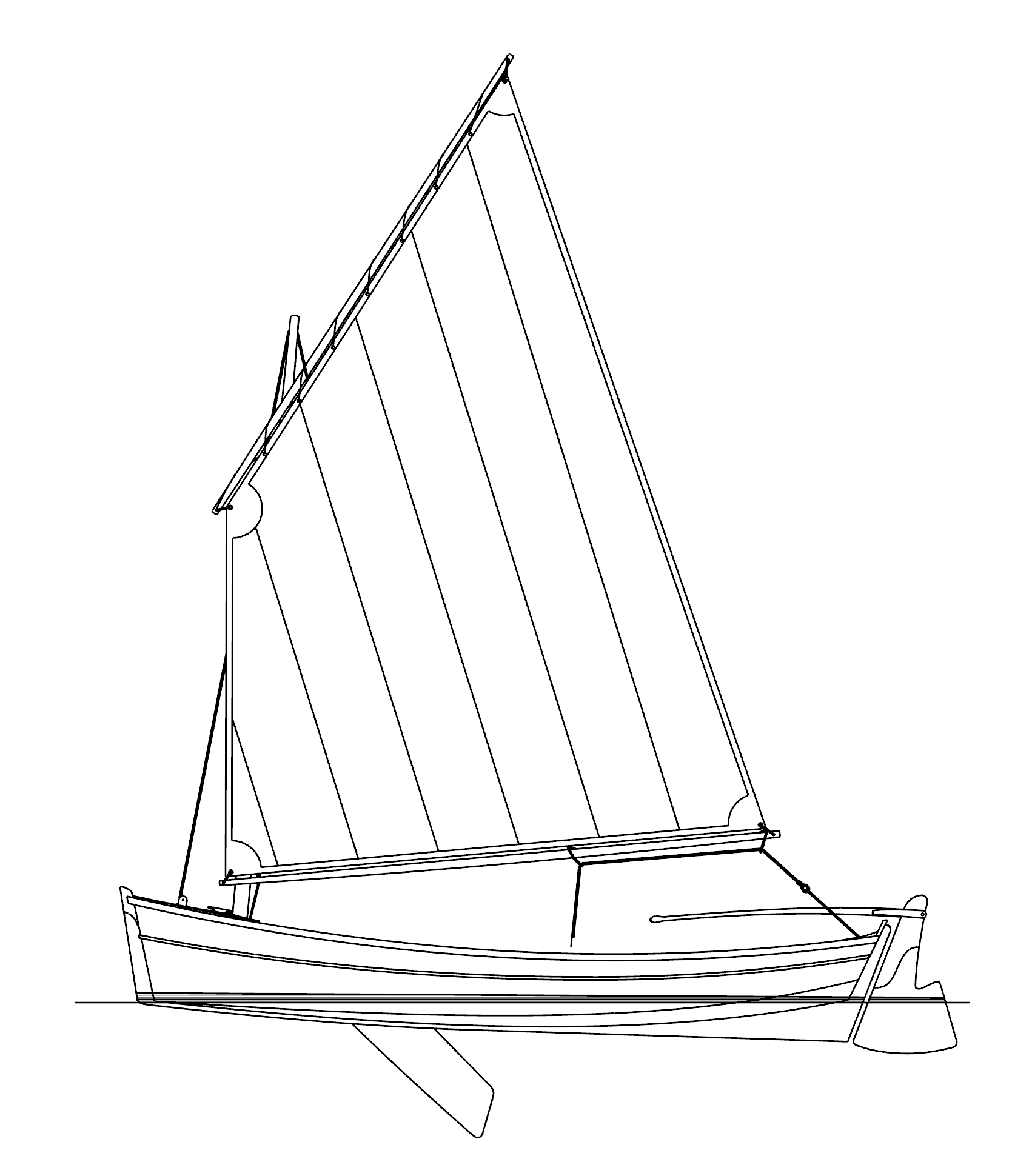
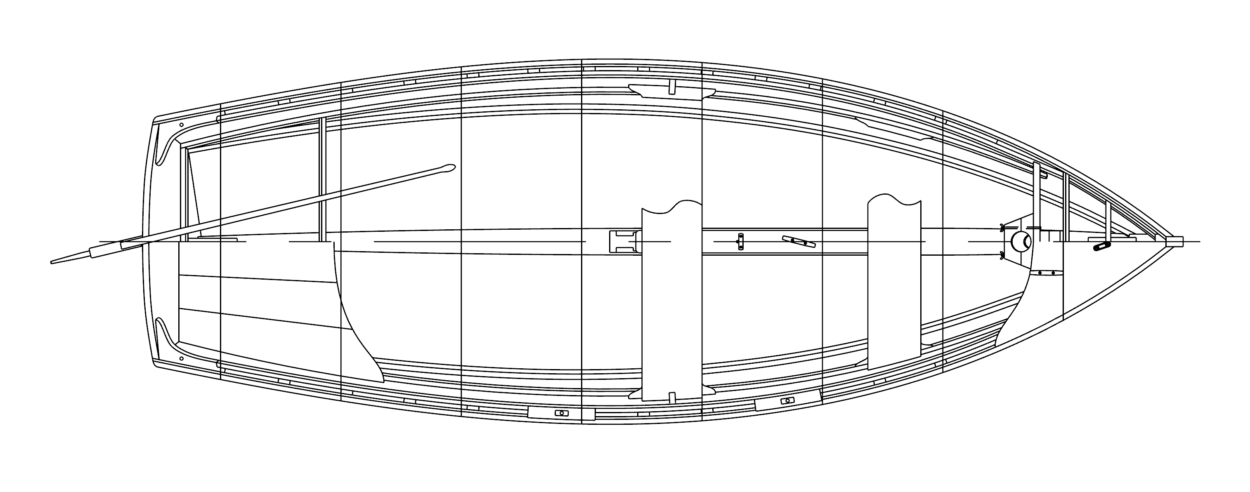
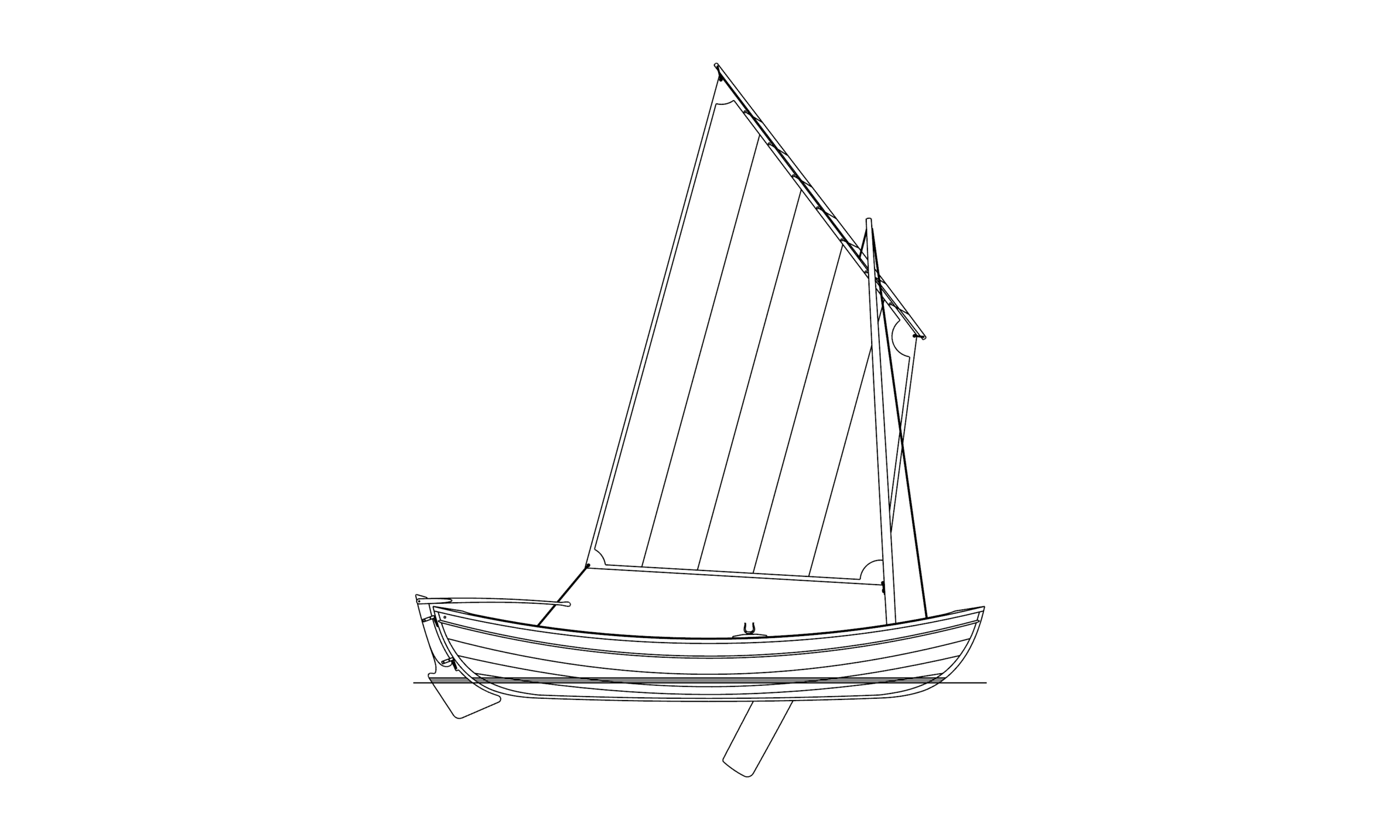
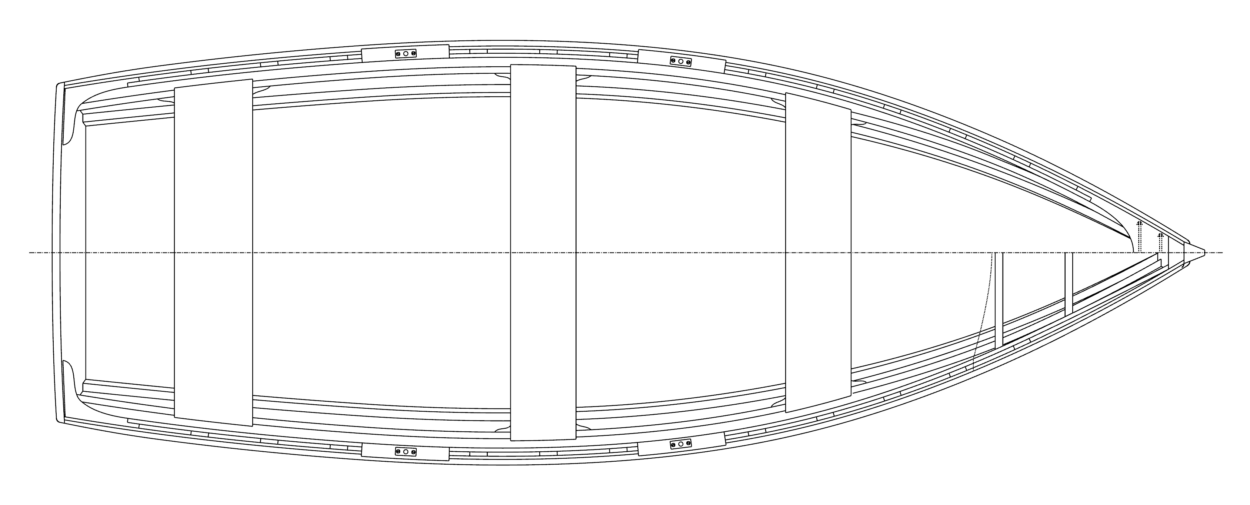
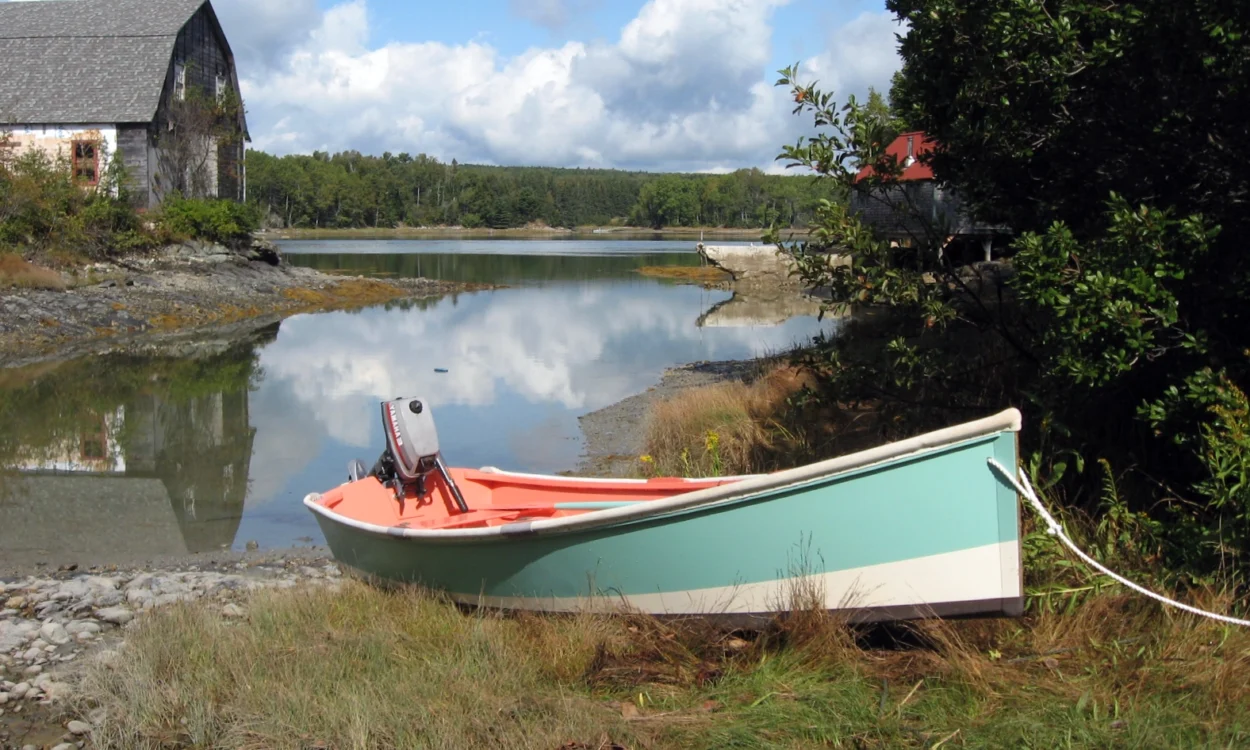
    A simple-to-build 11′ skiff, can be built up to 18′ long

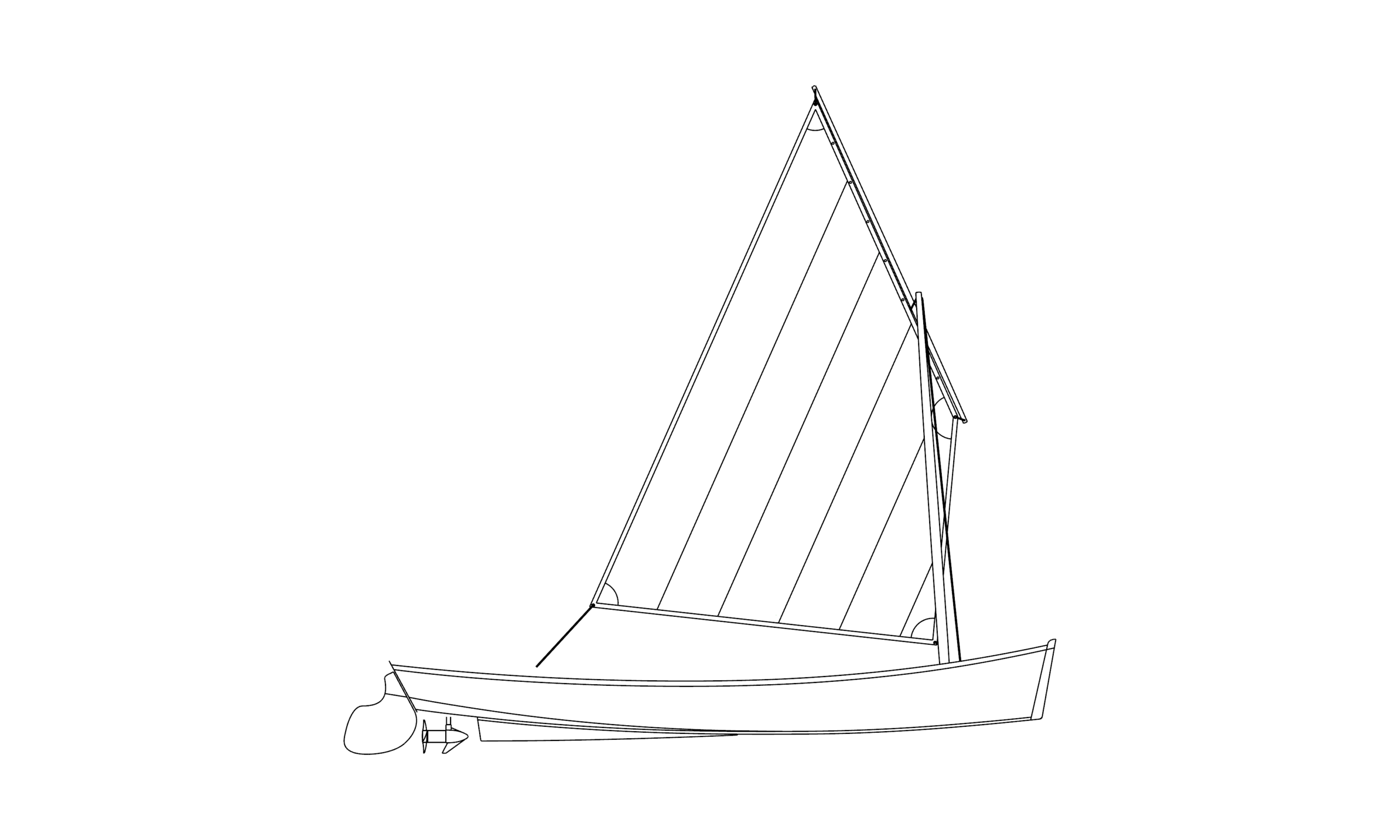
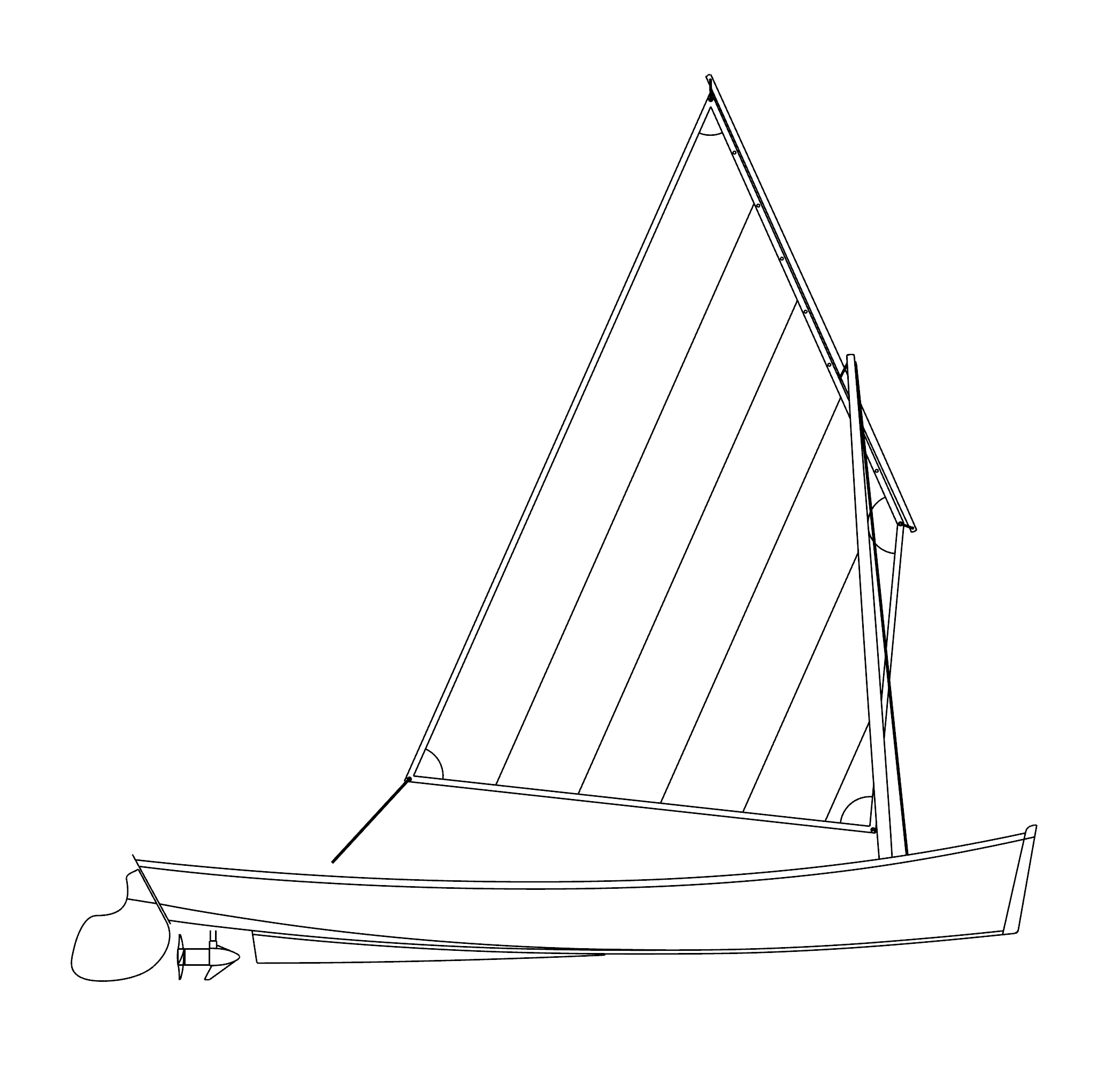
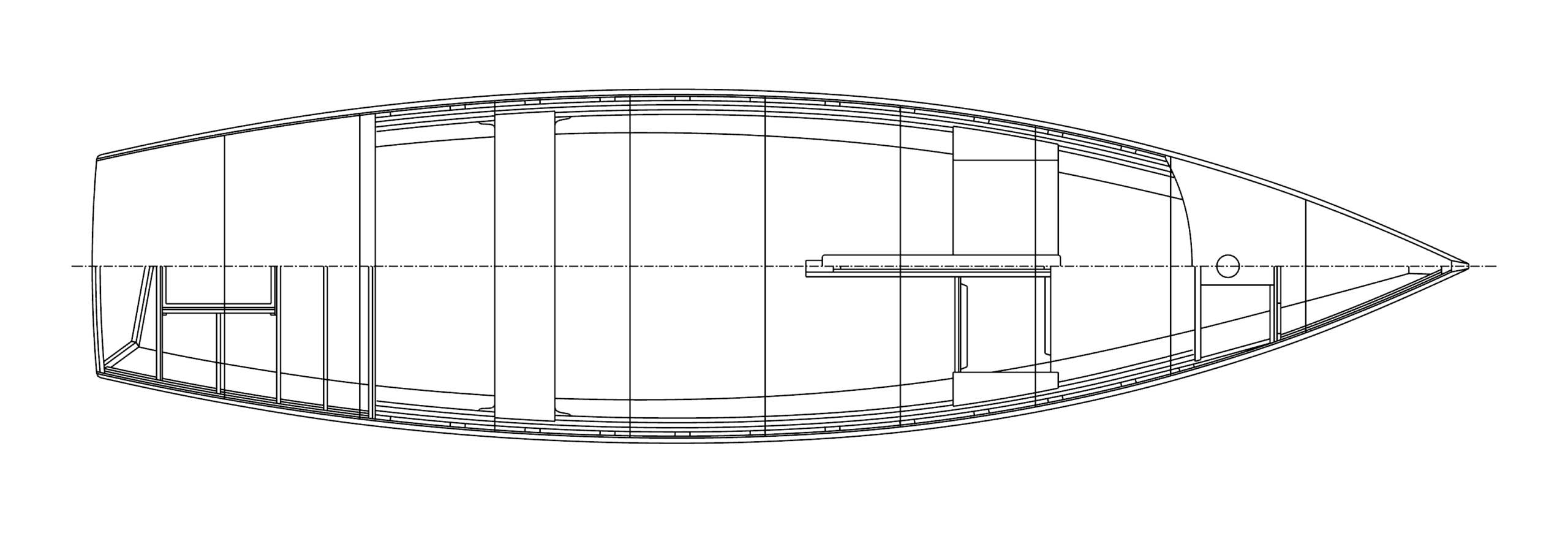
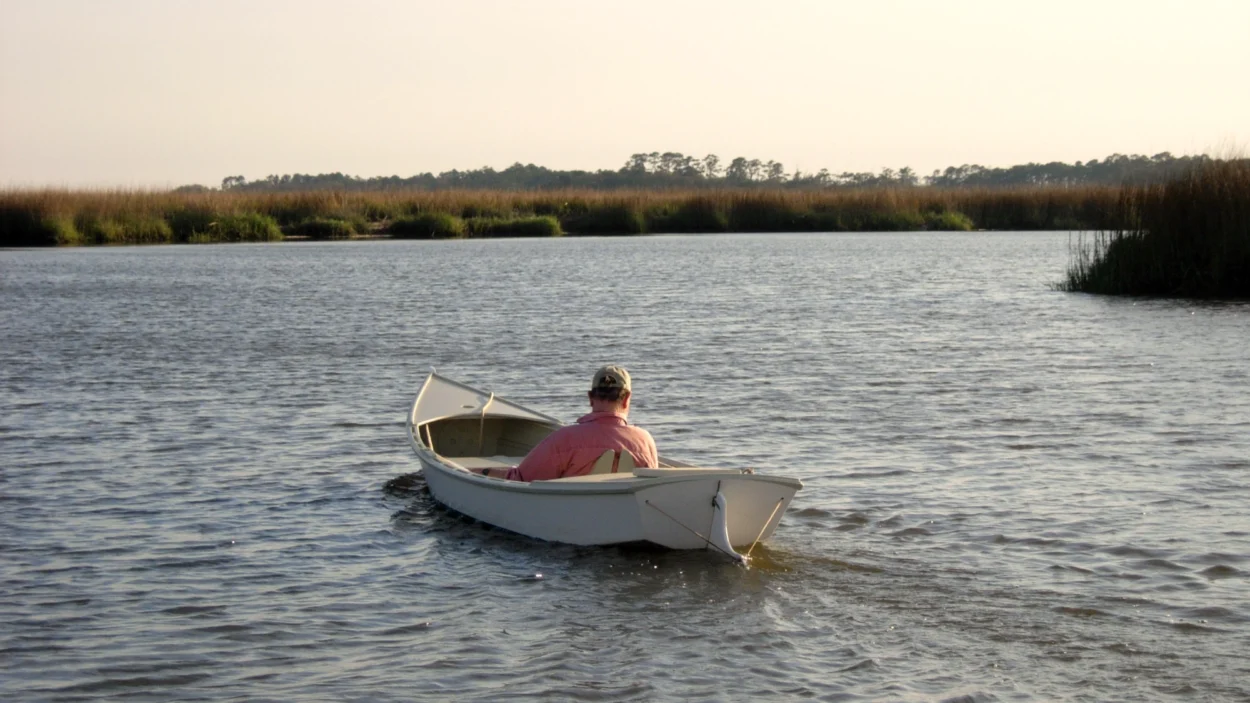
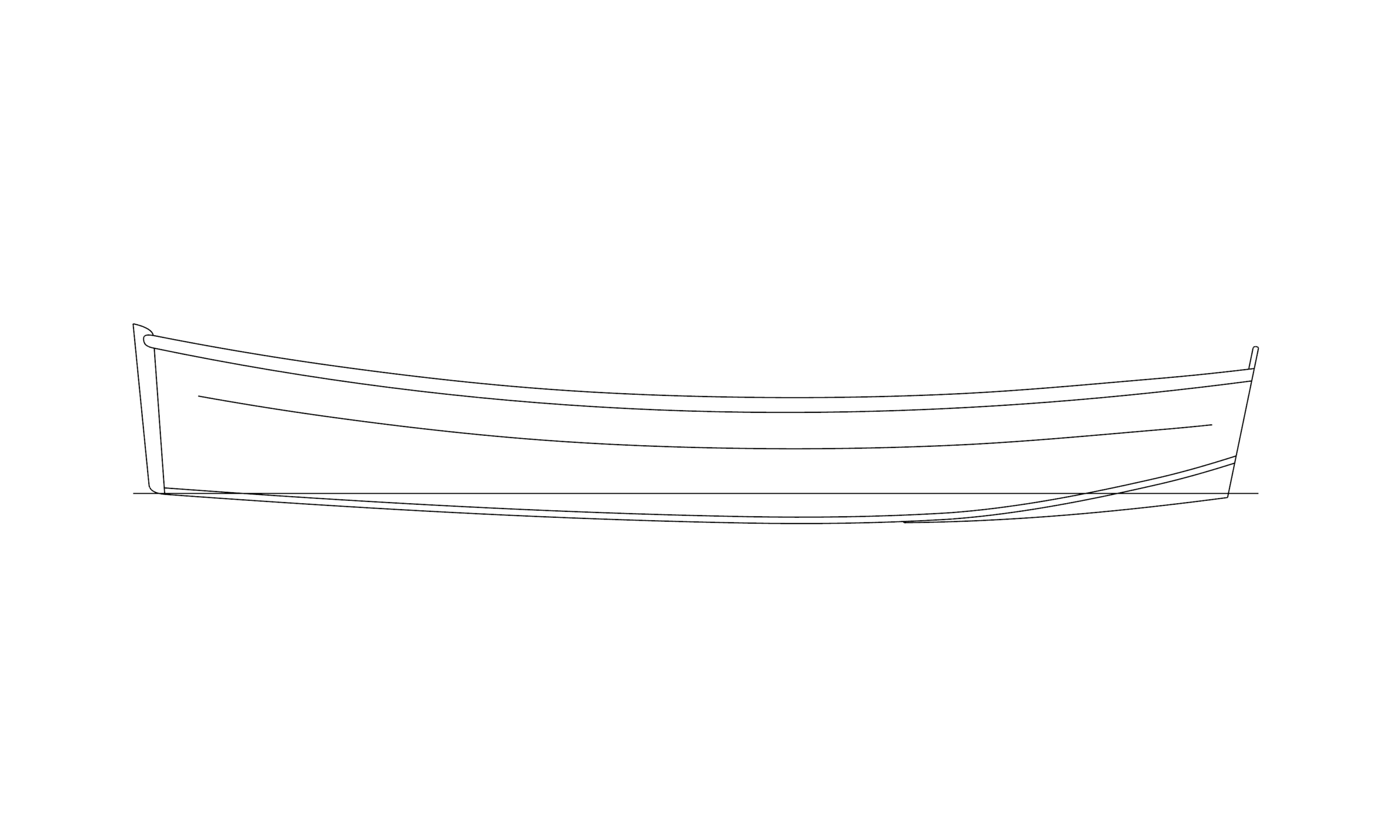
    The Westport Skiff is a good example of a type that was ubiquitous on the US East Coast in the early 1900s, and probably well before. They were good all-around boats, but their main virtue was simplicity of construction and low cost. A good builder could turn out one of these boats in a couple of days – one to build, one to paint. They were heavy, which didn’t matter once they were in the water, and the bottom planking would open up dramatically if left out of the water for any length of time. Thus, they were intended to spend the entire season in the water, likely as a tender for a larger workboat, or as an inexpensive boat for catching a few fish for dinner.

    Nowadays, many of us are not able to leave our skiff in the water all the time, so light weight and freedom from leaks are more important. You probably won’t build this boat in a day – more likely a week or a month – but it is still a simple and fun boat to build. It would be ideal as a project with the kids, and a good boat for them once done. I would urge you to build the rowing version, as outboards can be a curse to peace of mind and the environment. And, kids should learn to row before being turned loose with a motor. In fact, there isn’t much of any excuse for the outboard version. Its only virtue is that it gives a little more support for a slightly bigger motor and a single occupant in the stern. I drew it only because I had a handicapped customer who physically could not row.

    You can still put a little motor on the rowing version – about 2 hp is all it can use. But if you build the outboard version, its rowing qualities will be ruined with anything more that one middle sized kid at the oars. The transom will drag, the boat will slow dramatically and the fun of rowing will be gone. If you just can’t see yourself rowing at all, consider a little electric trolling motor with the battery up forward in the rowing version.

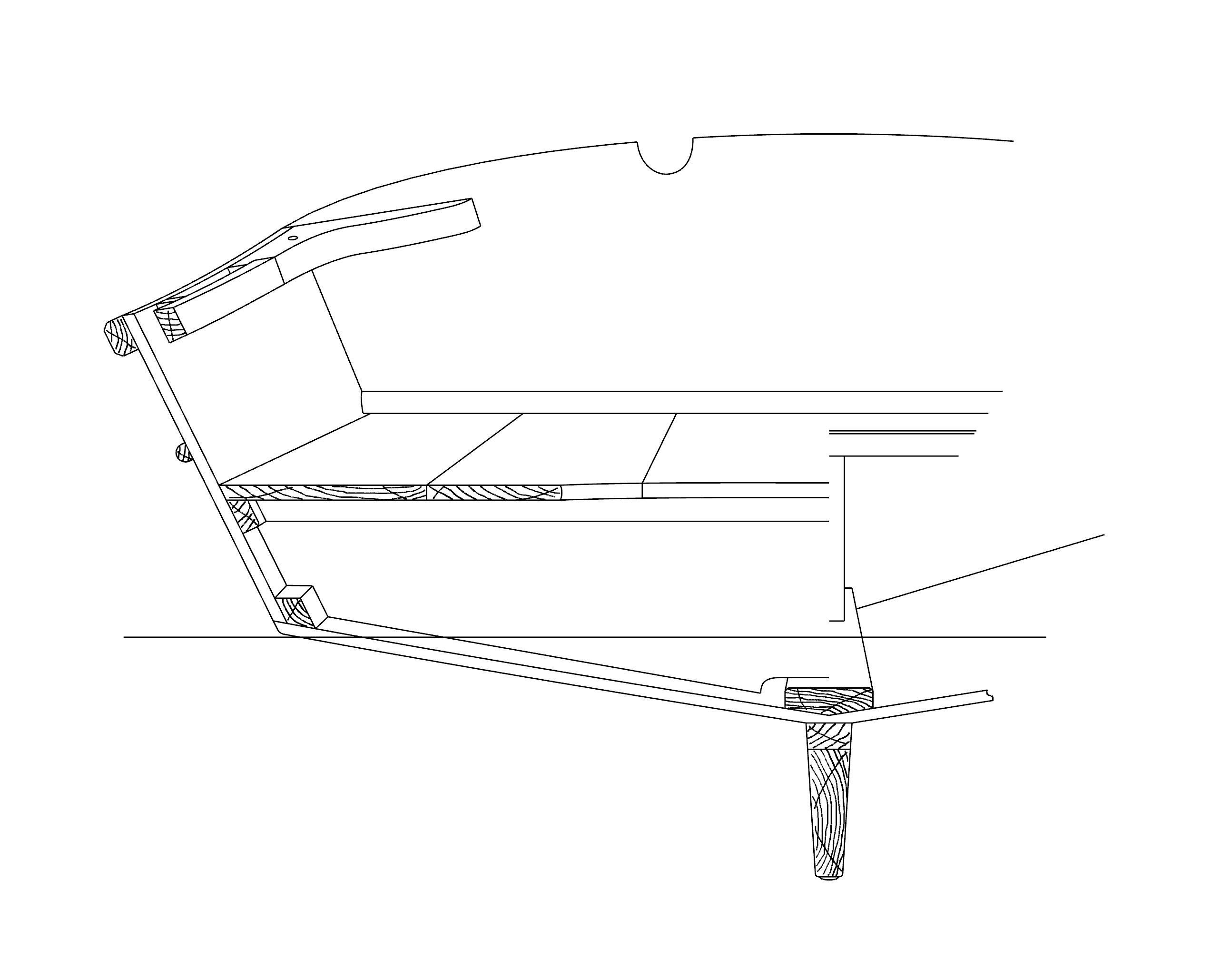
    If you want a bigger boat, you can stretch out this one to any length up to about 18 feet. Just increase the longitudinal spacing of the measurements given on the plans to some number that gives you the length you want. Use the same molds and transom as shown, keeping the same beam. You will also need to alter the bevel on the inner stem and transom slightly – keep the same width on the outside faces and make the inside smaller to suit. If you do go all the way to 18′, you might want to increase the thickness of the topside panels to 3/8″, as 1/4″ will be difficult to handle at any length over about 16′.

    This design is based on an original modeled by Fred Tripp and documented by R. H. Baker.


    STUDY PLANS: Click here to download free study plans

    TO PURCHASE PLANS: On two sheets. To order online using Paypal’s ordering system (which accepts credit cards and eChecks), please select one of the following buttons:

    U.S. orders. $75 + $6 shipping = $81
    International orders, including Canada. $75 + $15 shipping = $90
    You can see your Paypal Cart at any time by clicking the button below:

    You can also order plans by sending a check or money order to Hylan & Brown Boatbuilders, 10 Frank Day Ln, Brooklin, ME 04616.

    FAQ: Many questions are answered in Frequently Asked Questions. Please check there first.
    Particulars

    LOA11′
    Beam4′
    Draftapprox. 3″
    Weightapprox. 100 lbs
    TrailerableYes
    Hull typeFlat bottom, transom stern
    ConstructionGlued plywood
    Suitable forProtected waters
    Skill neededBeginner
    Lofting requiredNo, full-size patterns included
    Level of detailAbove average
  • Ruby Slipper

    Ruby Slipper

    Ruby Slipper

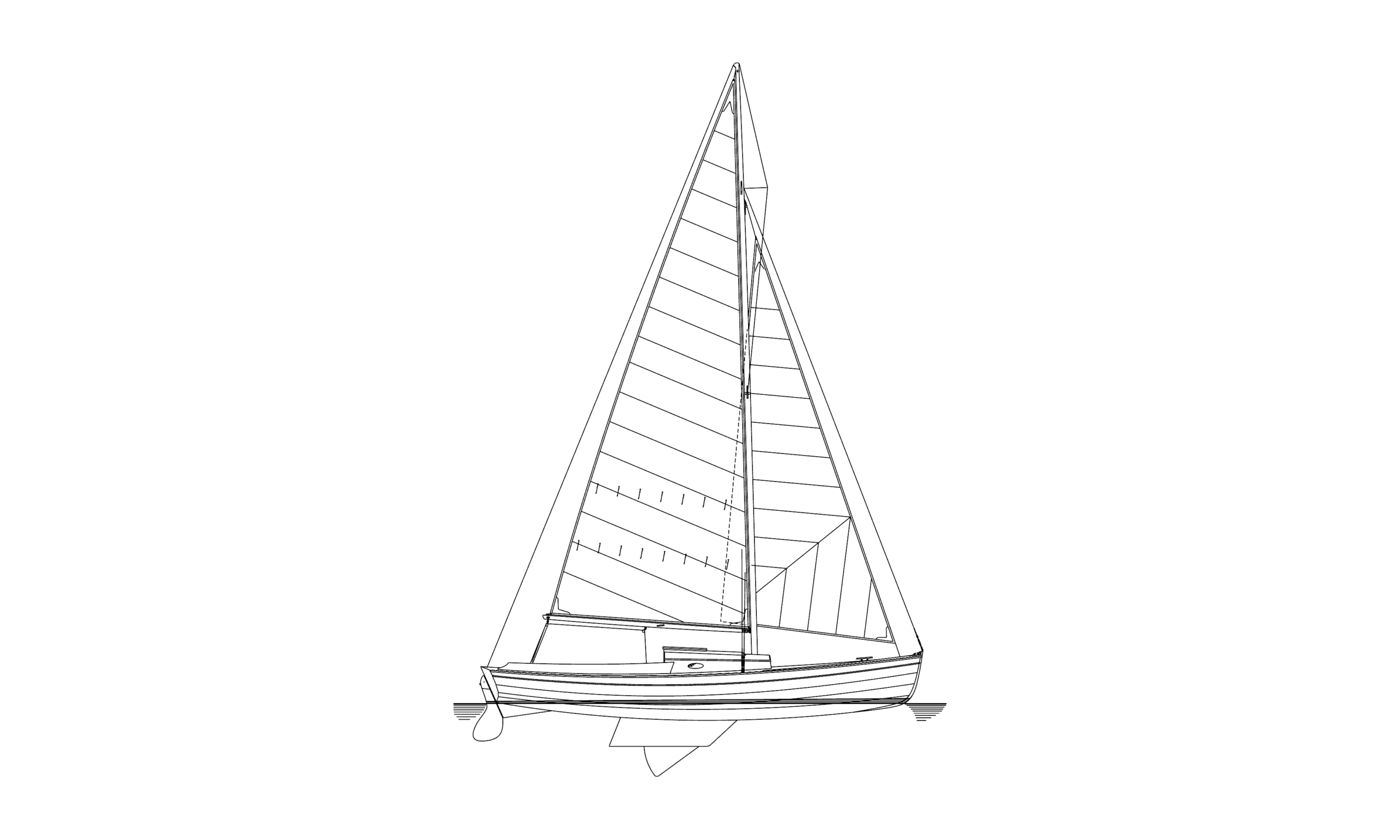
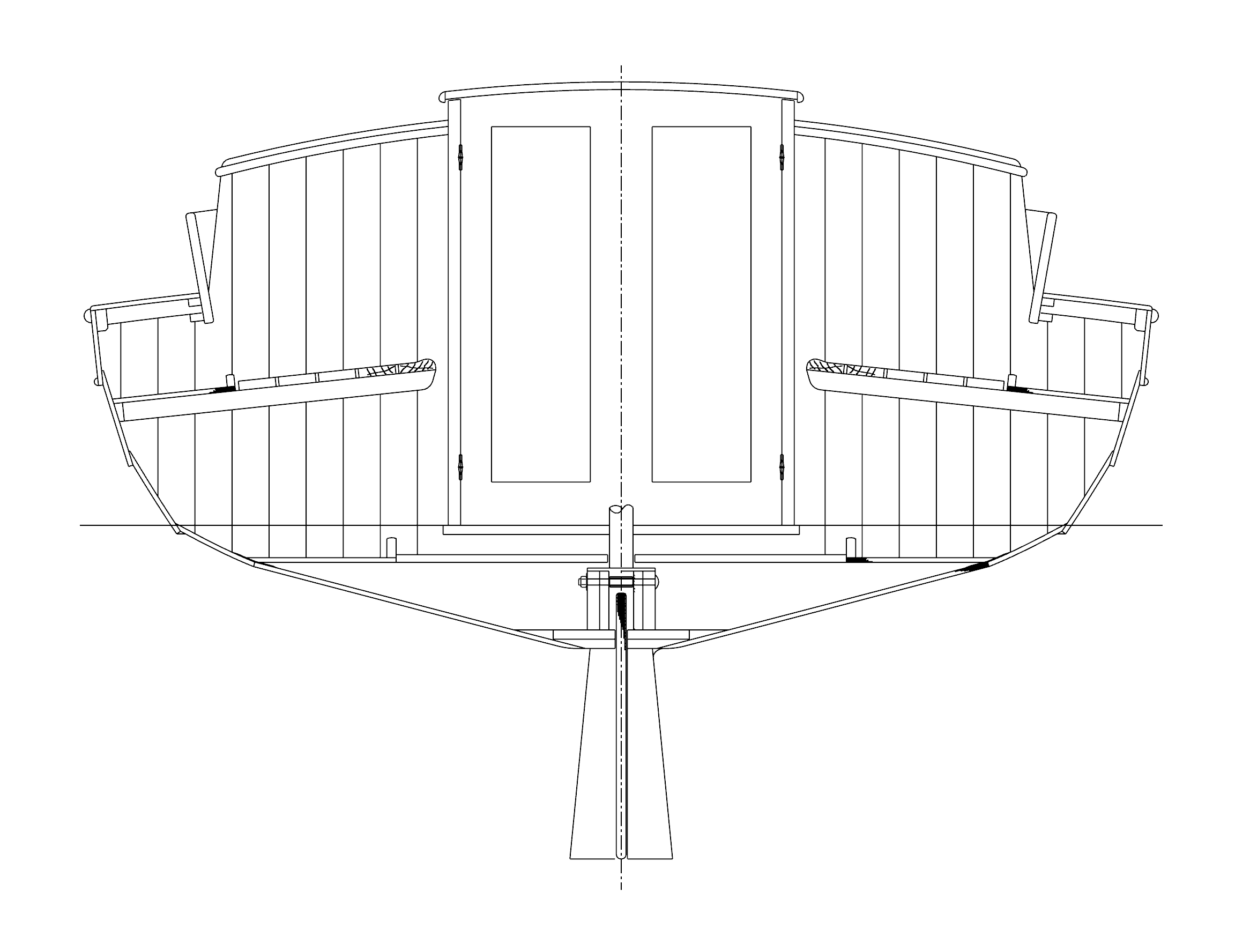
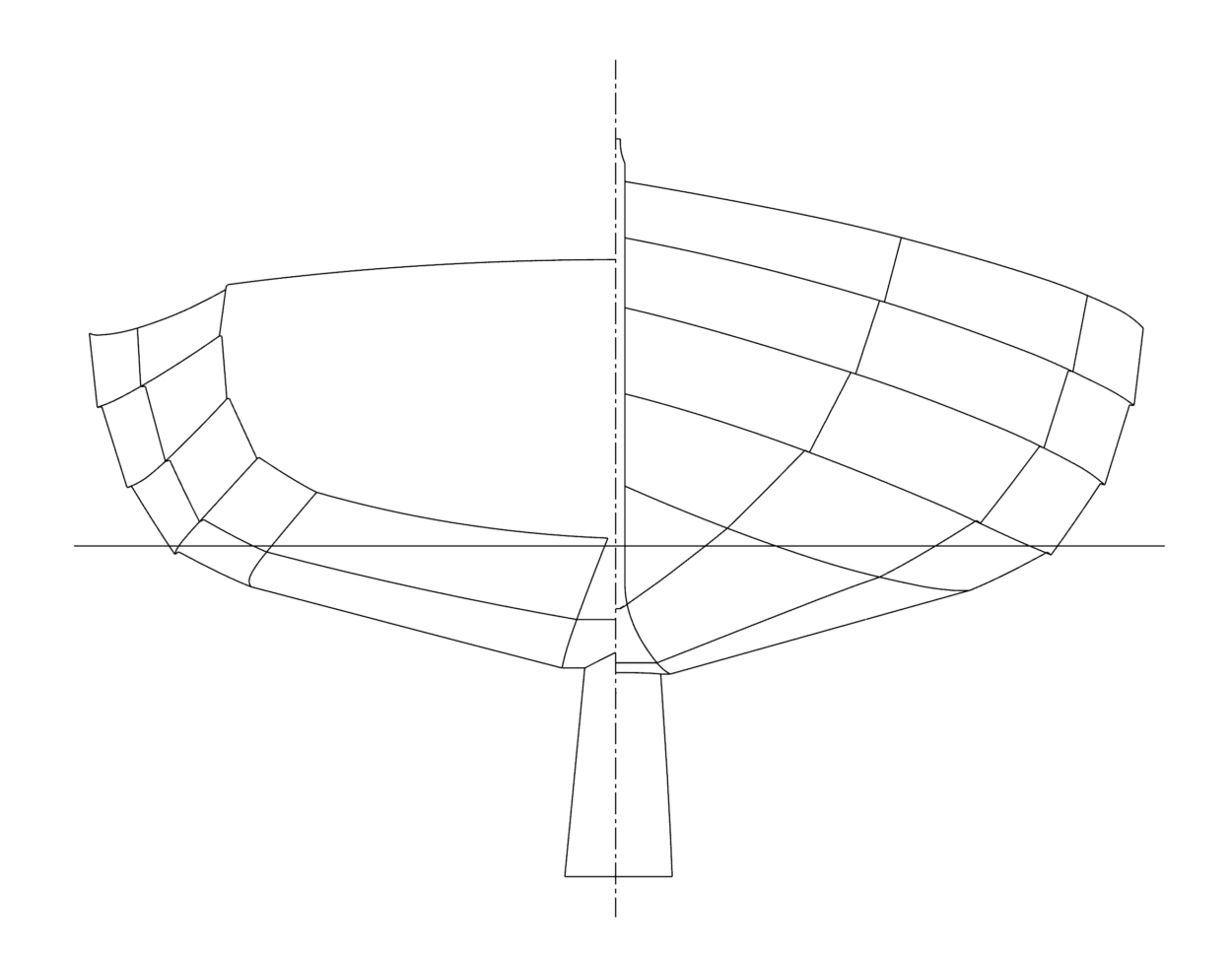
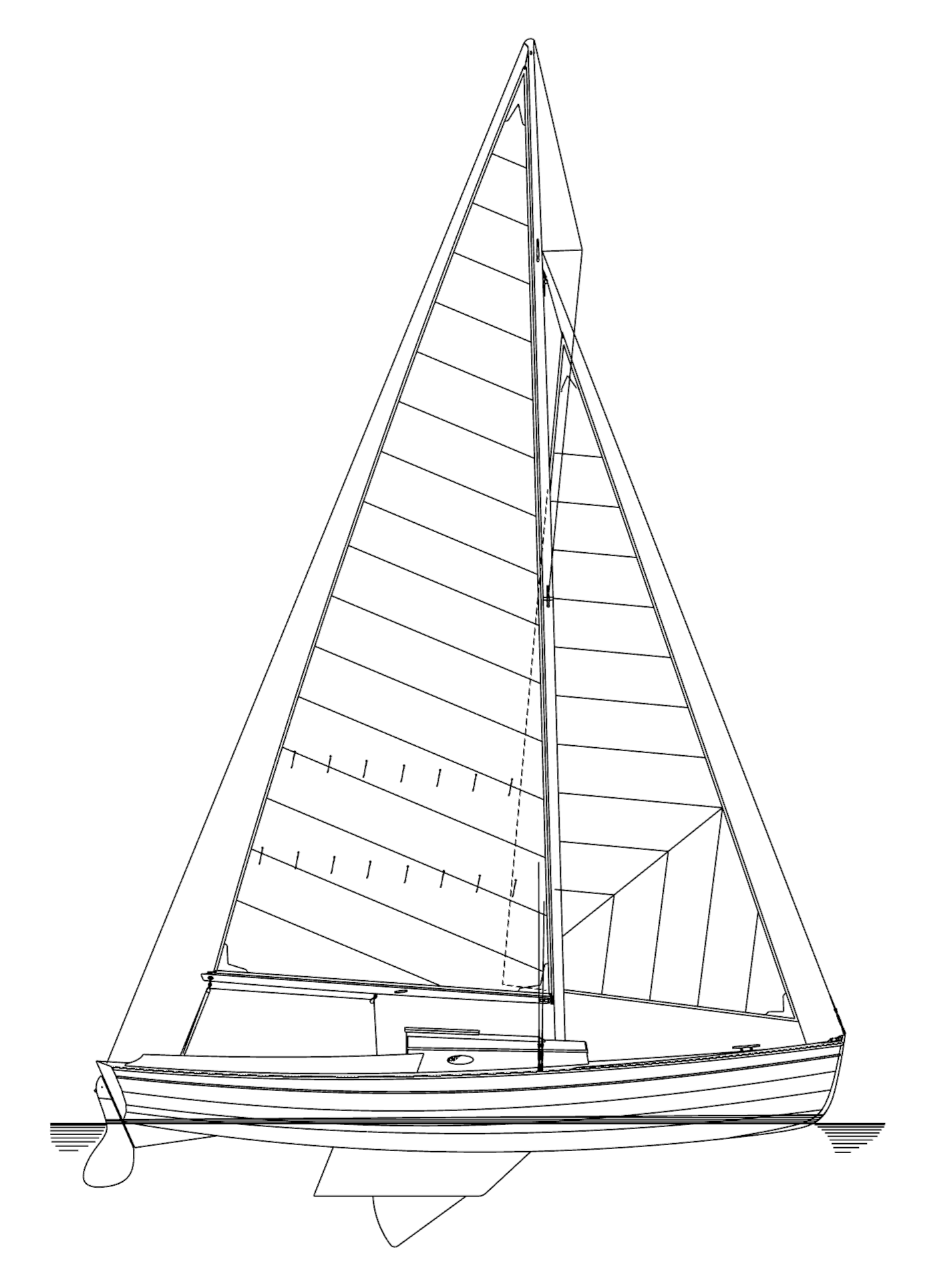
    Ruby Slipper is 23 foot daysailer designed for the ambitious amateur builder – someone who has perhaps enjoyed building a simple boat and is ready to step up to a bigger project. Glued lapstrake construction is well-proven as a wonderful method for building small boats. They go together quickly, require less maintenance than traditional wooden boats, and are immune to drying out when stored on a trailer. Although a little more mentally challenging than the stitch & glue method, it swaps a few simple woodworking skills for lots of mind-numbing sanding, and is ultimately quicker and less expensive. And to my eye, the resulting boats are better looking in the bargain!

    Ruby’s hull is shallow and light, with a long waterline. Generous beam allows for a cockpit that can accommodate a crowd in comfort. A hefty chunk of lead in a NACA foil keel keeps her standing up to her generous sail plan, and will help carry her through fluky spells. Her shallow draft makes her suitable for trailering, and at 2500 pounds, she could be hauled home behind a reasonably-sized car. Her particulars indicate rewarding sailing performance.

    Performance aside, Ruby Slipper would be a good fit for wobbly old salts like yours truly, who just want to go out for a sail on a lovely Maine summer afternoon. Said mariner might be a tad cantankerous and prefer to sail without the complication of a crew. He needs a boat that is easy to board from the dinghy, and rarely asks him to leave the cockpit. It wants to be big enough to be stable under foot, yet small enough to keep maintenance and handling from becoming a chore. She should go to weather in a smart fashion, be fast enough to provide a thrill and stable enough so that a gimbaled drink holder is rarely wanted. Getting underway should be simple, and if the breeze doesn’t look as promising as expected, there must be room enough for a lovely water-cradled nap!


    STUDY PLANS: Click here to download free study plans

    TO PURCHASE PLANS: On eight sheets: Sail Plan, Lines Plan, Ballast Plan, Joiner Details, Building Jig, full-size patterns. To order online using Paypal’s ordering system (which accepts credit cards and eChecks), please select one of the following buttons:

    U.S. orders. $400 + $30 shipping = $430
    International orders, including Canada. $400 + $80 shipping = $480
    You can see your Paypal Cart at any time by clicking the button below:

    You can also order plans by sending a check or money order to Hylan & Brown Boatbuilders, 10 Frank Day Ln, Brooklin, ME 04616.

    FAQ: Many questions are answered in Frequently Asked Questions. Please check there first.
    Particulars

    LOA23′ 3″
    LWL21′ 4″
    Beam7′ 2″
    Draft2′ 3″ / 4′
    Disp.2500 lbs
    TrailerableYes
    Hull typeMulti-chine, keel/centerboard
    ConstructionGlued lapstrake plywood
    Suitable forSomewhat protected waters
    Skill neededIntermediate
    Lofting requiredNo
    Level of detailAbove average
  • Siri

    Siri

    Siri

    An 18′ daysailer/beach cruiser available in multiple configurations

    Siri’s design began when Brooklin boatbuilder Eric Jacobssen of North Brooklin Boats approached me about developing a set of plans for a cold molded version of Iris, a lovely little canoe yawl that appeared in the August 2, 1888 issue of Forest and Stream Magazine. Iris would have attracted the attentions of devotees of the canoe cruising craze that was sweeping Europe, and particularly England, at that time. At 18 feet and 1800 pounds displacement, she represents a middle ground in the evolution of a type that started with John MacGregor’s tiny Rob Roy, and, some would say, culminated in Albert Strange’s beautiful Sheila. A similar boat, HALF MOON, resides in the collection at Mystic Seaport Museum.

    Lovely as she is, the Iris design has some shortcomings. Like many of her sailing canoe sisters, she is too narrow to stand up to her generous rig. With this, and the lack of a centerboard, her windward performance would be quite compromised. Perhaps “gentlemen don’t sail to windward”, but nowadays, they don’t like to row there either, particularly in an 1,800 pound boat.

    So here is Siri, an updated version of Iris. Modern construction and a few extra calculations allow her to carry all her generous ballast on the bottom of the keel, where it does the most good. Five inches of additional beam will help keep her on her feet in a breeze. The centerboard will assist in getting to windward in good fashion. Flotation compartments will ensure that she will remain afloat if the worst should happen. A few additional tweaks have been incorporated to ease construction or improve appearance.

    I became so taken with Siri that I began thinking of other possibilities for her. It occurred to me that glued lapstrake construction would be an attractive option for many builders. For sailors with no concerns about shallow water or trailer launching, a deeper keel with a cut away forefoot would give her a sports car personality. If she could spend her season with her rig permanently set up, a gaff sloop might have some attraction. For those who love working with shavings instead of glue, there ought to be a traditional construction plan.

    Siri’s plans show all of these options, and many of these may be “mixed and matched.” The plans are highly detailed, as I have learned that extra time on my part results in better boats and fewer phone calls. No lofting is required — there are full sized patterns to get the builder off to a quick start. Hardware is fully specified, so you will not have to spend time hunting down rare pieces.

    Siri is probably not a good project for an inexperienced first time builder. However, if you have previously built a simple boat, or have well developed woodworking skills, she should present no problems. She would make a fine daysailer or beach cruiser and she will certainly turn a lot of heads wherever she goes.

    Glued lapstrake version
    Cold-molded version

    STUDY PLANS: Click here to download free study plans

    TO PURCHASE PLANS: On eight sheets: Lines, Balanced Lug Sail Plan, Gaff Sloop Sail Plan, Cold-Molded Construction, Glued Lapstrake Construction, Carvel Plank-on-Frame Construction, Building Jig, full-size patterns. Also included is a CD with full specifications and miscellaneous builder’s info. To order online using Paypal’s ordering system (which accepts credit cards and eChecks), please select one of the following buttons:

    U.S. orders. $250 + $20 shipping = $270
    International orders, including Canada. $250 + $80 shipping = $330
    You can see your Paypal Cart at any time by clicking the button below:

    You can also order plans by sending a check or money order to Hylan & Brown Boatbuilders, 10 Frank Day Ln, Brooklin, ME 04616.

    FAQ: Many questions are answered in Frequently Asked Questions. Please check there first.
    Particulars

    LOA18′
    LWL17′ 4″
    Beam5′ 6″
    Draft15″ / 36″ (2′ 7″ deep keel version)
    Disp.1800 lbs
    TrailerableYes
    Hull typeRound bottom, double ended
    ConstructionCold-molded, glued lapstrake plywood, or plank-on-frame
    Suitable forSomewhat protected waters
    Skill neededSkilled amateur
    Lofting requiredNo
    Level of detailVery detailed
  • Little Crab

    Little Crab

    Little Crab

    Little Crab is a smaller version of the Chesapeake Crab Skiff I drew several years ago. Bill Page, boatbuilder and traditional marine hardware tycoon, asked for a 14′ version to use as a tender for his new power cruiser. He wanted a skiff with lots of stability that would be primarily powered by an electric trolling motor, but I was surprised by how well this boat rowed.

    Little Crab is a foot shorter than Bill’s boat, but it will still be a capacious tender for a larger yacht. She will row and tow reasonable well, and will provide reassuring stability when getting aboard.

    As a sailing boat, Little Crab will make a fine weekend camp cruiser, with room for a couple of sleeping bags when the mid-ships slip thwart is removed. She would also make a great boat for young adventurers: light and shallow enough to be pushed off the beach (or that unseen shallow spot), simple and moderately sized rig, rewarding rowing, and good stability.

    The boat is intended to be built upside down over widely spaced molds set up on a ladder frame. This is old fashioned technology by some people’s standards – why not “stitch ‘n’ glue”? While the stitch and glue method is conceptually simple and un-intimidating, it can produce inexact hull shapes, and in my experience, it is no faster and far less pleasurable than my method. Any time saved in avoiding temporary molds and wooden stems and chines is more than taken up in shmooing and sanding epoxy and fiberglass. In the end, you will take more pride in having learned to shape a piece of wood than you will in the muscles you’ve built sanding epoxy fillets.

    Little Crab will make a fine father & son project (no slight intended, ladies), but take a piece of advice from an old dad – even a small boat takes time, and kids grow up fast. So, plan well, set aside enough time, and make it fun.


    STUDY PLANS: Click here to download free study plans

    KITS: Learn more about the Little Crab kit here. To order a kit, contact Hewes & Co.

    TO PURCHASE PLANS: On five sheets: Sail Plan, Lines Plan, Construction Plan, Building Jig, full-size patterns. To order online using Paypal’s ordering system (which accepts credit cards and eChecks), please select one of the following buttons:

    U.S. orders. $150 + $20 shipping = $170
    International orders, including Canada. $150 + $80 shipping = $230
    You can see your Paypal Cart at any time by clicking the button below:

    You can also order plans by sending a check or money order to Hylan & Brown Boatbuilders, 10 Frank Day Ln, Brooklin, ME 04616.

    FAQ: Many questions are answered in Frequently Asked Questions. Please check there first.
    Particulars

    LOA13′
    LWL12′ 2″
    Beam4′ 5″
    Draft6″ (rowing), 9″ / 30″ (sailing)
    Weightapprox. 225 lbs
    TrailerableYes
    Hull typeV-bottom chine hull
    ConstructionPlywood
    Suitable forSomewhat protected waters
    Skill neededBeginner
    Lofting requiredNo
    Level of detailAbove average

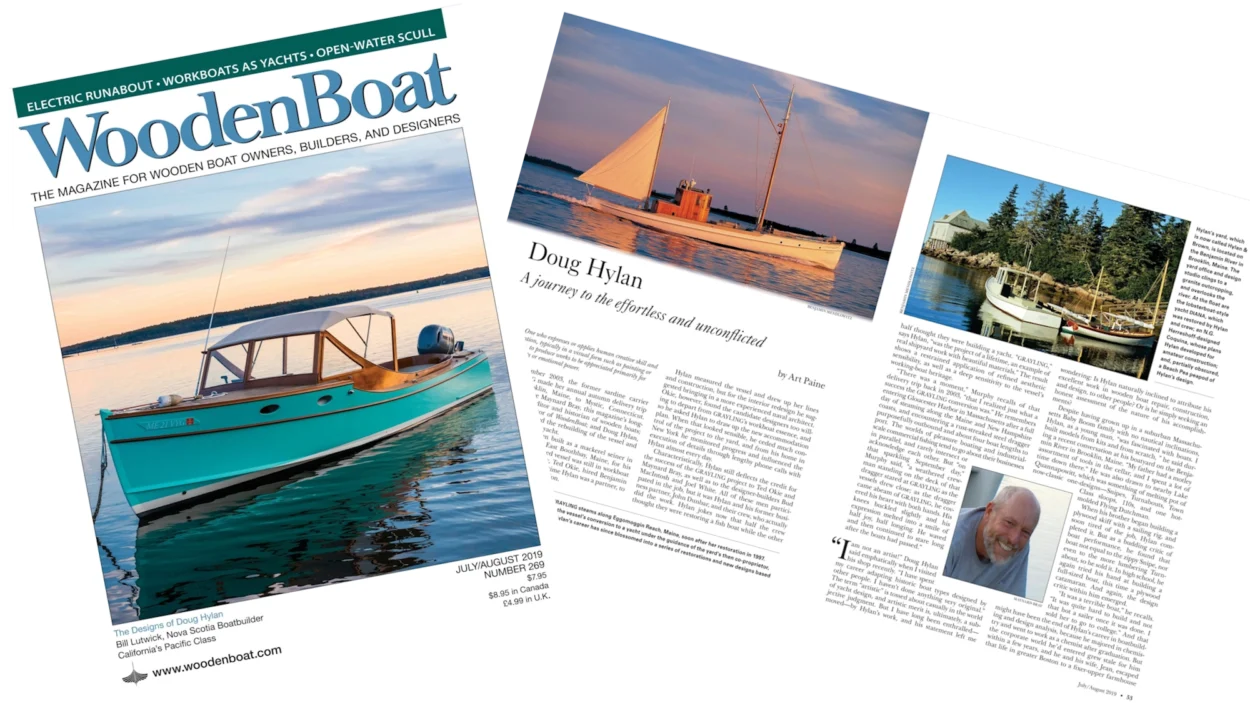
    OTHER REFERENCES: There’s a nice review of Little Crab in WoodenBoat (May/June 2019).

  • Benjamin River Peapod

    Benjamin River Peapod

    Benjamin River Peapod

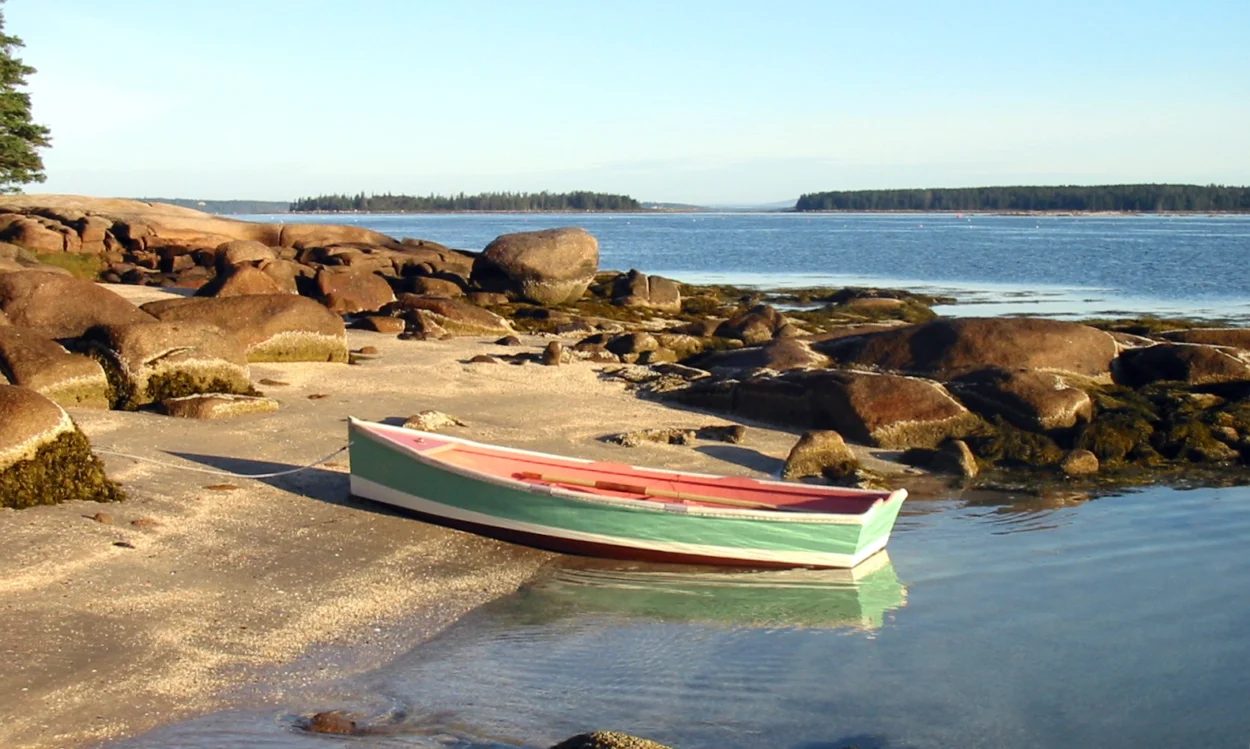
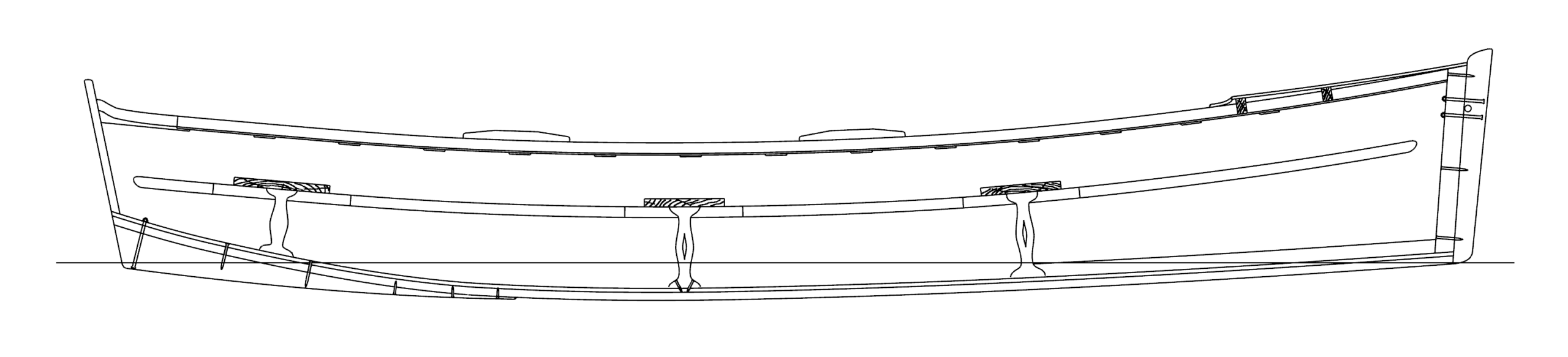
    This is a larger version of my Beach Pea design, made at the request of a customer who wanted a boat big enough to hold his growing family. While Beach Pea is big enough to carry two adults and two medium children, three adults should be considered the limit in rough conditions. The Benjamin River pod is 6″ longer with 4″ more beam and should easily carry four adults through rough water, 5 or even 6 in calm conditions.

    This boat was designed from the start with a CNC kit in mind, and the plans reflect that. You can build this boat without purchasing the kit, but some simple modifications would want to be made, and a few more boatbuilding skills are required. These are outlined in the Specifications sheet.

    As with Beach Pea I’ve tried to include traditional detailing to the extent possible with
    modern glued lap construction. But I have included flotation compartments in the
    Benjamin River pod, welcome in the unlikely event that the boat gets swamped.
    This boat uses the same construction as Beach Pea, so the How-to-Build series in
    WoodenBoat magazine (issues 133, 134, & 135) will apply.


    STUDY PLANS: Click here to download free study plans

    KITS: Learn more about the Benjamin River Peapod kit here. To order a kit, contact Hewes & Co.

    TO PURCHASE PLANS: On five sheets: Sail & Lines Plan, Construction Plan, Building Jig, two full-size patterns. To order online using Paypal’s ordering system (which accepts credit cards and eChecks), please select one of the following buttons:

    U.S. orders. $150 + $20 shipping = $170
    International orders, including Canada. $150 + $80 shipping = $230
    You can see your Paypal Cart at any time by clicking the button below:

    You can also order plans by sending a check or money order to Hylan & Brown Boatbuilders, 10 Frank Day Ln, Brooklin, ME 04616.

    FAQ: Many questions are answered in Frequently Asked Questions. Please check there first.

    Particulars

    LOA13′ 6″
    LWL11′ 3″
    Beam4′ 6″
    Draft6″
    Weightapprox. 120 lbs
    TrailerableYes
    Hull typeRound bottom double ender
    ConstructionGlued lapstrake plywood
    Suitable forSomewhat protected waters
    Skill neededBeginner
    Lofting requiredNo
    Level of detailAbove average
  • Wicomico

    Wicomico

    Wicomico

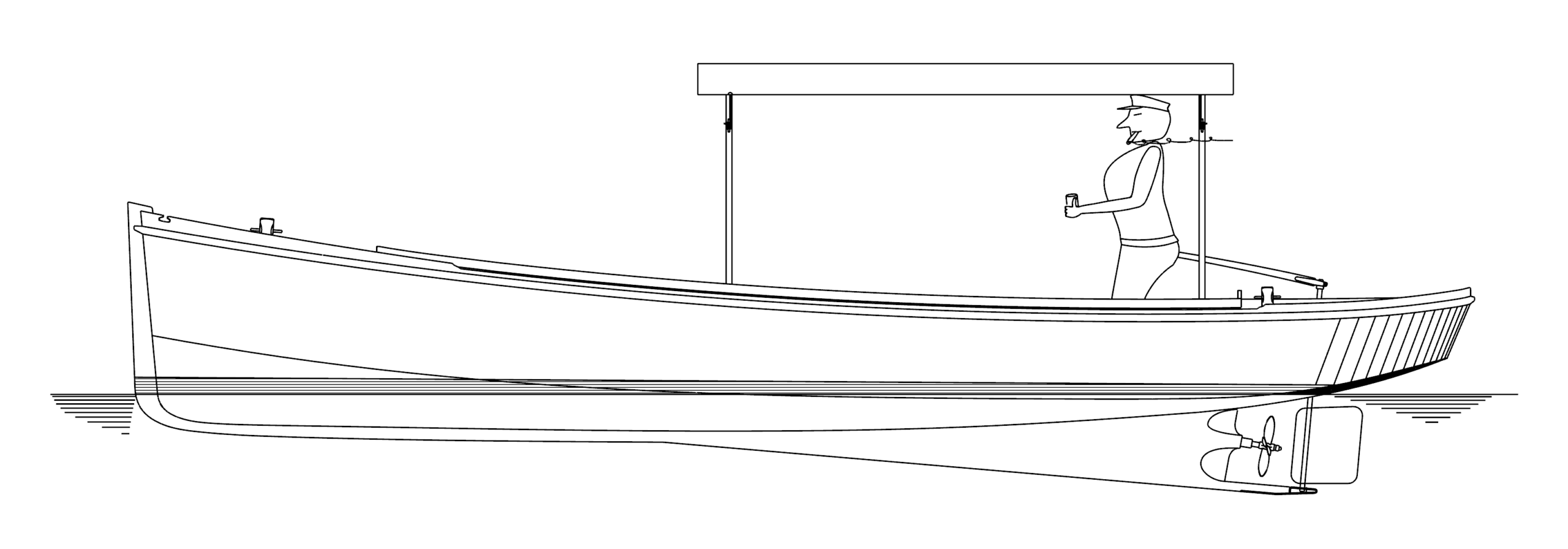
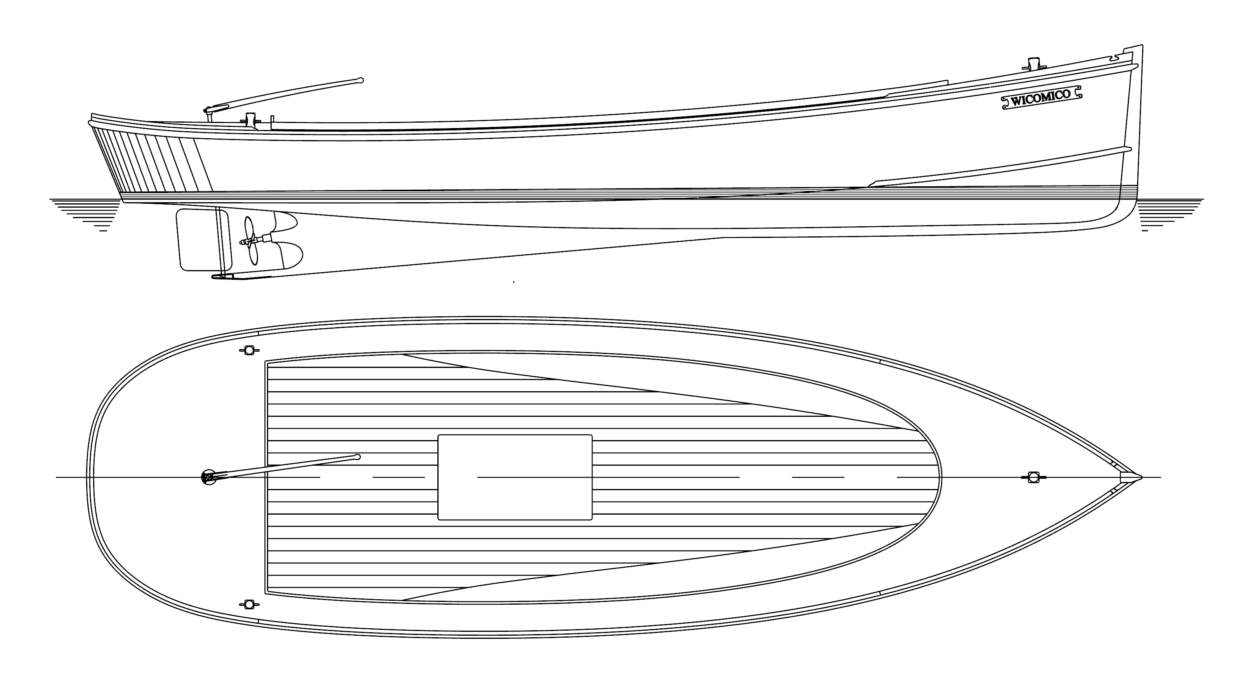
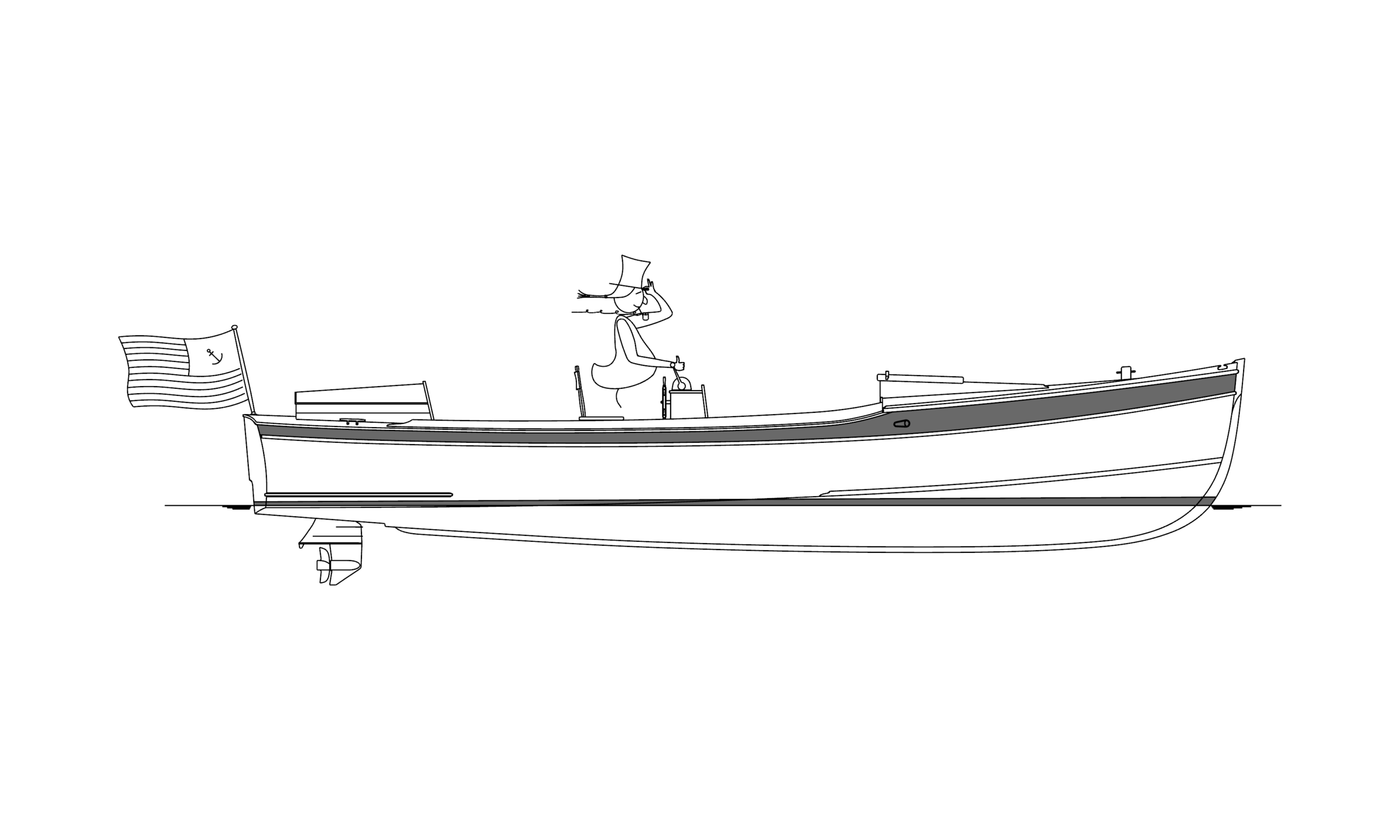
    25′ Chesapeake deadrise boat

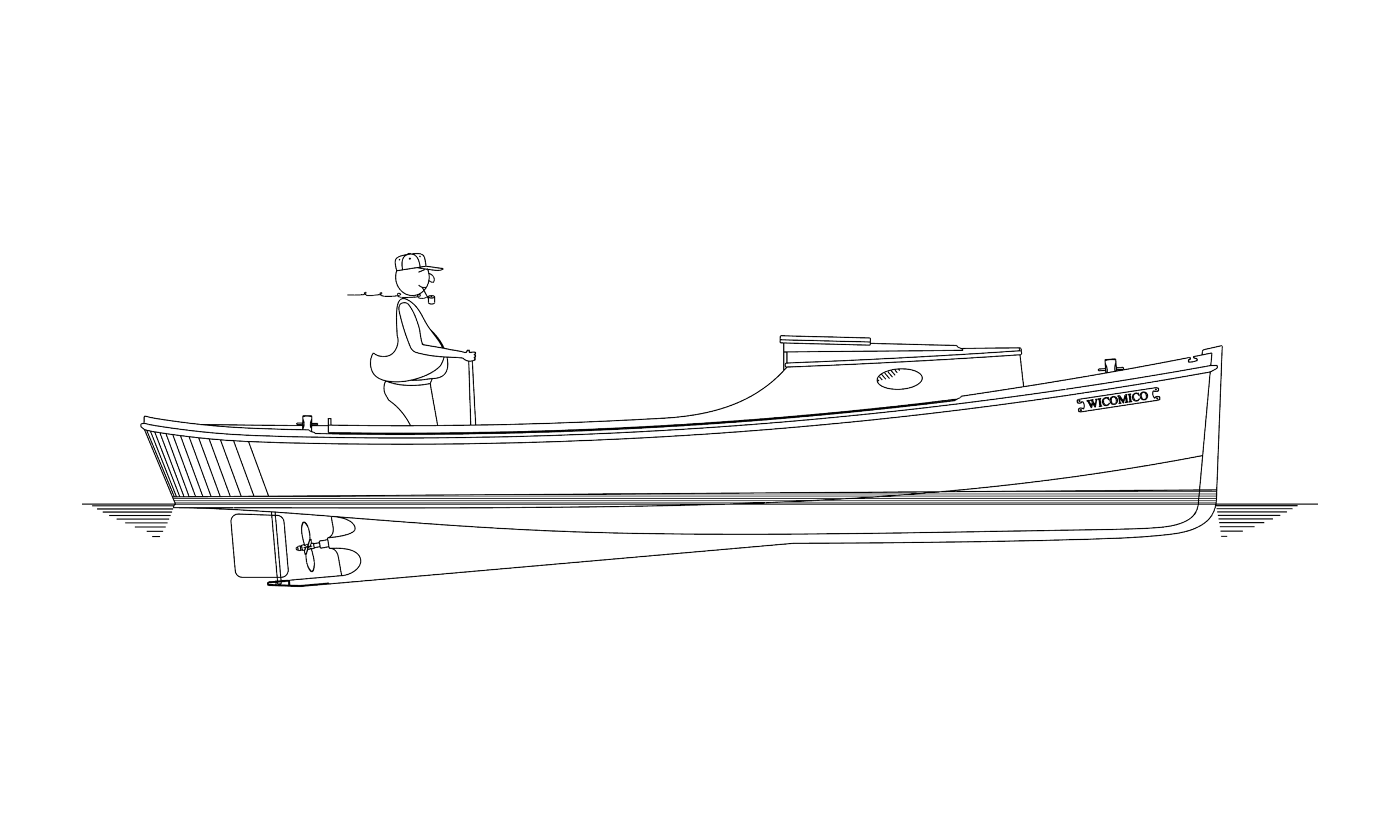
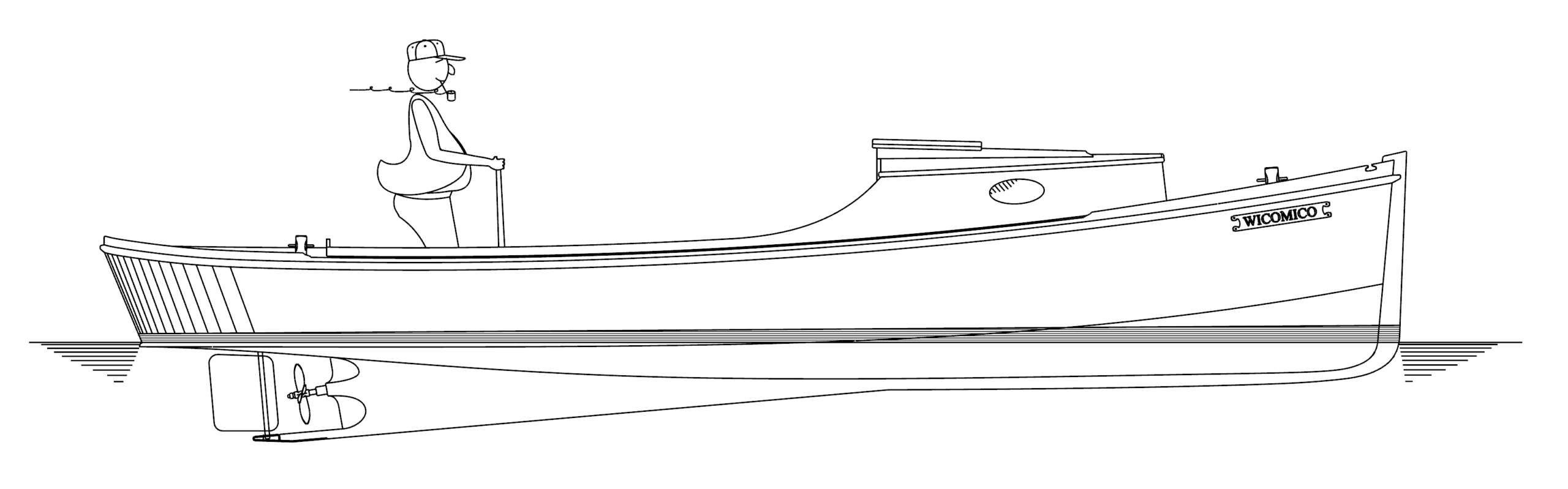
    The working craft of Chesapeake Bay have once again provided the inspiration for this design. The success of our Point Comfort outboard-powered skiff has led to requests for plans for a more traditional round sterned, inboard-powered sister.

    The plans for Wicomico contain information for two versions: an older-styled fan-tailed version suitable for displacement speeds, and a semi-displacement version with the stern immersed, as seen on more recent Bay boats. At 25 feet, this is a small rendition of the traditional Bay work boat, and she has comparatively more beam and less displacement than a traditional older sister.

    The fantail version will provide old time elegance for those who are not in too much of a hurry. Limited to hull speed (about 7 knots) this version will make the best use of minimal power – the very smallest diesel, or for those who value their peace & quiet, an electric drive. The semi-displacement version is capable of speeds up to about 12 knots with 25 horsepower, or up to 17 knots with 50 hp.

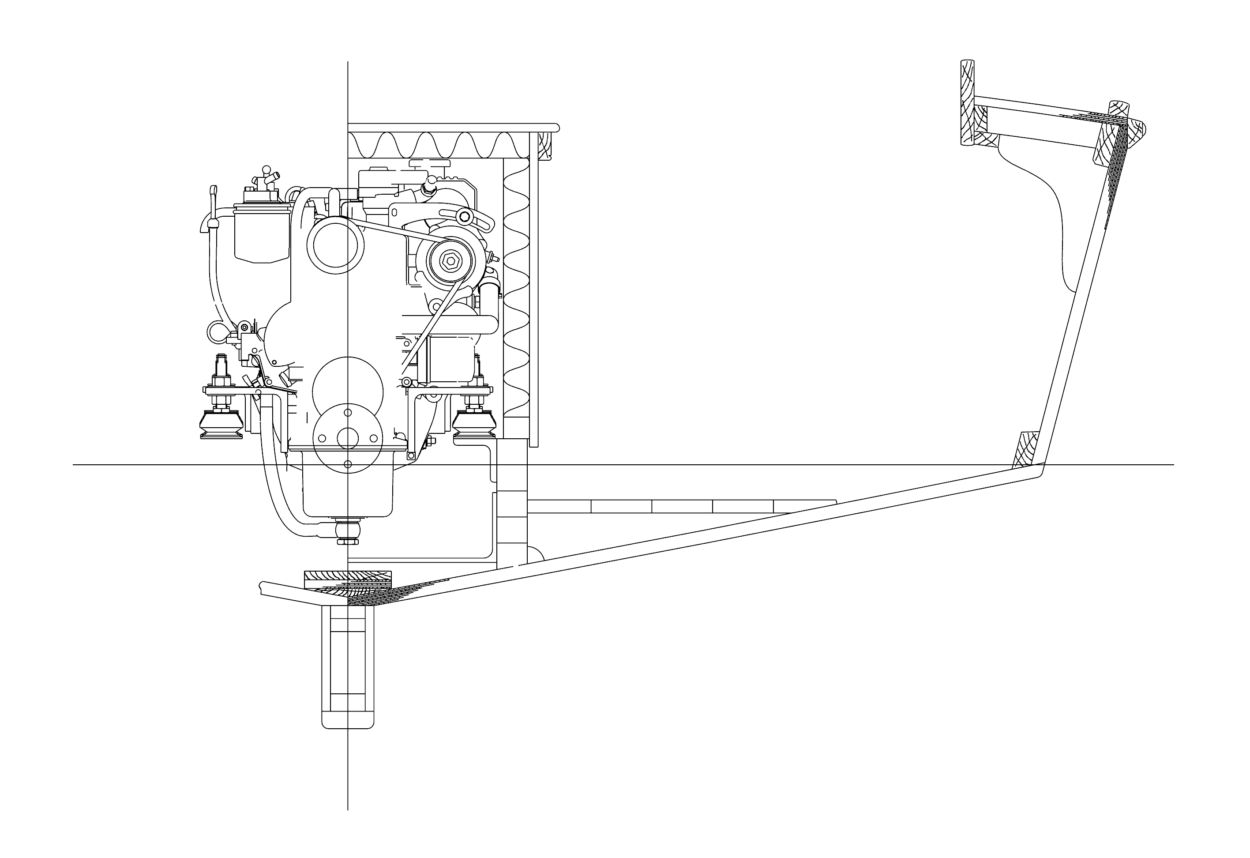
    The hull is built upside down over molds and a ladder frame. Heavy 3/4” plywood planking allows for a minimum of internal framing and makes future maintenance easier. This boat will be happy to live on a trailer, with no worries about drying out or opening seams. She uses the same plywood construction techniques that have proven successful in my Point Comfort skiffs, but her rounded stern will add a bit more challenge to the project.

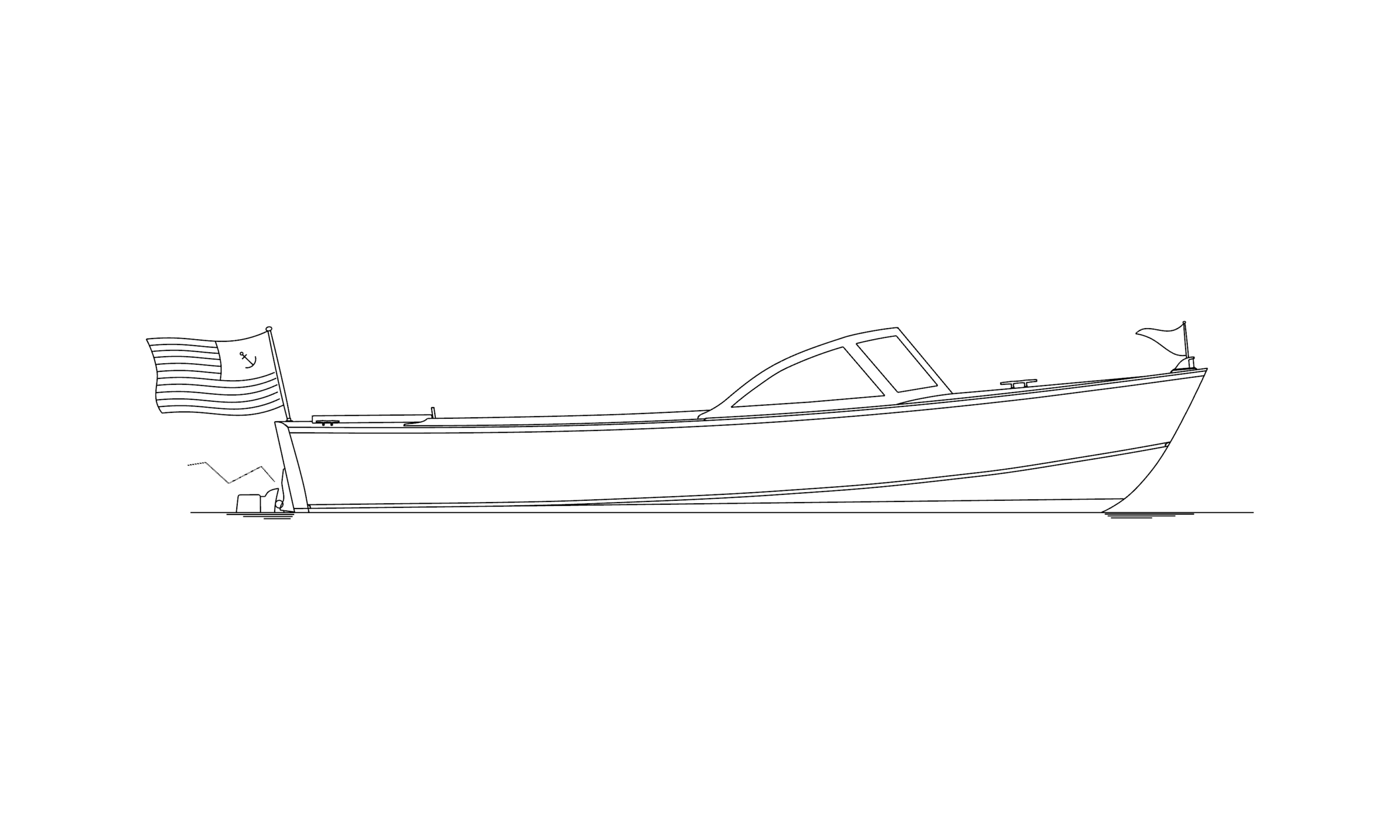
    Included are details for a cabin version and a shade top – the two could be combined for spartan cruising for those with sufficient pluck.

    The plans consist of nine sheets: Lines, Outboard Profile, Construction Plan, Construction Sections, Alternative Arrangements, Building Jig, and three sheets of full-sized patterns.


    STUDY PLANS: Click here to download free study plans.

    TO PURCHASE PLANS: Plans include 4 sheets. To order online using Paypal’s ordering system (which accepts credit cards and eChecks), please select one of the following buttons:

    U.S. orders. $300 + $30 shipping = $330
    International orders, including Canada. $300 + $80 shipping = $380
    You can see your Paypal Cart at any time by clicking the button below:

    You can also order plans by sending a check or money order to Hylan & Brown Boatbuilders, 10 Frank Day Ln, Brooklin, ME 04616.

    FAQ: Many questions are answered in Frequently Asked Questions. Please check there first.

    Particulars

    LOA25′
    Beam7′ 8″
    Draft1′ 11″
    Disp.approx. 2000 lbs
    Speedup to 17 kts, depending on version, motor, and final weight
    TrailerableYes, with an appropriate towing rig
    Hull typeV-bottom chine hull
    ConstructionPlywood
    Suitable forSomewhat protected waters
    Skill neededIntermediate
    Lofting requiredNo, full-size patterns included
    Level of detailAbove average
  • Top Hat

    Top Hat

    Top Hat

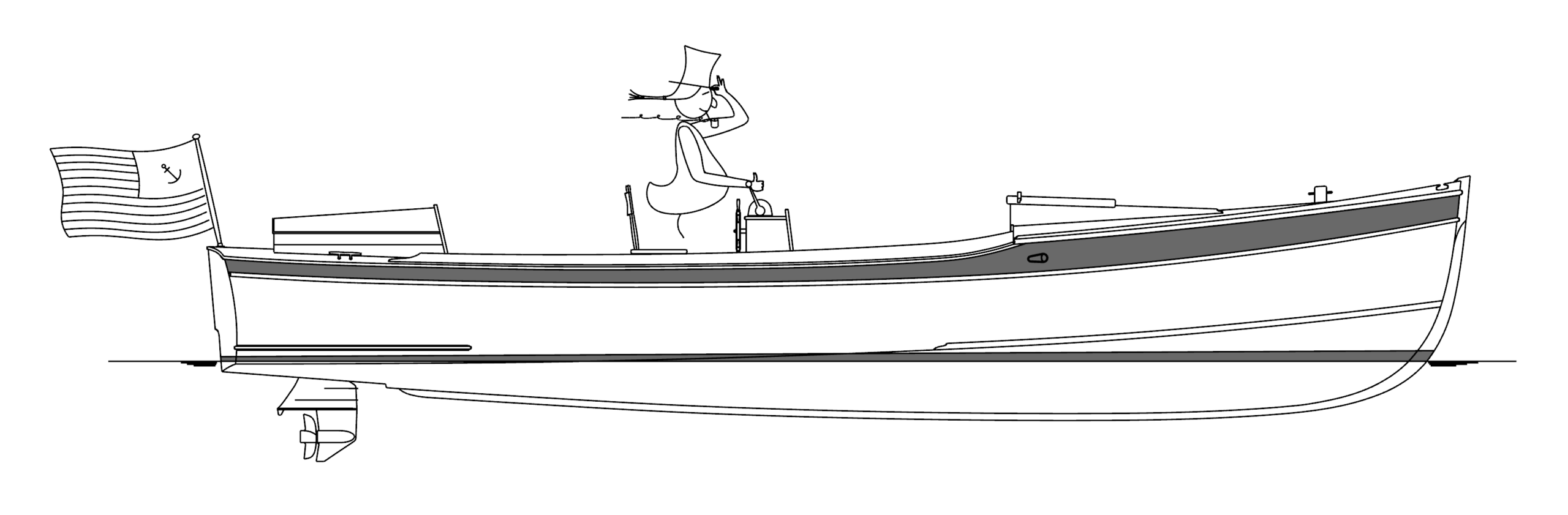
    26′ V-bottom launch

    Good speed and seakeeping ability with low impact and noise

    TOP HAT traces her heritage to the vee bottom boats designed by William. Hand in the early 1900s. Her lines, construction and propulsion have be updated, but the essential virtues remain – seaworthy and seakindly performance, good speeds with modest horsepower, handsome looks and ease of construction.

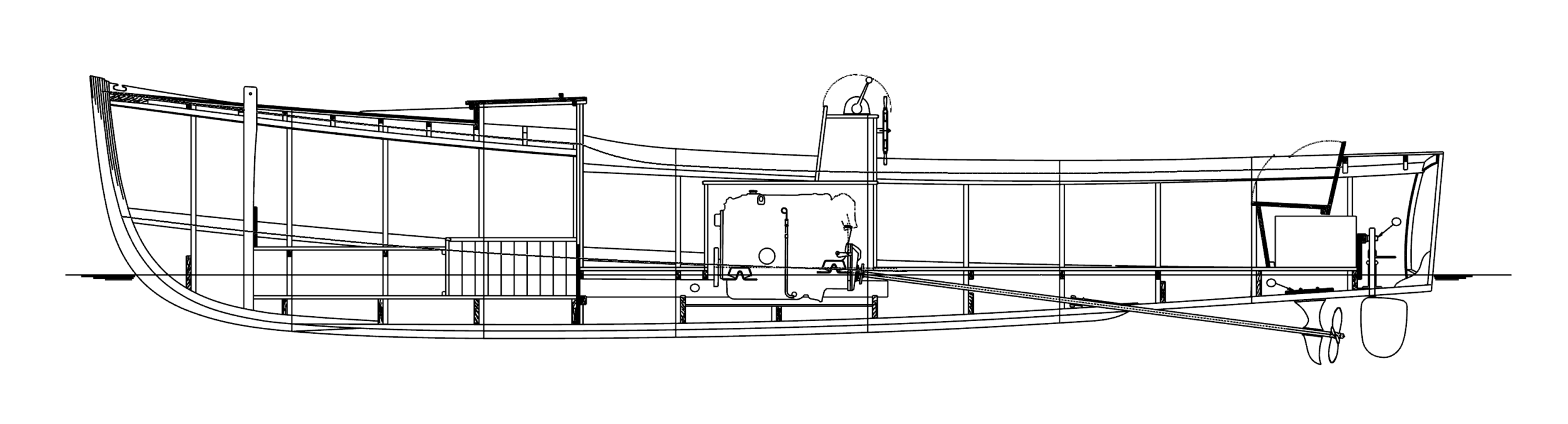
    A 50 HP Honda outboard in a well gives very quiet operation, easy maintenance and good handling in reverse. Also shown is an alternative inboard engine version.

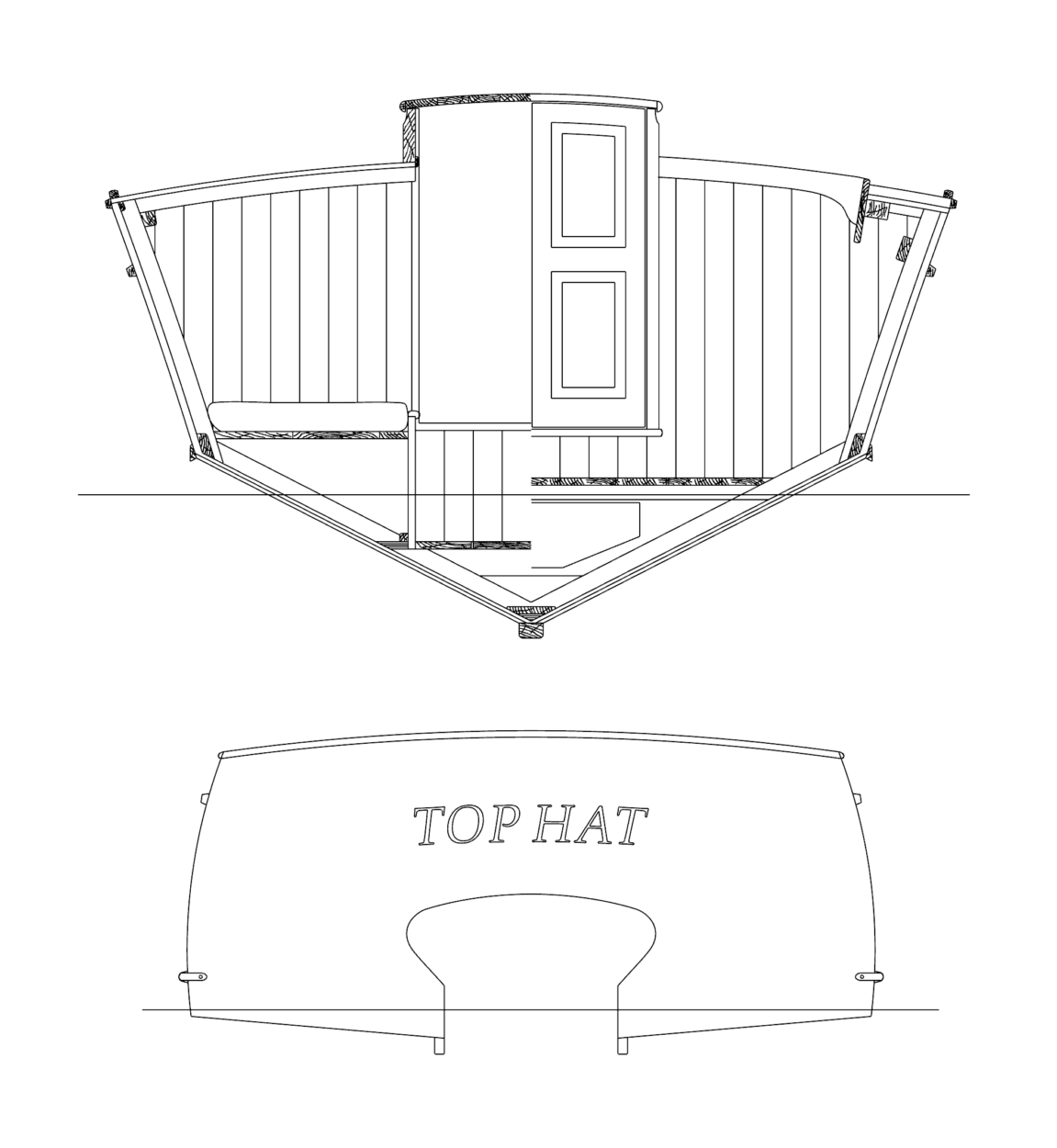
    Plans are well detailed, and consist of 8 sheets: outboard profile, lines & offsets, inboard construction profile, constructions sections, building jig, two detail sheets, and inboard diesel construction.

    A CD of photos in JPEG format taken during the construction of the prototype is available and will be a help to all builders.


    STUDY PLANS: Click here to download free study plans.

    TO PURCHASE PLANS: Plans include 8 sheets. A photo CD is also available. To order online using Paypal’s ordering system (which accepts credit cards and eChecks), please select one of the following buttons:

    U.S. orders, plans only. $250 + $20 shipping = $270
    U.S. orders, plans + CD. $300 + $20 shipping = $320
    International orders, including Canada, plans only. $250 + $80 shipping = $330
    International orders, including Canada, plans + CD. $300 + $80 shipping = $380
    You can see your Paypal Cart at any time by clicking the button below:

    You can also order plans by sending a check or money order to Hylan & Brown Boatbuilders, 10 Frank Day Ln, Brooklin, ME 04616.

    FAQ: Many questions are answered in Frequently Asked Questions. Please check there first.

    Particulars

    LOA26′ 5″
    Beam7′ 3″
    Draft15″ motor up
    Disp.3200 lbs (outboard version)
    Speedup to 18 kts
    TrailerableYes
    Hull typeV-bottom chine
    ConstructionStrip plank topsides, double plywood bottom over sawn frames
    Suitable forSomewhat protected waters
    Skill neededIntermediate
    Lofting requiredYes
    Level of detailAbove average

    OTHER REFERENCES: Design review by Robert Stephens in WoodenBoat #168, p. 86.

  • Pretty Marsh

    Pretty Marsh

    Pretty Marsh

    An elegant and beautiful 21′ runabout

    This runabout was designed for a man who wanted a boat as elegant and beautiful as the landscape surrounding his summer home at Pretty Marsh on Mount Desert. With lots of flare in the bow sections, and tumblehome at the stern, she has looks that match her performance.

    Moderate deadrise gives good performance with modest horsepower, a soft and predictable ride. Rugged construction means she can take a pounding if she has to. The plans show alternatives for outboard or I/O propulsion and runabout or center console layout.

    Construction is for developed plywood, but this design could be modified for aluminum construction as well. The plans are on five sheets and include lines, construction plan & sections, and construction alternatives.


    TO PURCHASE PLANS: Click here to order plans from Woodenboat Store

    STUDY PLANS: Click here to download free digital study plans

    FAQ: Many questions are answered in Frequently Asked Questions. Please check there first.

    Particulars

    LOA21′ 2″
    Beam7′ 3″
    Draft14″
    Power80-200 hp, I/O or outboard
    Speedup to 45 kts
    TrailerableYes
    Hull typeModerate V-bottom with soft chines
    ConstructionDeveloped plywood
    Suitable forSomewhat protected waters
    Skill neededIntermediate to advanced
    Lofting requiredYes
    Level of detailAbove average

    OTHER REFERENCES: “Plywood and the Computer” WoodenBoat 148 (page 54).

  • Marsh Hen

    Marsh Hen

    Marsh Hen

    Marsh Hen is the result of a design/build commission from a gentleman who enjoys kayaking in the extensive marshlands of coastal South Carolina and Georgia. She would also make a fine little cruiser for a small family who was willing to get back to basics.

    Marsh Hen’s hull form show genes from both William Hand’s early V-bottom designs and the Maine lobster boat. Both parents contribute seaworthy and seakindly performance, good speeds with modest horsepower, and handsome looks. Her plywood construction is more accessible to amateur builders.

    A 90 HP Evinrude outboard in a well gives very quiet operation, easy maintenance and good handling in reverse.

    Plans are well-detailed, and consist of 6 sheets: outboard profile, lines & offsets, inboard construction profile, constructions sections, joinery details, and building jig. A CD of photos in JPEG format taken during the construction of the prototype is also available.


    STUDY PLANS: Click here to download free study plans.

    TO PURCHASE PLANS: Plans include 6 sheets and a photo CD. To order online using Paypal’s ordering system (which accepts credit cards and eChecks), please select one of the following buttons:

    U.S. orders. $300 + $20 shipping = $320
    International orders, including Canada. $300 + $80 shipping = $380
    You can see your Paypal Cart at any time by clicking the button below:

    You can also order plans by sending a check or money order to Hylan & Brown Boatbuilders, 10 Frank Day Ln, Brooklin, ME 04616.

    FAQ: Many questions are answered in Frequently Asked Questions. Please check there first.

    Particulars

    LOA29′ 2″
    LWL27′ 6″
    Beam8′ 6″
    Draft17″ motor up
    Disp.5200 lbs
    Speedup to 18 kts
    TrailerableYes
    Hull typeV-bottom chine
    ConstructionPlywood topsides, double plywood bottom
    Alternate constructionCold-molded
    Suitable forSomewhat protected waters
    Skill neededIntermediate
    Lofting requiredYes, very simple
    Level of detailAbove average
  • Hird Island Electric Skiff

    Hird Island Electric Skiff

    Hird Island Electric Skiff

    An inshore skiff for sails, oars, or electric propulsion

    I developed this boat for my own use in the coastal Georgia marshes. In this area there are miles and miles of narrow, winding, tidal creeks, surrounded by tall marsh grasses. Birds and other animals abound, and quietly sneaking up on wildlife was one of the primary reasons for this design. The water in these creeks is surprisingly deep, but they are so narrow and winding that, much of the time, sailing is hopeless. You just get the sail up and drawing, and the creek will turn, changing your beautiful reach into a fruitless beat. There are pretty strong tidal currents as well, so rowing your way out of this situation can be exhausting. Therefore the design of this skiff was driven by the search for easy electric powering, with sailing and rowing secondary.

    Easy powering means a narrow hull, and speeds at or below hull speed – in this case, a little over 5 knots. These same features favor rowing, and the Hird Island Electric Skiff makes a pretty nice rowing boat, particularly if the heavy batteries are left ashore. Narrow hulls are not good for sailing, however, particularly so if there is no external ballast keel. Stability is what is needed for really good sailing, and narrowing the hull for easy propulsion takes away from stability. That said, this skiff will sail well on all points, but may require a disconcerting amount of hiking out in order to stay on her feet when going to windward. Her rig is rather small, and designed for very easy hoisting, the theory being that I would power when the wind was foul and quickly hoist the sail when it turned fair for a bit.

    The other features of this design include a plywood chine hull for simple construction and easier dry sailing. There are two generous flotation compartments, in case you go over with those heavy batteries aboard. A rope steering system that I picked up from N.G. Herreshoff’s Coquina design allows steering from anywhere in the boat and lets two people sit facing forward without having to fight with the tiller. There is a removable slip thwart, which will put a rowers weight in the proper place and then gets out of the way when sailing or powering. There are a couple of little back rests that attach to the aft thwart for comfortable seating.

    While I first envisioned this skiff as doing a fair amount of sailing, in fact our usage of her has evolved in two other directions, both based on her electric power. The first is wine-and-cheese sunset cruises with my wife. Here the quietness of the motor and the private proximity of the passenger promotes wonderful conversations (perhaps helped along by the wine). Our second favorite use of this boat has been for wonderful moonlight cruises. Sailing has receded in our usage partly from my own laziness, but also because the range under batteries has turned out to be far more than I expected.

    As with most of my designs, after spending a little time with the boat, I found a few things I would like to change. For this reason, the boat you see being built in the photos may not be the same in all respects as the one shown on the plans. Most of these changes won’t even be noticed, but one, the setup method, most certainly will.

    When I began on this design, I thought I had better get out of my rut and try some variation of stitch & glue construction. In this method, the boat’s shape is defined by bending accurately shaped panels together and fastening them with epoxy glue and fiberglass tape. By the time I was done, I decided to get back into my rut again and show a regular ladder-frame-with-molds-set-up-on-it method of defining the hull shape. One reason for this is that the hull panels are so thin that it is difficult to fold them together accurately enough to get a fair and true hull shape. The other reason is that, while epoxy/fiberglass chines may look easy and are un-intimidating to the amateur builder, they are far more time consuming than traditional wooden ones, and don’t look nearly as nice. There are still places where epoxy fillets provide an easy and clean method of joining two pieces of plywood together (for instance in the motor well and battery compartments), but I think that for setup, my usual method will make a better, nicer looking, and faster to build boat.

    For diehard stitch & glue aficionados, you are still welcome to proceed in that fashion, and the necessary information is in the plans. For the rest of you, the traditional method will serve you in better stead, particularly if you are bitten by the bug and decide to go on and build other boats. No lofting is required in either case – the patterns included with the plans will be accurate enough.


    STUDY PLANS: Click here to download free study plans.

    TO PURCHASE PLANS: Plans include 6 sheets, and photo CD of construction and detailing. To order online using Paypal’s ordering system (which accepts credit cards and eChecks), please select one of the following buttons:

    U.S. orders. $200 + $20 shipping = $220
    International orders, including Canada. $200 + $80 shipping = $280
    You can see your Paypal Cart at any time by clicking the button below:

    You can also order plans by sending a check or money order to Hylan & Brown Boatbuilders, 10 Frank Day Ln, Brooklin, ME 04616.

    FAQ: Many questions are answered in Frequently Asked Questions. Please check there first.

    Particulars

    LOA15′ 3″
    Beam4′
    Draft9″ / 2′ 6″
    Sail area58 sq ft
    TrailerableYes
    Hull typeFlat bottom forward, V-bottom aft
    ConstructionGlued plywood
    Suitable forProtected waters
    Skill neededBeginner
    Lofting requiredNo, full-size patterns included
    Level of detailAbove average