
• In The Shop
  • Build
  • Restore
  • Electrify

Category: Solar

  • Solar Expedition Boat for Australia

    Solar Expedition Boat for Australia

    Solar Expedition Boat for Australia

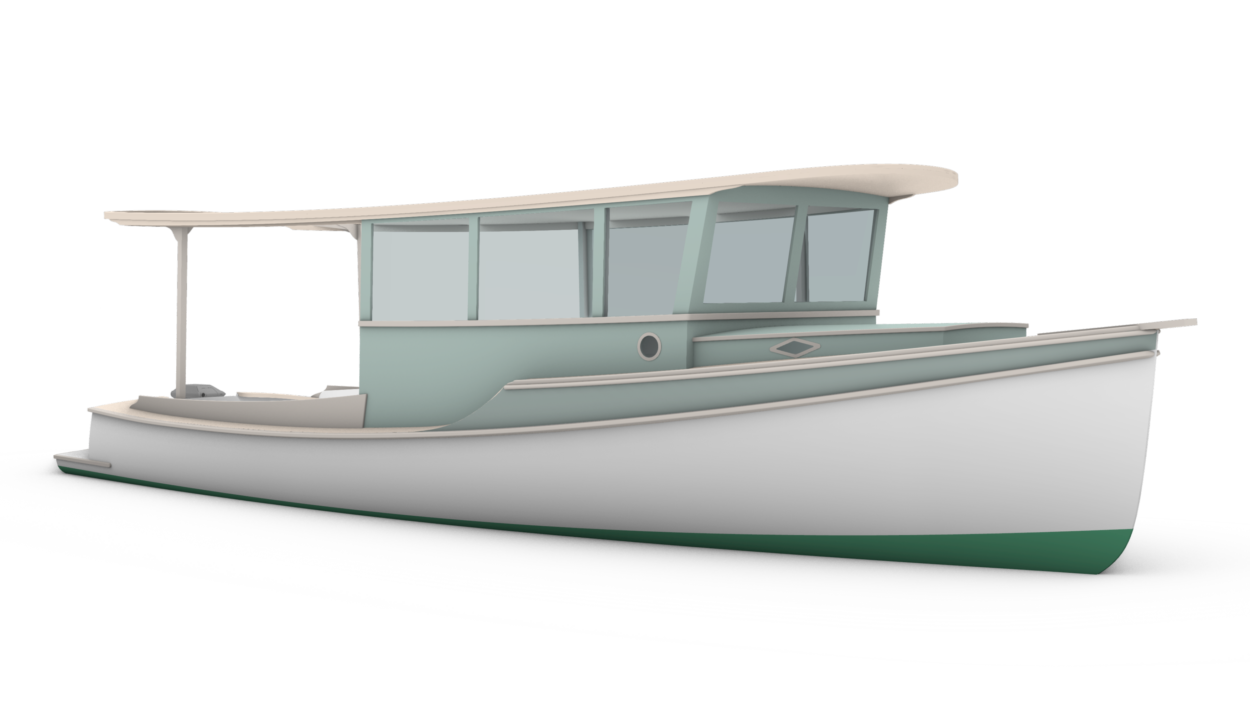
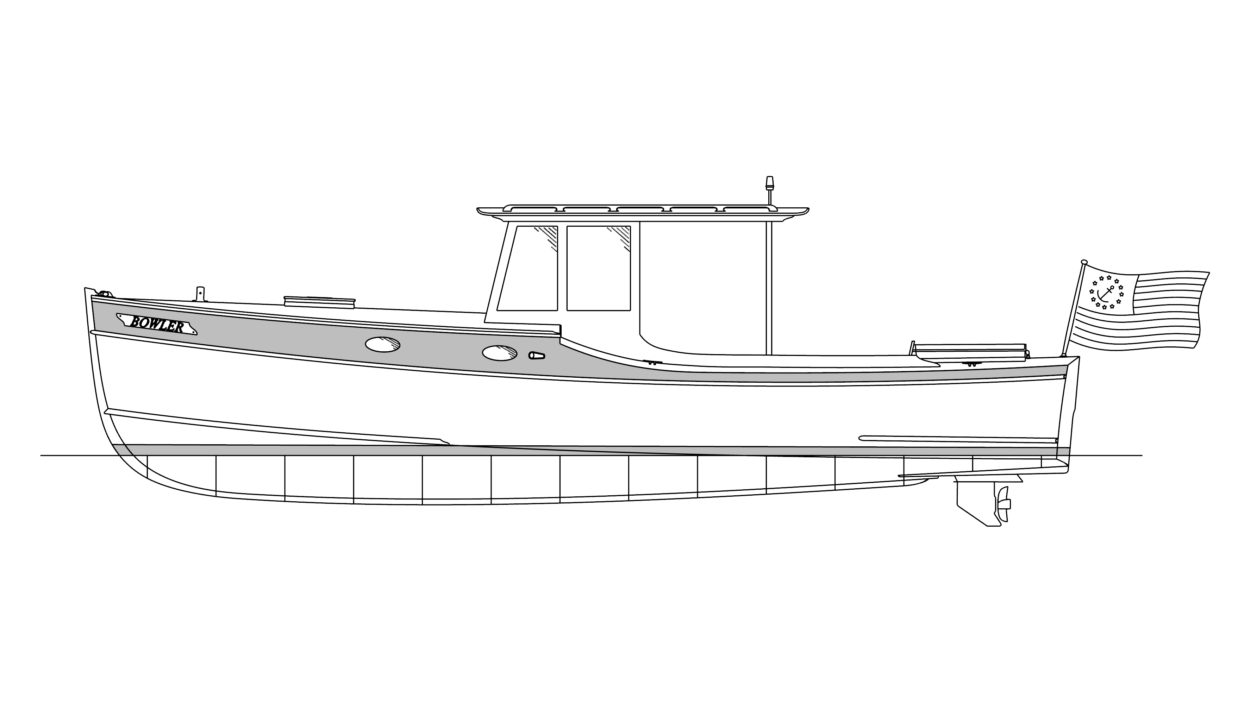
    Early in 2024, we were approached by an experienced Australian boatman who had heard of our work with electric propulsion. He sent along a design brief that demonstrated that he knew boats and was familiar with the advantages and constraints that go with marine electric propulsion. We don’t often take design commissions for construction in other shops, but this one meshed perfectly with my interest in the possibilities for low impact, quiet cruising.

    Historically, the development of power boats has always been about going faster. Cheap petroleum and advances in internal combustion fostered this trend, despite the fact that high speed boating is among our most energy intensive and polluting pursuits. Batteries still have a long way to go before they can pack the power density of a good sized fuel tank, but low speed boating can be very efficient indeed.
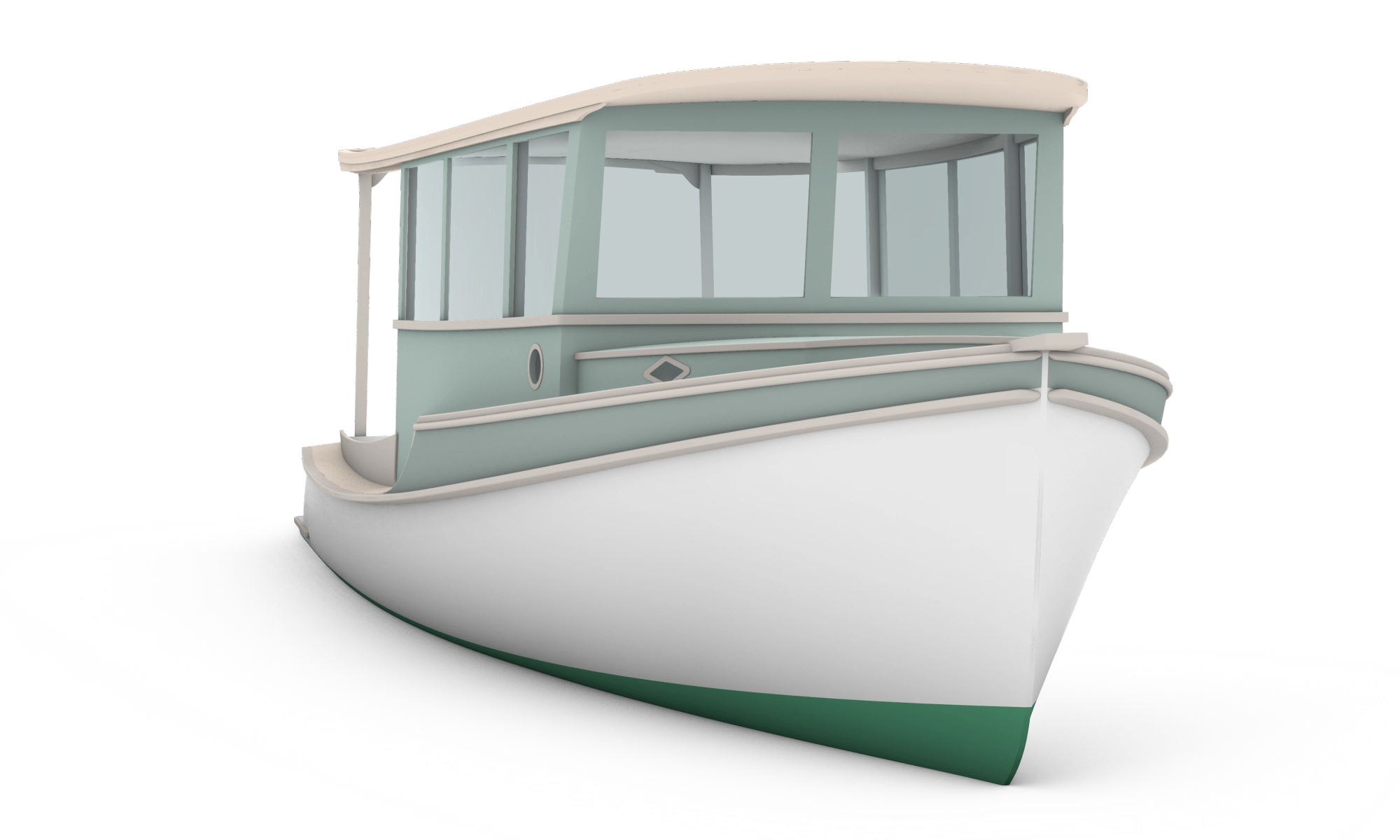
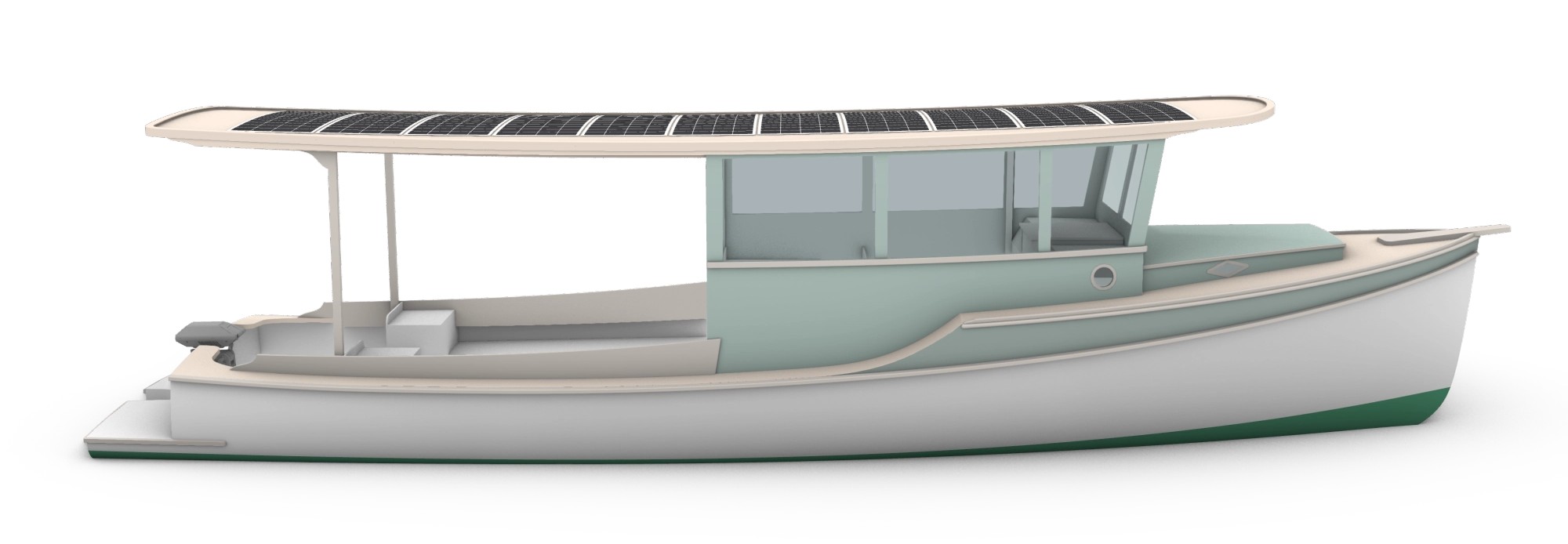
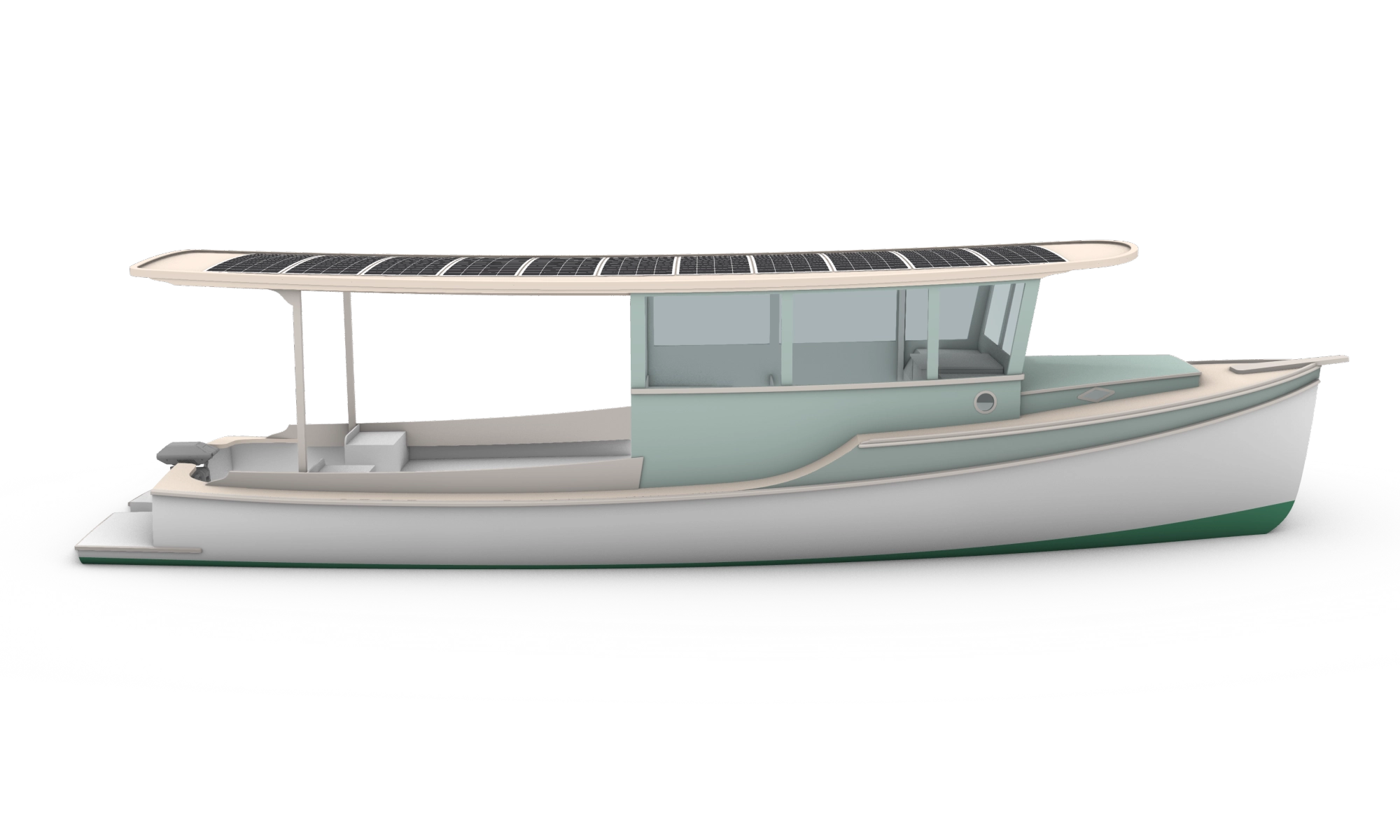
    Hull shapes that are optimized for high speeds are inefficient at lower speeds — you have to go back almost 100 years for designs that are optimized for the upper hull speed range that is so wonderful for electric boating. Atlantic Canada’s Cape Island boats and Sam Crocker’s small fishing vessels were the mode for the hull shape for this design. A large solar canopy will allow true solar sailing on the sunny days around the summer solstice, extend battery range, and mean fewer stops for marina shore power. As batteries get lighter and cheaper, each of our new electric projects seems to include more of them.

    The design brief for this boat called for a boat large enough for spartan cruising for one or two people, with a beam narrow enough to avoid extra permits on Australian roads, and light enough to be towed behind the owner’s vehicle. A large solar canopy and traditional styling were also called for. With these parameters set, the rest is just details! Construction will start in the winter of 2025, at Denman Marine in Tasmania.

    At Hylan & Brown, we feel fortunate to have found a group of committed people who are interested in slowing down and enjoying the peace and quiet that comes with electric power boating. We enjoy the challenge of working with a variety of electric propulsion suppliers to figure out the best components to meet their needs and work hard to keep abreast of the best combination of new and reliable in this rapidly evolving technology.

    – Doug Hylan

    Particulars

    LOA30′
    Beam8′ 2″
    Draft14″
    Disp.3100 lbs
    MotorePropulsion Navy 6 (6 kW, 48V)
    Batteries30 kWh (Victron LFP)
    Solar1800 W (custom Solbian panels)
    Range70 nm at 4 kts, unlimited with solar
  • SEIWA

    SEIWA

    SEIWA

    26‘ Navy Whaleboat (1969, 2025)

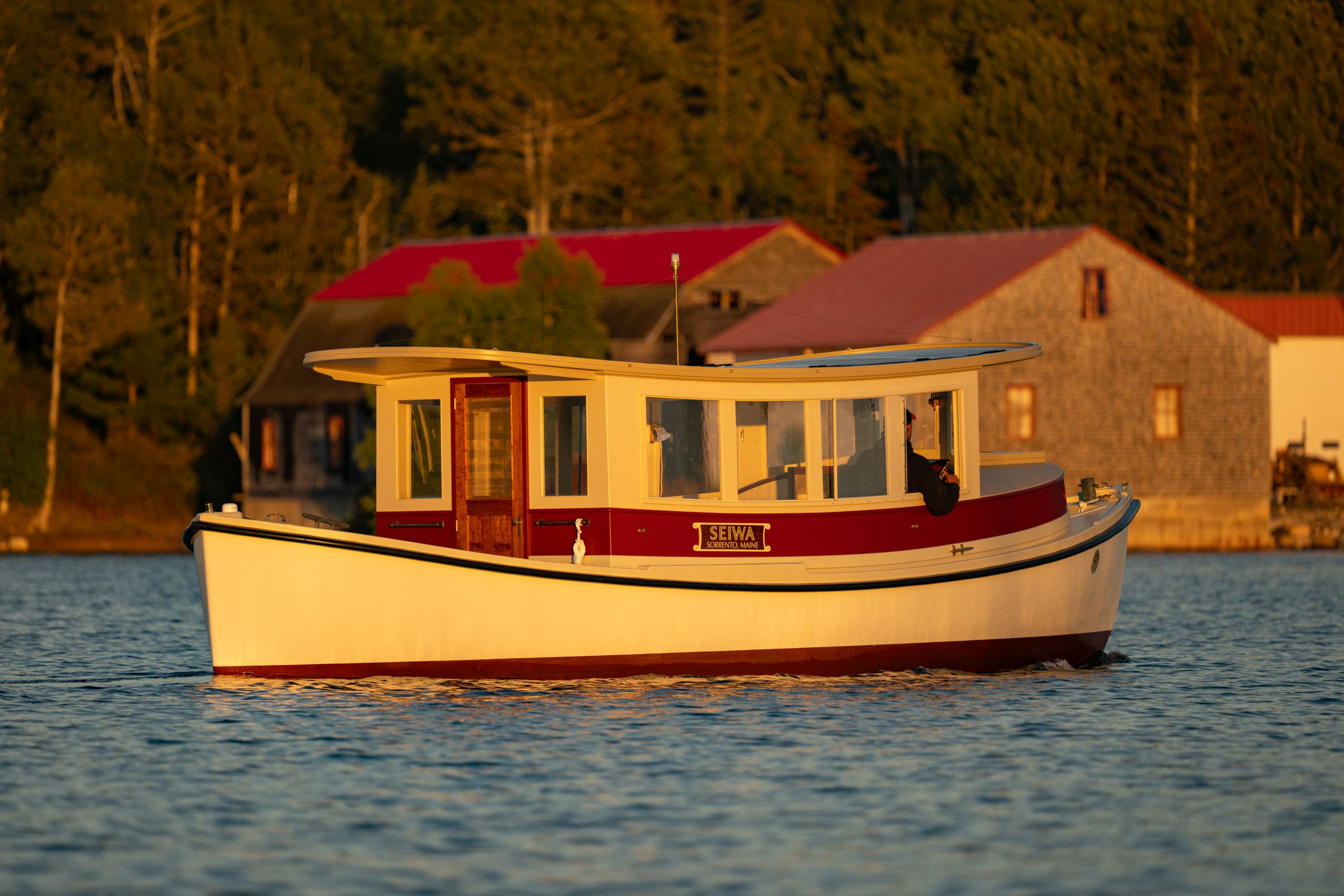
    After the success of VEGA’s electrification in 2023, her owner came back to us with a new project in mind.  He enjoyed using VEGA for day trips with friends and family, but wanted another boat to venture further afield in, with simple overnight accommodations for up to two people.  Sorrento to Isle au Haut without plugging in was the challenge he gave us – and he already had a boat in mind.

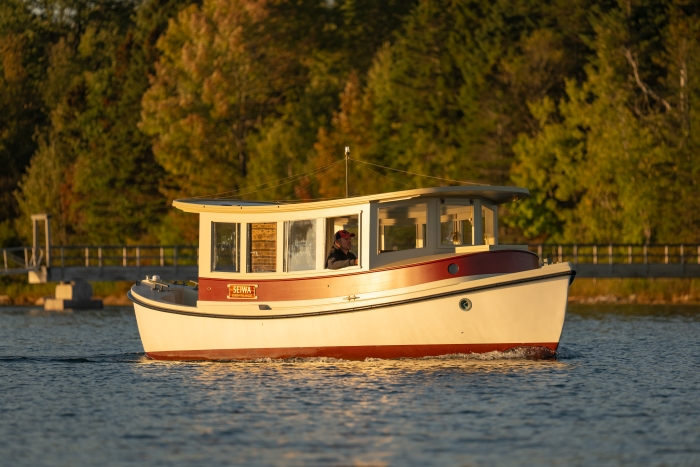
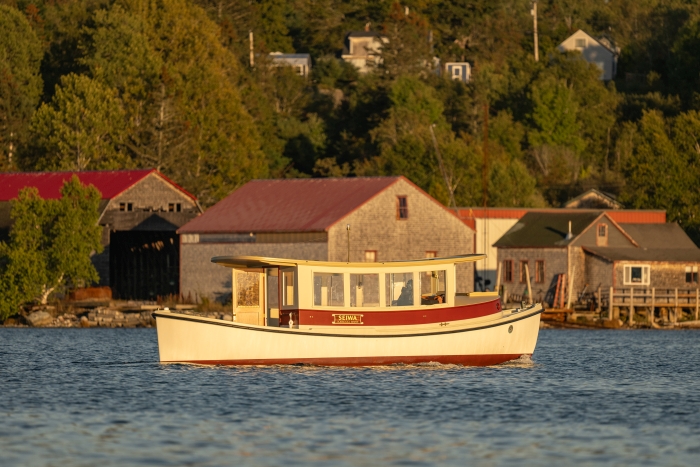
    Built in 1969 by Uniflite in Bellingham, WA, this former Navy motor whaleboat was a good candidate for efficient electric cruising.  With a double-ended hull designed for displacement speeds, she slips through the water with ease and can easily carry the weight of a large battery bank.  The design Doug came up with called for gutting the boat and building a new superstructure, with a long hardtop for solar panels, good protection from the weather, and lots of glass for unrestricted visibility.

    Photo: Nick Parson
    Photo: Nick Parson

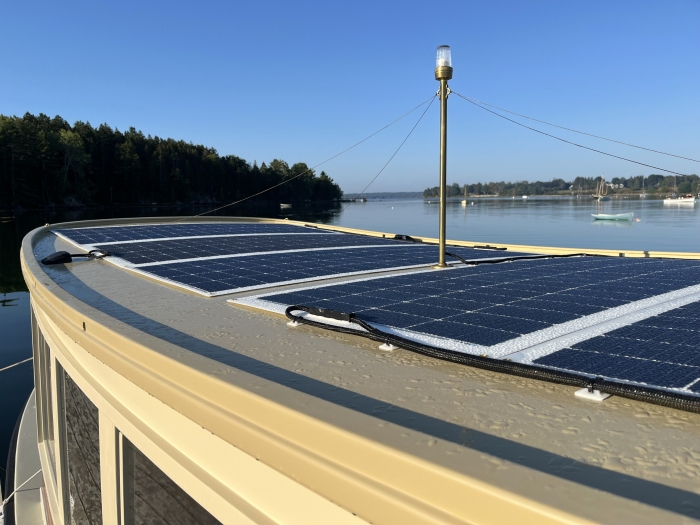
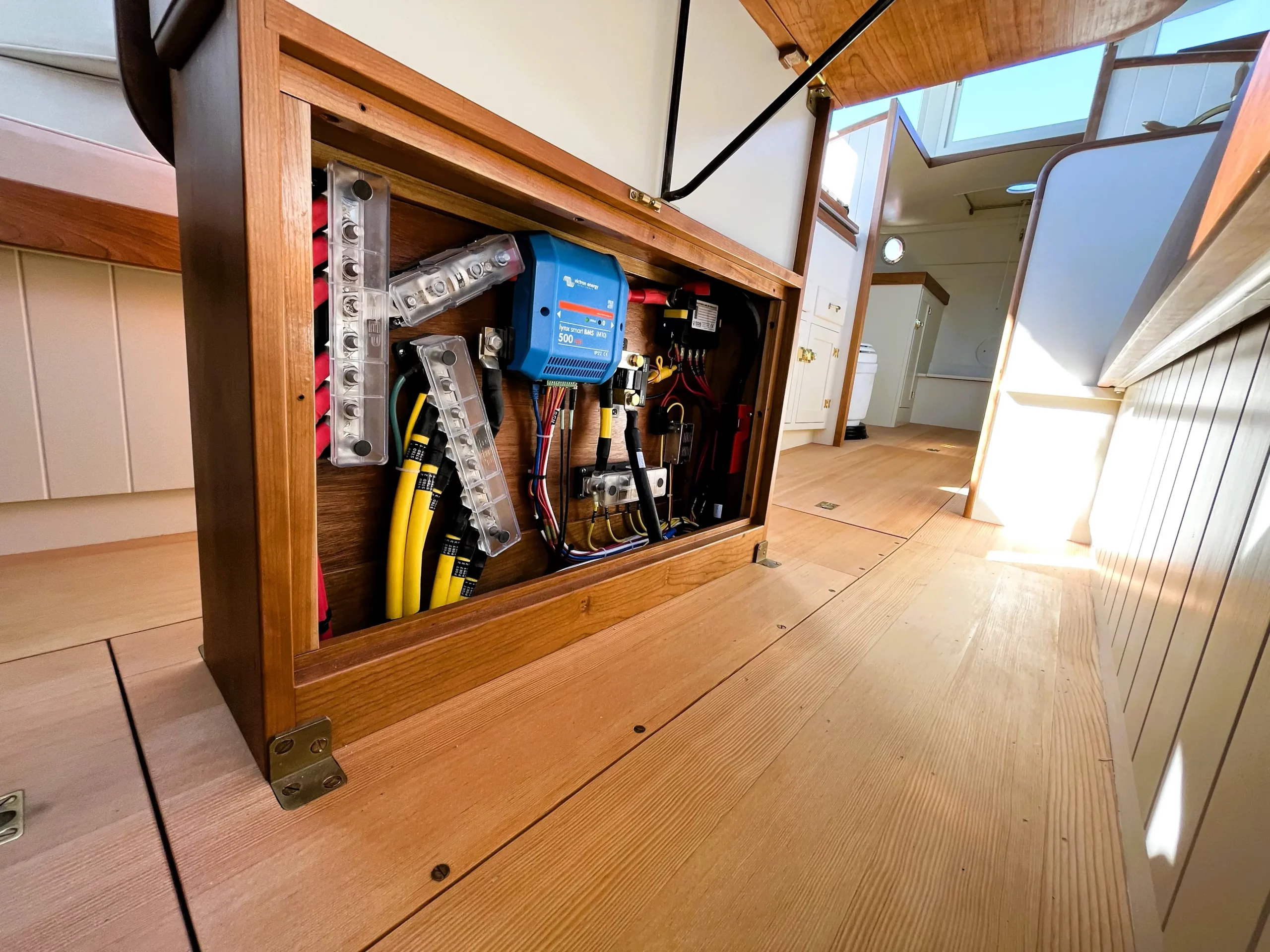
    For propulsion, we installed a 15 kW pod from Rim Drive Technology, paired with a 60 kWh Victron battery bank.  The result is smooth, silent operation with extremely low maintenance requirements.  Six 200 W solar panels mounted on the cabin top continuously recharge the batteries while underway, enabling what we call “solar sailing”: traveling at a speed determined by available sunlight rather than by drawing down the battery bank.  At modest cruising speeds, SEIWA can run comfortably all day, and under favorable conditions, with very little battery use at all.

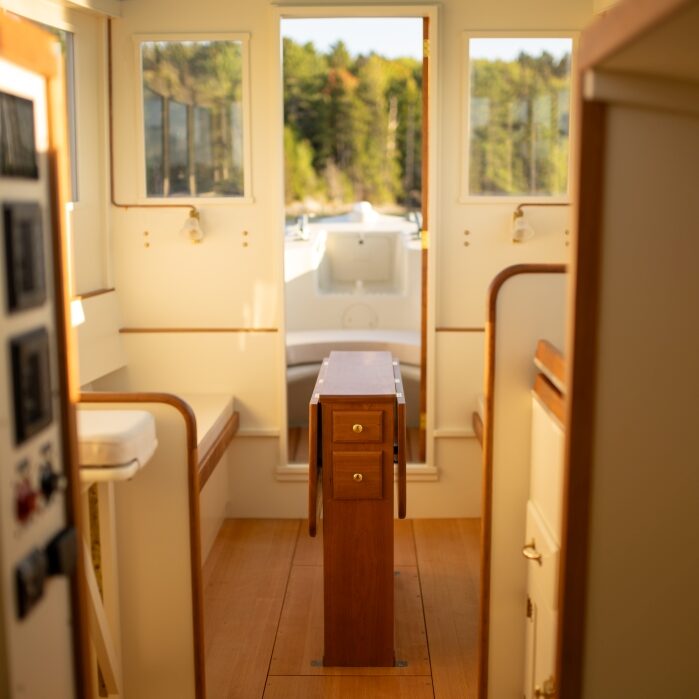
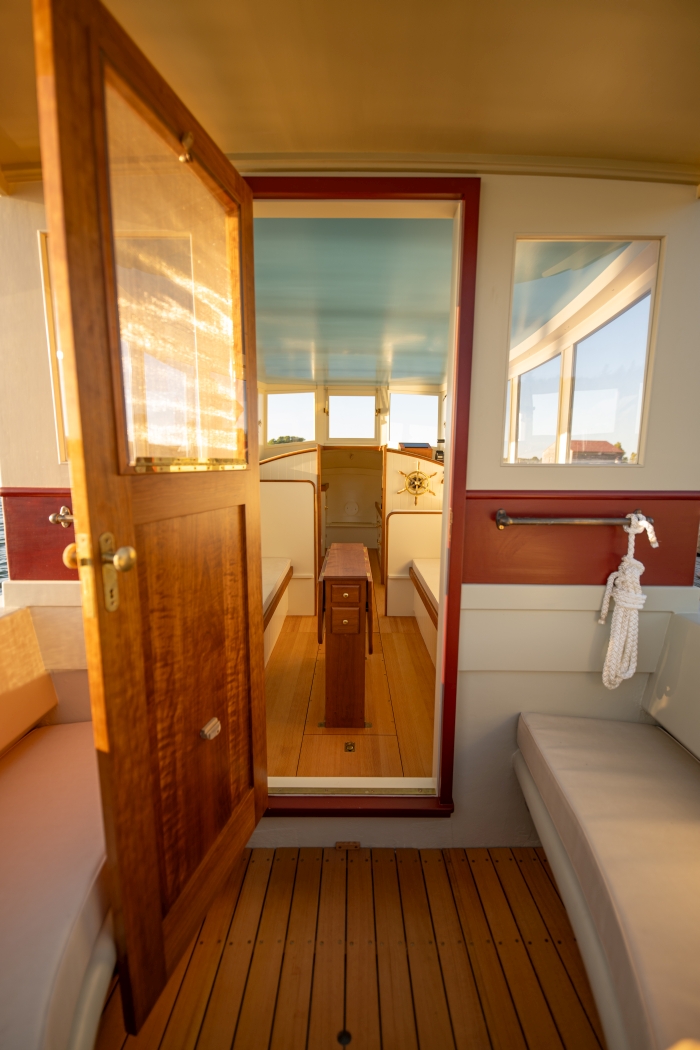
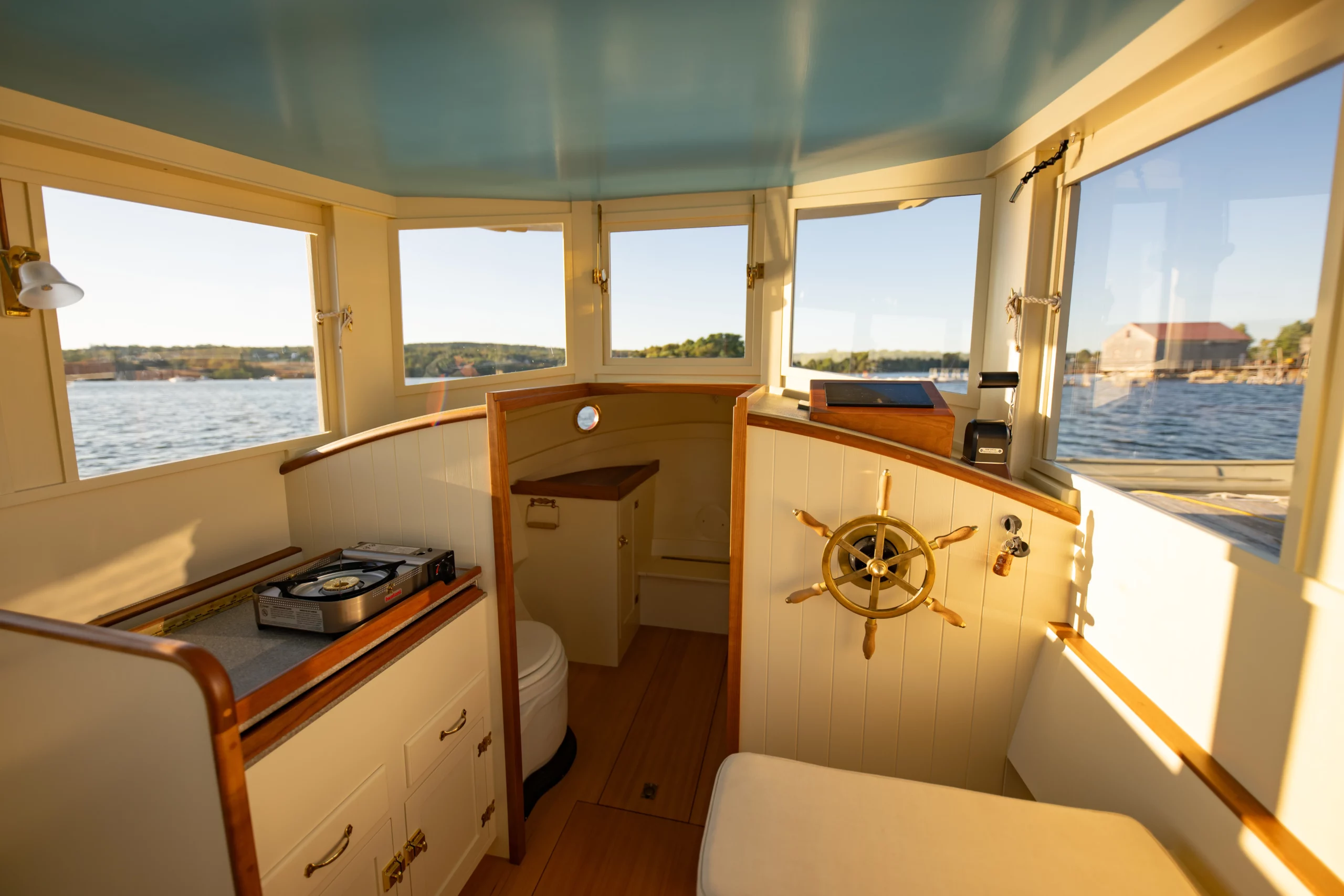
    Inside, we focused on simplicity, with accommodations tailored to her owner’s vision of minimalist coastal exploration.  Two settees convert to comfortable sleeping berths, and the compact cabin includes a Laveo waterless head and a clever galley with a folding single-burner stove that reveals a sink beneath.

    With planning, multi-day trips using nothing but the power of the sun are a real possibility in a boat like this.  For sailors transitioning away from sail, or cruisers looking for a quieter, less demanding way to explore, SEIWA offers an effortless and environmentally responsible alternative.  For us, the boat stands as a proof of concept: with the right hull, thoughtful design, and carefully-selected solar-electric systems, electric cruising isn’t just possible – it’s practical, peaceful, and deeply rewarding.

    Particulars

    LOA26′
    LWL25′
    Beam8′ 5″
    Draft2′ 2″
    Disp.7400 lbs
    MotorRim Drive Technology POD 15.0 (15 kW, 48V)
    BatteriesVictron LFP (60 kWh)
    Top Speed6.5 kts
    Cruise4 kts
    Range80 nm at 4 kts, 30 nm at 6.5 kts
    Range w/ solar130 nm at 4 kts, 33 nm at 6.5 kts
    Photo: Nick Parson
    25.9.15-Seiwa-8
  • VEGA

    VEGA

    VEGA

    31′ Cranberry Island Launch (1936, 2023)

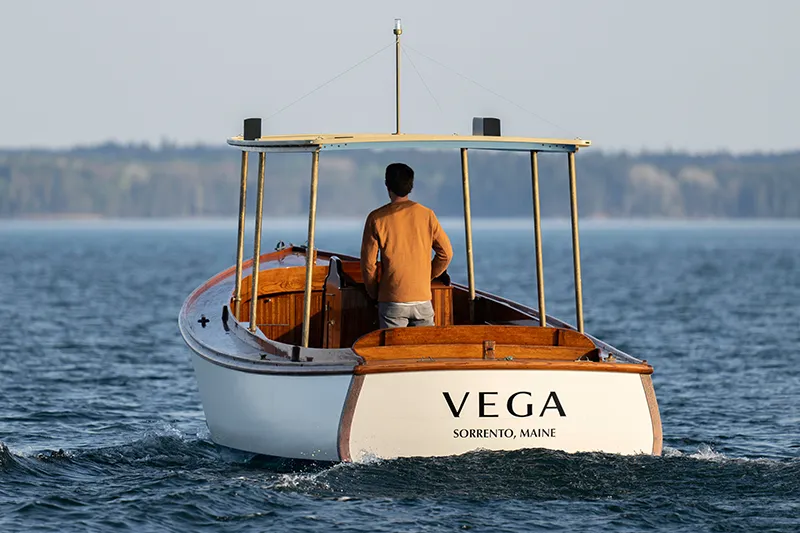
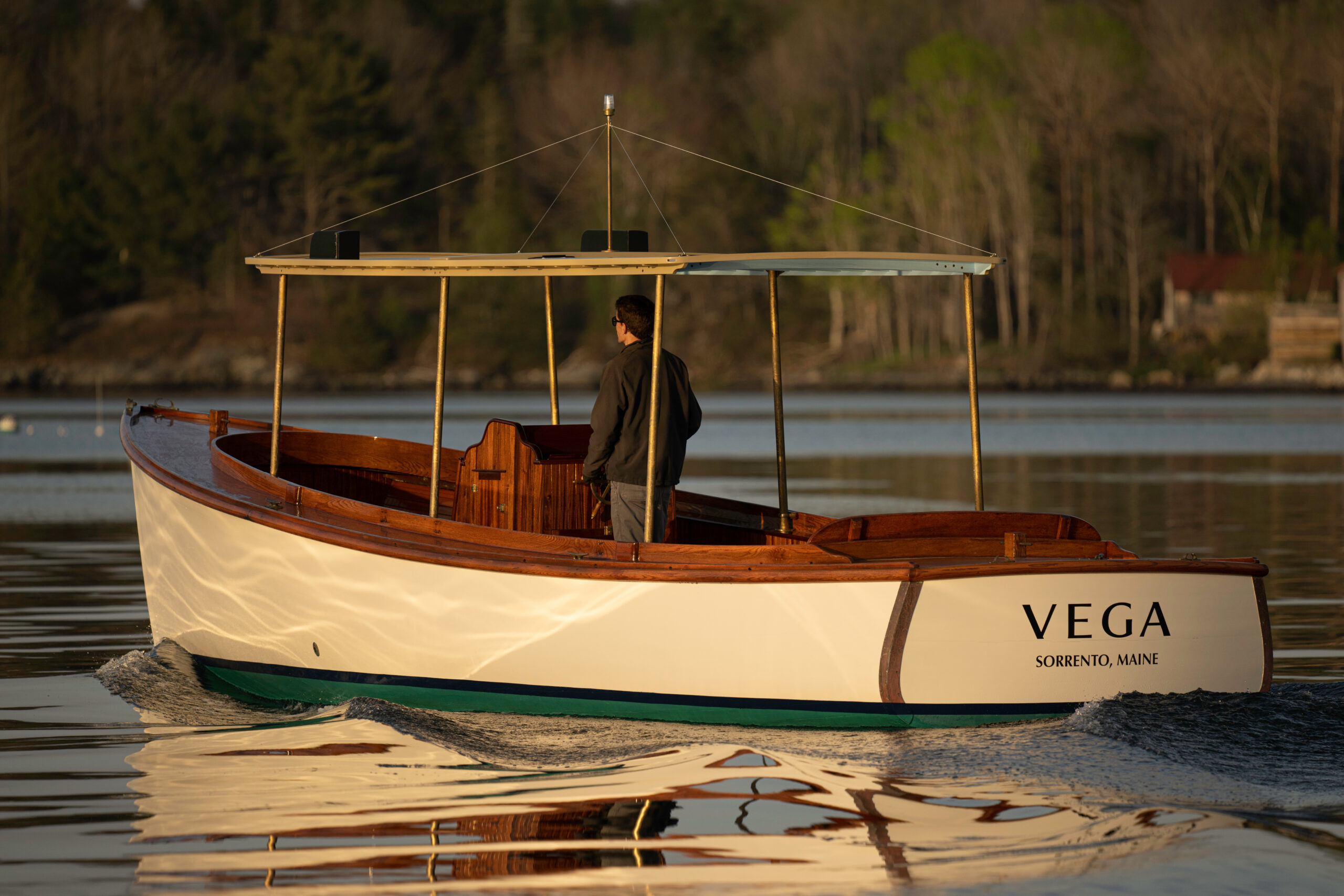
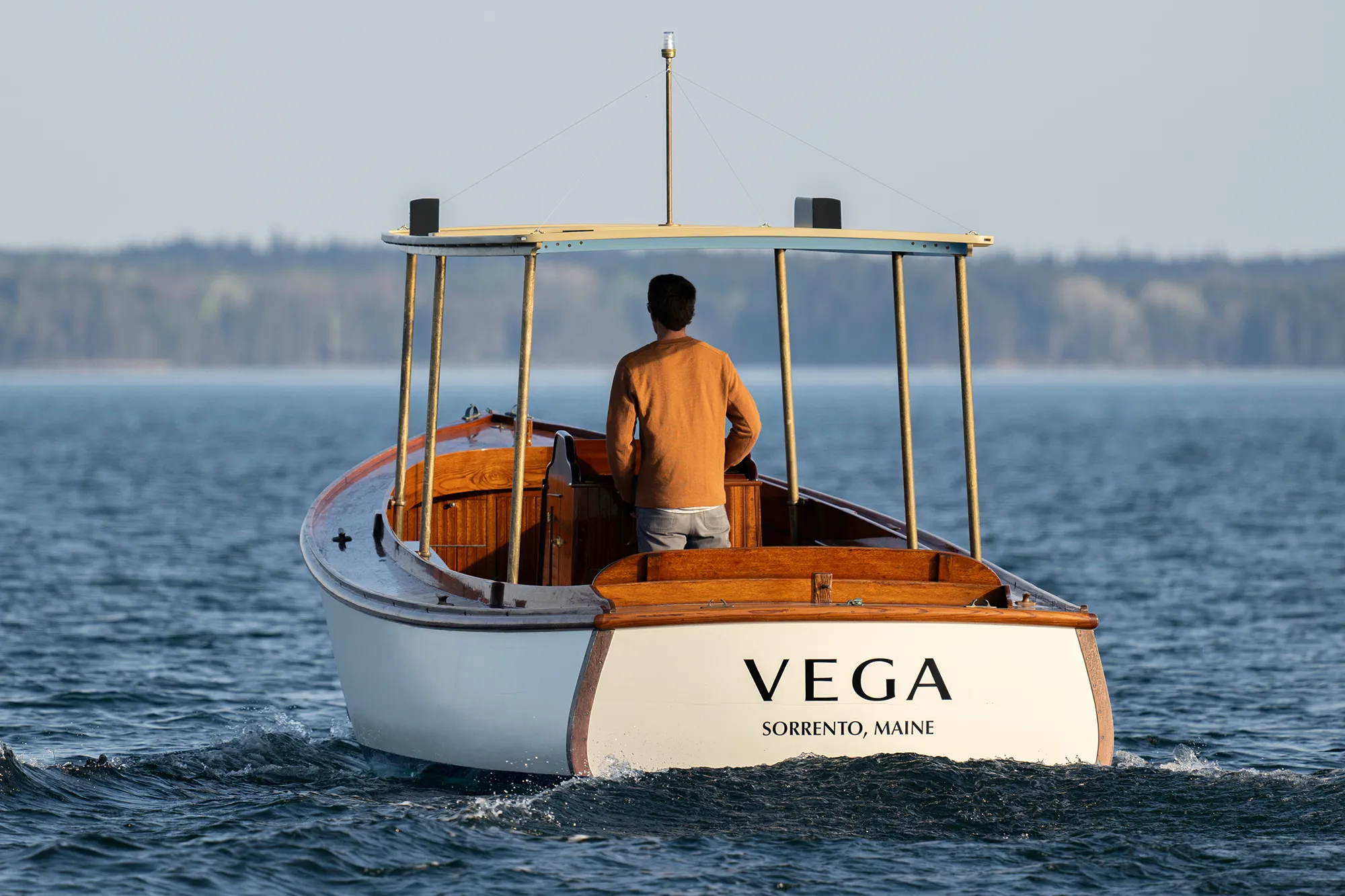
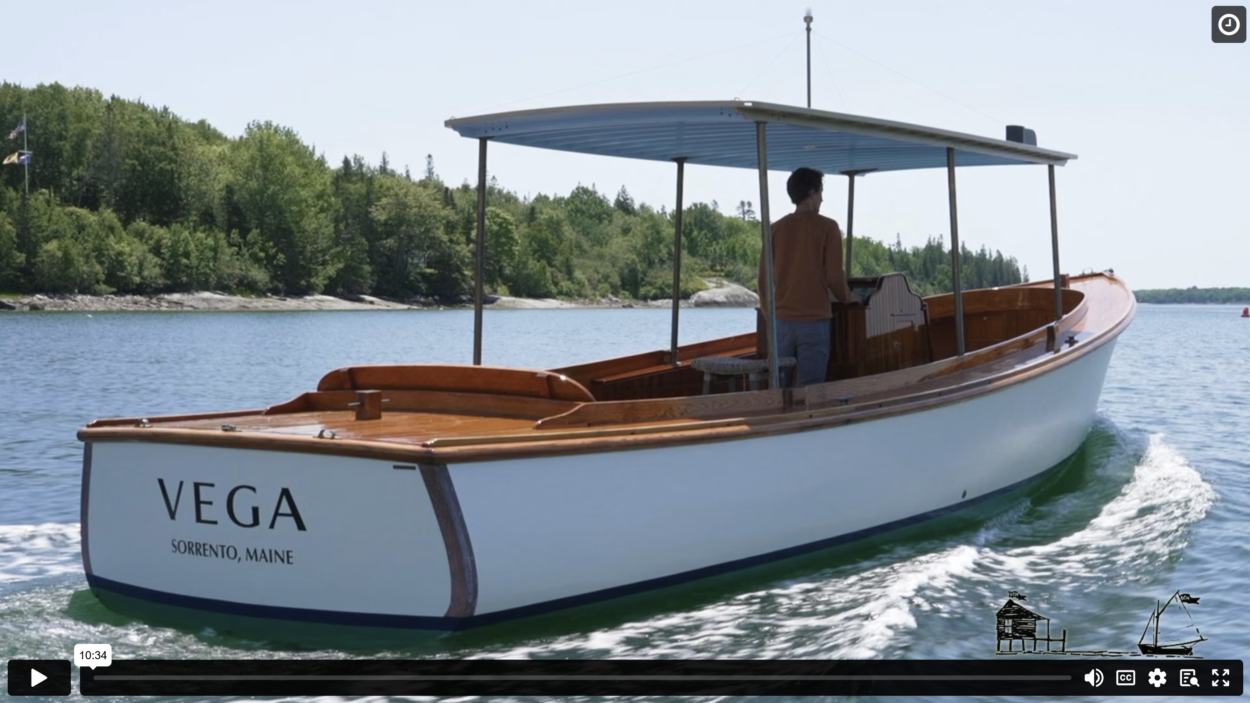
    VEGA was built on Great Cranberry Island In 1936. She spent the next 84 years enjoyed by one family and stored carefully on island. She came to us in remarkably original condition by way of Maynard Bray’s “Save a Classic” Column in WoodenBoat Magazine. Her new owner was interested in perpetuating the original fabric and spirit of the classic launch, while also converting her from gasoline to electric power.

    Photo: Nick Parson
    VegaPhoto: Nick Parson

    His intended use was well suited to electric power: regular joy rides, picnic excursions and cocktail cruises off his dock (with shore power) in Sorrento, with an occasional cruise to Stonington, Brooklin, or even western Penobscot Bay. The boat was a great candidate for electric, too: fine bow, long waterline, narrow beam and a not-quite submerged transom.

    The conversion was a success. With one season under her belt, we learned a lot about her abilities: She can easily go from Brooklin to Sorrento on a single charge; She can make regular short cruises and re-charge on solar alone, and a lot more.

    Particulars

    LOA33′
    LWL31′ 6″
    Beam9′
    Draft2′ 6″
    Disp.8500 lbs
    MotorElectric Yacht QT20.0 (20 kW, 48V)
    BatteriesVictron LFP (30 kWh)
    Top Speed9 kts
    Cruise5 kts
    Range65 nm at 5 kts, 25 nm at 7 kts
  • AUK

    AUK

    AUK

    Point Comfort 23 (2020)

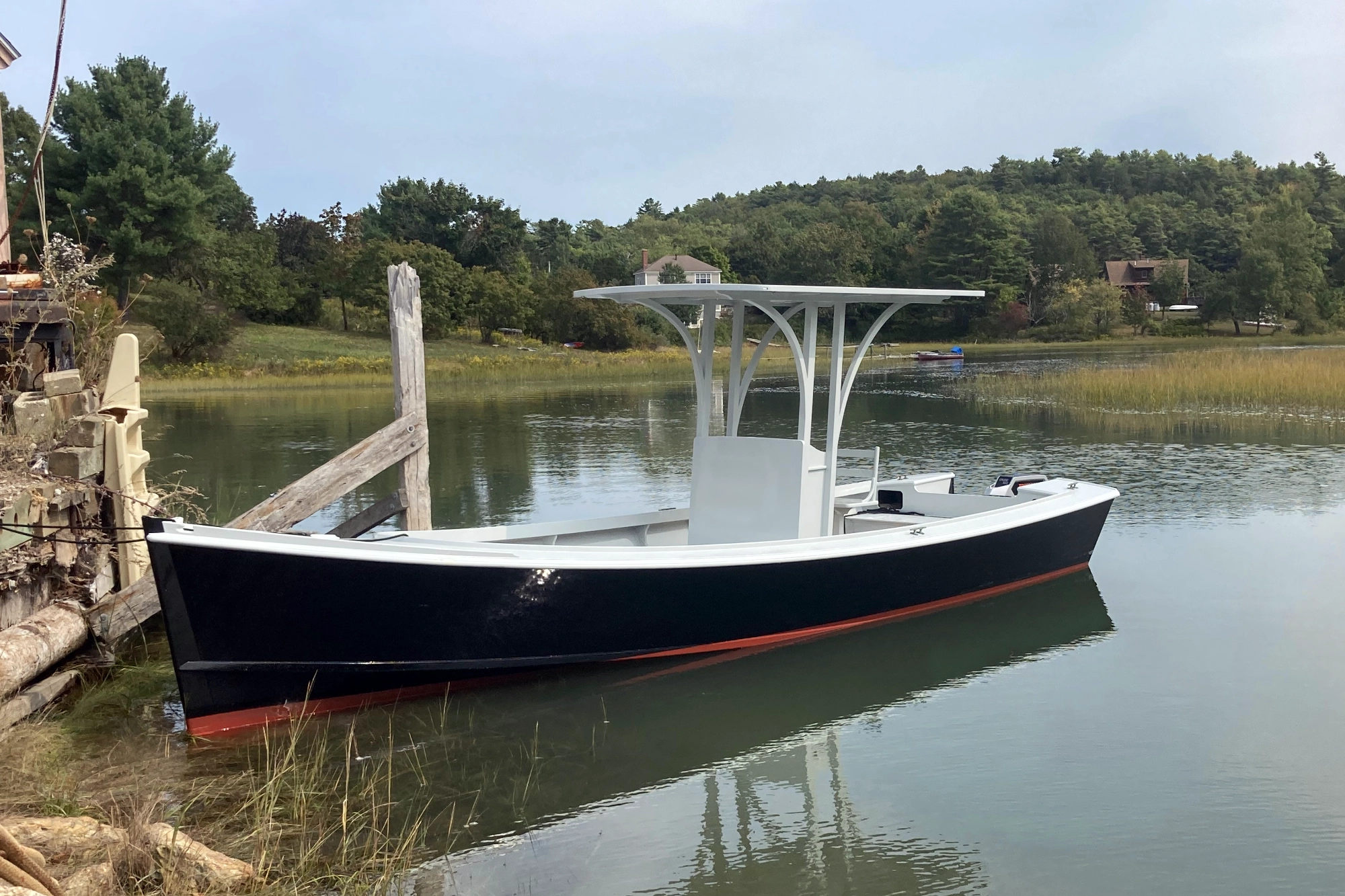
    In early 2020 AUK’s owner asked us to propose an existing Hylan design that we felt would maximize the potential of the latest electric outboard technology. Doug offered his Point Comfort 23 as the best candidate, and with the help of Ocean Planet Energy we selected a Torqeedo Cruise 10.0 motor powered by a pair of their 48 V 5000 Wh batteries (later upgraded to a Cruise 12.0 and third battery). With access to 120 V service the batteries can be charged from flat in about 6 hours with the Torqeedo fast charger. For charging on the mooring and extending range, Ocean Planet Energy recommended (4) Solbian SR+ 116 panels.

    As a platform for the latest electric propulsion system, AUK has lot to offer. With her plumb bow she has a long waterline for her size which makes for better performance at lower speeds. When speed is a must she planes easily with her shallow V back aft. In general the historically-inspired design represents a measure of balance that is often missing in the inefficient overpowered “Clorox bottles” that populate most of our harbors in 2020.

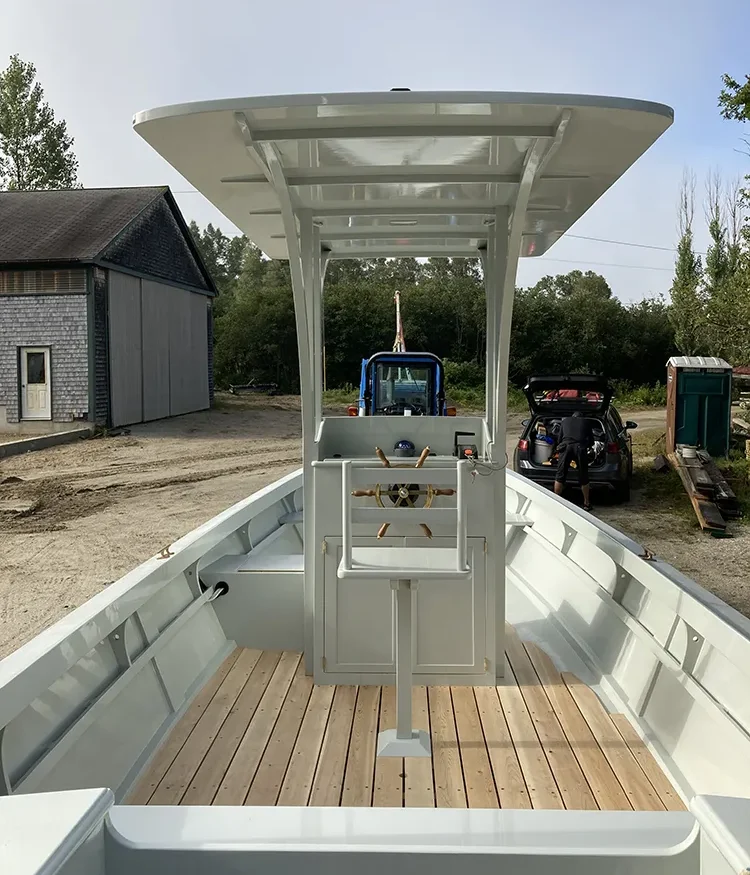
    Cockpit of electric boat

    AUK’s aesthetic is also derived from a carefully struck balance. Her vernacular Chesapeake work boat roots mingle with a modern minimalism that modestly references the technology driving her. It is truly fun to watch her underway and consider how her far flung elements emulsify into something altogether new.

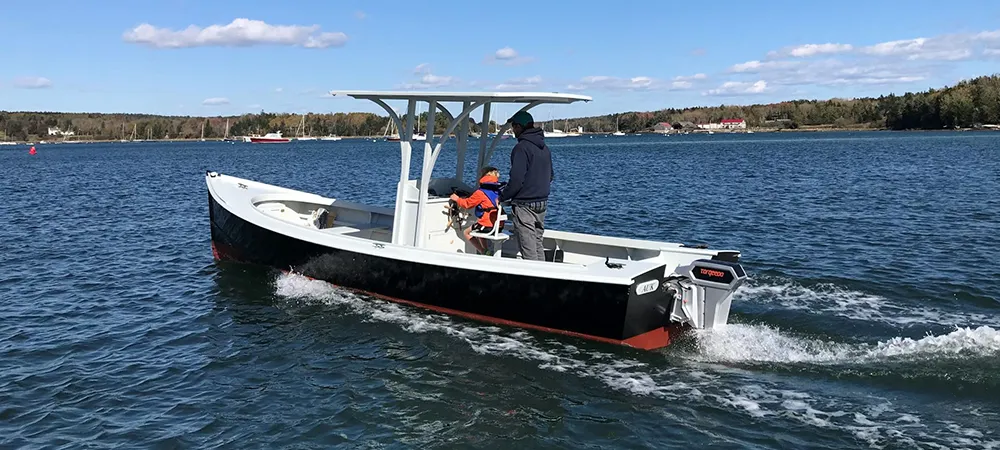
    But the fun of watching her is nothing compared with the thrill of being aboard. As you cast off and navigate the harbor the silence slowly dawns on you. After a few minutes underway you will begin to understand that this isn’t just a new kind of boat, it’s a new kind of boating! One where we’ve regained our senses, where we can enjoy the moment not just the destination, where we can appreciate the world around us without actively degrading it. Here’s to the future of electric boating!

    Auk out for a ride

    Particulars

    LOA23′ 1″
    LWL21′ 10″
    Beam6′ 10″
    Draft7″
    Disp.1500 lbs
    MotorTorqeedo Cruise 12.0 (12 kW, 48 V)
    Batteries(3) Torqeedo Power48 (15 kWh total)
    Top Speed14 kts
    Cruise5-6 kts
    Range35 nm at 5 kts, 15 nm at 14
    AUK line drawing