
• In The Shop
  • Build
  • Restore
  • Electrify

Category: Outboard

  • Westport Skiff

    Westport Skiff

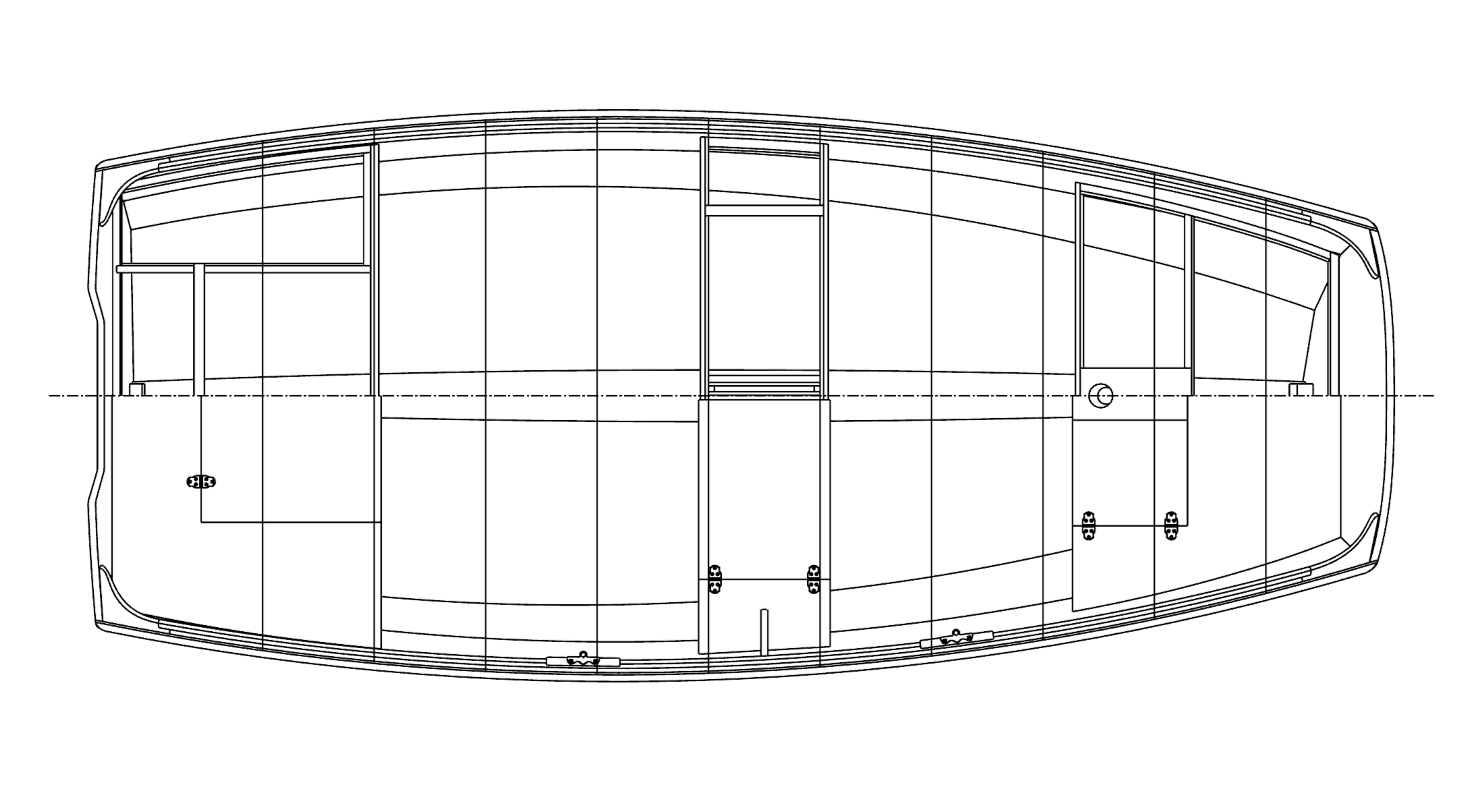
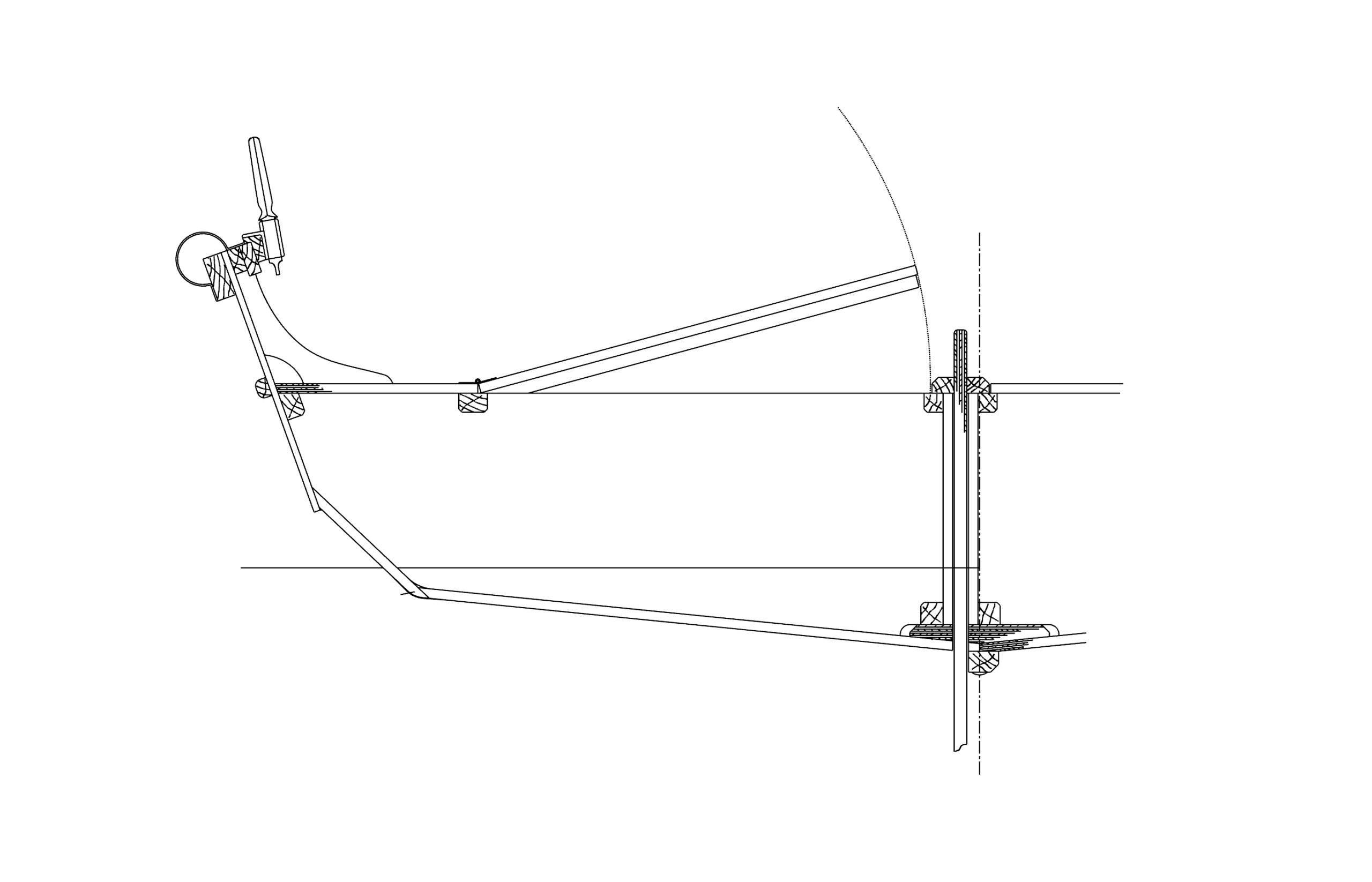
    Westport Skiff

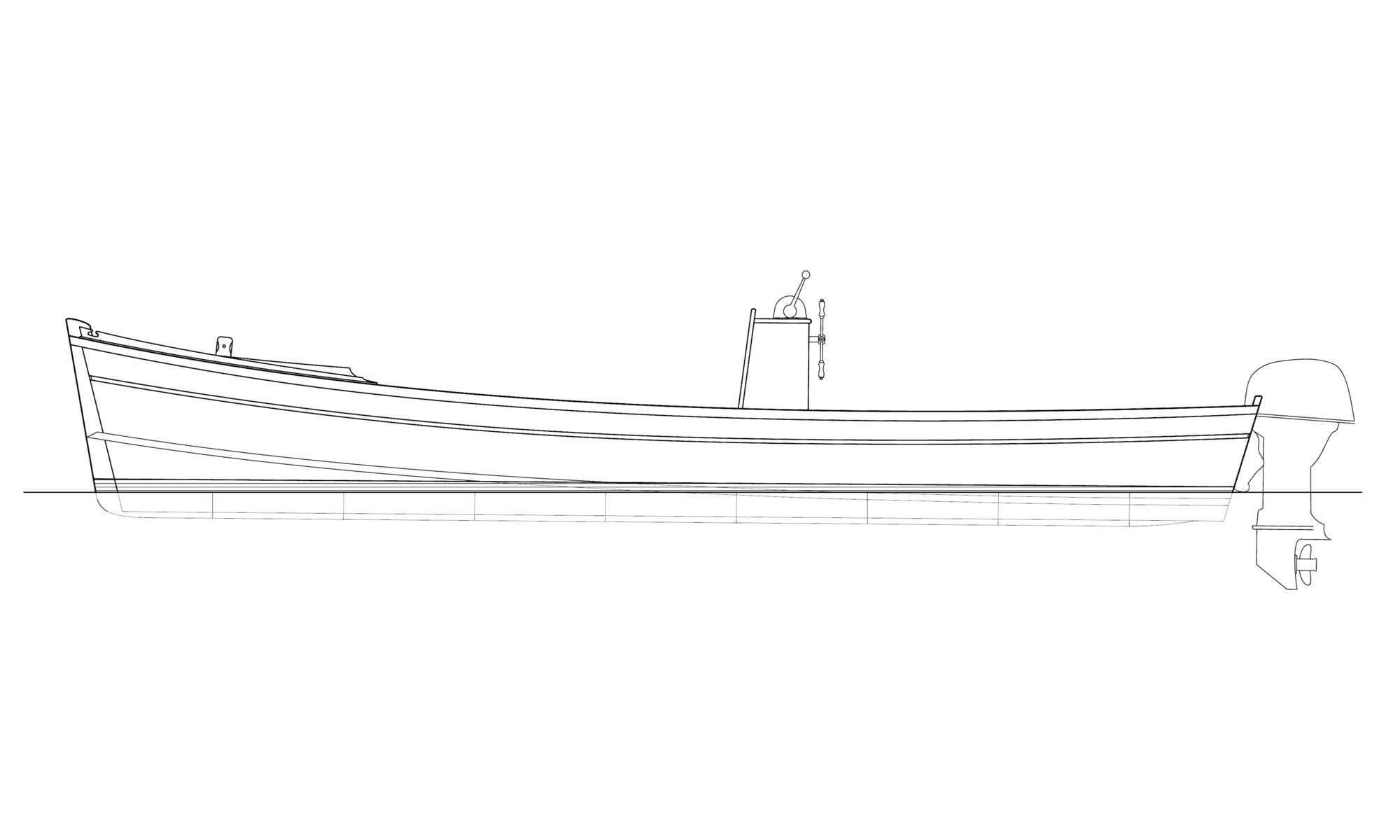
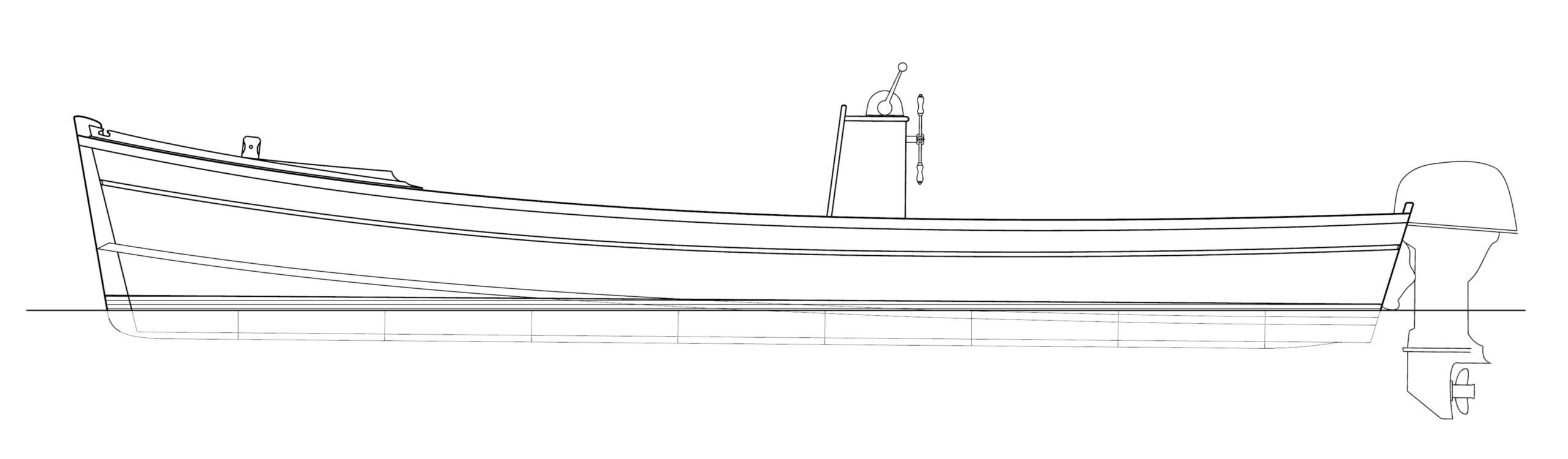
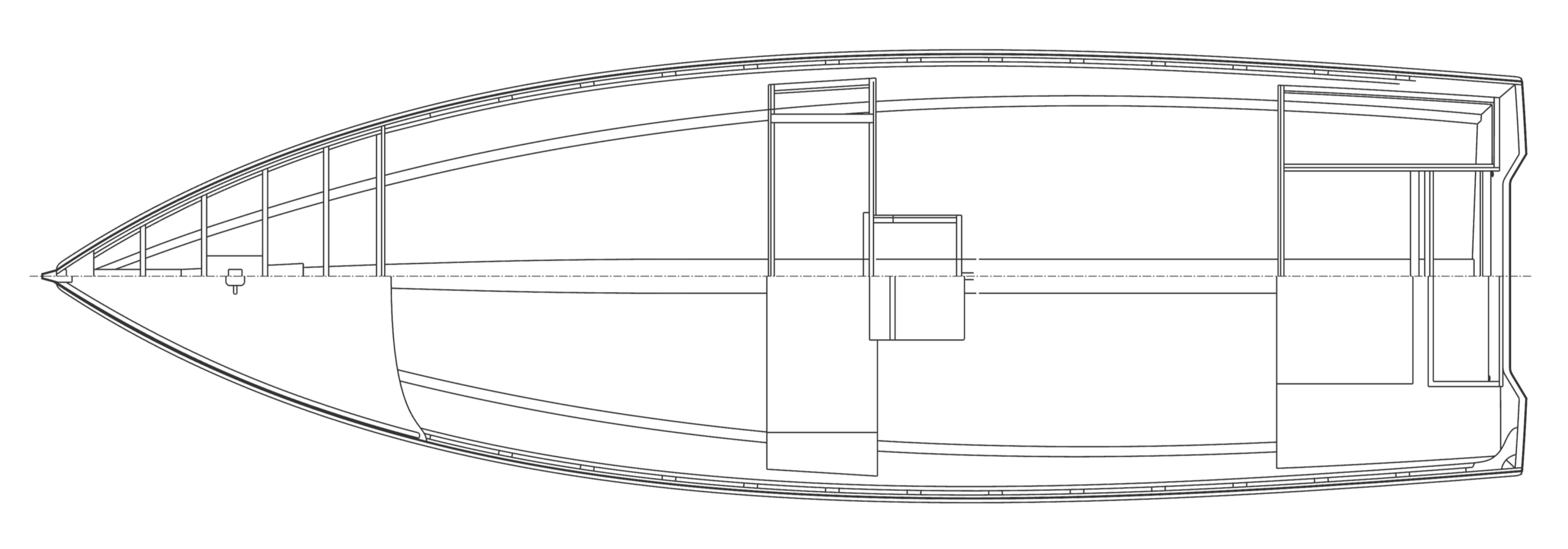
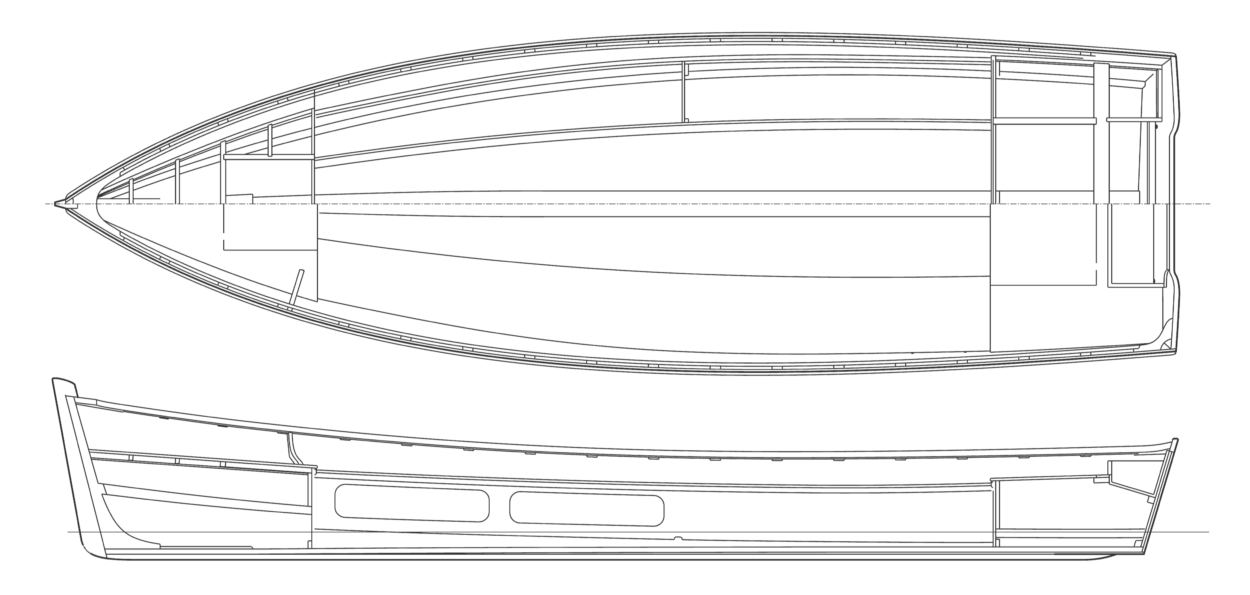
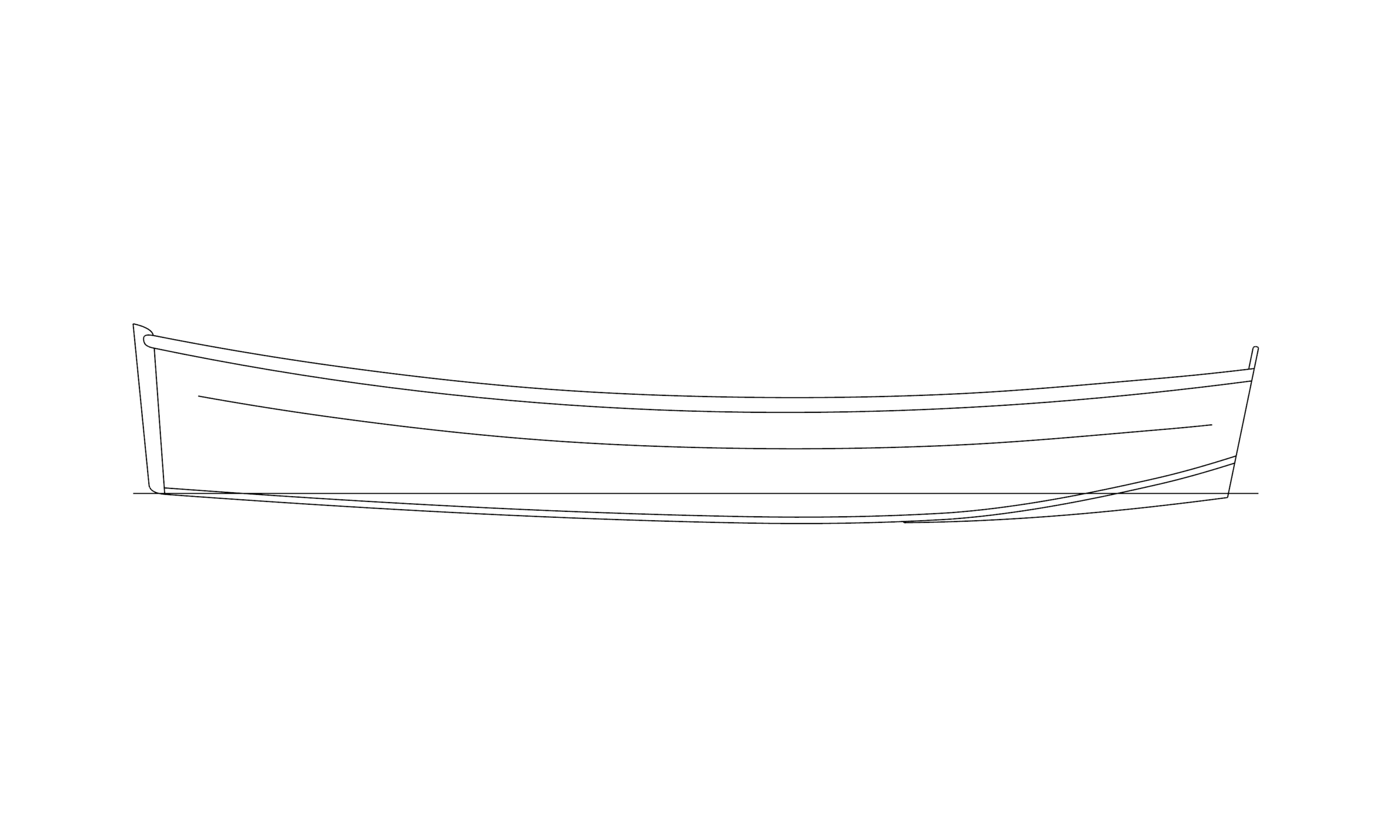
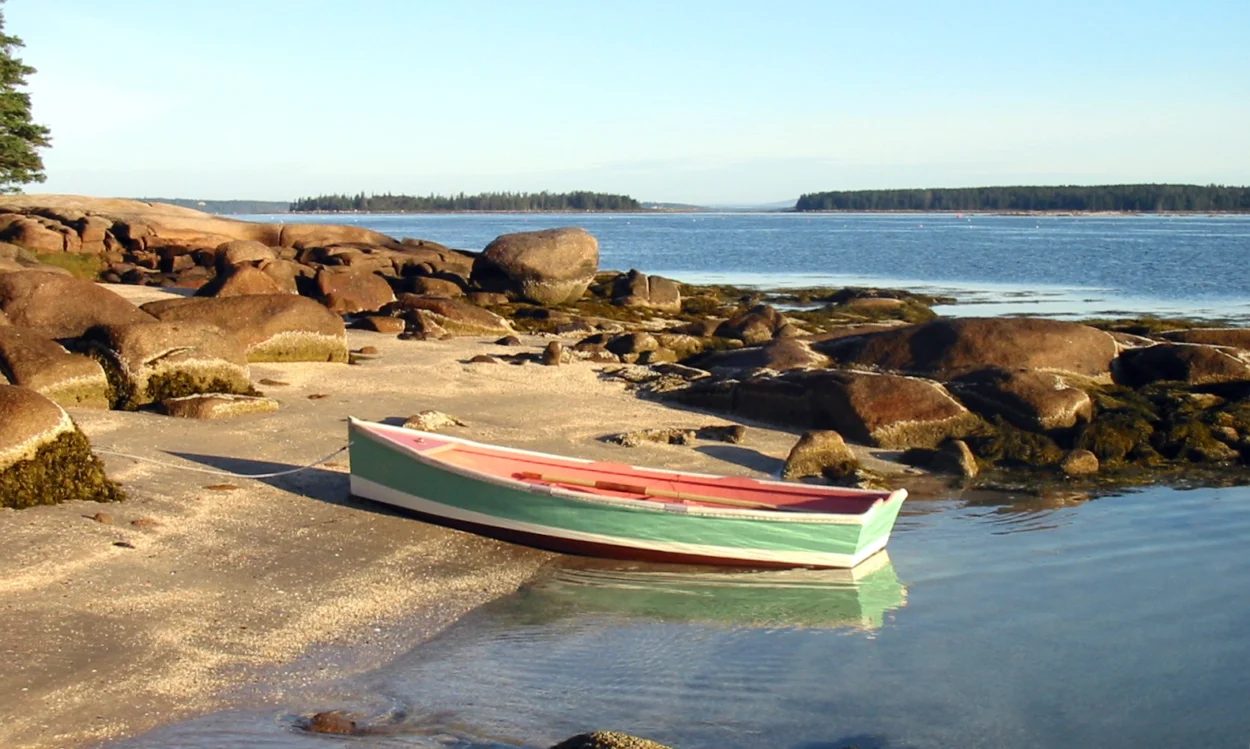
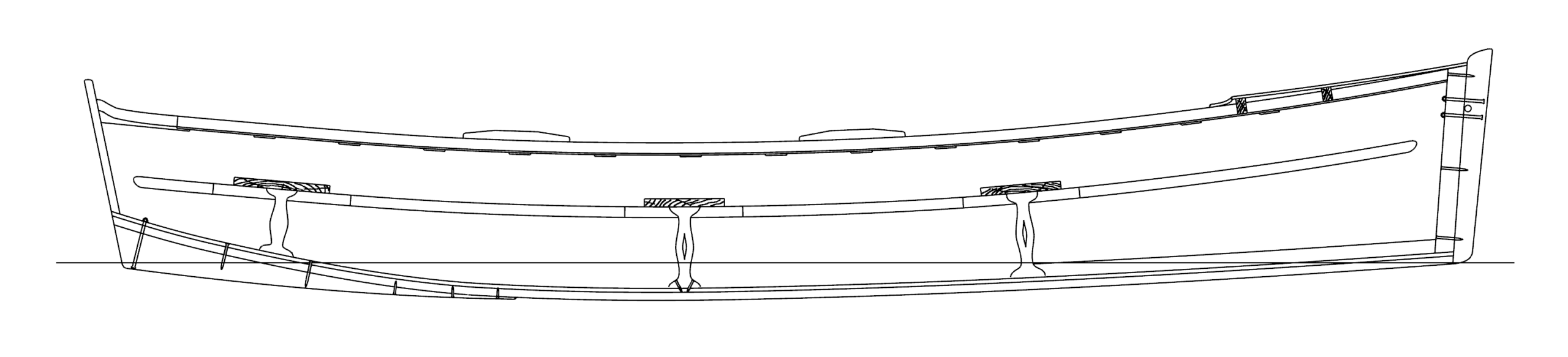
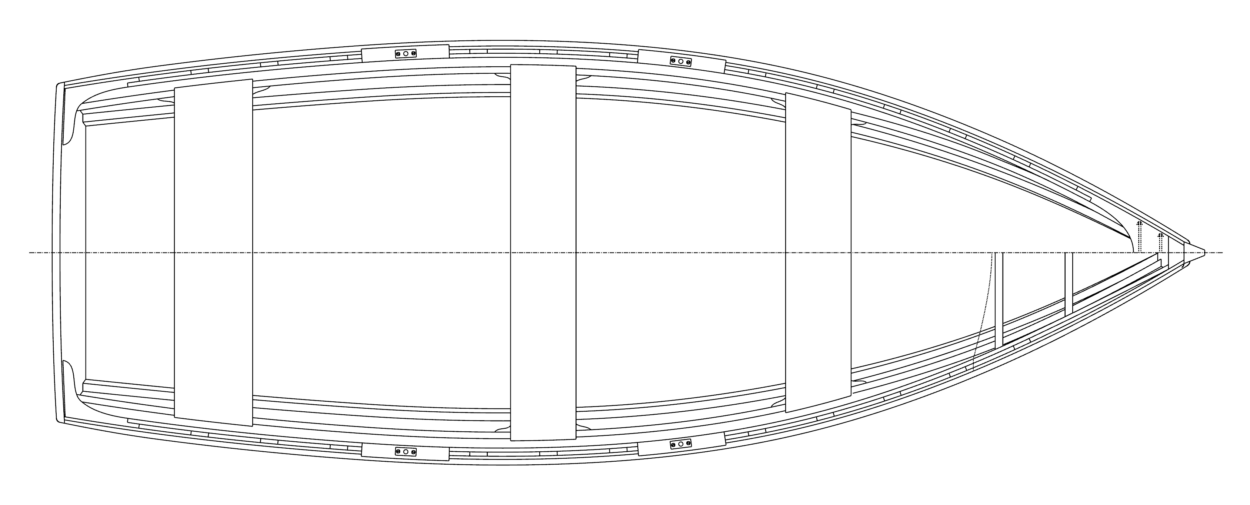
    A simple-to-build 11′ skiff, can be built up to 18′ long

    The Westport Skiff is a good example of a type that was ubiquitous on the US East Coast in the early 1900s, and probably well before. They were good all-around boats, but their main virtue was simplicity of construction and low cost. A good builder could turn out one of these boats in a couple of days – one to build, one to paint. They were heavy, which didn’t matter once they were in the water, and the bottom planking would open up dramatically if left out of the water for any length of time. Thus, they were intended to spend the entire season in the water, likely as a tender for a larger workboat, or as an inexpensive boat for catching a few fish for dinner.

    Nowadays, many of us are not able to leave our skiff in the water all the time, so light weight and freedom from leaks are more important. You probably won’t build this boat in a day – more likely a week or a month – but it is still a simple and fun boat to build. It would be ideal as a project with the kids, and a good boat for them once done. I would urge you to build the rowing version, as outboards can be a curse to peace of mind and the environment. And, kids should learn to row before being turned loose with a motor. In fact, there isn’t much of any excuse for the outboard version. Its only virtue is that it gives a little more support for a slightly bigger motor and a single occupant in the stern. I drew it only because I had a handicapped customer who physically could not row.

    You can still put a little motor on the rowing version – about 2 hp is all it can use. But if you build the outboard version, its rowing qualities will be ruined with anything more that one middle sized kid at the oars. The transom will drag, the boat will slow dramatically and the fun of rowing will be gone. If you just can’t see yourself rowing at all, consider a little electric trolling motor with the battery up forward in the rowing version.

    If you want a bigger boat, you can stretch out this one to any length up to about 18 feet. Just increase the longitudinal spacing of the measurements given on the plans to some number that gives you the length you want. Use the same molds and transom as shown, keeping the same beam. You will also need to alter the bevel on the inner stem and transom slightly – keep the same width on the outside faces and make the inside smaller to suit. If you do go all the way to 18′, you might want to increase the thickness of the topside panels to 3/8″, as 1/4″ will be difficult to handle at any length over about 16′.

    This design is based on an original modeled by Fred Tripp and documented by R. H. Baker.


    STUDY PLANS: Click here to download free study plans

    TO PURCHASE PLANS: On two sheets. To order online using Paypal’s ordering system (which accepts credit cards and eChecks), please select one of the following buttons:

    U.S. orders. $75 + $6 shipping = $81
    International orders, including Canada. $75 + $15 shipping = $90
    You can see your Paypal Cart at any time by clicking the button below:

    You can also order plans by sending a check or money order to Hylan & Brown Boatbuilders, 10 Frank Day Ln, Brooklin, ME 04616.

    FAQ: Many questions are answered in Frequently Asked Questions. Please check there first.
    Particulars

    LOA11′
    Beam4′
    Draftapprox. 3″
    Weightapprox. 100 lbs
    TrailerableYes
    Hull typeFlat bottom, transom stern
    ConstructionGlued plywood
    Suitable forProtected waters
    Skill neededBeginner
    Lofting requiredNo, full-size patterns included
    Level of detailAbove average
  • Top Hat

    Top Hat

    Top Hat

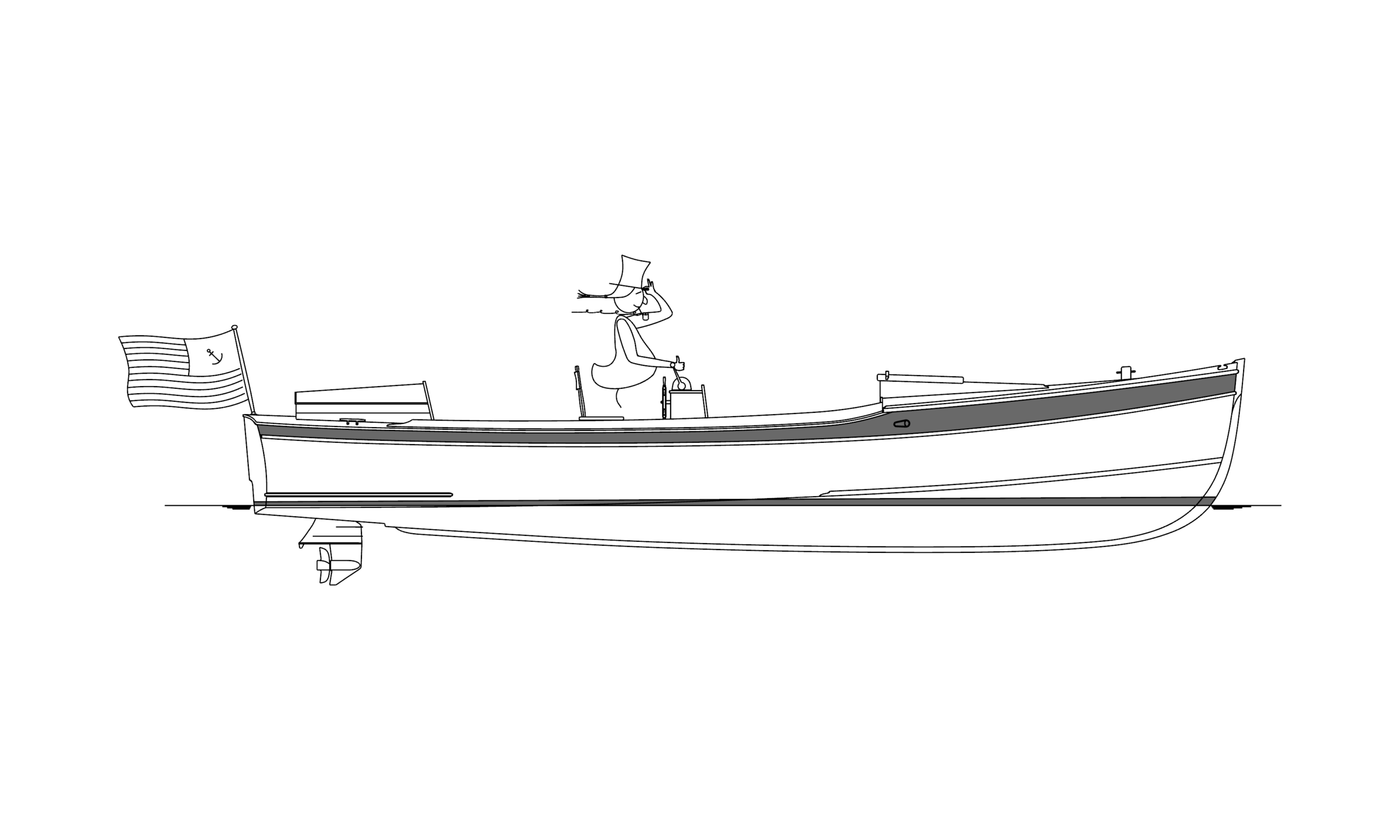
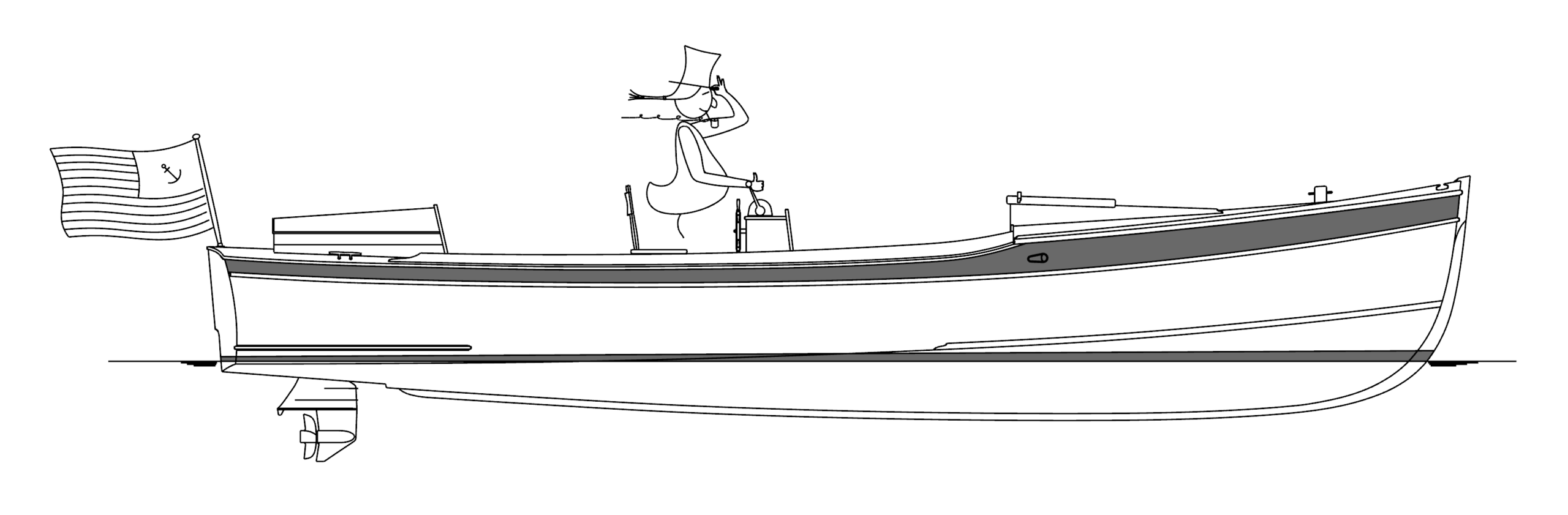
    26′ V-bottom launch

    Good speed and seakeeping ability with low impact and noise

    TOP HAT traces her heritage to the vee bottom boats designed by William. Hand in the early 1900s. Her lines, construction and propulsion have be updated, but the essential virtues remain – seaworthy and seakindly performance, good speeds with modest horsepower, handsome looks and ease of construction.

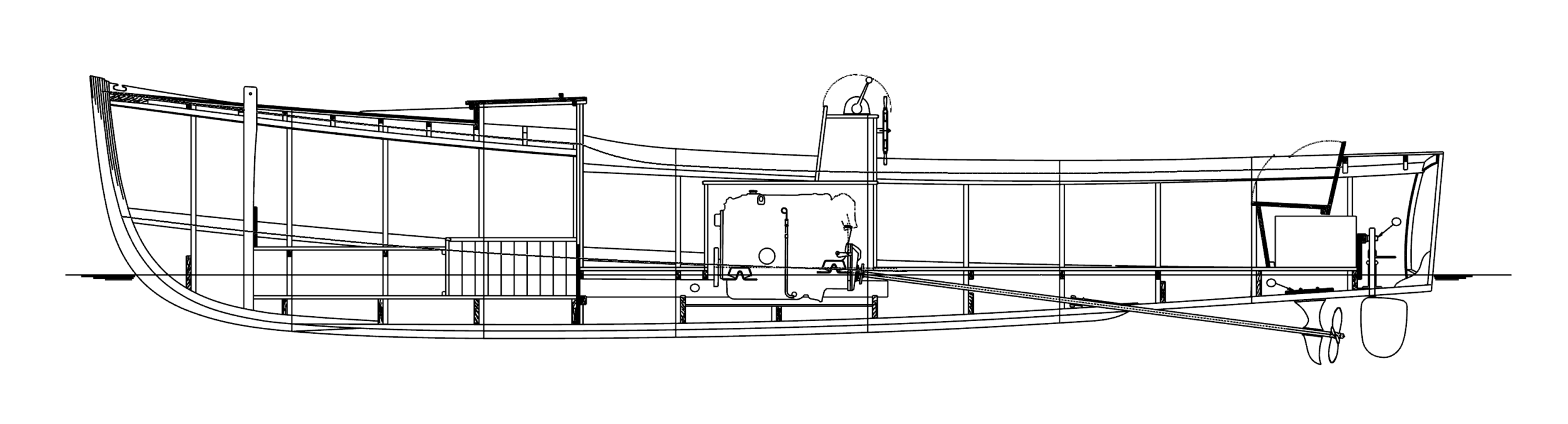
    A 50 HP Honda outboard in a well gives very quiet operation, easy maintenance and good handling in reverse. Also shown is an alternative inboard engine version.

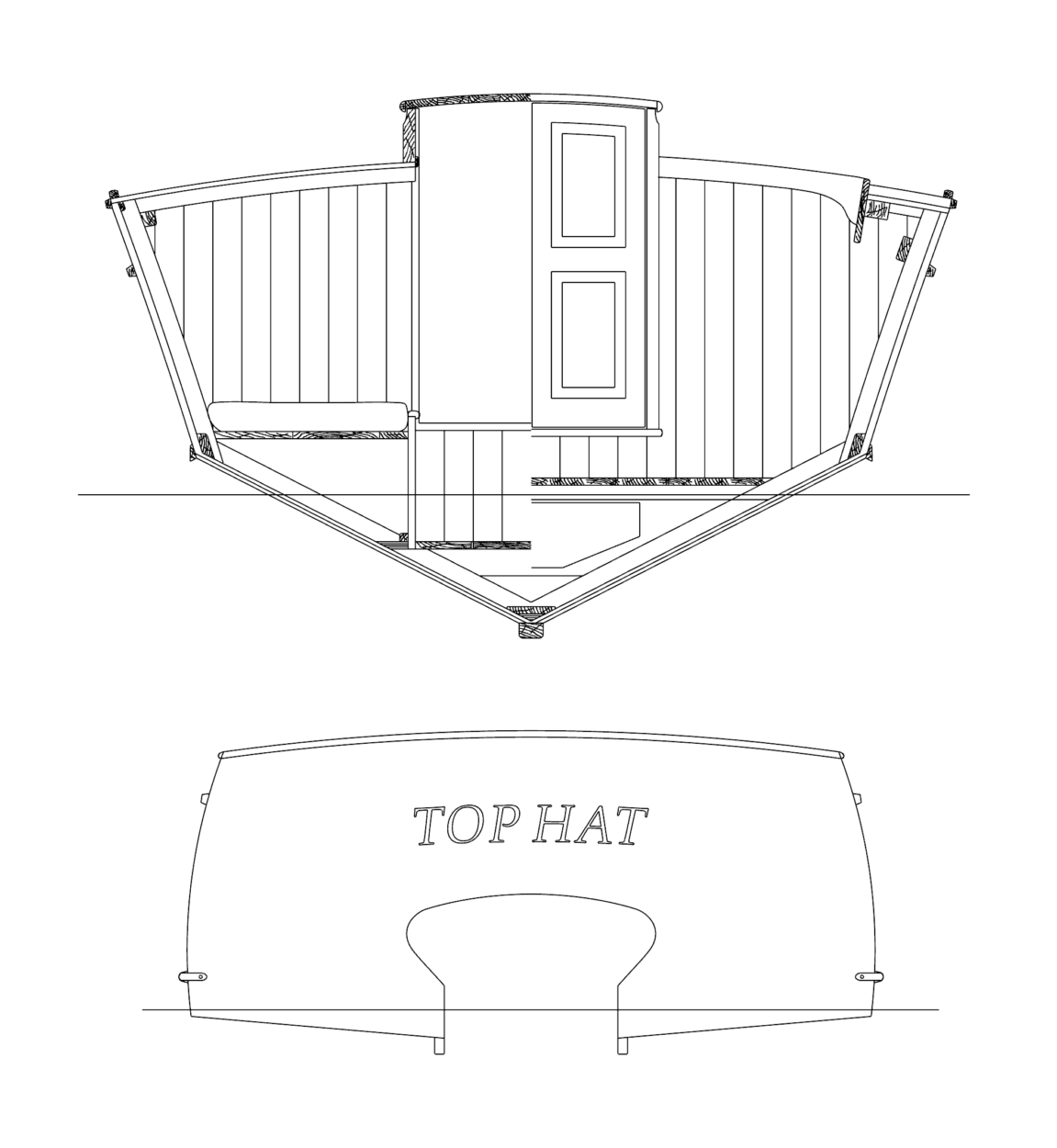
    Plans are well detailed, and consist of 8 sheets: outboard profile, lines & offsets, inboard construction profile, constructions sections, building jig, two detail sheets, and inboard diesel construction.

    A CD of photos in JPEG format taken during the construction of the prototype is available and will be a help to all builders.


    STUDY PLANS: Click here to download free study plans.

    TO PURCHASE PLANS: Plans include 8 sheets. A photo CD is also available. To order online using Paypal’s ordering system (which accepts credit cards and eChecks), please select one of the following buttons:

    U.S. orders, plans only. $250 + $20 shipping = $270
    U.S. orders, plans + CD. $300 + $20 shipping = $320
    International orders, including Canada, plans only. $250 + $80 shipping = $330
    International orders, including Canada, plans + CD. $300 + $80 shipping = $380
    You can see your Paypal Cart at any time by clicking the button below:

    You can also order plans by sending a check or money order to Hylan & Brown Boatbuilders, 10 Frank Day Ln, Brooklin, ME 04616.

    FAQ: Many questions are answered in Frequently Asked Questions. Please check there first.
    Particulars

    LOA26′ 5″
    Beam7′ 3″
    Draft15″ motor up
    Disp.3200 lbs (outboard version)
    Speedup to 18 kts
    TrailerableYes
    Hull typeV-bottom chine
    ConstructionStrip plank topsides, double plywood bottom over sawn frames
    Suitable forSomewhat protected waters
    Skill neededIntermediate
    Lofting requiredYes
    Level of detailAbove average

    OTHER REFERENCES: Design review by Robert Stephens in WoodenBoat #168, p. 86.

  • Pretty Marsh

    Pretty Marsh

    Pretty Marsh

    An elegant and beautiful 21′ runabout

    This runabout was designed for a man who wanted a boat as elegant and beautiful as the landscape surrounding his summer home at Pretty Marsh on Mount Desert. With lots of flare in the bow sections, and tumblehome at the stern, she has looks that match her performance.

    Moderate deadrise gives good performance with modest horsepower, a soft and predictable ride. Rugged construction means she can take a pounding if she has to. The plans show alternatives for outboard or I/O propulsion and runabout or center console layout.

    Construction is for developed plywood, but this design could be modified for aluminum construction as well. The plans are on five sheets and include lines, construction plan & sections, and construction alternatives.


    TO PURCHASE PLANS: Click here to order plans from Woodenboat Store

    STUDY PLANS: Click here to download free digital study plans

    FAQ: Many questions are answered in Frequently Asked Questions. Please check there first.

    Particulars

    LOA21′ 2″
    Beam7′ 3″
    Draft14″
    Power80-200 hp, I/O or outboard
    Speedup to 45 kts
    TrailerableYes
    Hull typeModerate V-bottom with soft chines
    ConstructionDeveloped plywood
    Suitable forSomewhat protected waters
    Skill neededIntermediate to advanced
    Lofting requiredYes
    Level of detailAbove average

    OTHER REFERENCES: “Plywood and the Computer” WoodenBoat 148 (page 54).

  • Marsh Hen

    Marsh Hen

    Marsh Hen

    Marsh Hen is the result of a design/build commission from a gentleman who enjoys kayaking in the extensive marshlands of coastal South Carolina and Georgia. She would also make a fine little cruiser for a small family who was willing to get back to basics.

    Marsh Hen’s hull form show genes from both William Hand’s early V-bottom designs and the Maine lobster boat. Both parents contribute seaworthy and seakindly performance, good speeds with modest horsepower, and handsome looks. Her plywood construction is more accessible to amateur builders.

    A 90 HP Evinrude outboard in a well gives very quiet operation, easy maintenance and good handling in reverse.

    Plans are well-detailed, and consist of 6 sheets: outboard profile, lines & offsets, inboard construction profile, constructions sections, joinery details, and building jig. A CD of photos in JPEG format taken during the construction of the prototype is also available.


    STUDY PLANS: Click here to download free study plans.

    TO PURCHASE PLANS: Plans include 6 sheets and a photo CD. To order online using Paypal’s ordering system (which accepts credit cards and eChecks), please select one of the following buttons:

    U.S. orders. $300 + $20 shipping = $320
    International orders, including Canada. $300 + $80 shipping = $380
    You can see your Paypal Cart at any time by clicking the button below:

    You can also order plans by sending a check or money order to Hylan & Brown Boatbuilders, 10 Frank Day Ln, Brooklin, ME 04616.

    FAQ: Many questions are answered in Frequently Asked Questions. Please check there first.
    Particulars

    LOA29′ 2″
    LWL27′ 6″
    Beam8′ 6″
    Draft17″ motor up
    Disp.5200 lbs
    Speedup to 18 kts
    TrailerableYes
    Hull typeV-bottom chine
    ConstructionPlywood topsides, double plywood bottom
    Alternate constructionCold-molded
    Suitable forSomewhat protected waters
    Skill neededIntermediate
    Lofting requiredYes, very simple
    Level of detailAbove average
  • Oonagh

    Oonagh

    Oonagh

    The anti-RIB

    In traditional boating circles, it is a long cherished tradition to rail against inflatables, and there are some good reasons. Because rowing them to good effect is not possible, inflatables almost invariably wind up with an outboard on the transom. Outboards produce several varieties of pollution – sound, air, water – and have a tendency to foster questionable skylarking by bored youngsters. And recently, mankind has discovered that burning petroleum might just have another big drawback as well.

    The new generation of rigid bottom inflatables, or RIBs have some additional vices. They abandon what used to be the most powerful argument for inflatables – that they can be deflated and stored aboard for longer passages. They feature deepish V-bottoms, which make rowing even more impossible, and only really show any advantage with the application of lots of petroleum. When you try to use that horsepower, a RIB will first plow itself into a deep trough, then jump up onto a plane with unnerving rapidity – they have no sweet spot between the two.

    My hunch is that the rush to RIBs is driven by the fact that we baby boomers (the flower children who were going to bring us to the age of Aquarius, remember?) are losing our balance, muscle mass, joint mobility (and a bunch of other functions too embarrassing to mention), and are happy to have a dinghy that is as stable as a church, can be driven like a bumper car, and gives us an airtight excuse for not rowing. Come on Flower Children, let’s take back the high road!

    Inflatable boats have some undeniable advantages. First and probably foremost is their tremendous stability. They also have wonderful built-in fendering – no worries about coming alongside your perfect topsides when things are a little lumpy. And when you get alongside, you can stand up on the inflated pontoons to get a boost for climbing aboard the mother ship. Oonagh is my attempt to combine some of the best qualities of inflatables with the advantages of a traditional dinghy, and put it into a package that is a little less hostile to the planet.

    To help protect your topsides, Oonagh’s plans show the over-sized cushioned gunwale guard more commonly used on docks. She will tow much more easily than an inflatable, and row four times as well. Within the same general size she will give much more interior room, and her passengers will be down in the boat rather than sitting up on the pontoons where soggy drawers are almost inevitable. And we don’t even need to mention sailing, do we? With a little care, your Oonagh can be passed on to your grandchildren.

    I know that many people are going to want to put a motor on Oonagh, so she is designed for it. The same tucked up transom that makes for decent rowing will preclude planing, so there is no point in putting anything more than 2 horsepower back there. In fact, one horsepower is as much as she can really use effectively. This begs the question – why not electric? Why not indeed! A small trolling motor will push her along nicely, and you will be able to carry on a private conversation while enjoying the scenery.

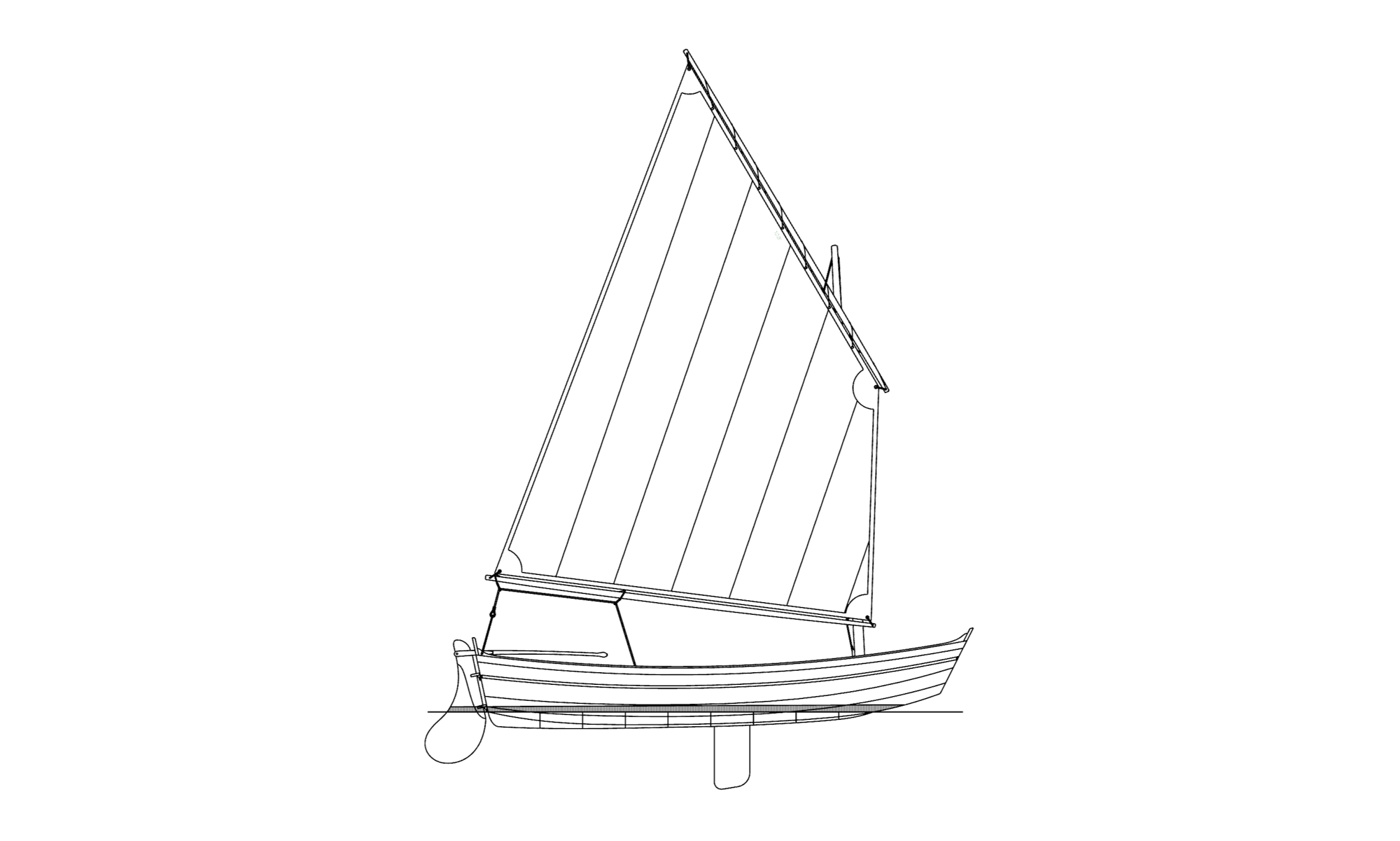
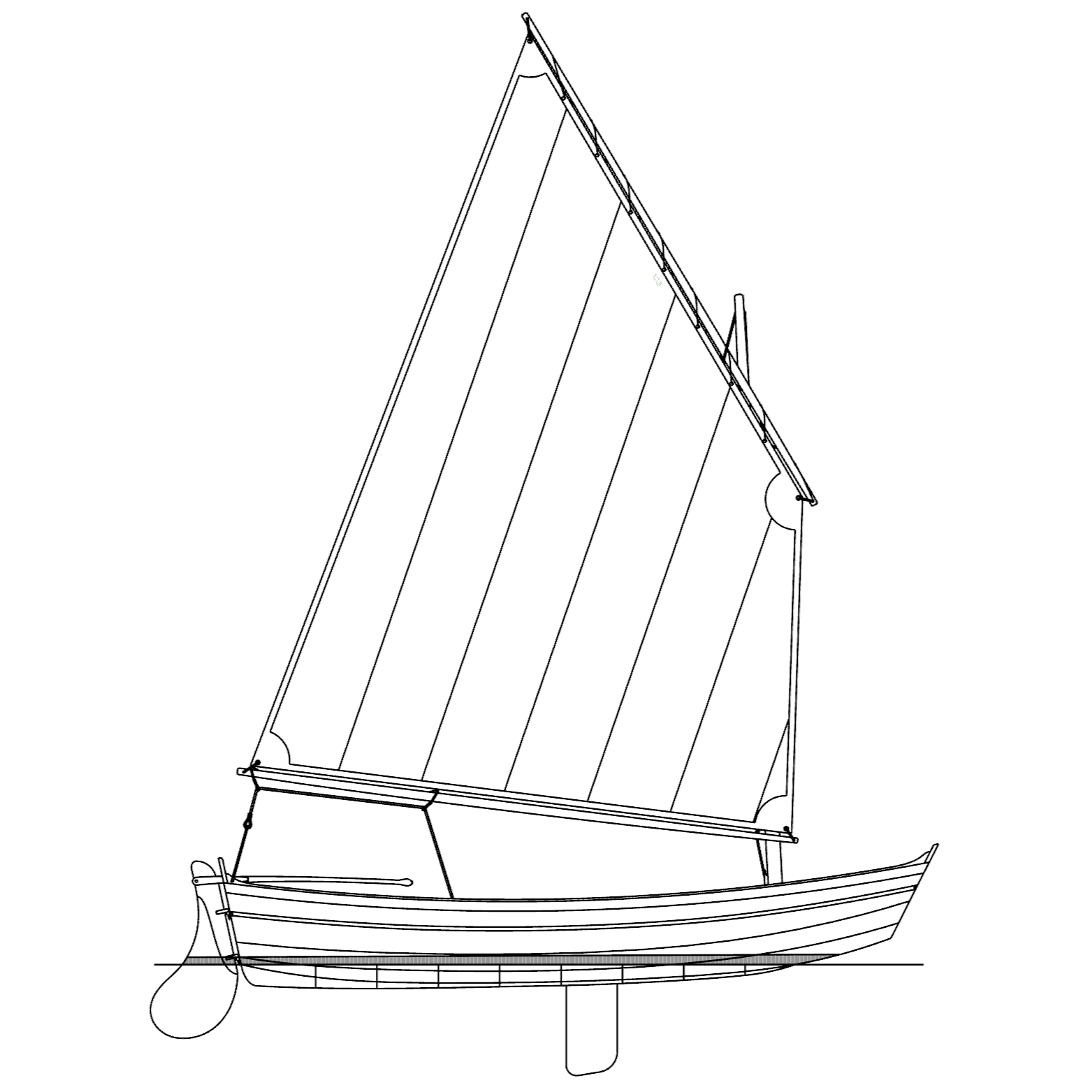
    Beyond use as a tender, Oonagh will make a fine boat for family sailing, fishing trips or just an evening row with the kids. Her simple construction and detailed plans will make for a good family construction project as well. I can guarantee that the experience of building, then using, a small boat will be a treasure that your kids will carry with them throughout life.

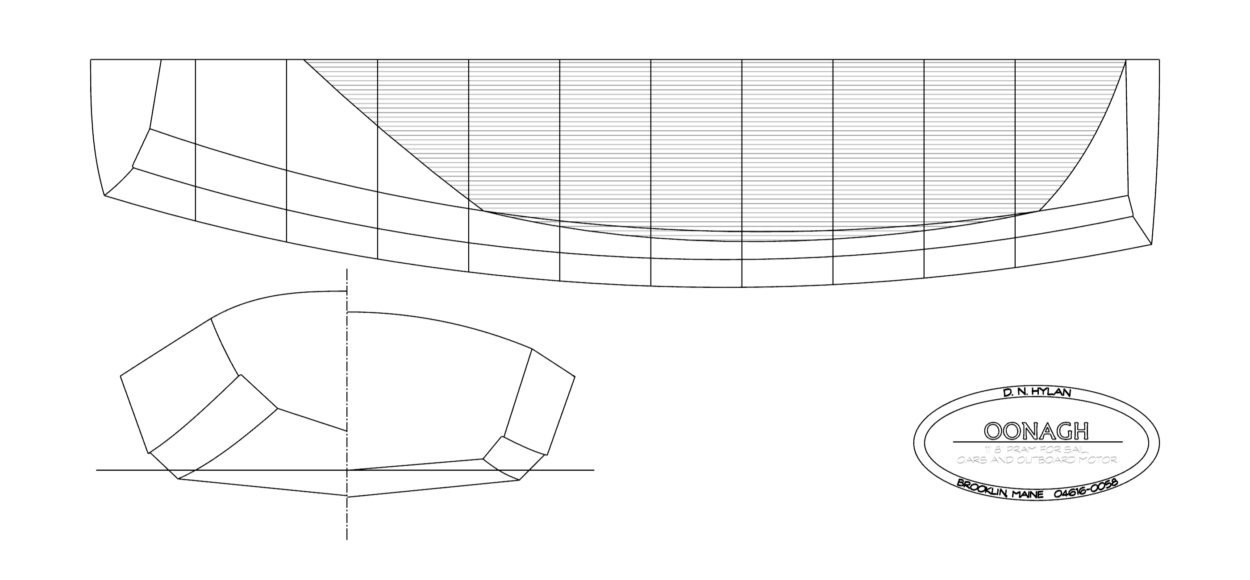
    Plans include seven sheets: Sail Plan, Lines & Construction Plan, Building Jig, Full Size Patterns, Plank Layout.


    TO PURCHASE PLANS: Oonagh plans, CNC kit, and a series of “how to build” videos are now available exclusively through OffCenterHarbor.com.

    Particulars

    LOA11′ 8″
    LWL9′
    Beam5′
    Draft5″ / 22″ board down
    Weightapprox. 170 lbs
    TrailerableYes
    Hull typeMultichine
    ConstructionGlued lapstrake plywood
    Suitable forSomewhat protected waters
    Skill neededBeginner
    Lofting requiredNo
    Level of detailAbove average
  • Ben Garveys

    Ben Garveys

    Ben Garveys

    Ben 15′ 9″ | Big Ben 19′

    Fine boatyard skiffs or small harbor ferries

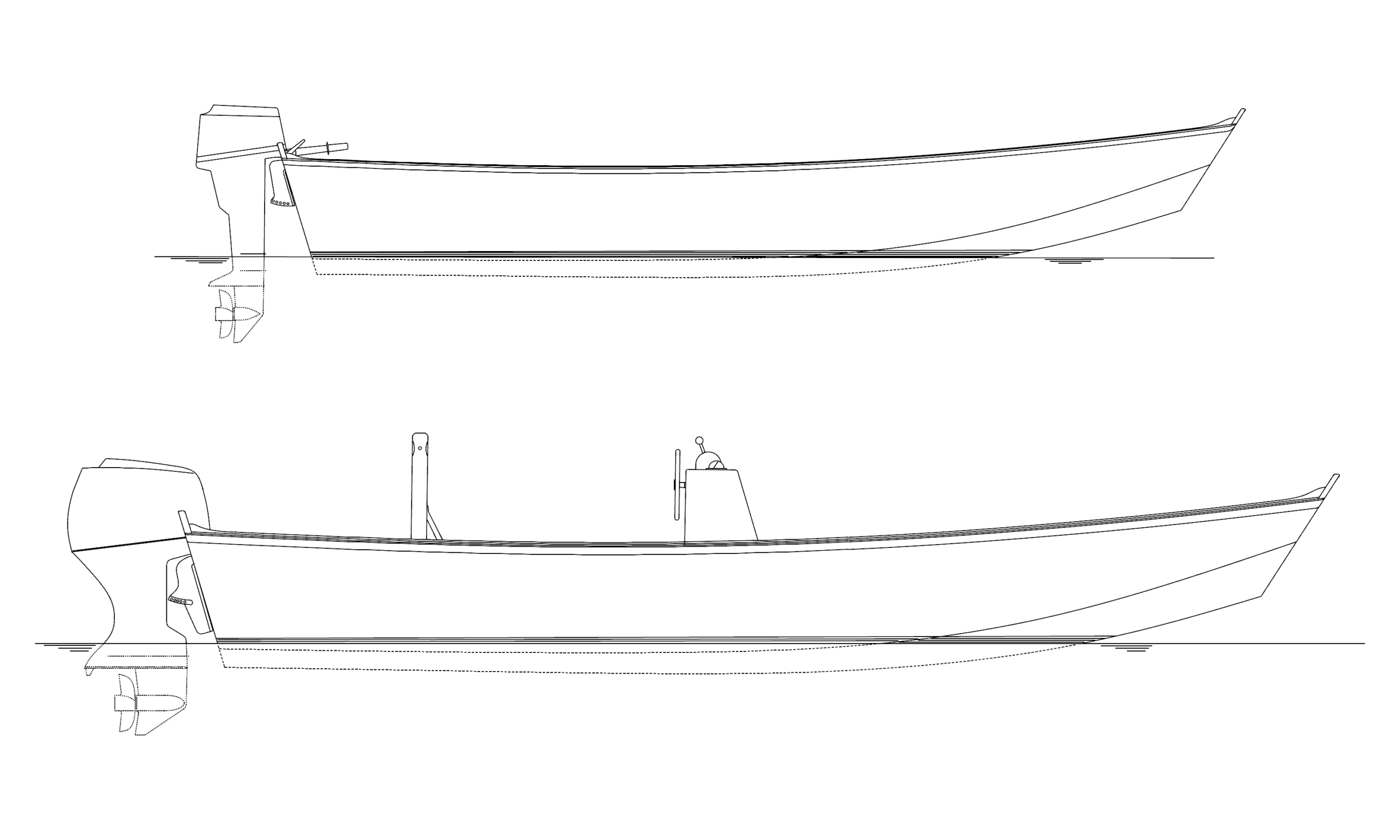
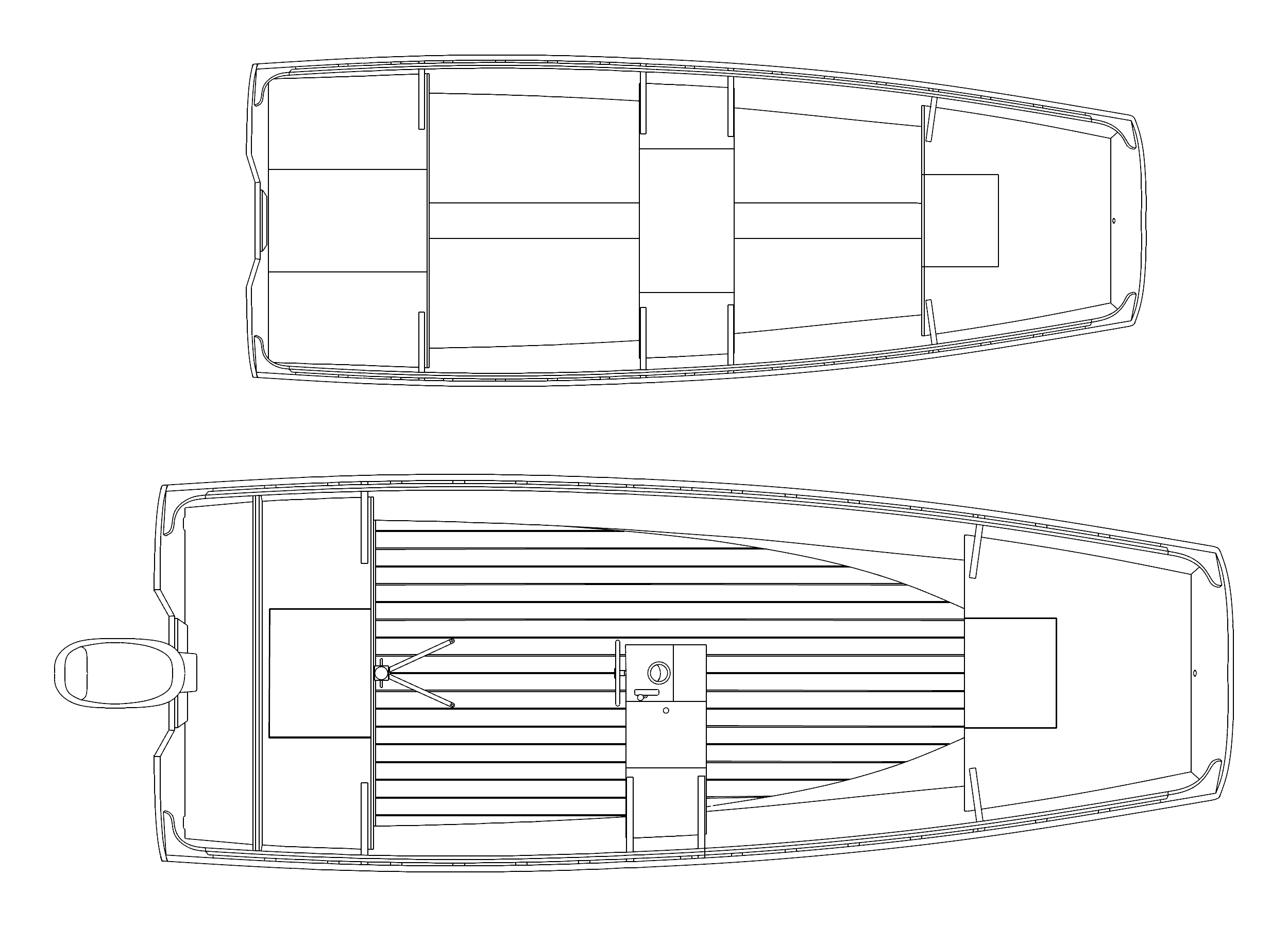
    Here are a pair of boats that will feel right at home on the working waterfront. Both boats would make fine boatyard skiffs or small harbor ferries. Both would be fine for a little recreational fishing or getting around the lake on summer vacation.

    Garveys originated as shallow draft, burdensome, and very easily built boats for working the shallow bays and estuaries of the Jersey Shore. The advent of the internal combustion engine, and later, the outboard motor, ensured their survival since the hull form is actually much better suited to mechanical power than to the sailing rigs of the early boats.

    Doug Hylan has refined the Ben garveys a bit from their original form. They show a strong sheer and more rake to the bow transom for good looks, the buttock lines aft have been straightened out for planing speeds, and the construction is updated to make use of plywood and epoxy adhesives. But they still display the same characteristics that made their forefathers popular: ease of construction, shallow draft, good stability, and great load capacity.

    The Ben garveys are built of plywood, upside down on a ladder frame over temporary molds. Lofting is required, but is extremely simple. The chines are easily made using epoxy fillets and fiberglass tape. Flotation compartments ensure that a swamped boat will float level and even support the motor head above the water.

    The plans are on five sheets (four for Big Ben) and include lines, construction, details, and building jig. Also included are instruction sheets which cover tools and materials, scarfing plywood, construction, and use.

    WB Plans: $75.00 each.


    Outboard profile of Ben garveys
    Plan view of Ben garveys

    Particulars

    LOA15′ 9″ | 19′
    LWL11′ 2″ | 14′ 1″
    Beam5′ 7″ | 6′ 11″
    Draft5″ | 7″
    Powerup to 40 hp | up to 80 hp
    Speedup to 35 kts
    TrailerableYes
    Hull typeV-bottom garveys
    ConstructionPlywood with epoxy/glass chines
    Suitable forSomewhat protected waters
    Skill neededBeginner to intermediate
    Lofting requiredYes, very simple
    Level of detailAbove average

    OTHER REFERENCES: Design review by Mike O’Brien, Boat Design Quarterly 9 (page 7).

  • Bowler

    Bowler

    Bowler

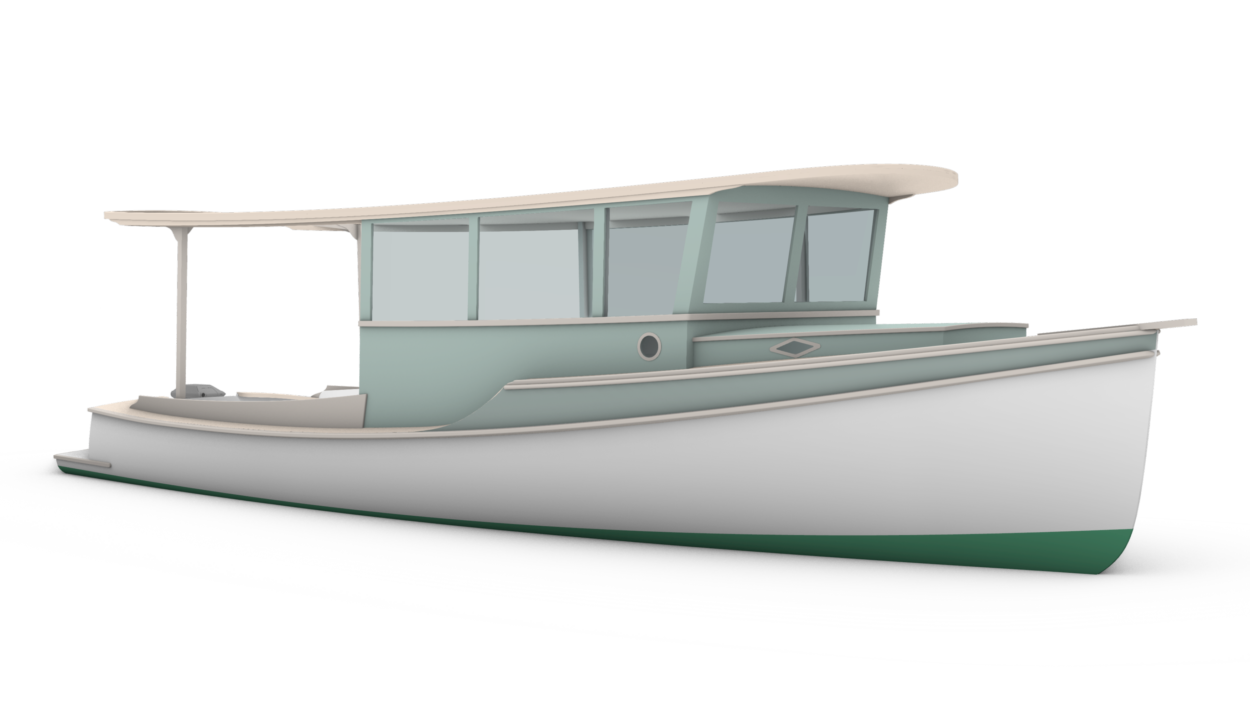
    Weekend Cruiser

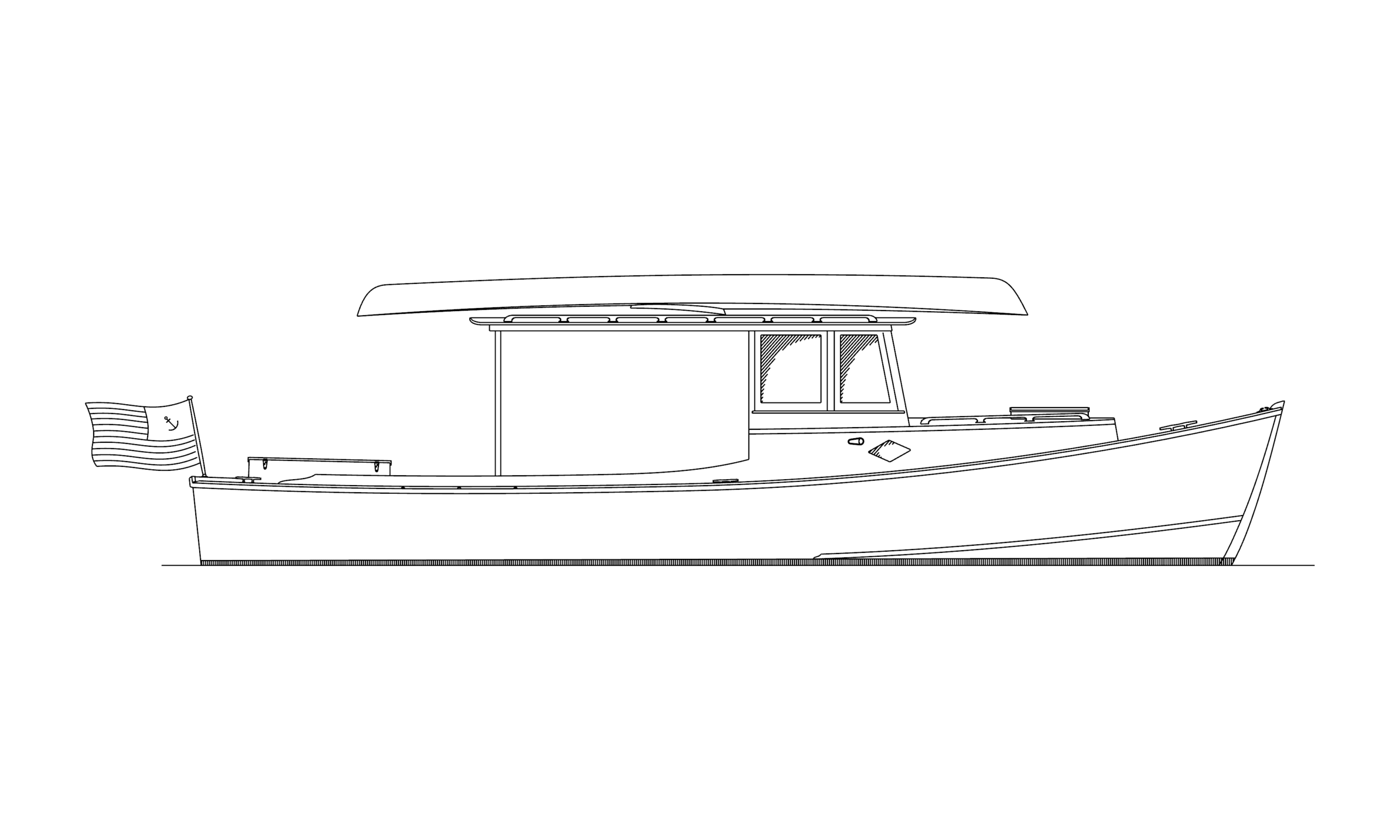
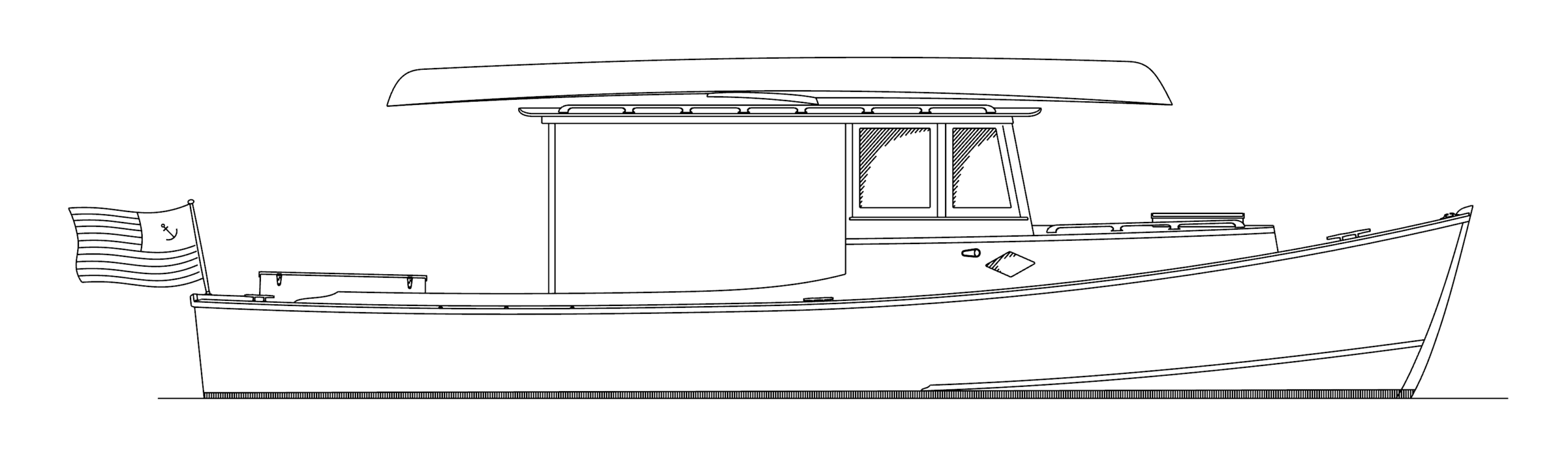
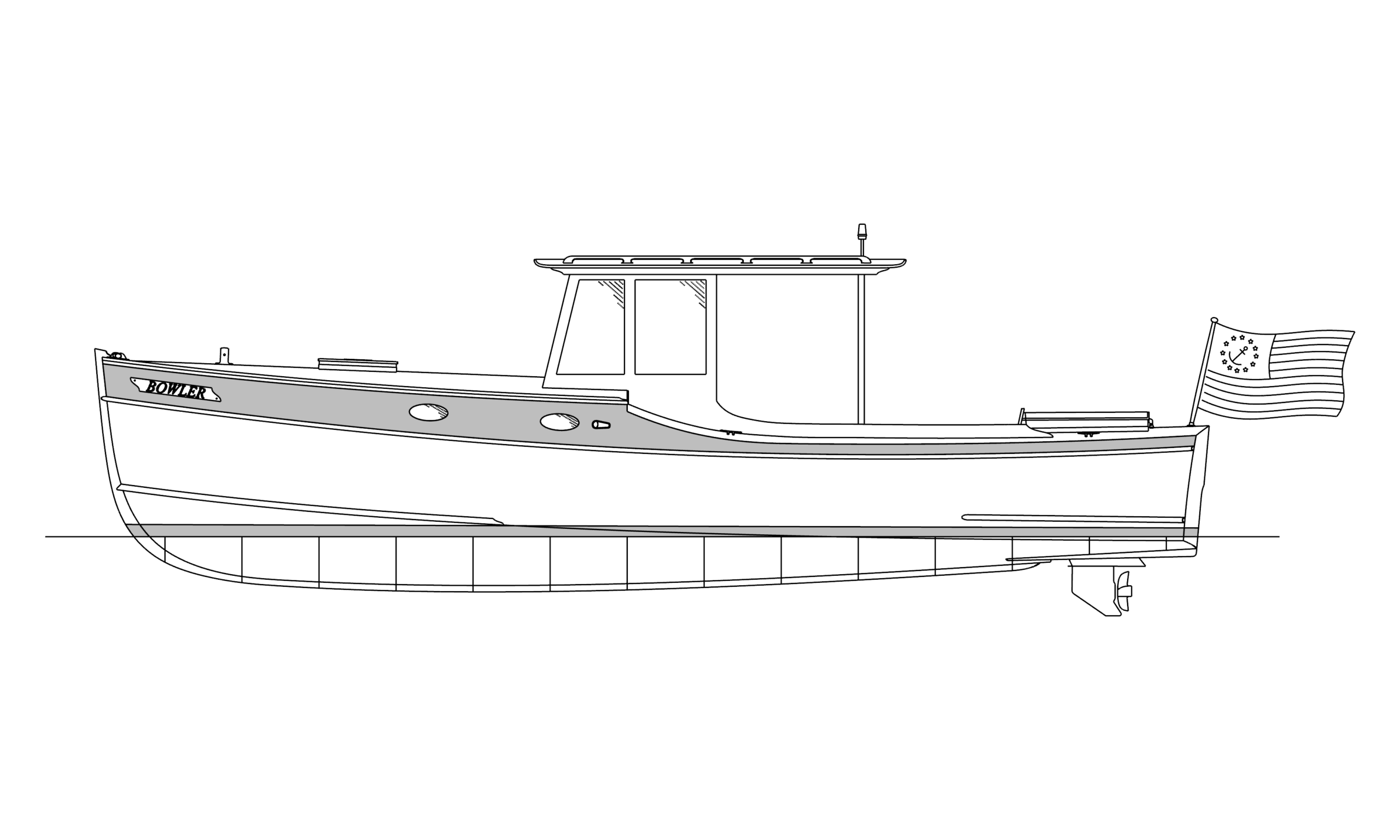
    Thank you for considering my plans for Bowler, a “cruising” version of my Top Hat launch. These boats are descended from Harry Bryan’s inspired Handy Billy design, which in turn can trace its origins back to William Hand’s V-bottom designs from the early 20th century. One hundred years later, Hand would still recognize these boats – handsome, sea kindly, efficient, and attractive to the home builder. We’ve incorporated some extra beam, modern construction, and today’s wonderfully quiet and clean-burning outboard motors.

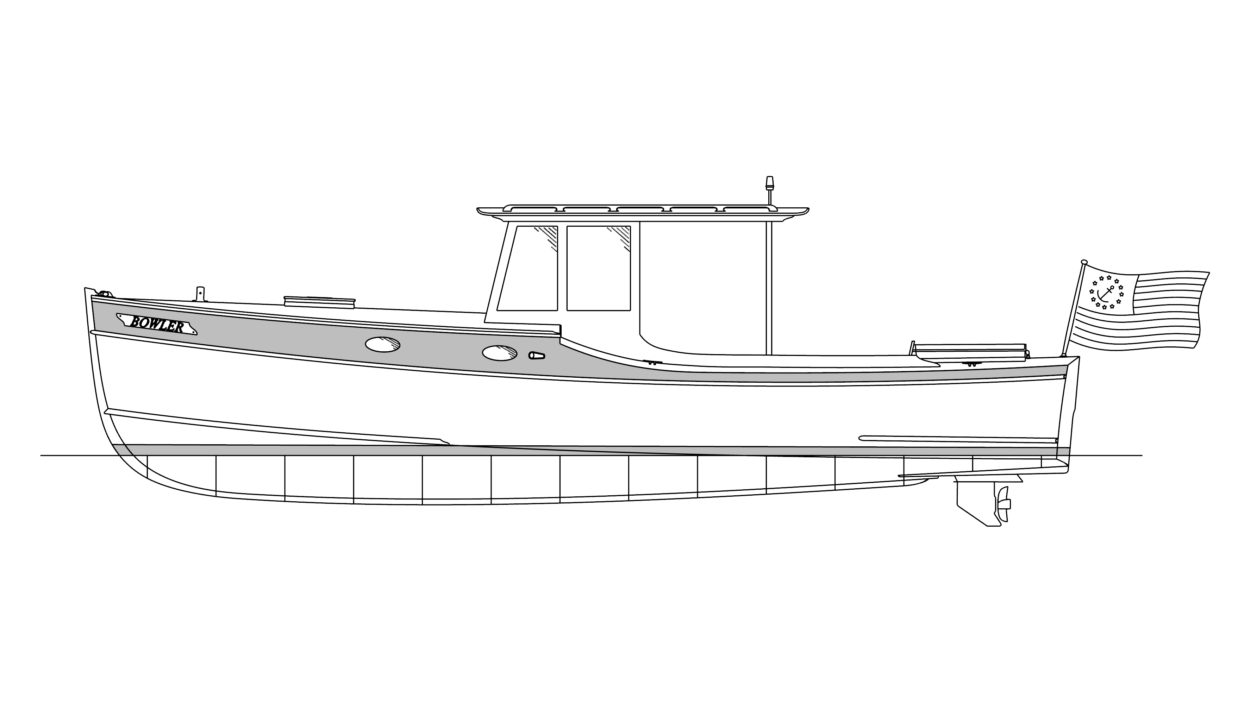
    Bowler uses modern glued wood construction. Her bottom is plywood and her curvaceous topsides are strip-planked. All is sheathed in Dynel/epoxy for a boat that stays good-looking with less maintenance. Her fine bow will handle a chop with ease, and her semi-displacement hull can be driven up to 17 knots with just 60 horsepower.

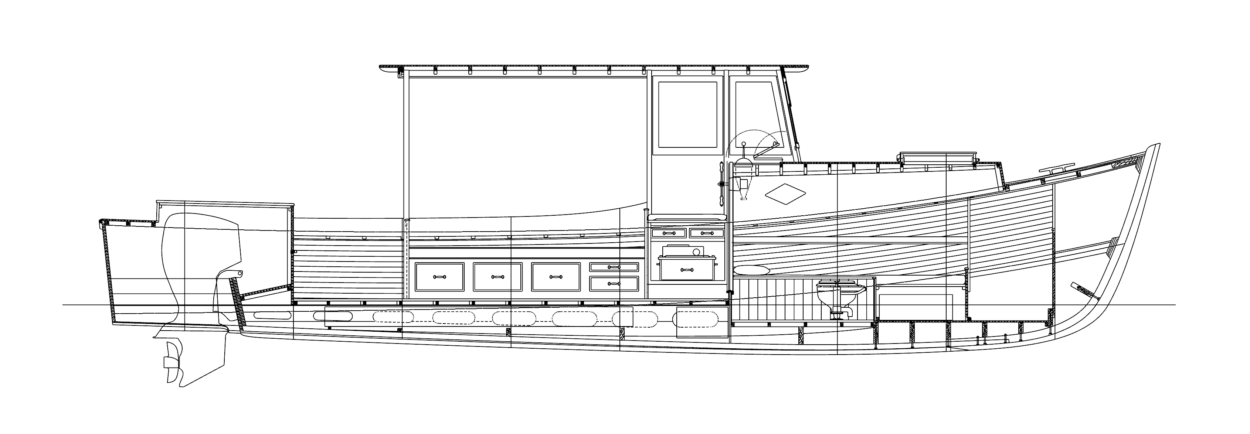
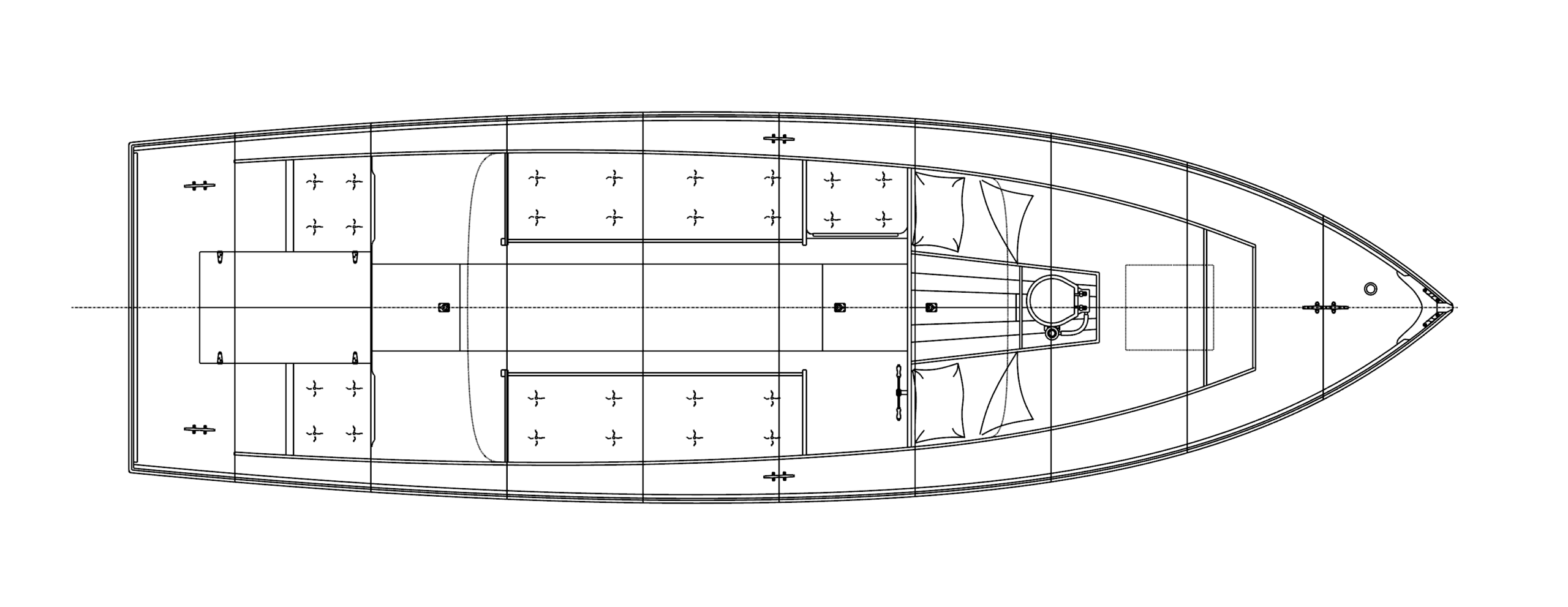
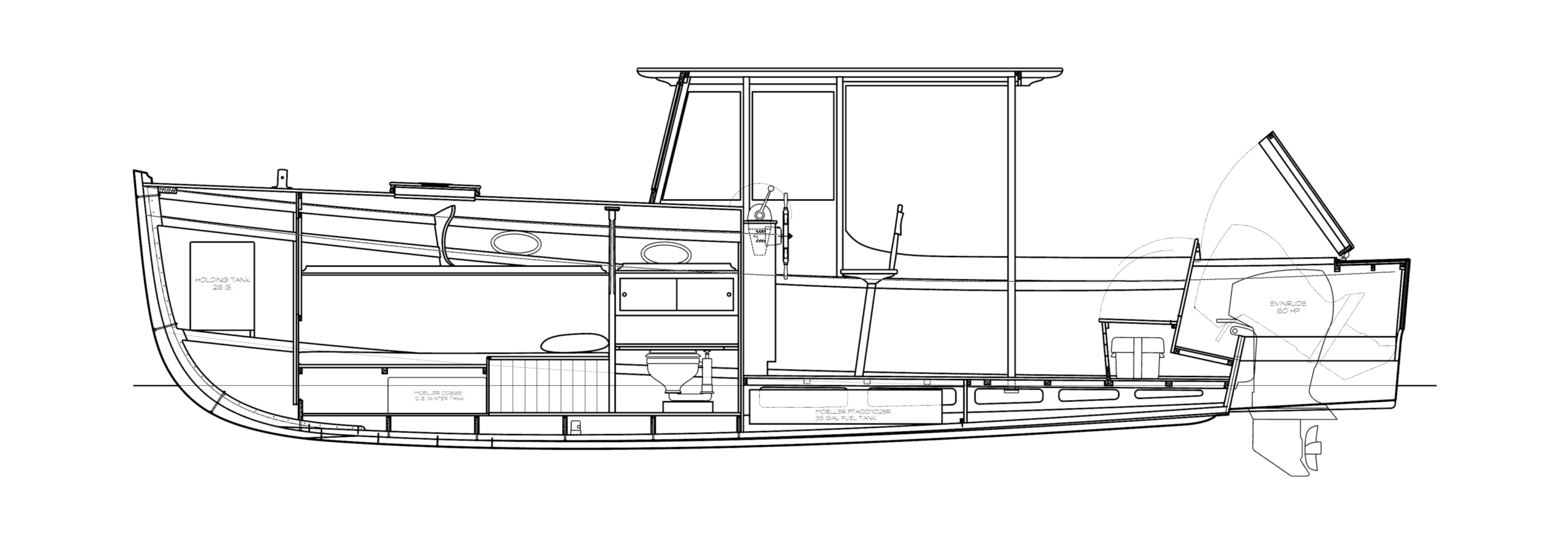
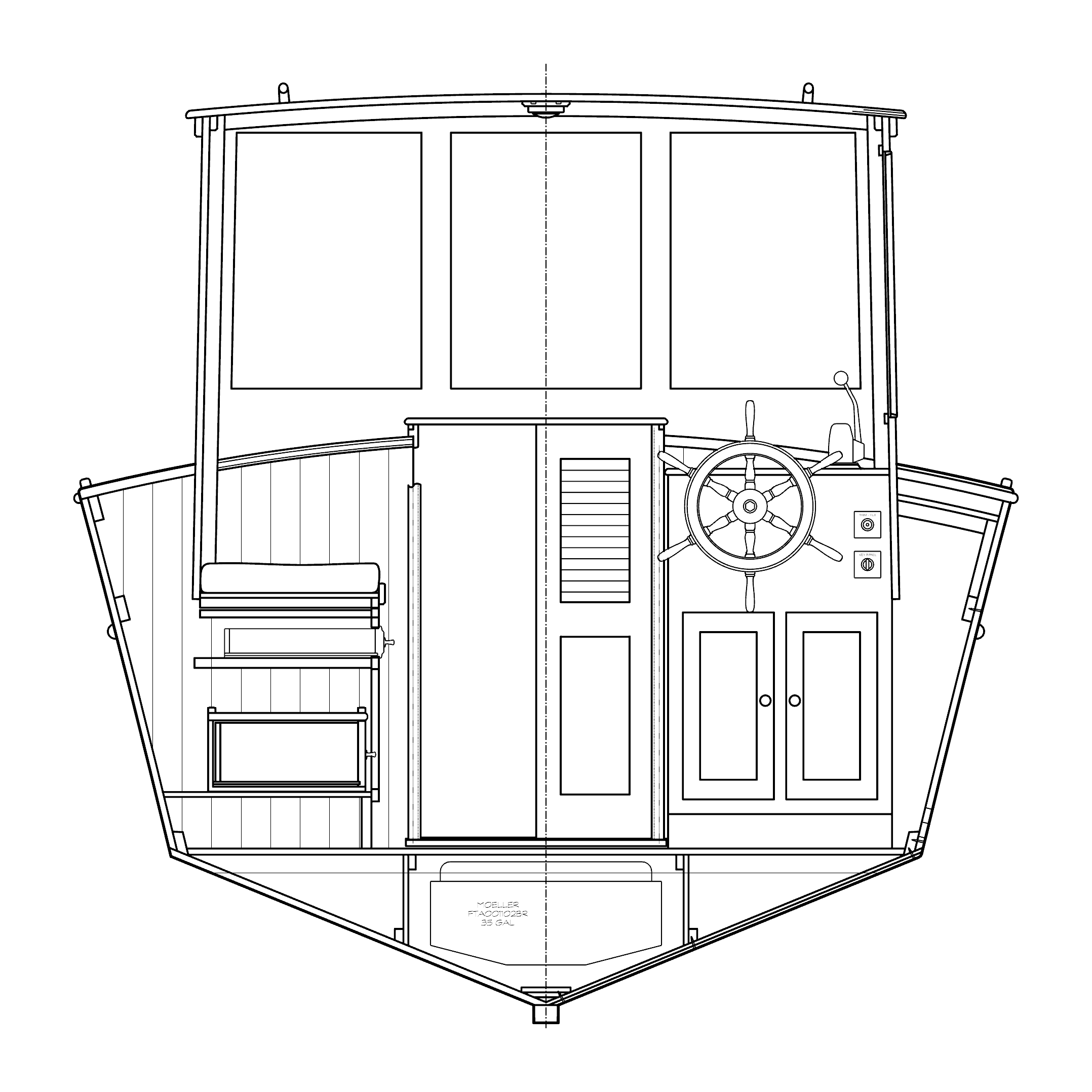
    Down below is a generous V-berth, followed by a toilet to starboard and a sink & counter to port. A step up brings you to the shelter, with 6′ 3″ of headroom. The helm station is to starboard, and to port is a “co-pilot” seat with storage under. A luxurious settee extends across the aft end of the cockpit, just forward of the motor well. Lots of storage back here as well.

    Bowler’s motor is in a covered well, which makes engine noise almost negligible. The plans are based on an Evinrude E-TEC 60 hp motor – if you want a different motor, you should plan to purchase it early, before the dimensions of the motor well are all glued in place. Please don’t call to ask me if a bigger motor can be installed. This type of hull is not appropriate for speeds over 20 knots.

    While most will consider Bowler a day boat, a weekend cruise is easily accommodated as long as simple eating is acceptable. A young and adventurous couple might head off for a week! With curtains around the shelter, even a pair of kids could be included in the fun.

    The plans consist of six sheets: Lines, Outboard Profile, Construction Plan, Construction Sections, Joiner Details, Lofted Offsets. Also included is a CD of construction photos and other helpful information.


    STUDY PLANS: Click here to download free study plans.

    KITS: Learn more about the Bowler kit here. To order a kit, contact Hewes & Co.

    TO PURCHASE PLANS: Plans include 6 sheets plus a USB stick with photos and other info. To order online using Paypal’s ordering system (which accepts credit cards and eChecks), please select one of the following buttons:

    U.S. orders. $325 + $20 shipping = $345
    International orders, including Canada. $325 + $80 shipping = $405
    You can see your Paypal Cart at any time by clicking the button below:

    You can also order plans by sending a check or money order to Hylan & Brown Boatbuilders, 10 Frank Day Ln, Brooklin, ME 04616.

    FAQ: Many questions are answered in Frequently Asked Questions. Please check there first.
    Particulars

    LOA26′ 6″
    LWL25′ 4″
    Beam8′ 2″
    Draft1′ 4″
    Disp.3680 lbs
    Powerup to 60 HP
    Speedup to 17 kts
    TrailerableYes
    Hull typeV-bottom semi-displacement
    ConstructionPlywood bottom & sheathed strip-planked topsides
    Suitable forSomewhat protected waters
    Skill neededIntermediate
    Lofting requiredNo, corrected offsets included, full-size patterns available
    Level of detailAbove average

    In the Press:

    “A Simple Change of Hat” WoodenBoat 253:58.

    “D.N. Hylan: Bagatelle” Maine Boats, Homes & Harbors #133.

  • Point Comfort 23

    Point Comfort 23

    Point Comfort 23

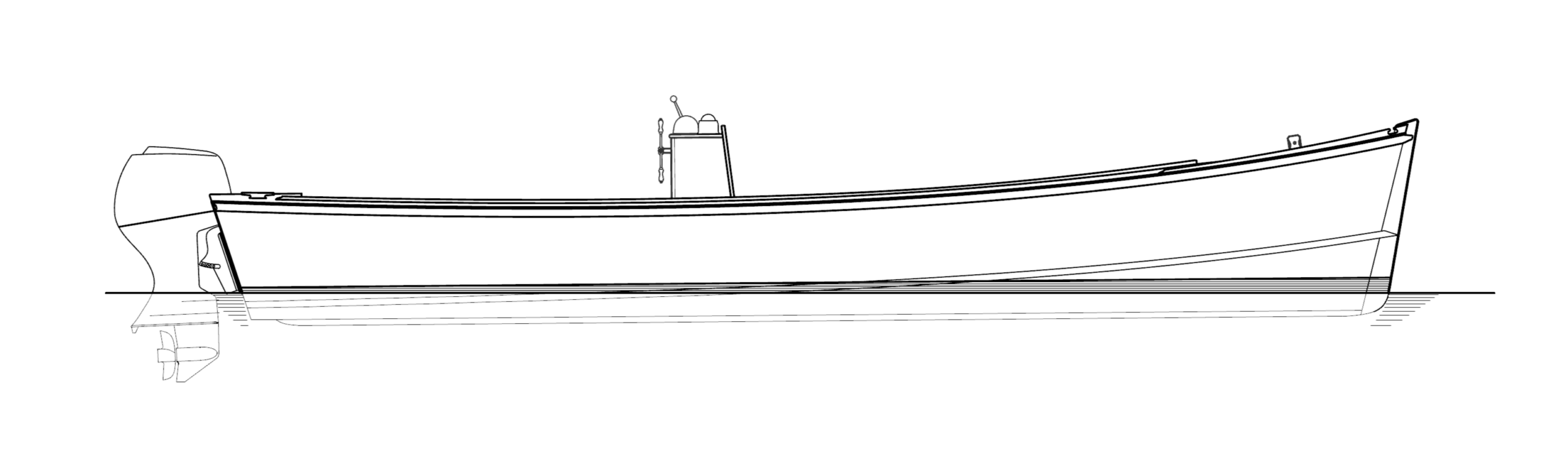
    This boat is a larger version of my popular Point Comfort 18, a traditional Chesapeake Bay workboat type reinterpreted for simpler and more modern construction. Like her smaller sister, this design is drawn to use plywood – in large pieces where possible (roughly three quarters of the boat’s hull), and in small pieces where necessary to get the Chesapeake deadrise bow form. Construction should prove relatively quick and straightforward.

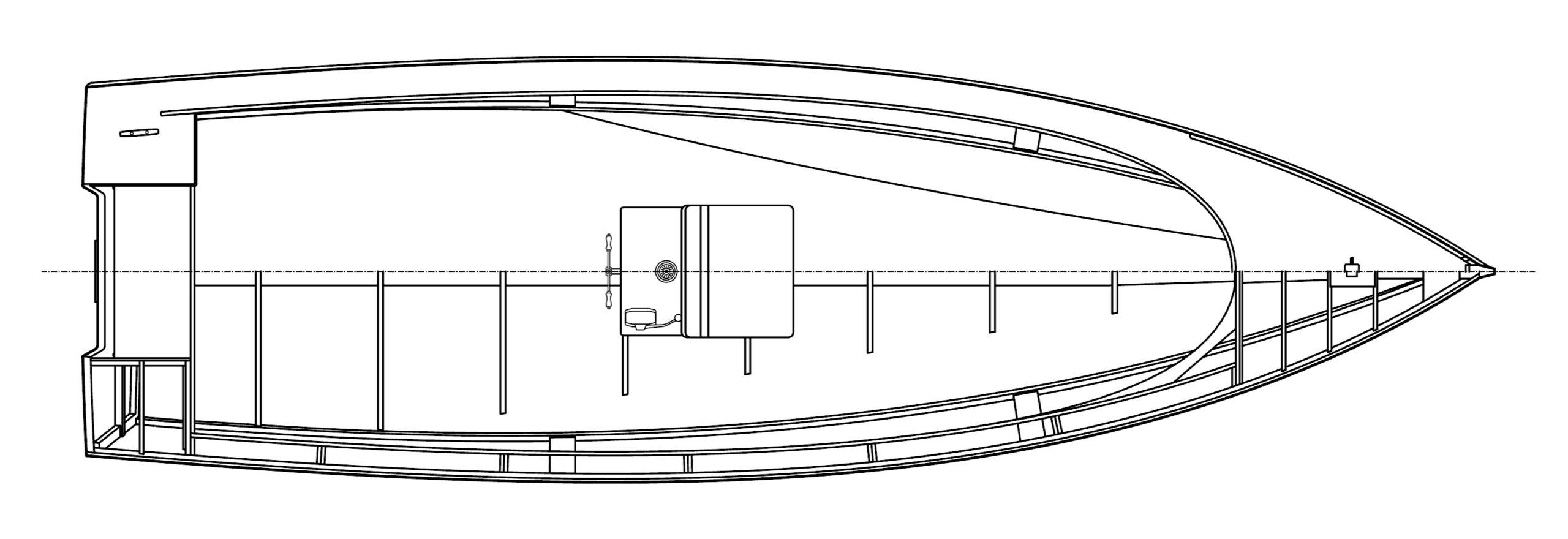
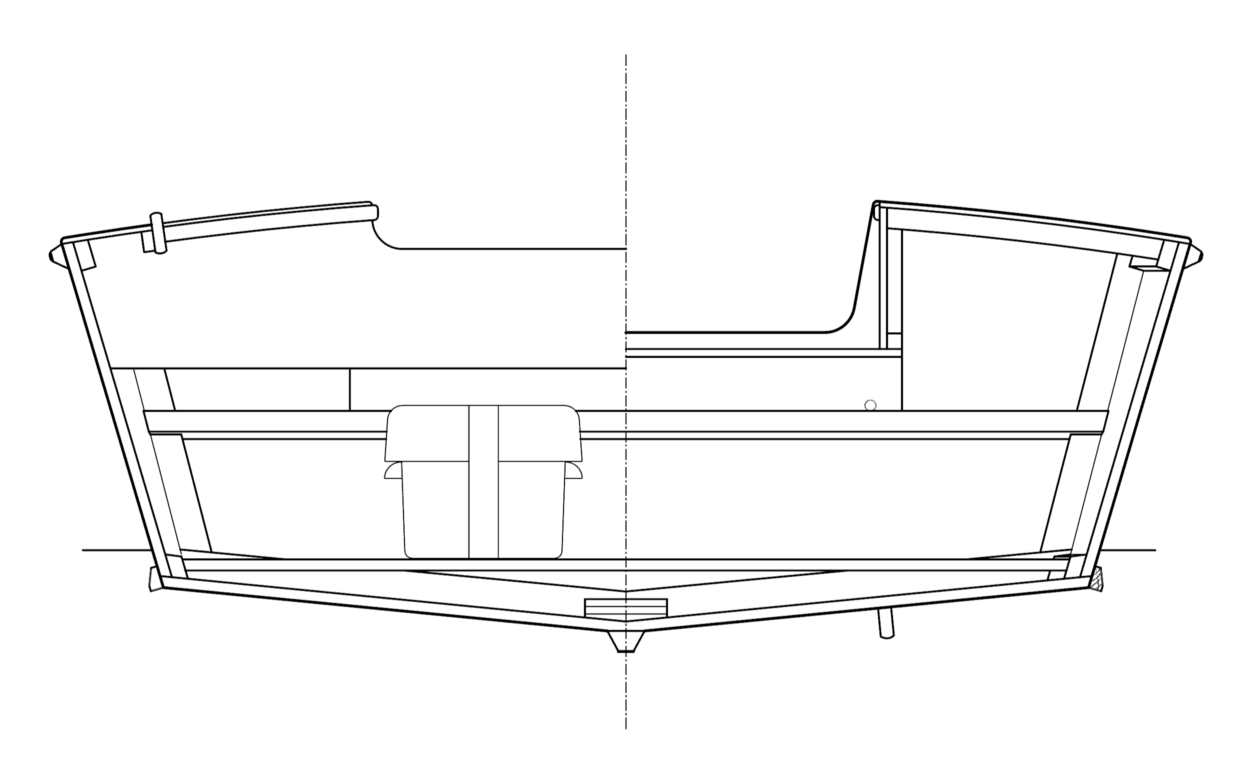
    The hull is built upside down over molds and a ladder frame. Heavy 3/4″ plywood is used for planking which allows a hull with little internal framing.

    This type has proven to make excellent use of low horsepower – in fact, big motors are not recommended. Fifty horsepower should give 20 knots, but this boat will carry a good load at rewarding speeds with as little as 25. Sixty horsepower should be viewed as the upper limit.

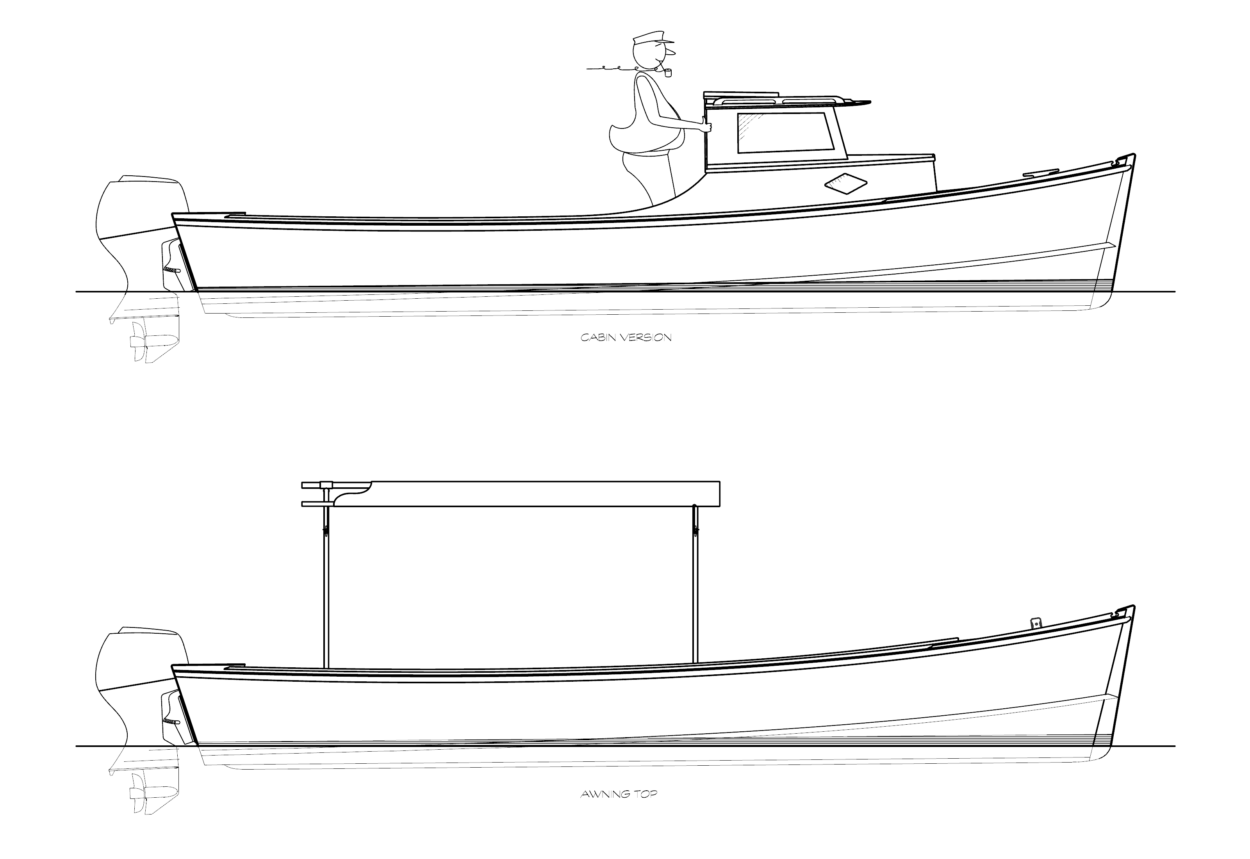
    Included are details for a cabin version and an awning top – the two could be combined for spartan cruising for those with sufficient pluck.

    The plans consist of eight sheets: Lines, Outboard Profile, Construction Plan, Optional Cabin configuration, Building Jig, and three sheets of full sized patterns.

    The Point Comfort skiffs give one of the best combinations of quick and easy building, soft riding, and fuel efficiency I have ever encountered. It will give a smooth ride in the kind of small chop that would knock your fillings loose in a flat bottomed skiff, and get a big load delivered in good time with a tiny fuel bill.


    STUDY PLANS: Click here to download free study plans.

    TO PURCHASE PLANS: Plans include 8 sheets plus full size patterns. To order online using Paypal’s ordering system (which accepts credit cards and eChecks), please select one of the following buttons:

    U.S. orders. $350 + $30 shipping = $380
    International orders, including Canada. $350 + $80 shipping = $430
    You can see your Paypal Cart at any time by clicking the button below:

    You can also order plans by sending a check or money order to Hylan & Brown Boatbuilders, 10 Frank Day Ln, Brooklin, ME 04616.

    FAQ: Many questions are answered in Frequently Asked Questions. Please check there first.

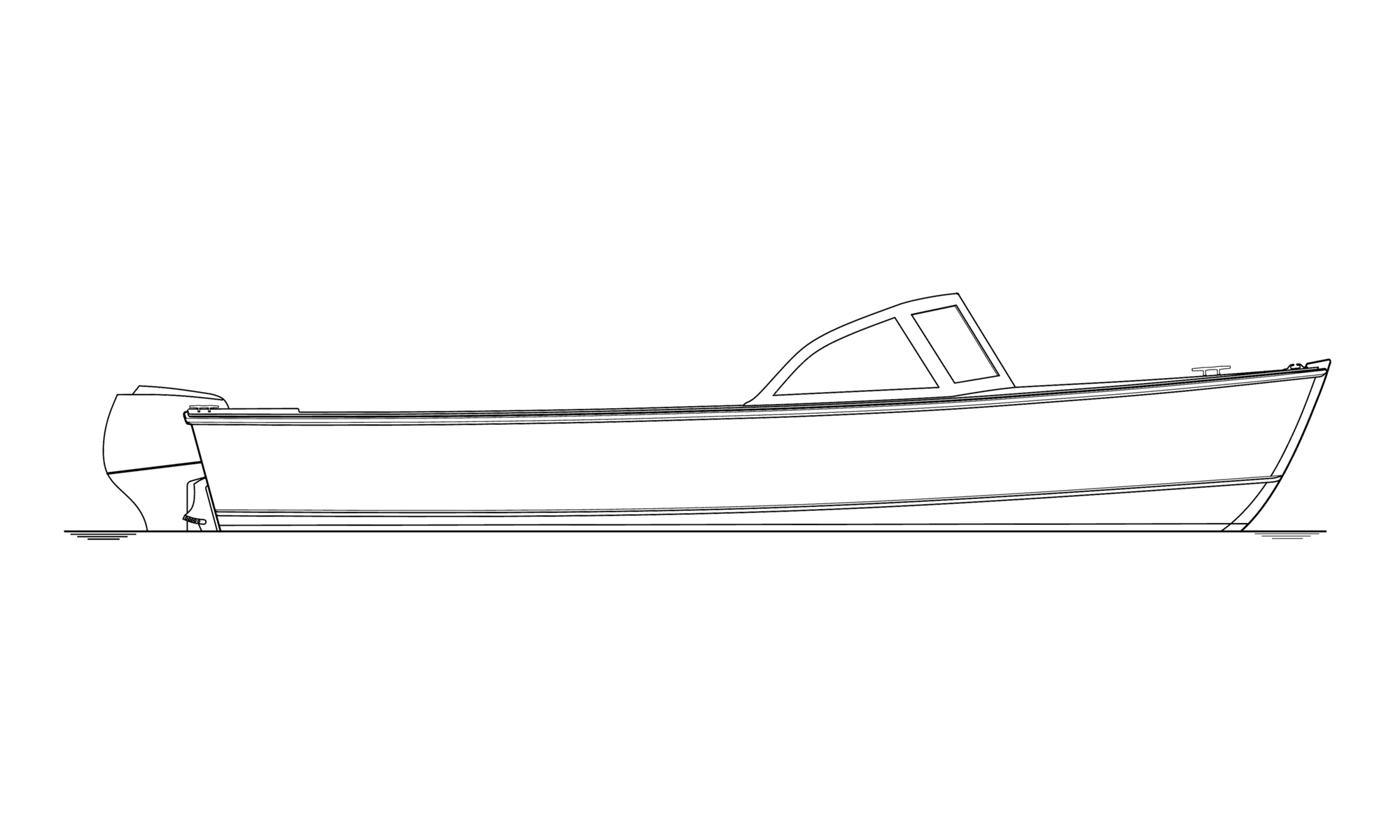
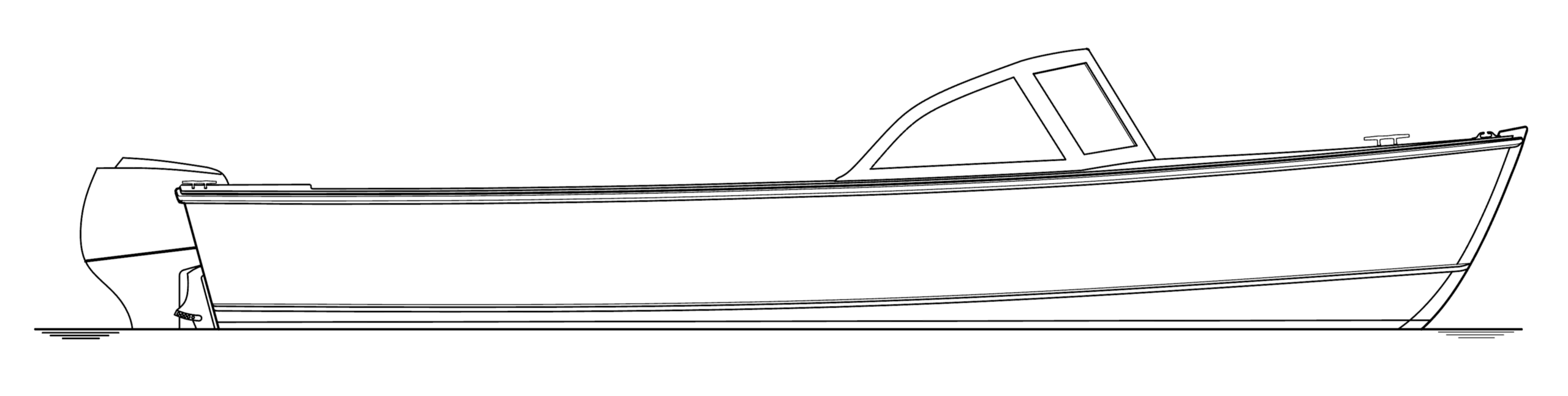
    Point Comfort 23 outboard profile
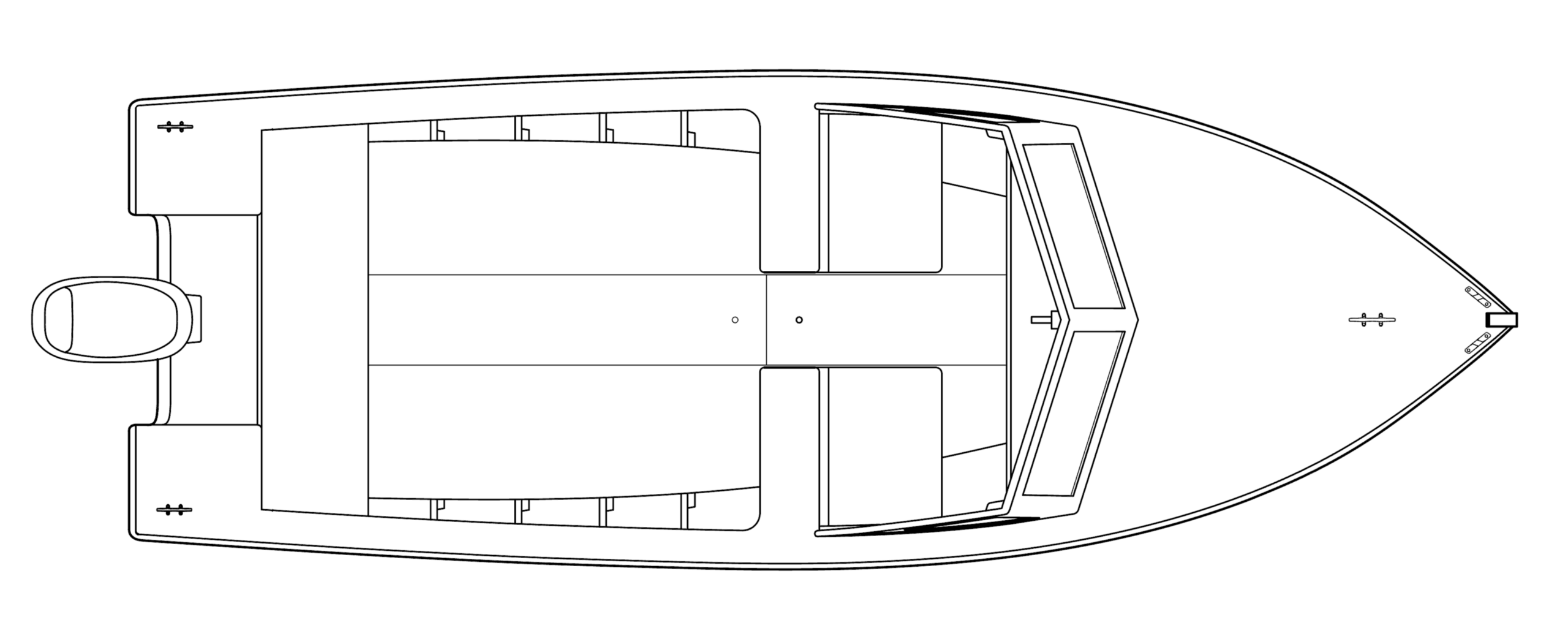
    Point Comfort 23 plan view

    Alternate layouts:

    Point Comfort 23 alternate layouts

    Particulars

    LOA23′ 1″
    LWL21′ 10″
    Beam6′ 10″
    Draft7″
    Disp.1500 lbs
    Power25 to 60 HP
    TrailerableYes
    Hull typeChesapeake deadrise skiff
    ConstructionPlywood
    Suitable forSomewhat protected waters
    Skill neededIntermediate
    Lofting requiredNo, full size patterns included
    Level of detailAbove average
  • Point Comfort 18

    Point Comfort 18

    Point Comfort 18

    Here is another little skiff inspired by a Chesapeake Bay working craft.  In order to combine chine construction with the kind of bow that can punch into (instead of being punched around by) the Bay’s notorious chop, builders there have long used cross planked “deadrise” construction in which the bottom planking twists markedly as it approaches the stem. While this method produces a fine and soft riding bow, it requires great skill as each bottom plank must have just the right amount of twist manually carved into it.

    Plywood has a lot of advantages for small hull construction, but one disadvantage is that it cannot be made to form into this kind of bow, at least not in large pieces.  This new design is drawn to use plywood – in large pieces where possible (roughly three quarters of the boats hull), and in small pieces where necessary to get the Chesapeake deadrise bow form.  Construction has proven to be quick and easy.

    This boat is designed to make good use of low horsepower – in fact, big motors are not recommended.  Our boatyard 9.9 horsepower outboard gave 12 kts with four adults aboard. Twenty-five horsepower should be viewed as the upper limit.

    The plans consist of eight sheets:  Lines, Outboard Profile, two interior layout options, Building Jig, and three sheets of full-sized patterns.  Also included is a USB drive with construction and finished photos of the prototype boat, and other various and possibly helpful information.

    In addition, photos of the prototype under construction are available at our Facebook page.


    STUDY PLANS: Click here to download free study plans.

    KITS: Learn more about the Point Comfort 18 kit here. To order a kit, contact Hewes & Co.

    TO PURCHASE PLANS: Plans include 8 sheets plus a USB stick with photos and other info. To order online using Paypal’s ordering system (which accepts credit cards and eChecks), please select one of the following buttons:

    U.S. orders. $250 + $20 shipping = $270
    International orders, including Canada. $250 + $80 shipping = $330
    You can see your Paypal Cart at any time by clicking the button below:

    You can also order plans by sending a check or money order to Hylan & Brown Boatbuilders, 10 Frank Day Ln, Brooklin, ME 04616.

    FAQ: Many questions are answered in Frequently Asked Questions. Please check there first.

    Point Comfort 18 outboard profile

    Alternate layout:

    Particulars

    LOA18′ 3″
    LWL17′ 4″
    Beam5′ 5″
    Draft6″
    Disp.350 lbs w/o motor
    Power10 to 25 HP
    TrailerableYes
    Hull typeChesapeake deadrise skiff
    ConstructionPlywood
    Suitable forSomewhat protected waters
    Skill neededBeginner
    Lofting requiredNo, full size patterns included
    Level of detailAbove average
  • Albury Brothers Runabout

    Albury Brothers Runabout

    Albury Brothers Runabout

    A fine outboard, smooth riding, seaworthy, and rugged.

    In the northern Bahamas, the Albury name is synonymous with boatbuilding. For generations, this family has turned out hundreds of boats, from dinghies to schooners, from their building sheds on Man-O-War Cay. For almost 40 years Willard and Benny Albury have been producing fine outboard runabouts that have earned a reputation as smooth riding, seaworthy, rugged boats, capable of excellent speed with modest horsepower. These plans represent what Willard Albury considers to be his optimal boat, the best of over 250 individual boats.

    Doug Hylan has drawn a set of plans that not only documents the construction of these fine boats, but makes it possible for other builders to enjoy their good qualities. The lines show a moderate deadrise of 15 degrees with a fine entry, producing an easy ride even in the short, steep chop common in the shallow waters of the Bahamas. Construction is robust but simple and clean, making these boats easy to maintain and long-lived.

    Glued strip planking over frames sawn from natural Madeira root knees was the original construction, but most builders today will probably find it easier to laminate their frames. For those who would prefer cold molding, a construction sheet is included for this method. Lofting is required, but this is not a difficult set of lines to lay down.

    Plans are on 6 sheets, including lines, original construction, cold molded construction, and details. Calculation for U. S. Coast Guard safe powering, load capacity, and flotation requirements are included.

    WB Plan No. 136, $90.00.


    TO PURCHASE PLANS: Click here to order plans from Woodenboat Store

    STUDY PLANS: Click here to order digital study plans from WoodenBoat Store

    FAQ: Many questions are answered in Frequently Asked Questions. Please check there first.

    Albury Runabout outboard profile
    Albury Runabout plan view
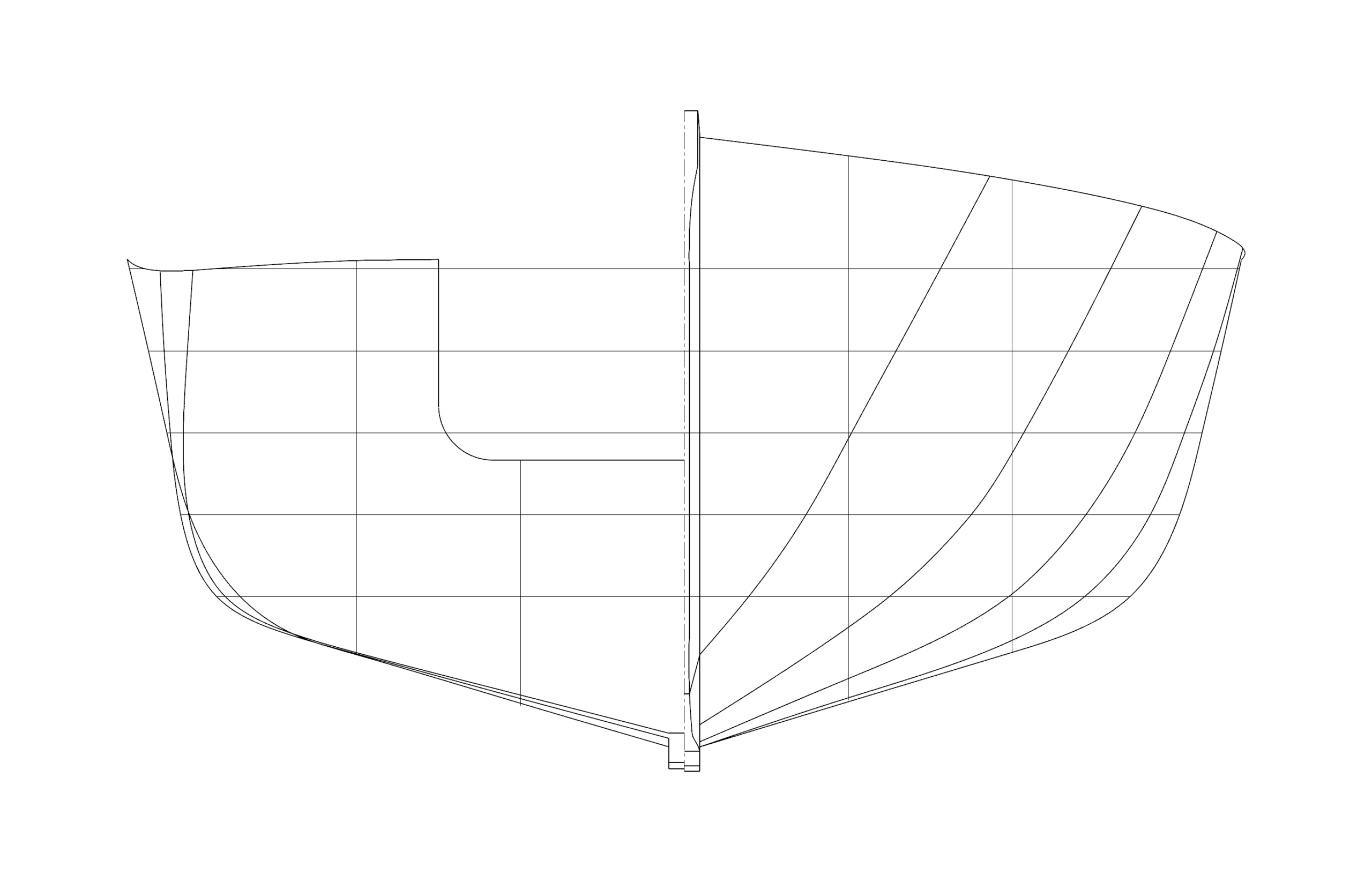
    Albury Runabout sections

    Particulars

    LOA19′ 7″
    LWL17′ 9″
    Beam6′ 10″
    Draft13″
    Disp.2400 lbs
    Power40 to 120 HP
    Intended capacity2-7 day cruising
    TrailerableYes
    Hull typeV-bottom runabout
    ConstructionStrip plank over grown or laminated frames
    Suitable forSomewhat protected waters
    Skill neededIntermediate
    Lofting requiredYes
    Alternative constructionCold molded, plans included
    Level of detailAbove average

    OTHER REFERENCES: “The Alburys of Man O’ War Cay” WoodenBoat 135:44.