
• In The Shop
  • Build
  • Restore
  • Electrify

Category: Oar

  • Westport Skiff

    Westport Skiff

    Westport Skiff

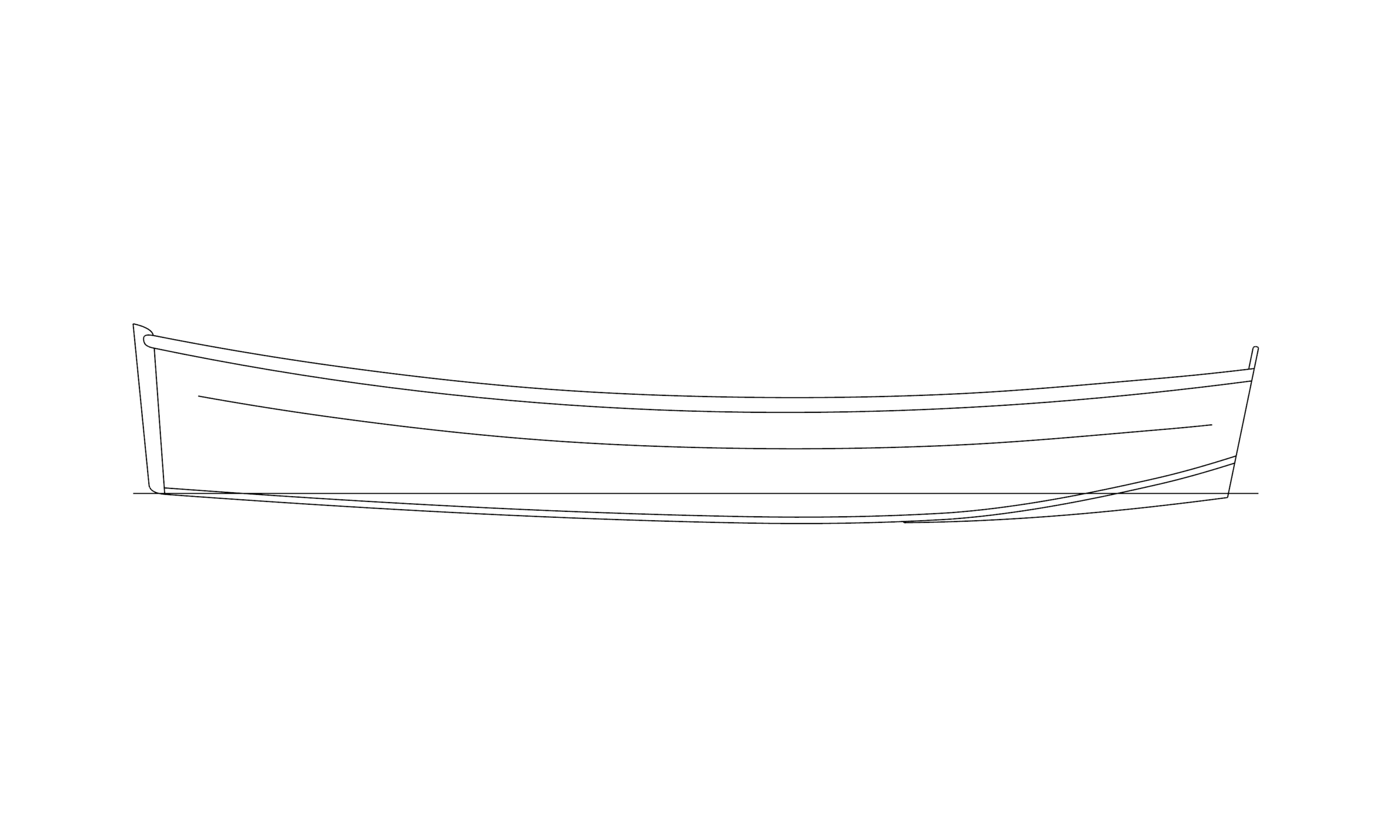
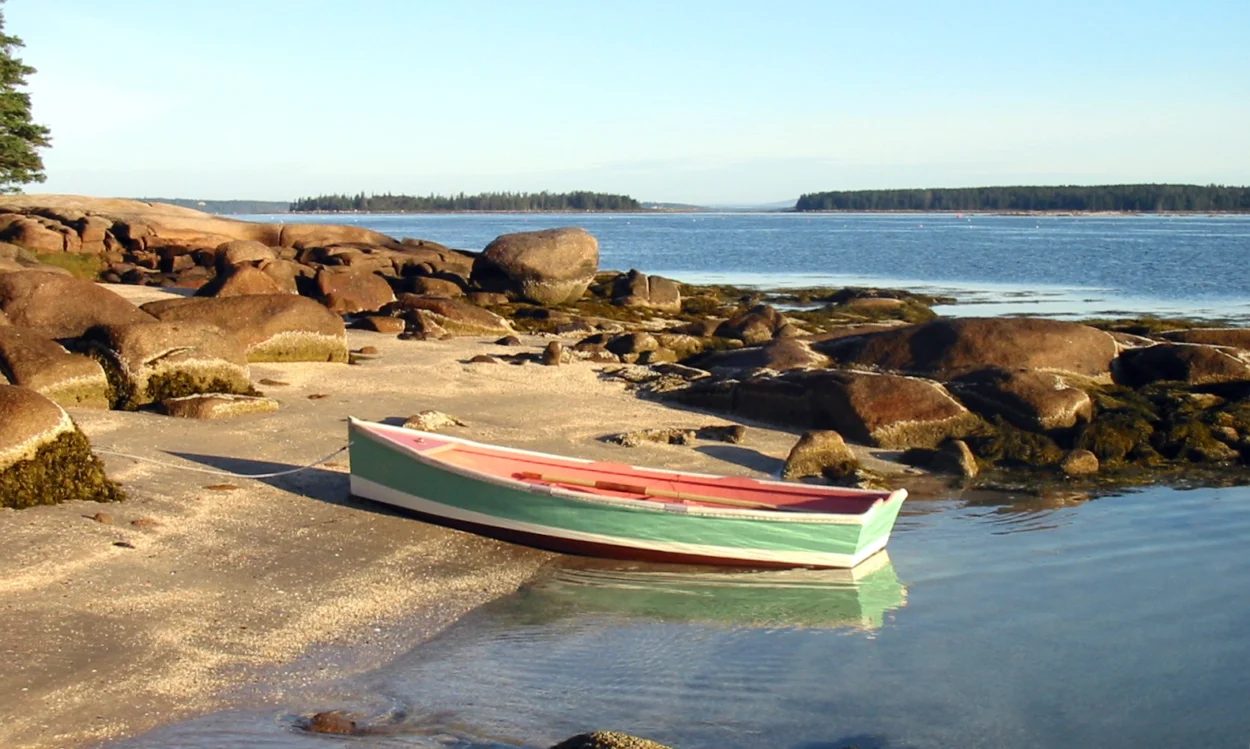
    A simple-to-build 11′ skiff, can be built up to 18′ long

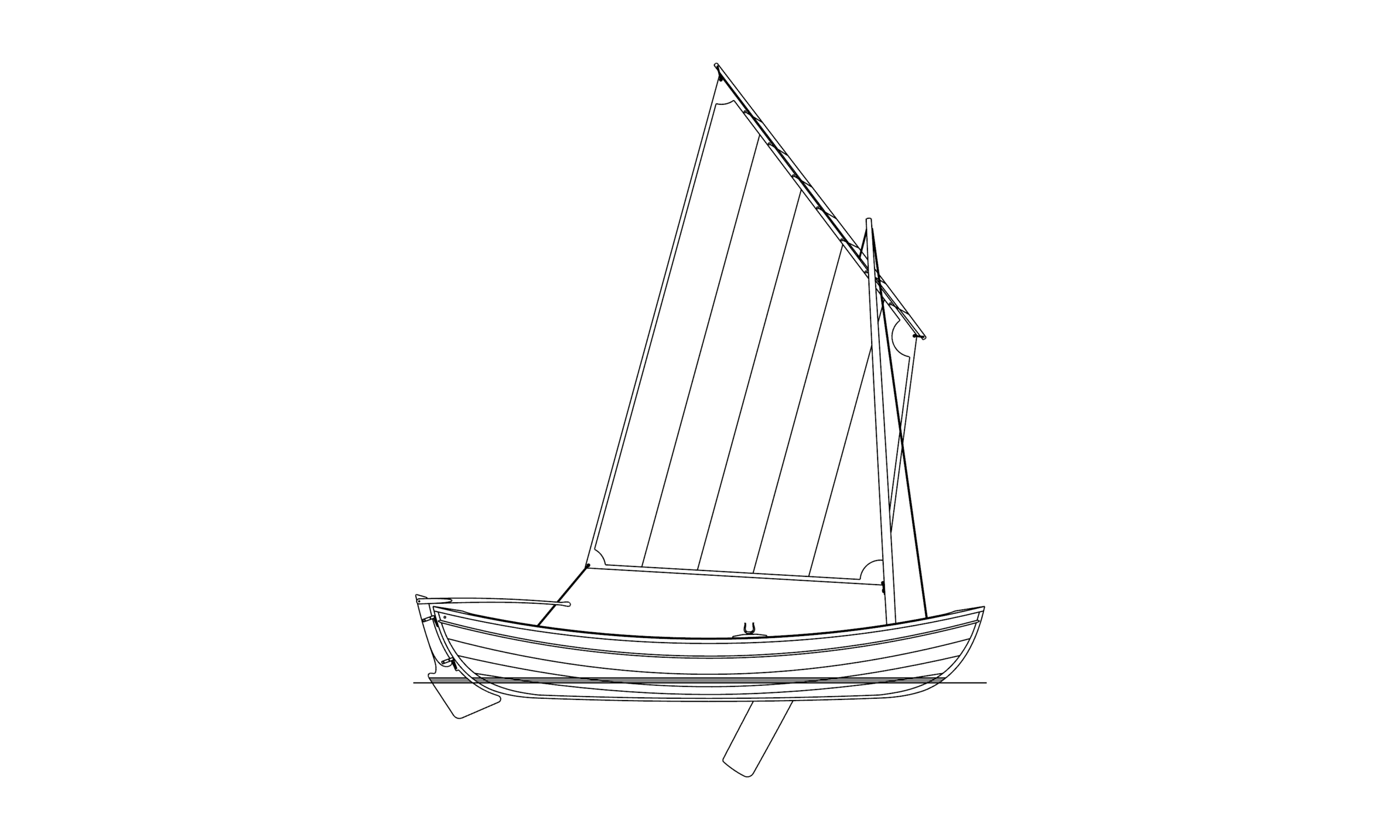
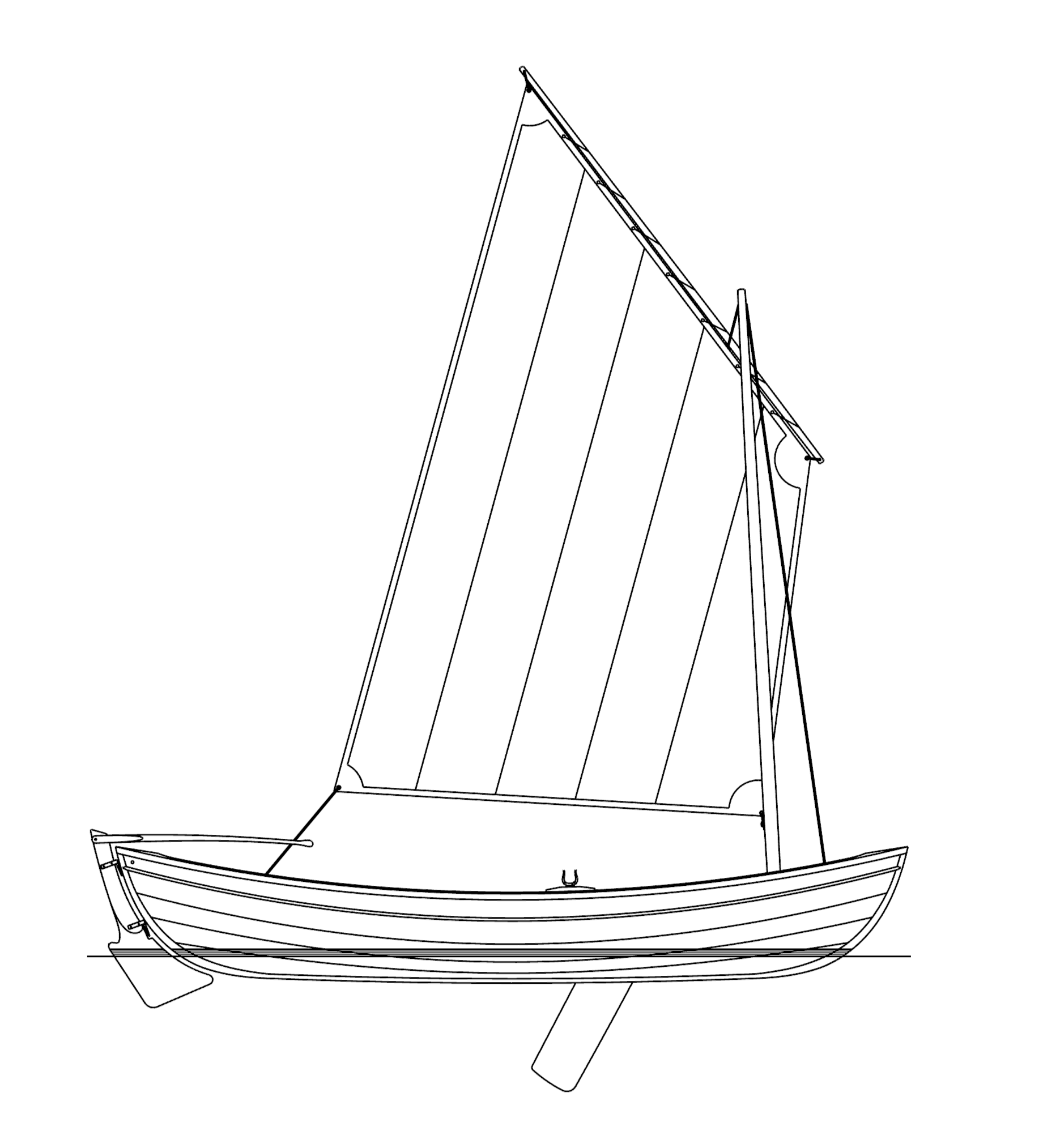
    The Westport Skiff is a good example of a type that was ubiquitous on the US East Coast in the early 1900s, and probably well before. They were good all-around boats, but their main virtue was simplicity of construction and low cost. A good builder could turn out one of these boats in a couple of days – one to build, one to paint. They were heavy, which didn’t matter once they were in the water, and the bottom planking would open up dramatically if left out of the water for any length of time. Thus, they were intended to spend the entire season in the water, likely as a tender for a larger workboat, or as an inexpensive boat for catching a few fish for dinner.

    Nowadays, many of us are not able to leave our skiff in the water all the time, so light weight and freedom from leaks are more important. You probably won’t build this boat in a day – more likely a week or a month – but it is still a simple and fun boat to build. It would be ideal as a project with the kids, and a good boat for them once done. I would urge you to build the rowing version, as outboards can be a curse to peace of mind and the environment. And, kids should learn to row before being turned loose with a motor. In fact, there isn’t much of any excuse for the outboard version. Its only virtue is that it gives a little more support for a slightly bigger motor and a single occupant in the stern. I drew it only because I had a handicapped customer who physically could not row.

    You can still put a little motor on the rowing version – about 2 hp is all it can use. But if you build the outboard version, its rowing qualities will be ruined with anything more that one middle sized kid at the oars. The transom will drag, the boat will slow dramatically and the fun of rowing will be gone. If you just can’t see yourself rowing at all, consider a little electric trolling motor with the battery up forward in the rowing version.

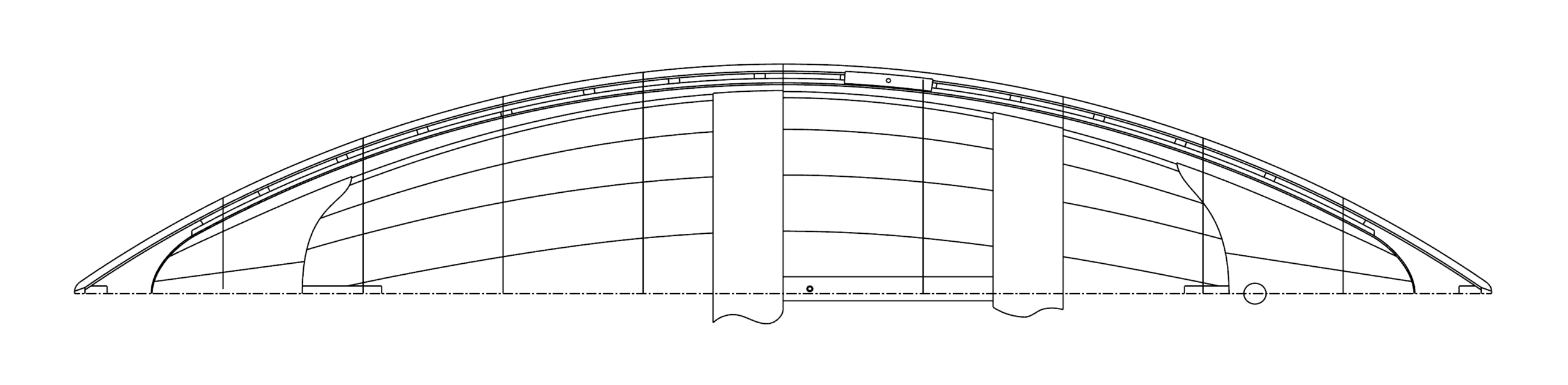
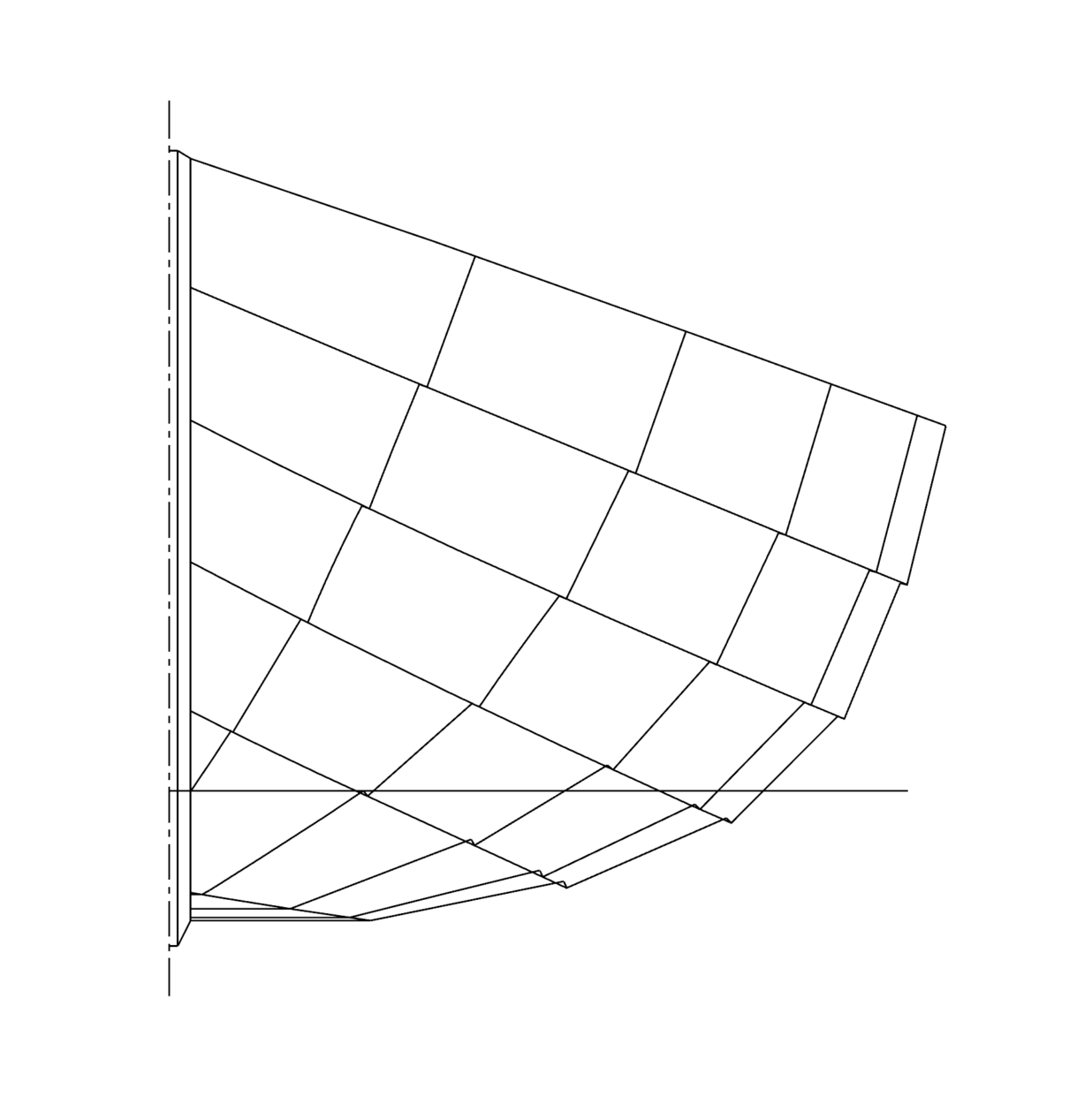
    If you want a bigger boat, you can stretch out this one to any length up to about 18 feet. Just increase the longitudinal spacing of the measurements given on the plans to some number that gives you the length you want. Use the same molds and transom as shown, keeping the same beam. You will also need to alter the bevel on the inner stem and transom slightly – keep the same width on the outside faces and make the inside smaller to suit. If you do go all the way to 18′, you might want to increase the thickness of the topside panels to 3/8″, as 1/4″ will be difficult to handle at any length over about 16′.

    This design is based on an original modeled by Fred Tripp and documented by R. H. Baker.


    STUDY PLANS: Click here to download free study plans

    TO PURCHASE PLANS: On two sheets. To order online using Paypal’s ordering system (which accepts credit cards and eChecks), please select one of the following buttons:

    U.S. orders. $75 + $6 shipping = $81
    International orders, including Canada. $75 + $15 shipping = $90
    You can see your Paypal Cart at any time by clicking the button below:

    You can also order plans by sending a check or money order to Hylan & Brown Boatbuilders, 10 Frank Day Ln, Brooklin, ME 04616.

    FAQ: Many questions are answered in Frequently Asked Questions. Please check there first.
    Particulars

    LOA11′
    Beam4′
    Draftapprox. 3″
    Weightapprox. 100 lbs
    TrailerableYes
    Hull typeFlat bottom, transom stern
    ConstructionGlued plywood
    Suitable forProtected waters
    Skill neededBeginner
    Lofting requiredNo, full-size patterns included
    Level of detailAbove average
  • Little Crab

    Little Crab

    Little Crab

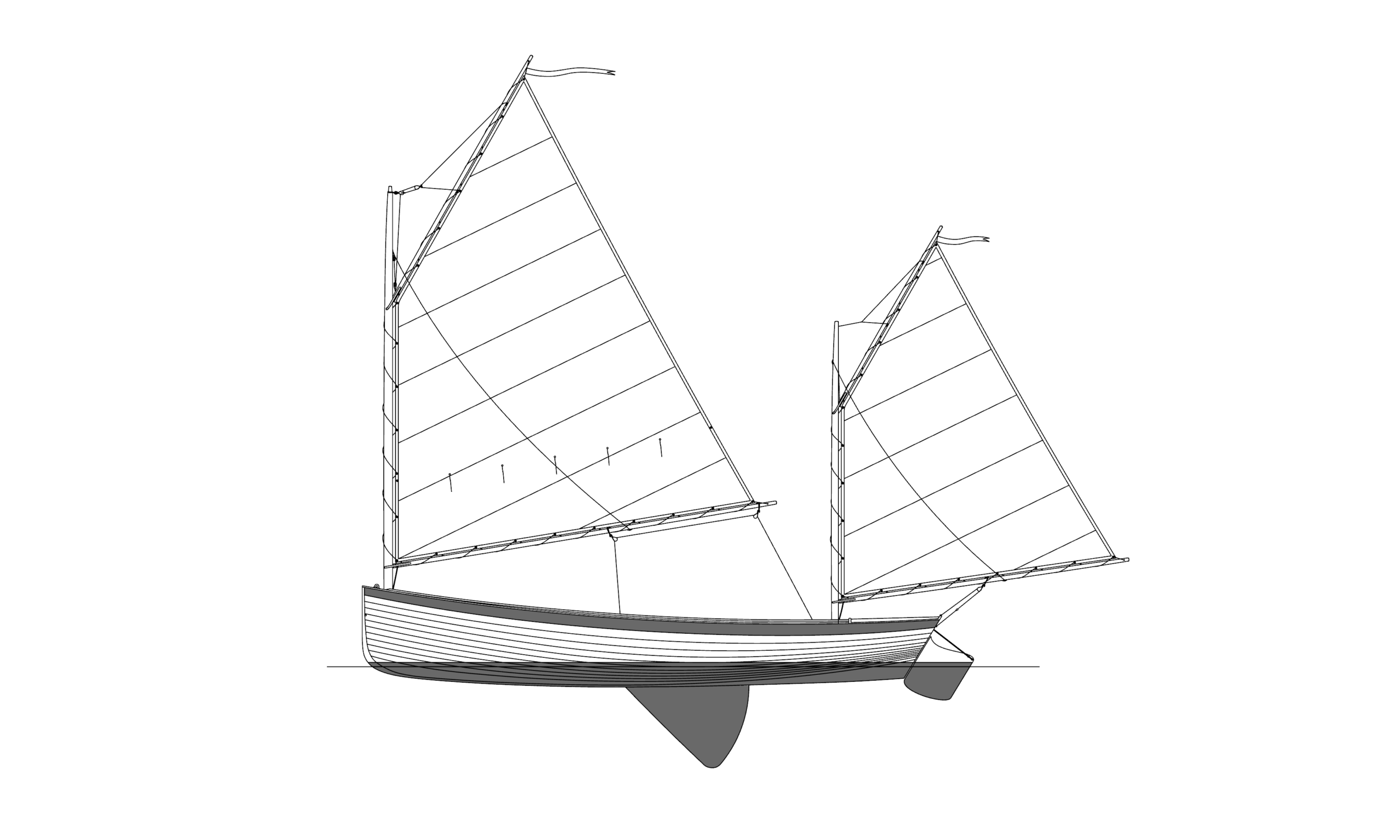
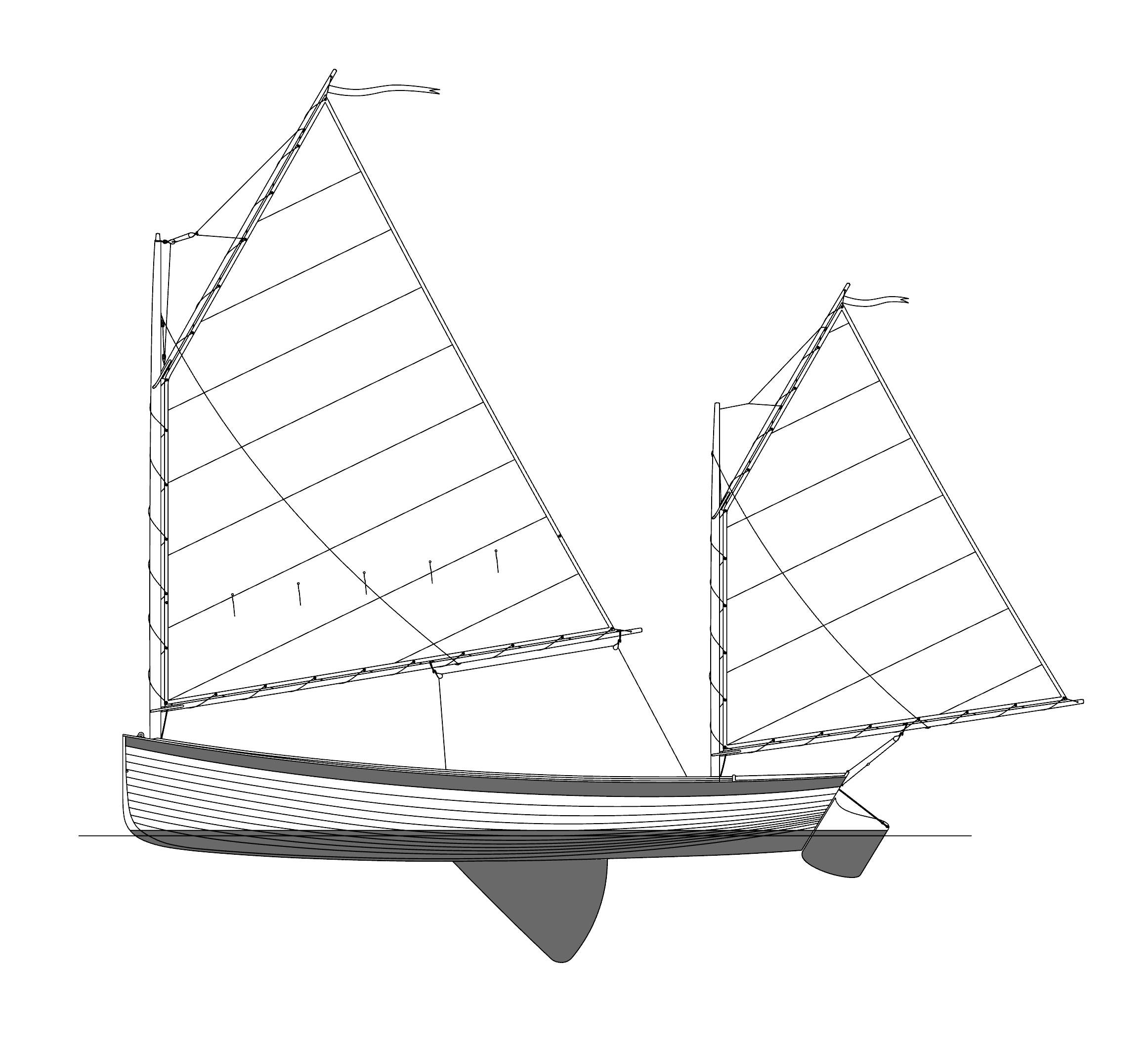
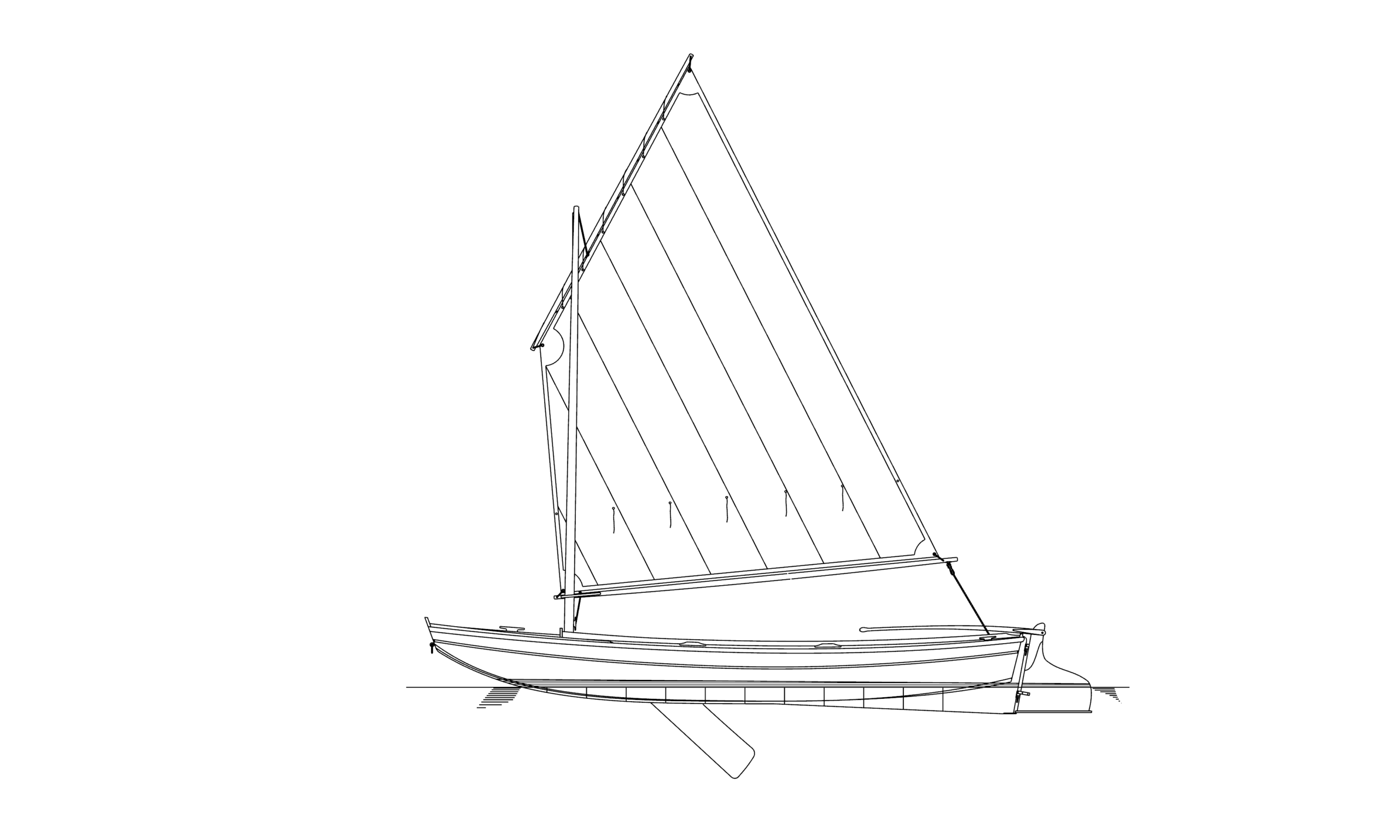
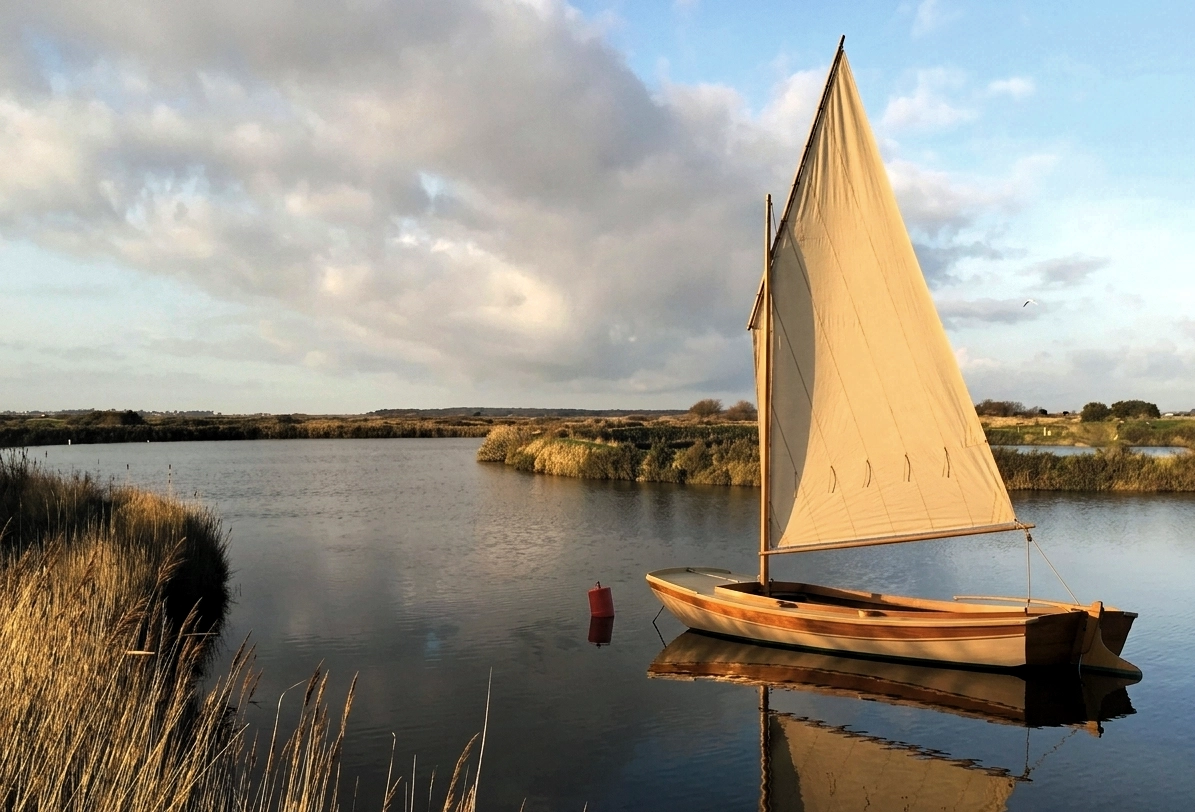
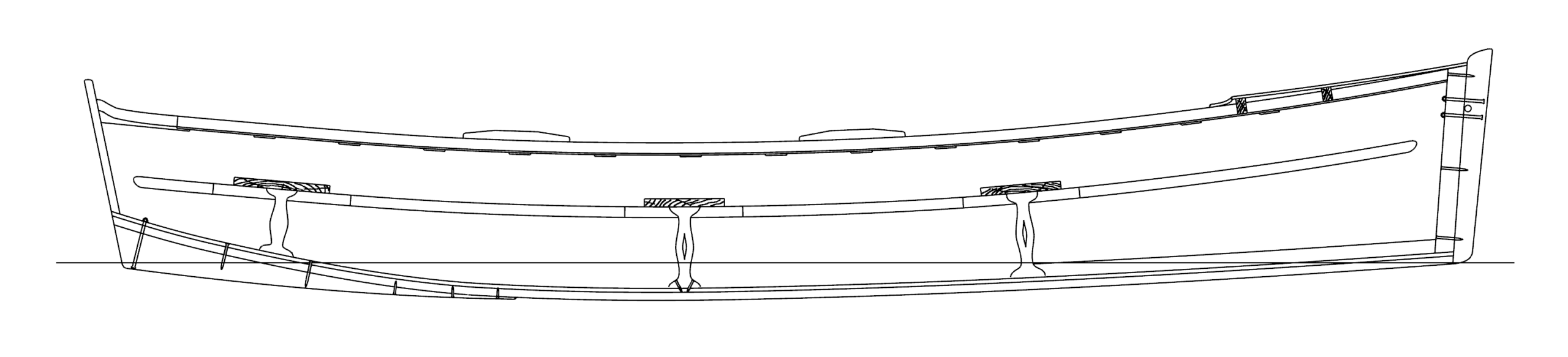
    Little Crab is a smaller version of the Chesapeake Crab Skiff I drew several years ago. Bill Page, boatbuilder and traditional marine hardware tycoon, asked for a 14′ version to use as a tender for his new power cruiser. He wanted a skiff with lots of stability that would be primarily powered by an electric trolling motor, but I was surprised by how well this boat rowed.

    Little Crab is a foot shorter than Bill’s boat, but it will still be a capacious tender for a larger yacht. She will row and tow reasonable well, and will provide reassuring stability when getting aboard.

    As a sailing boat, Little Crab will make a fine weekend camp cruiser, with room for a couple of sleeping bags when the mid-ships slip thwart is removed. She would also make a great boat for young adventurers: light and shallow enough to be pushed off the beach (or that unseen shallow spot), simple and moderately sized rig, rewarding rowing, and good stability.

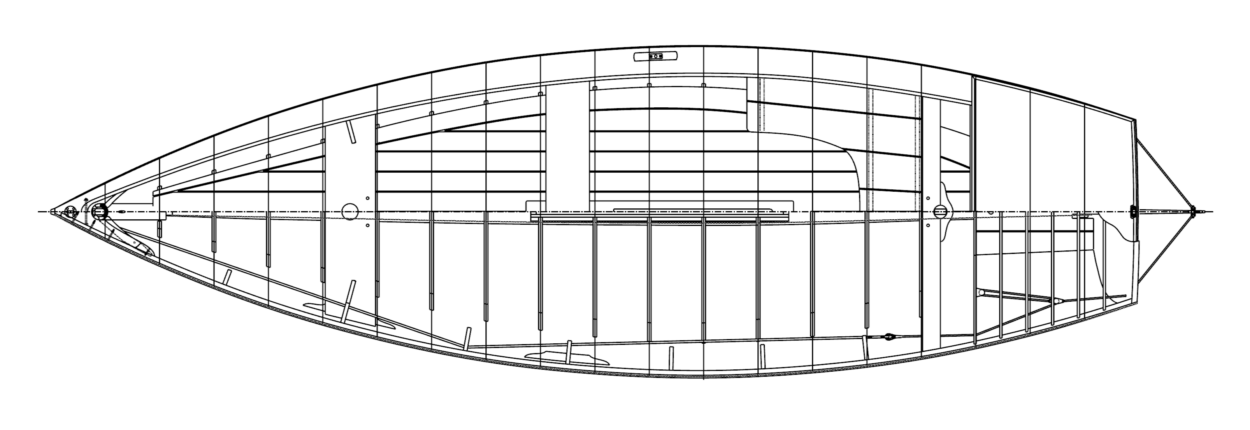
    The boat is intended to be built upside down over widely spaced molds set up on a ladder frame. This is old fashioned technology by some people’s standards – why not “stitch ‘n’ glue”? While the stitch and glue method is conceptually simple and un-intimidating, it can produce inexact hull shapes, and in my experience, it is no faster and far less pleasurable than my method. Any time saved in avoiding temporary molds and wooden stems and chines is more than taken up in shmooing and sanding epoxy and fiberglass. In the end, you will take more pride in having learned to shape a piece of wood than you will in the muscles you’ve built sanding epoxy fillets.

    Little Crab will make a fine father & son project (no slight intended, ladies), but take a piece of advice from an old dad – even a small boat takes time, and kids grow up fast. So, plan well, set aside enough time, and make it fun.


    STUDY PLANS: Click here to download free study plans

    KITS: Learn more about the Little Crab kit here. To order a kit, contact Hewes & Co.

    TO PURCHASE PLANS: On five sheets: Sail Plan, Lines Plan, Construction Plan, Building Jig, full-size patterns. To order online using Paypal’s ordering system (which accepts credit cards and eChecks), please select one of the following buttons:

    U.S. orders. $150 + $20 shipping = $170
    International orders, including Canada. $150 + $80 shipping = $230
    You can see your Paypal Cart at any time by clicking the button below:

    You can also order plans by sending a check or money order to Hylan & Brown Boatbuilders, 10 Frank Day Ln, Brooklin, ME 04616.

    FAQ: Many questions are answered in Frequently Asked Questions. Please check there first.
    Particulars

    LOA13′
    LWL12′ 2″
    Beam4′ 5″
    Draft6″ (rowing), 9″ / 30″ (sailing)
    Weightapprox. 225 lbs
    TrailerableYes
    Hull typeV-bottom chine hull
    ConstructionPlywood
    Suitable forSomewhat protected waters
    Skill neededBeginner
    Lofting requiredNo
    Level of detailAbove average

    OTHER REFERENCES: There’s a nice review of Little Crab in WoodenBoat (May/June 2019).

  • Benjamin River Peapod

    Benjamin River Peapod

    Benjamin River Peapod

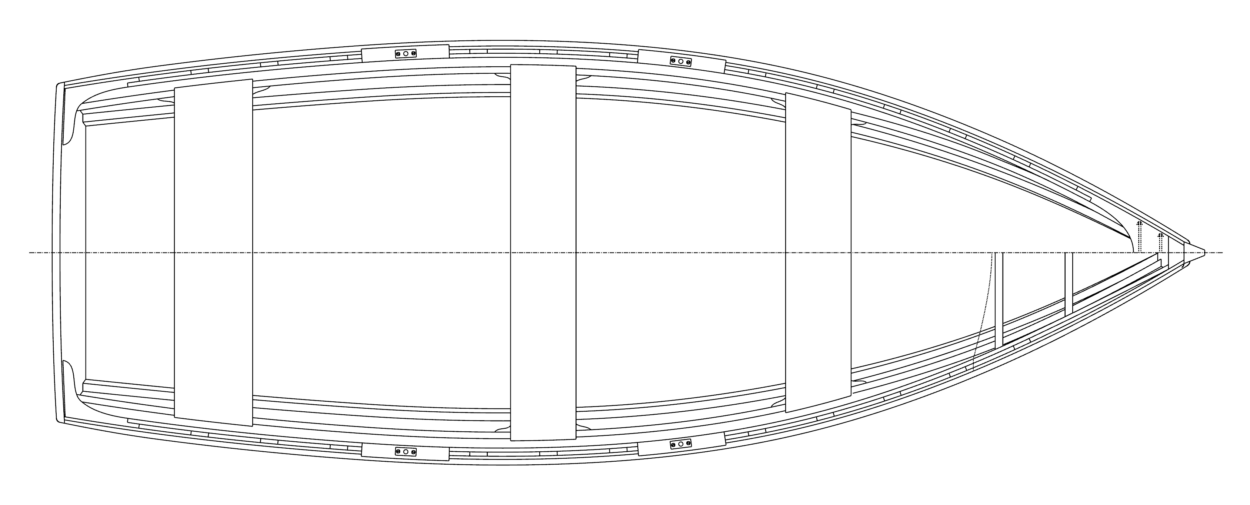
    This is a larger version of my Beach Pea design, made at the request of a customer who wanted a boat big enough to hold his growing family. While Beach Pea is big enough to carry two adults and two medium children, three adults should be considered the limit in rough conditions. The Benjamin River pod is 6″ longer with 4″ more beam and should easily carry four adults through rough water, 5 or even 6 in calm conditions.

    This boat was designed from the start with a CNC kit in mind, and the plans reflect that. You can build this boat without purchasing the kit, but some simple modifications would want to be made, and a few more boatbuilding skills are required. These are outlined in the Specifications sheet.

    As with Beach Pea I’ve tried to include traditional detailing to the extent possible with
    modern glued lap construction. But I have included flotation compartments in the
    Benjamin River pod, welcome in the unlikely event that the boat gets swamped.
    This boat uses the same construction as Beach Pea, so the How-to-Build series in
    WoodenBoat magazine (issues 133, 134, & 135) will apply.


    STUDY PLANS: Click here to download free study plans

    KITS: Learn more about the Benjamin River Peapod kit here. To order a kit, contact Hewes & Co.

    TO PURCHASE PLANS: On five sheets: Sail & Lines Plan, Construction Plan, Building Jig, two full-size patterns. To order online using Paypal’s ordering system (which accepts credit cards and eChecks), please select one of the following buttons:

    U.S. orders. $150 + $20 shipping = $170
    International orders, including Canada. $150 + $80 shipping = $230
    You can see your Paypal Cart at any time by clicking the button below:

    You can also order plans by sending a check or money order to Hylan & Brown Boatbuilders, 10 Frank Day Ln, Brooklin, ME 04616.

    FAQ: Many questions are answered in Frequently Asked Questions. Please check there first.
    Particulars

    LOA13′ 6″
    LWL11′ 3″
    Beam4′ 6″
    Draft6″
    Weightapprox. 120 lbs
    TrailerableYes
    Hull typeRound bottom double ender
    ConstructionGlued lapstrake plywood
    Suitable forSomewhat protected waters
    Skill neededBeginner
    Lofting requiredNo
    Level of detailAbove average
  • Hird Island Electric Skiff

    Hird Island Electric Skiff

    Hird Island Electric Skiff

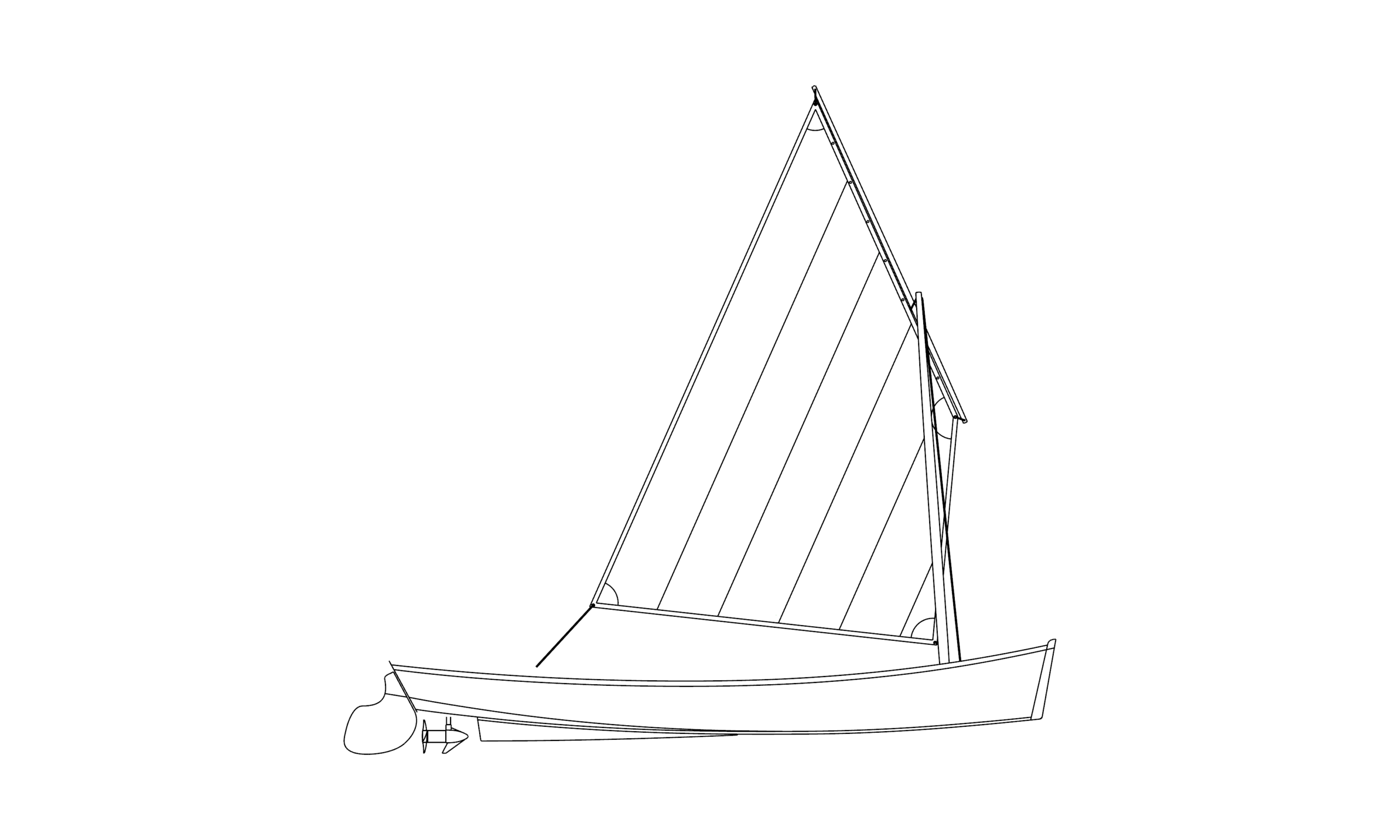
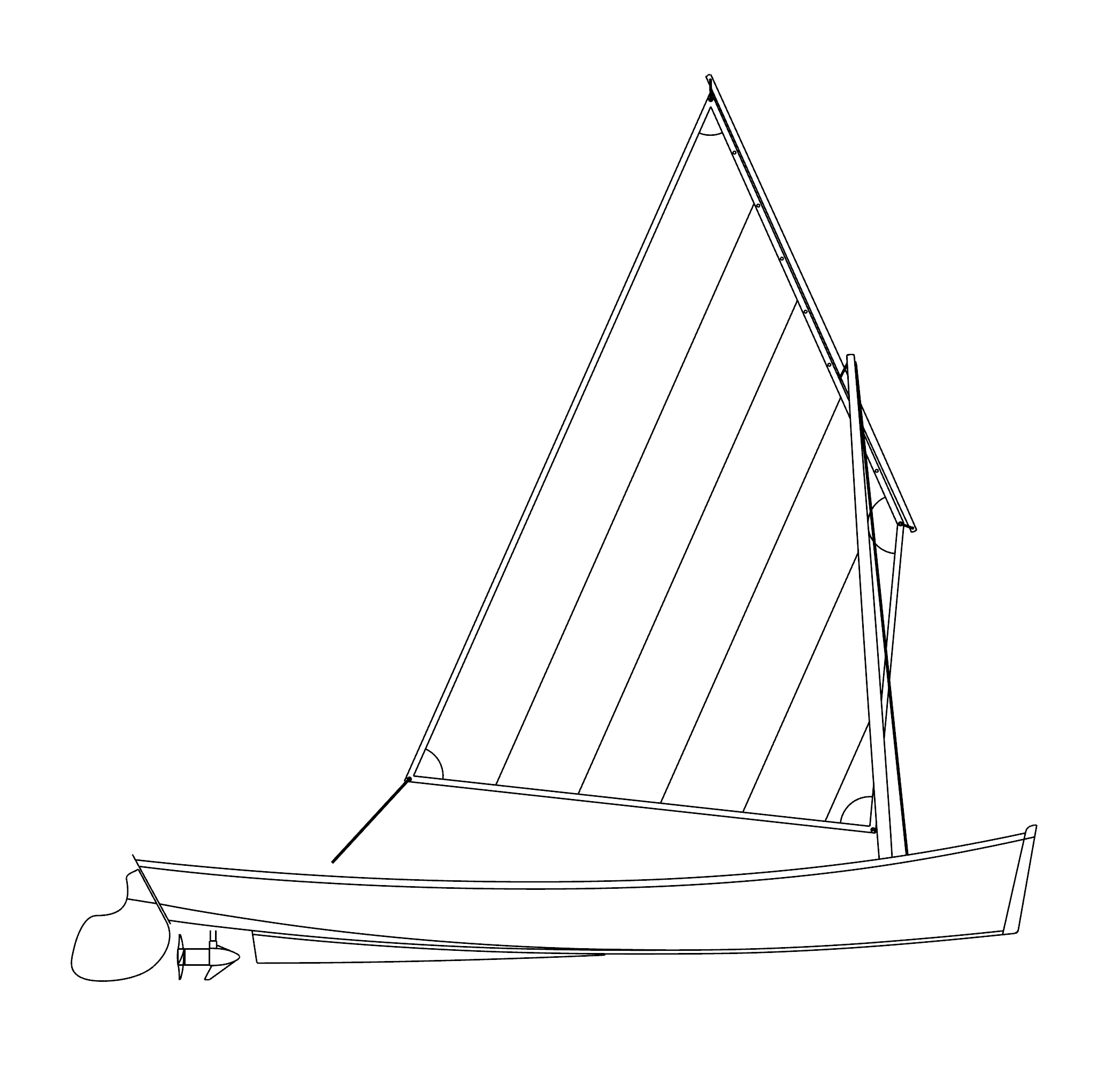
    An inshore skiff for sails, oars, or electric propulsion

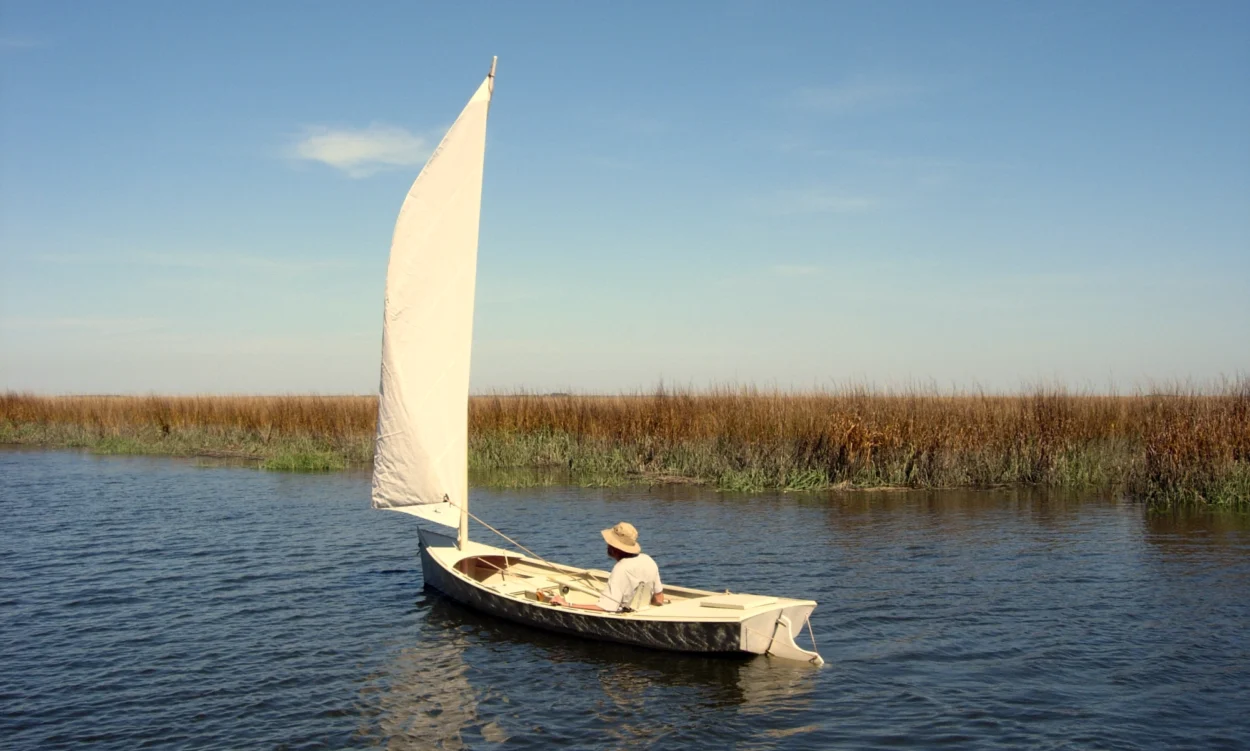
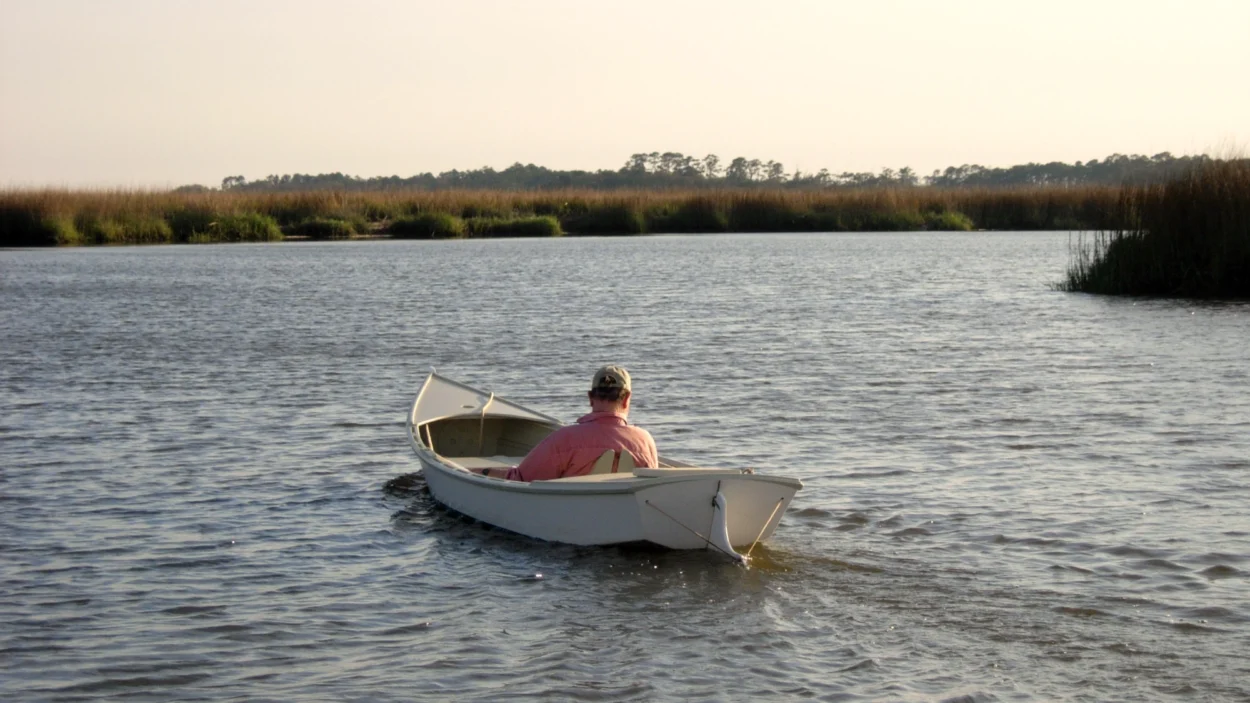
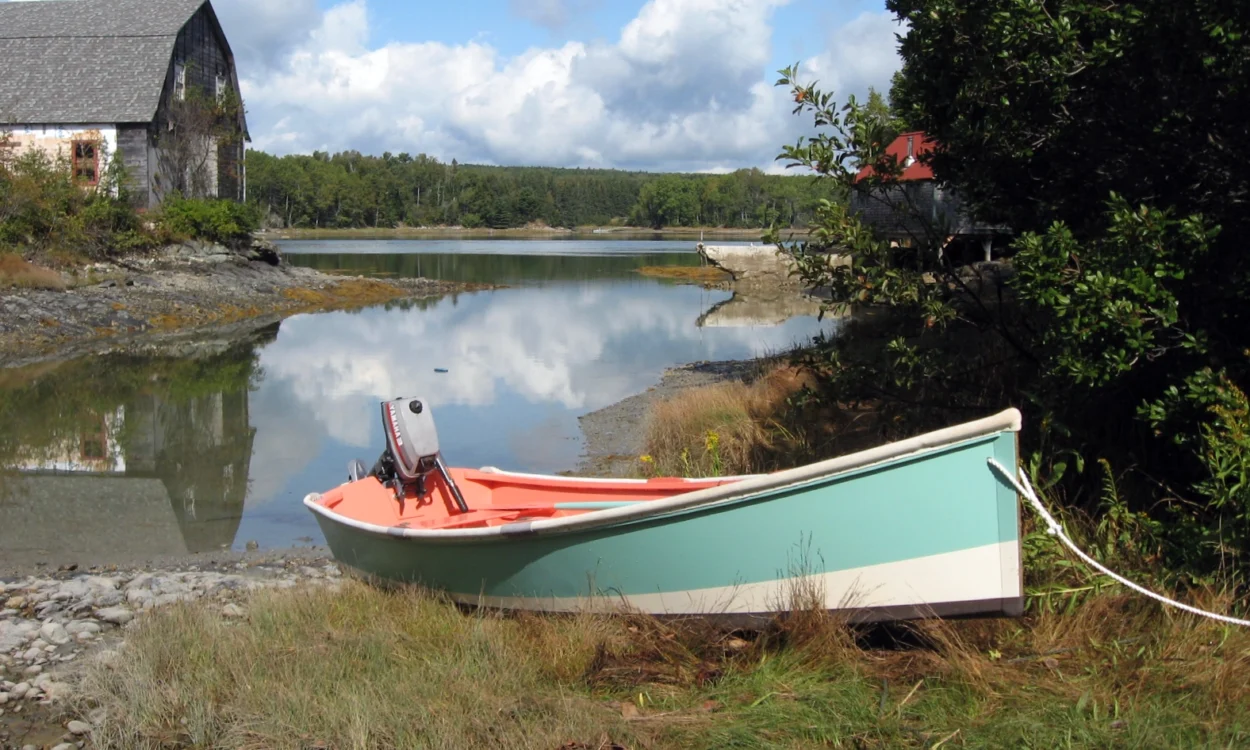
    I developed this boat for my own use in the coastal Georgia marshes. In this area there are miles and miles of narrow, winding, tidal creeks, surrounded by tall marsh grasses. Birds and other animals abound, and quietly sneaking up on wildlife was one of the primary reasons for this design. The water in these creeks is surprisingly deep, but they are so narrow and winding that, much of the time, sailing is hopeless. You just get the sail up and drawing, and the creek will turn, changing your beautiful reach into a fruitless beat. There are pretty strong tidal currents as well, so rowing your way out of this situation can be exhausting. Therefore the design of this skiff was driven by the search for easy electric powering, with sailing and rowing secondary.

    Easy powering means a narrow hull, and speeds at or below hull speed – in this case, a little over 5 knots. These same features favor rowing, and the Hird Island Electric Skiff makes a pretty nice rowing boat, particularly if the heavy batteries are left ashore. Narrow hulls are not good for sailing, however, particularly so if there is no external ballast keel. Stability is what is needed for really good sailing, and narrowing the hull for easy propulsion takes away from stability. That said, this skiff will sail well on all points, but may require a disconcerting amount of hiking out in order to stay on her feet when going to windward. Her rig is rather small, and designed for very easy hoisting, the theory being that I would power when the wind was foul and quickly hoist the sail when it turned fair for a bit.

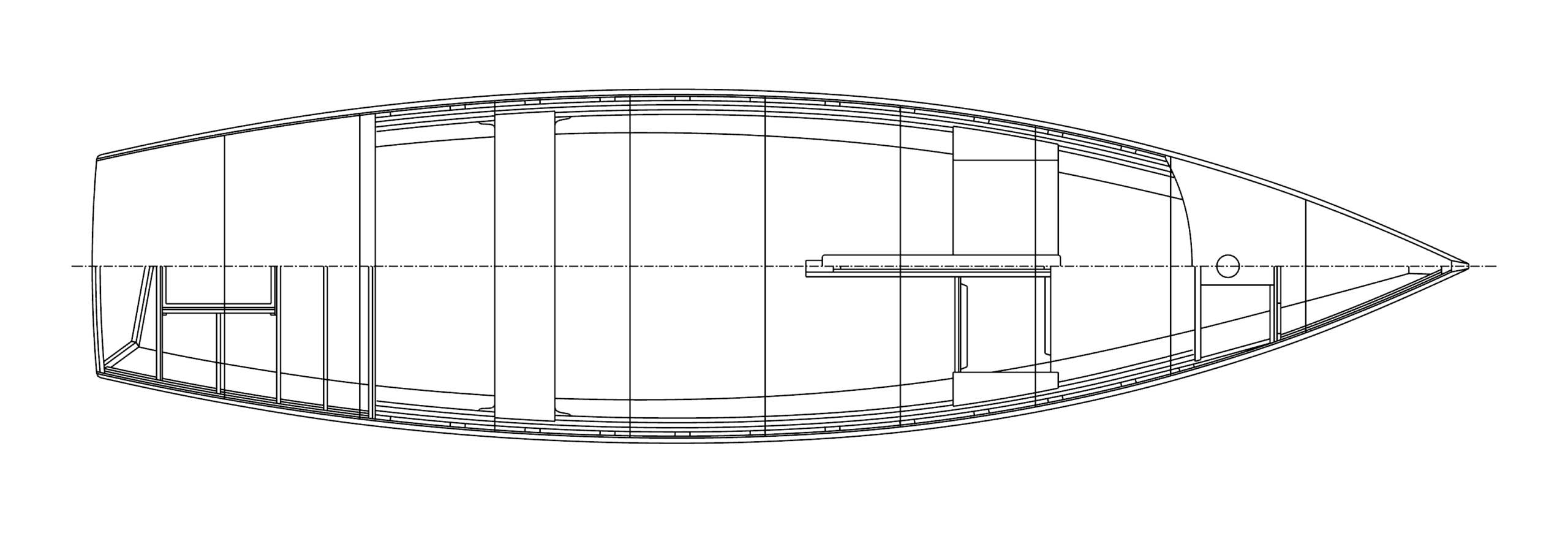
    The other features of this design include a plywood chine hull for simple construction and easier dry sailing. There are two generous flotation compartments, in case you go over with those heavy batteries aboard. A rope steering system that I picked up from N.G. Herreshoff’s Coquina design allows steering from anywhere in the boat and lets two people sit facing forward without having to fight with the tiller. There is a removable slip thwart, which will put a rowers weight in the proper place and then gets out of the way when sailing or powering. There are a couple of little back rests that attach to the aft thwart for comfortable seating.

    While I first envisioned this skiff as doing a fair amount of sailing, in fact our usage of her has evolved in two other directions, both based on her electric power. The first is wine-and-cheese sunset cruises with my wife. Here the quietness of the motor and the private proximity of the passenger promotes wonderful conversations (perhaps helped along by the wine). Our second favorite use of this boat has been for wonderful moonlight cruises. Sailing has receded in our usage partly from my own laziness, but also because the range under batteries has turned out to be far more than I expected.

    As with most of my designs, after spending a little time with the boat, I found a few things I would like to change. For this reason, the boat you see being built in the photos may not be the same in all respects as the one shown on the plans. Most of these changes won’t even be noticed, but one, the setup method, most certainly will.

    When I began on this design, I thought I had better get out of my rut and try some variation of stitch & glue construction. In this method, the boat’s shape is defined by bending accurately shaped panels together and fastening them with epoxy glue and fiberglass tape. By the time I was done, I decided to get back into my rut again and show a regular ladder-frame-with-molds-set-up-on-it method of defining the hull shape. One reason for this is that the hull panels are so thin that it is difficult to fold them together accurately enough to get a fair and true hull shape. The other reason is that, while epoxy/fiberglass chines may look easy and are un-intimidating to the amateur builder, they are far more time consuming than traditional wooden ones, and don’t look nearly as nice. There are still places where epoxy fillets provide an easy and clean method of joining two pieces of plywood together (for instance in the motor well and battery compartments), but I think that for setup, my usual method will make a better, nicer looking, and faster to build boat.

    For diehard stitch & glue aficionados, you are still welcome to proceed in that fashion, and the necessary information is in the plans. For the rest of you, the traditional method will serve you in better stead, particularly if you are bitten by the bug and decide to go on and build other boats. No lofting is required in either case – the patterns included with the plans will be accurate enough.


    STUDY PLANS: Click here to download free study plans.

    TO PURCHASE PLANS: Plans include 6 sheets, and photo CD of construction and detailing. To order online using Paypal’s ordering system (which accepts credit cards and eChecks), please select one of the following buttons:

    U.S. orders. $200 + $20 shipping = $220
    International orders, including Canada. $200 + $80 shipping = $280
    You can see your Paypal Cart at any time by clicking the button below:

    You can also order plans by sending a check or money order to Hylan & Brown Boatbuilders, 10 Frank Day Ln, Brooklin, ME 04616.

    FAQ: Many questions are answered in Frequently Asked Questions. Please check there first.
    Particulars

    LOA15′ 3″
    Beam4′
    Draft9″ / 2′ 6″
    Sail area58 sq ft
    TrailerableYes
    Hull typeFlat bottom forward, V-bottom aft
    ConstructionGlued plywood
    Suitable forProtected waters
    Skill neededBeginner
    Lofting requiredNo, full-size patterns included
    Level of detailAbove average
  • Coquina

    Coquina

    Coquina

    N.G. Herreshoff

    Both glued lapstrake plywood and traditional cedar over oak construction.

    Under license from the MIT’s Hart Nautical Collections, Doug Hylan and Maynard Bray have collaborated to produce a highly detailed builder’s package for both amateur and professional builders, as well as students of Herreshoff’s work. Nathanael Herreshoff designed Coquina for his own use in the winter of 1889, and used her for may years, perhaps longer that any other of his personal yachts. Herreshoff wrote in some detail of Coquina in his later life: “I sailed quite often, both summer and winter.” Surely such a boat, used so much and remembered so fondly by a man of Herreshoff’s means and experience, must have applications for today’s sailors.

    Plans are fully detailed, and consist of 11 sheets including Herreshoff’s original construction drawing.

    Other sheets include sail plan, lines plan, original construction, glued lapstrake plywood construction, spars & rigging plan, building jig, and four sheets of full sized patterns and plank layouts.

    COMPACT DISC – also available, a CD containing over 500 photos of both traditional and glued lapstrake plywood construction, covering every aspect of building, rigging and sailing these wonderful boats.


    STUDY PLANS: Click here to download free study plans.

    TO PURCHASE PLANS: Plans include 11 sheets. A photo CD is also available. To order online using Paypal’s ordering system (which accepts credit cards and eChecks), please select one of the following buttons:

    U.S. orders, plans only. $200 + $20 shipping = $220
    International orders, including Canada, plans only. $200 + $80 shipping = $280
    U.S. orders, plans + CD. $250 + $20 shipping = $270
    International orders, including Canada, plans + CD. $250 + $80 shipping = $330
    U.S. orders, CD only. $50 + $6 shipping = $56
    International orders, including Canada, CD only. $50 + $15 shipping = $65
    You can see your Paypal Cart at any time by clicking the button below:

    You can also order plans by sending a check or money order to Hylan & Brown Boatbuilders, 10 Frank Day Ln, Brooklin, ME 04616.

    FAQ: Many questions are answered in Frequently Asked Questions. Please check there first. There are also some Coquina-specific FAQs at the bottom of this page.

    Particulars

    LOA16′ 8″
    Beam5′ 1″
    Draft8″ / 3′
    Weight450 lbs, with rig
    TrailerableYes
    Hull typeRound-bottom lapstrake
    ConstructionGlued lapstrake plywood or traditional cedar over oak
    Suitable forSomewhat protected waters
    Skill neededSkilled amateur
    Lofting requiredNo
    Level of detailVery detailed

    OTHER REFERENCES:

    Herreshoff of Bristol, Bray & Pinheiro, pp. 50, 51, 126, 146.
    “Getting to Know COQUINA” by Maynard Bray, WoodenBoat Magazine, No. 187, p. 76.

    Coquina FAQs (click to open)

    Do you take Credit Cards? How can I pay for my plans?

    As if August 1, 2007, you can now use the PayPal ordering system to pay for most plans. PayPal accepts Visa / MC / AmEx / Discover / eCheck / PayPal. Or you can send a check or money order to: COQUINA, 53 BENJAMIN RIVER DR., BROOKLIN, ME, 04616. We do not wait for personal checks to clear, usually shipping your order within a day or two.

    Do you ship plans outside of the US?

    Yes, we will ship plans anywhere. International postage rate are $50.00 for plans and $8.00 for a CD.

    Before I buy, where can I get more information on Coquina?

    The best source for general information is Maynard Bray’s article in WoodenBoat, number 187. Another good reference is Michael Hanyi’s article in the Nov/Dec 2001 issue of the British magazine Watercraft.

    I have some woodworking experience but have never built a boat before.
    Do you think I can build Coquina?

    This is a very difficult question to answer. We have seen beautiful boats that have come from the hands of inexperienced builders. And we have seen not-so-nice boats from builders with considerable experience. Given enough time, almost anyone can build a boat that will float and sail or row. We have gone to great lengths to put together a plans package that is as detailed as possible, in order to leave as few questions as possible for inexperienced builders. We have found that this is the best way to insure success in a project like this.

    Should I build a simpler boat first before building Coquina?

    If you have no boat building or woodworking experience, this may not be a bad idea. If it is a very simple boat, like Joel White’s fine Nutshell pram or Shellback dinghy, you may find that the skills acquired in building it will so speed up your Coquina project that you will have two boats for nearly the same time commitment as one. And once you start building boats, you are likely to want to keep it up.

    Can I count on you for help in building my Coquina?

    We want your Coquina project to have the best possible outcome, but unfortunately, if we answered every question that came our way, we would never get anything else done. You might consider asking someone to work with you on your project. This person may have more experience than you, and two heads are usually better than one. On our CD, we will provide a more extensive FAQ section addressing builder’s questions, as well as a list of applicable books and sources for maternials. Old WoodBoat Magazines are a great source of information – check out their on-line index. Finally, the WoodenBoat Forum at WoodenBoat.com can be a source of helpful (and sometimes not so helpful) information. If you need to contact me, e-mail me through this web site and include your phone number and best time to call.

    What are the pros & cons of traditional construction?

    Traditional plank on frame construction is the real thing – just what Herreshoff himself used. Some builders enjoy working in real wood and avoiding epoxy. A higher level of skill is required for traditional construction – joints are more complicated, steam bending is required, and better fits are required.

    What are the pros & cons of glued lapstrake construction?

    Glued lapstrake plywood boats are immune to drying out and the problems associated with the natural shrinking and swelling cycle of wood. They don’t leak, and are much better able to withstand life on a trailer. Their maintenance is slightly lower and the skills required to build them are less fussy.

    I love Coquina, but do not have the time or interest to build my own.
    How much does it cost to have one built for me?

    At Hylan & Brown – Boatbuilders the current price for a completed Coquina is around $29,000.00. Consult with other builders for their prices.

    How may hours are involve in building Coquina?

    Our first boat took us about 250 hours to complete the hull, about 850 man hours for the total project. This was for an experienced builder.

    How much are materials likely to cost to build Coquina?

    For the boats we built, the materials came to about $3200.00. We enjoy some wholesale and quantity discounts, but not to a great extent on a boat of this type.

  • Chesapeake Crab Skiff

    Chesapeake Crab Skiff

    Chesapeake Crab Skiff

    A fast and stable boat that can carry a real load.

    Based on traditional crabbing skiff documentation by Howard Chapelle, this has proven to be a fast and stable boat that can carry a real load. While primarily a sailing skiff, she is reasonably handy under oars and easily driven with a tiny outboard. She also displays good manners when towed.

    As Mike O’Brien said in his WoodenBoat design review, “Doug Hylan has drawn a striking skiff that looks sharp in any company.” Plans are on four sheets: Lines and offsets, construction, leg o’ mutton sail plan and sprit sail plan.

    Traditional detailing is combined with easy maintenance and simple plywood construction.

    Crab Skiff prototype under sail

    STUDY PLANS: Click here to download free study plans.

    TO PURCHASE PLANS: Plans include 7 sheets: Lines, Construction, Sprit Rig, Leg-o-Mutton Rig, Setup Jig, full-size patterns. To order online using Paypal’s ordering system (which accepts credit cards and eChecks), please select one of the following buttons:

    U.S. orders. $150 + $20 shipping = $170
    International orders, including Canada. $150 + $80 shipping = $230
    You can see your Paypal Cart at any time by clicking the button below:

    You can also order plans by sending a check or money order to Hylan & Brown Boatbuilders, 10 Frank Day Ln, Brooklin, ME 04616.

    FAQ: Many questions are answered in Frequently Asked Questions. Please check there first.

    Particulars

    LOA15′ 4”
    Beam4′ 8″
    Draft10″ / 2′ 5″
    Weightapprox. 250 lbs
    Speedup to 6 kts
    TrailerableYes
    Hull typeDeadrise
    ConstructionPlywood
    Suitable forSomewhat protected waters
    Skill neededBeginner to intermediate
    Lofting requiredNo, full-size patterns included
    Level of detailAbove average

    OTHER REFERENCES – Design review by Mike O’Brien, WoodenBoat #157:74

  • Swan Point Garvey

    Swan Point Garvey

    Swan Point Garvey

    Working garveys of various sizes were once ubiquitous along the 90 miles of back bays behind the barrier islands on the New Jersey coast, used for tonging, clamming and fishing in the bays, gunning in the expansive marshes and bringing farm produce down river to market. In American Small Sailing Craft, Howard Chapelle goes into great length on the myriad variations of this hull type. Easy to build and burdensome, these boats gave an economical means of transport in sheltered waters all along the American East Coast. Proportions, size, and rig varied depending on locale, but construction was always simple and robust.

    The Swan Point Garvey is designed for glued plywood construction, so it will be much lighter than the traditional boats, and will be happy living on a trailer. She can be rowed, sculled, poled, sailed or fitted with a tiny outboard (preferably electric). If you enjoy camp cruising, there is good sleeping space for two with the amidships thwart “slipped”. Just like its forebears, this will be a simple boat to build – well within the abilities of a weekend boatbuilder or a parent/child team.

    Longtime Barnegat Bay sailor Russ Manheimer commissioned the design for this little sailing garvey, writing: “Even not-so-pretty boats such as our humble New Jersey garvey deserve consideration for a new design for home builders using modern glued ply methods.” Russ’s input was invaluable in developing this design. He aspires to foster a comeback of the type, with a boat that “would work well along the quiet water and creeks still to be found on our bay and elsewhere.”


    STUDY PLANS: Click here to download free study plans.

    TO PURCHASE PLANS: Plans include 7 sheets: Lines & Sail Plan, Construction, Building Jig, Details, and 3 sheets of full-size patterns. To order online using Paypal’s ordering system (which accepts credit cards and eChecks), please select one of the following buttons:

    U.S. orders. $220 + $20 shipping = $220
    International orders, including Canada. $200 + $80 shipping = $280
    You can see your Paypal Cart at any time by clicking the button below:

    You can also order plans by sending a check or money order to Hylan & Brown Boatbuilders, 10 Frank Day Ln, Brooklin, ME 04616.

    FAQ: Many questions are answered in Frequently Asked Questions. Please check there first.

    Particulars

    LOA15”
    Beam4′ 8″
    Draft8″ / 2′ 6″
    Weightapprox. 300 lbs
    Power2-3 hp max
    Speedup to 5 kts
    TrailerableYes
    Hull typeGarvey
    ConstructionPlywood
    Suitable forSomewhat protected waters
    Skill neededBeginner
    Lofting requiredNo, full-size patterns included
    Level of detailAbove average

    OTHER REFERENCES: Design review by Mike O’Brien, WoodenBoat #299.

  • Beach Pea

    Beach Pea

    Beach Pea

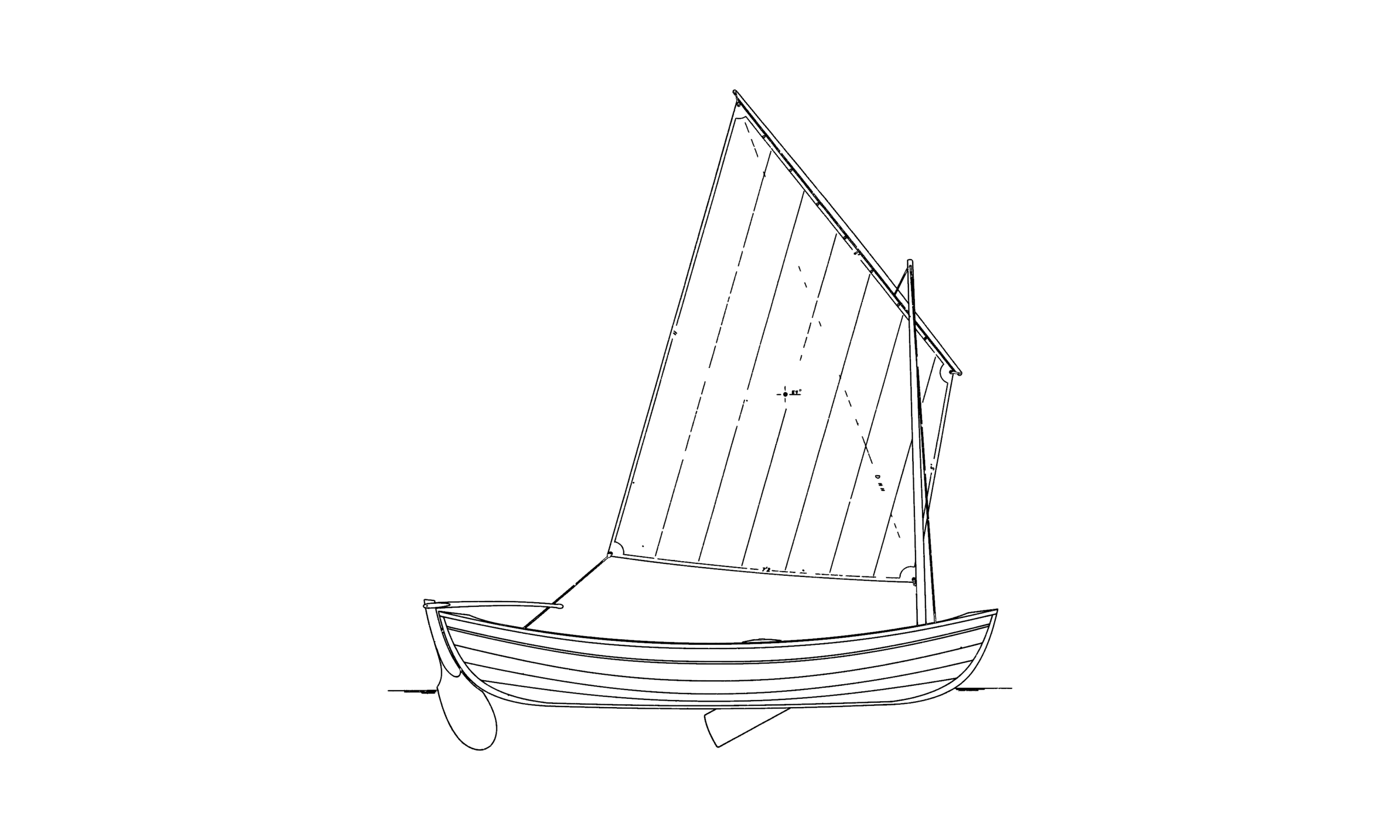
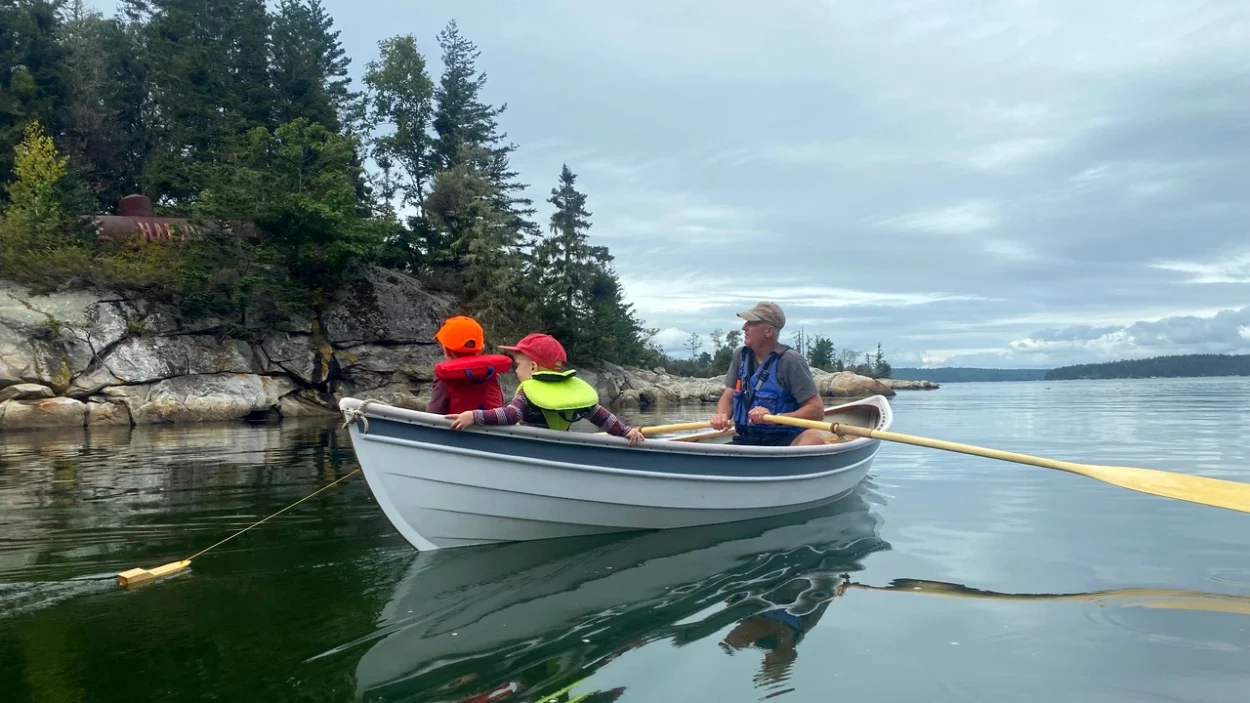
    Most boats produced as tenders today row so poorly that it is little wonder that their owners often turn to an outboard motor for help. But if you wish to forego the noise, expense and pollution of a motor, you may find that a peapod is the ultimate yacht tender.

    These are great little boats, seaworthy, stable, and easily rowed. Here is a pod that is a bit smaller than most, but she will still carry a big load and bring you through some lumpy water with confidence.

    Beach Pea uses modern glued lapstrake plywood construction, so she is lighter and easier to build than a traditionally-built boat. In addition, you won’t have to worry about her seams opening if your pod has been out of the water for a while. The clean interior will be easier to maintain, and a coat of paint will last longer on the stable plywood surface.

    Two sailing rigs are shown, an easy to strike lugsail, and the more traditional sprit rig. Doug Hylan drew Beach Pea’s plans with the beginning builder in mind. The plans are well-detailed and full-size patterns eliminate the need for lofting. Plans are on five sheets, including lines, construction, two sail plans and full size patterns for molds and stems. A 22 page “how to build” booklet is included to help you along.

    The extended version of Beach Pea is 15 feet long with the same beam. Basically, the longer boat uses the same molds as the 13 footer, just spaced further apart. Also the stems are pulled out a bit to the same proportion. The plans include instructions for re-spacing the molds, a layout for the new stem shape, and an optional arrangement with side decks and flotation compartments in the ends. There is also a slightly bigger sail plan and rudder arrangement shown.


    13′ STUDY PLANS: Click here to order digital study plans from the WoodenBoat Store

    13′ KITS: Learn more about the Beach Pea 13 kit here. To order a kit, contact Hewes & Co.

    TO PURCHASE PLANS: Click here to order plans from the WoodenBoat Store


    EXTENDED 15′ VERSION: The plans for the extended 15′ version of Beach Pea are an add-on to the regular 13′ plans. Please thus order the plans for the 13′ version (see above) and the add-on plans below. To order online using Paypal’s ordering system (which accepts credit cards and eChecks), please select one of the following buttons:

    U.S. orders. $50 + $6 shipping = $56
    International orders, including Canada. $50 + $15 shipping = $65
    You can see your Paypal Cart at any time by clicking the button below:

    You can also order plans by sending a check or money order to Hylan & Brown Boatbuilders, 10 Frank Day Ln, Brooklin, ME 04616.

    FAQ: Many questions are answered in Frequently Asked Questions. Please check there first.


    15′ version (click to show)

    Particulars | 13′ version

    LOA13′
    Beam4′ 4″
    Draft3″ / 1′ 6″
    Weightapprox. 120 lbs
    PropulsionSail & oar
    TrailerableYes
    Hull typeRound bottom double ender
    ConstructionGlued lapstrake plywood
    Suitable forProtected waters
    Skill neededBeginner to intermediate
    Lofting requiredNo, full size patterns included
    Level of detailAbove average

    Particulars | 15′ version

    LOA15′
    Beam4′ 4″
    Draft3 1/2″ / 1′ 6″
    Weightapprox. 140 lbs
    PropulsionSail & oar
    TrailerableYes
    Hull typeRound bottom double ender
    ConstructionGlued lapstrake plywood
    Suitable forProtected waters
    Skill neededBeginner to intermediate
    Lofting requiredNo, full size patterns included
    Level of detailAbove average
    Photo: Elizabeth Root
  • Oonagh

    Oonagh

    Oonagh

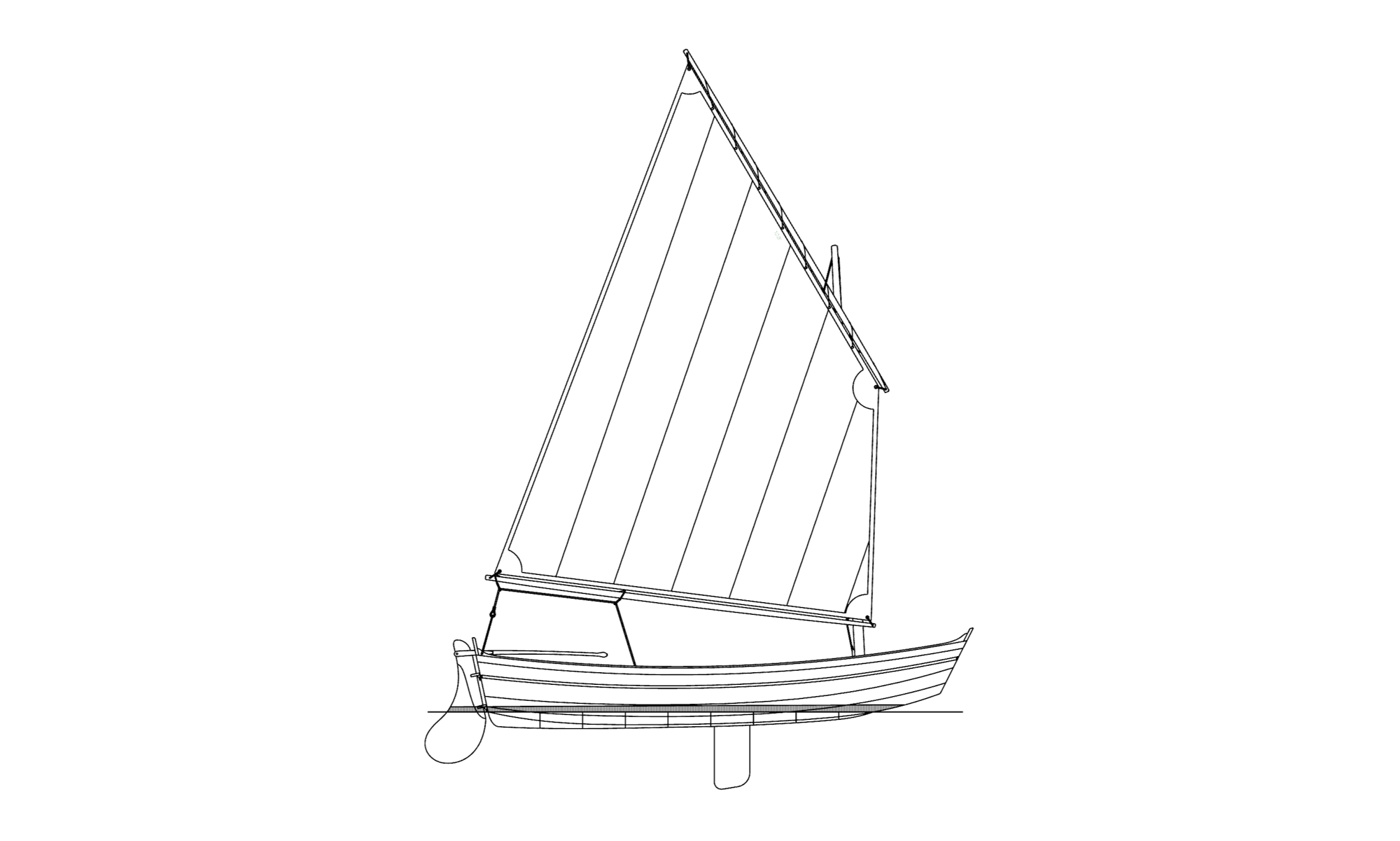
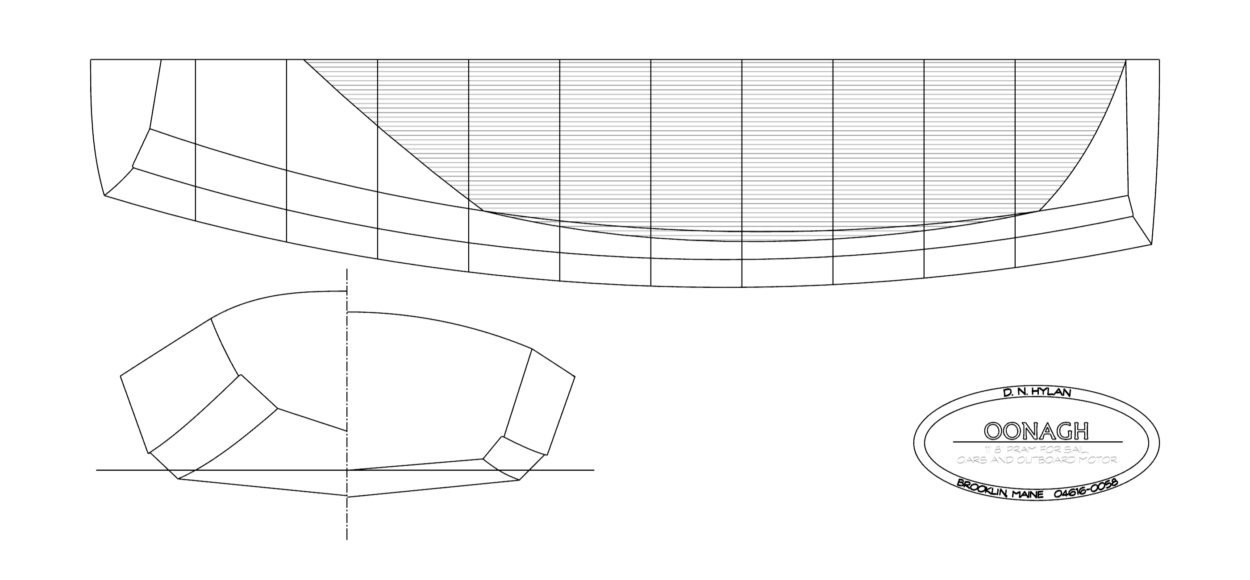
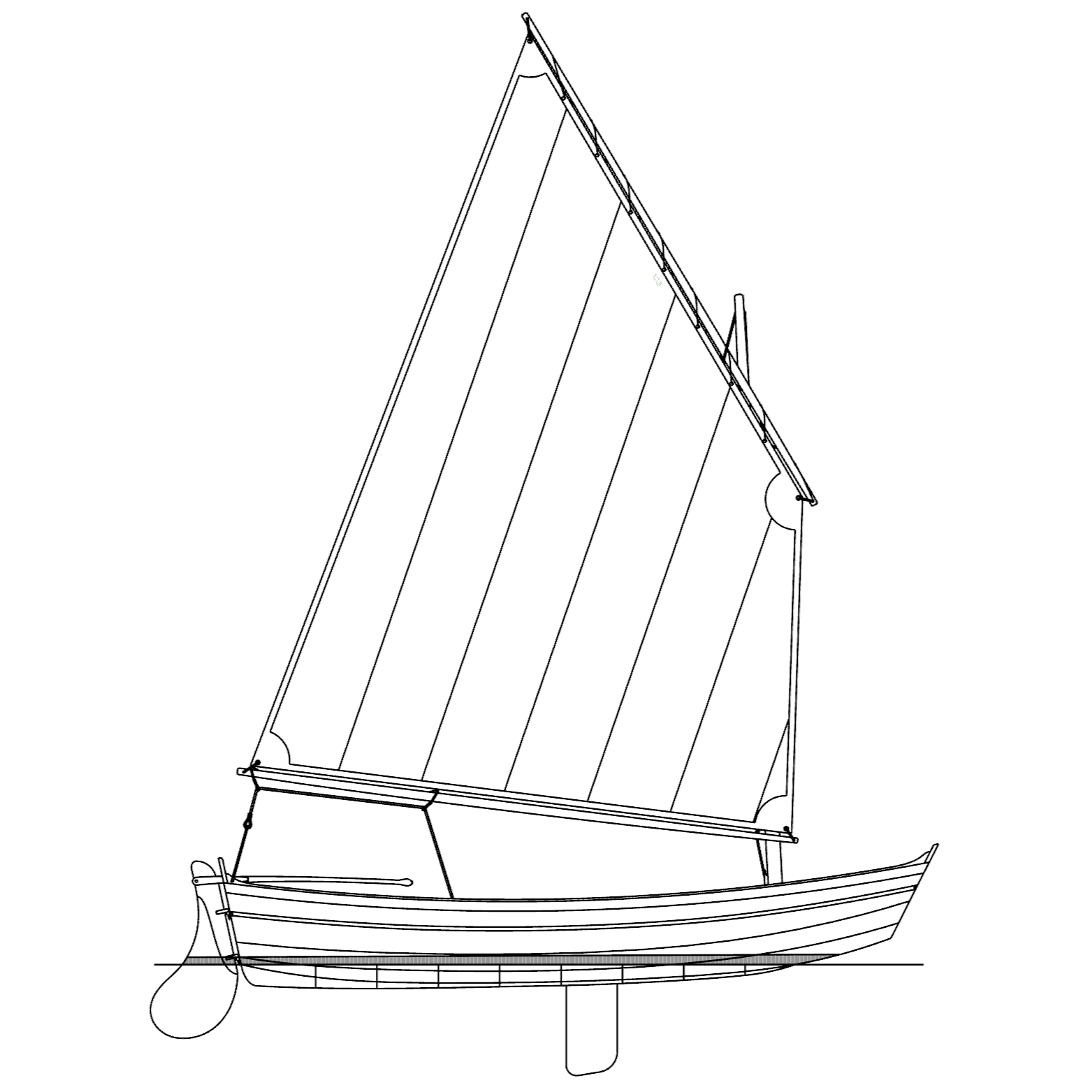
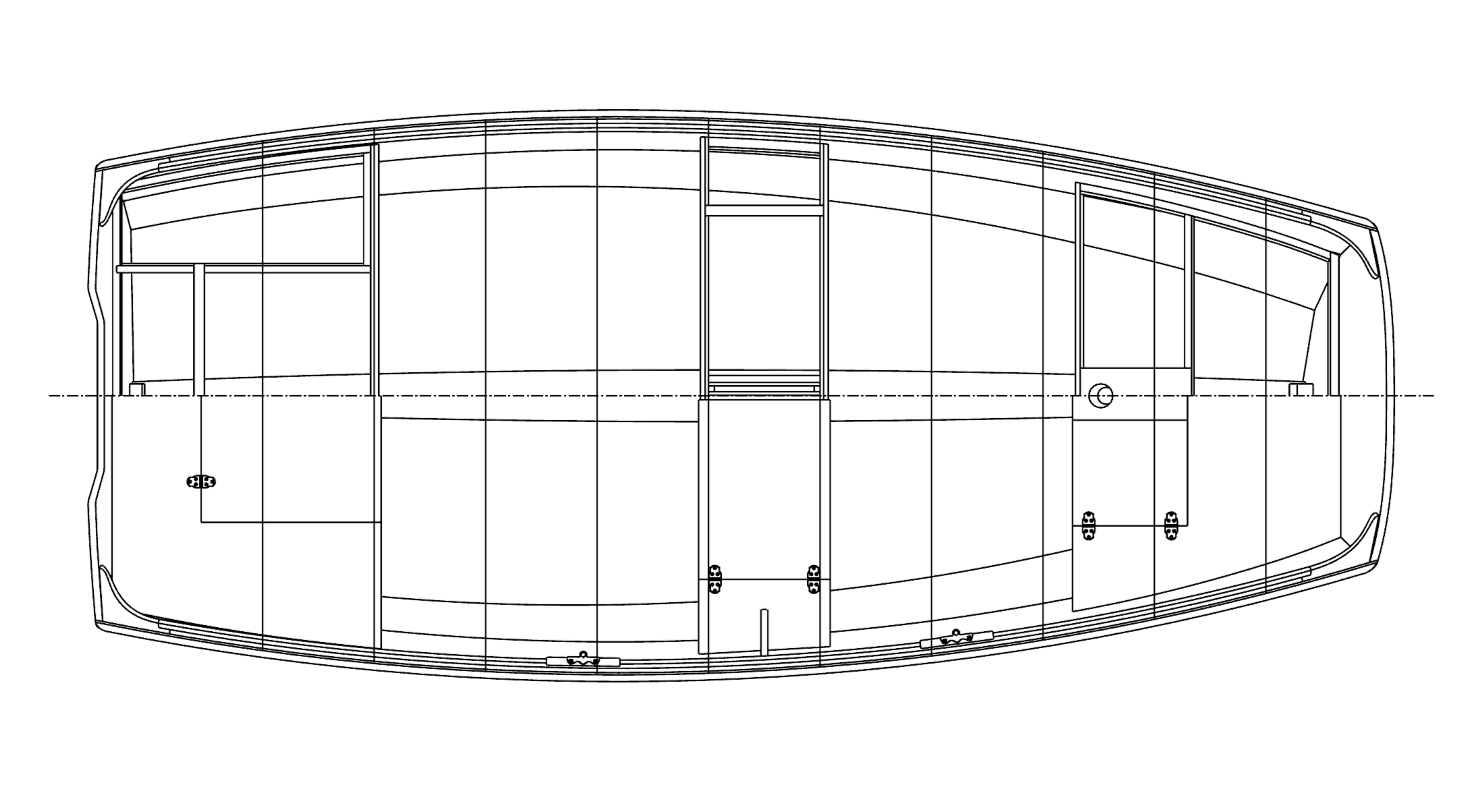
    The anti-RIB

    In traditional boating circles, it is a long cherished tradition to rail against inflatables, and there are some good reasons. Because rowing them to good effect is not possible, inflatables almost invariably wind up with an outboard on the transom. Outboards produce several varieties of pollution – sound, air, water – and have a tendency to foster questionable skylarking by bored youngsters. And recently, mankind has discovered that burning petroleum might just have another big drawback as well.

    The new generation of rigid bottom inflatables, or RIBs have some additional vices. They abandon what used to be the most powerful argument for inflatables – that they can be deflated and stored aboard for longer passages. They feature deepish V-bottoms, which make rowing even more impossible, and only really show any advantage with the application of lots of petroleum. When you try to use that horsepower, a RIB will first plow itself into a deep trough, then jump up onto a plane with unnerving rapidity – they have no sweet spot between the two.

    My hunch is that the rush to RIBs is driven by the fact that we baby boomers (the flower children who were going to bring us to the age of Aquarius, remember?) are losing our balance, muscle mass, joint mobility (and a bunch of other functions too embarrassing to mention), and are happy to have a dinghy that is as stable as a church, can be driven like a bumper car, and gives us an airtight excuse for not rowing. Come on Flower Children, let’s take back the high road!

    Inflatable boats have some undeniable advantages. First and probably foremost is their tremendous stability. They also have wonderful built-in fendering – no worries about coming alongside your perfect topsides when things are a little lumpy. And when you get alongside, you can stand up on the inflated pontoons to get a boost for climbing aboard the mother ship. Oonagh is my attempt to combine some of the best qualities of inflatables with the advantages of a traditional dinghy, and put it into a package that is a little less hostile to the planet.

    To help protect your topsides, Oonagh’s plans show the over-sized cushioned gunwale guard more commonly used on docks. She will tow much more easily than an inflatable, and row four times as well. Within the same general size she will give much more interior room, and her passengers will be down in the boat rather than sitting up on the pontoons where soggy drawers are almost inevitable. And we don’t even need to mention sailing, do we? With a little care, your Oonagh can be passed on to your grandchildren.

    I know that many people are going to want to put a motor on Oonagh, so she is designed for it. The same tucked up transom that makes for decent rowing will preclude planing, so there is no point in putting anything more than 2 horsepower back there. In fact, one horsepower is as much as she can really use effectively. This begs the question – why not electric? Why not indeed! A small trolling motor will push her along nicely, and you will be able to carry on a private conversation while enjoying the scenery.

    Beyond use as a tender, Oonagh will make a fine boat for family sailing, fishing trips or just an evening row with the kids. Her simple construction and detailed plans will make for a good family construction project as well. I can guarantee that the experience of building, then using, a small boat will be a treasure that your kids will carry with them throughout life.

    Plans include seven sheets: Sail Plan, Lines & Construction Plan, Building Jig, Full Size Patterns, Plank Layout.


    TO PURCHASE PLANS: Oonagh plans, CNC kit, and a series of “how to build” videos are now available exclusively through OffCenterHarbor.com.

    Particulars

    LOA11′ 8″
    LWL9′
    Beam5′
    Draft5″ / 22″ board down
    Weightapprox. 170 lbs
    TrailerableYes
    Hull typeMultichine
    ConstructionGlued lapstrake plywood
    Suitable forSomewhat protected waters
    Skill neededBeginner
    Lofting requiredNo
    Level of detailAbove average