
• In The Shop
  • Build
  • Restore
  • Electrify

Category: Drawing Board

  • Eve

    Eve

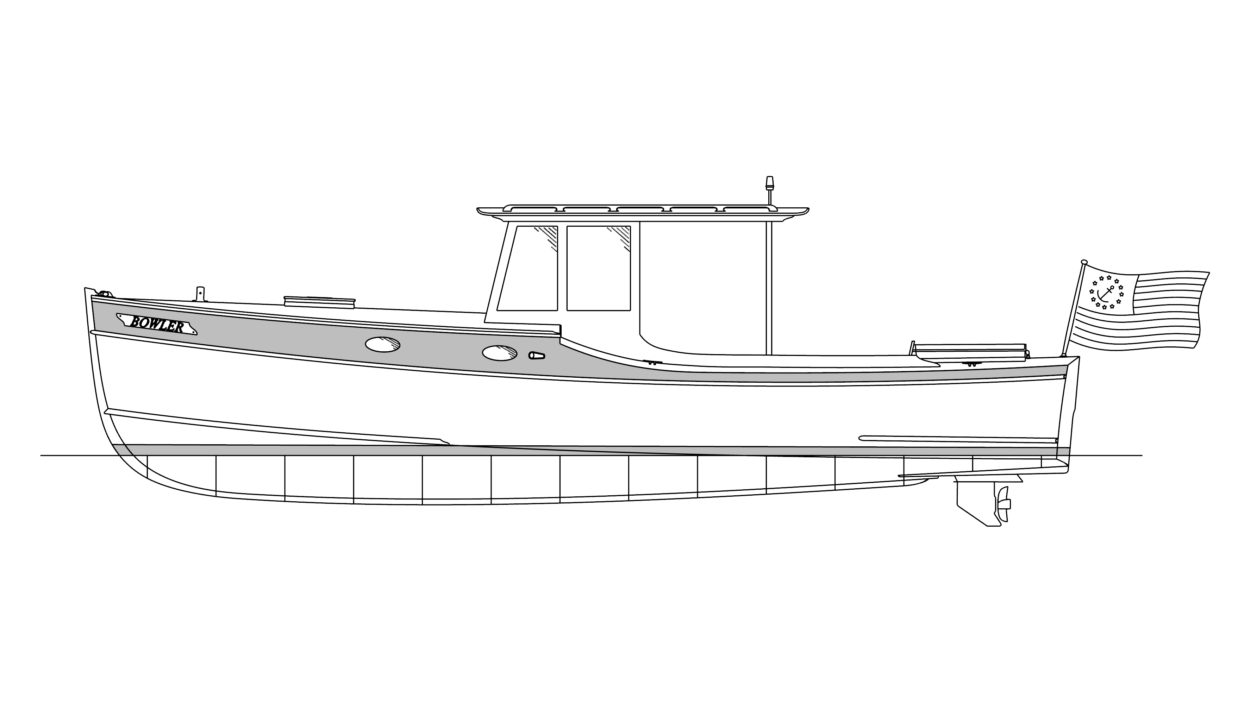
    26′ Launch for Electric Power

    When it comes to beautiful, fuel efficient boats, it pays to look back to the early lobster boats that raced home to Jonesport, ME in the early 20th century. None were finer than the lovely torpedo-stern boats of Will Frost, considered by some as the father of the modern Downeast semi-displacement hull form.

    Frost was a dealer for the Red Wing Motor Company, which made a new breed of gasoline marine engine. Internal combustion in boats got its start with the one-lunger, heavy and low-powered, but they were quickly embraced by fishermen who were happy to exchange the peace and quiet of sail for a more predictable schedule. Much later, converted automobile engines gave unimaginable power-to-weight ratios. But between the two came motors like the Red Wing: lighter and more powerful than the one-lunger, they made a new type of hull form possible.

    Throughout most of maritime history, it was well understood that boats could only go so fast, and that speed was related to the waterline length: hull speed. Towards the end of the steam era, designers like N. G. Herreshoff found that hull speed could be exceeded, but only with more power, narrow beam and lightweight construction. The race was on! Will Frost was quick to understand the opportunities presented by motors like the Red Wing, and was eager to experiment with hull shape. And he worked in the period when even working men had a highly developed eye for beauty.

    The ways of waves and water have not changed – hull speed boats are still the most energy efficient. But the ways of man haven’t changed much either – they still want to go faster. As a result of the astounding power contained within a gallon of petroleum, boat designers, builders, and customers have engaged in a kind of nuclear arms race for speed without consideration for the costs. We have only recently discovered that the cost will be vastly higher than imagined, and that our children will be paying the price.

    Electric power offers a way to have our cake, and eat some of it too. Just as Frost must have seen that the future of boating in the 1900s was petroleum, we can see that in the 21st century it will be electricity. Electric motors are well-developed, efficient, and available in any desired horsepower. But even the newest battery technology doesn’t come close to the energy storage density available in a simple tank of gas or diesel! To try to replicate our current power boating habits with electric power is a fool’s errand, at least for now. We can use time honored design methods – light weight and narrow beam – to help. But the real key to getting the most enjoyment out of electric boating is to slow down.

    Many of us are ready for a different approach to our time on the water, focusing more on the journey, less on the schedule. Eve is designed for them. She is as lovely as the dawn and slippery as an eel, seaworthy enough for the coast of Maine, quiet enough to sneak up on wary seals. She would look equally at home riding to her mooring with the fishing fleet in Moosabec Reach, or tied up at the dock of a summer cottage. Imagine an evening wine & supper cruise!

    -Doug Hylan

  • Novi Girl

    Novi Girl

    Novi Girl

    Small Electric Cruiser

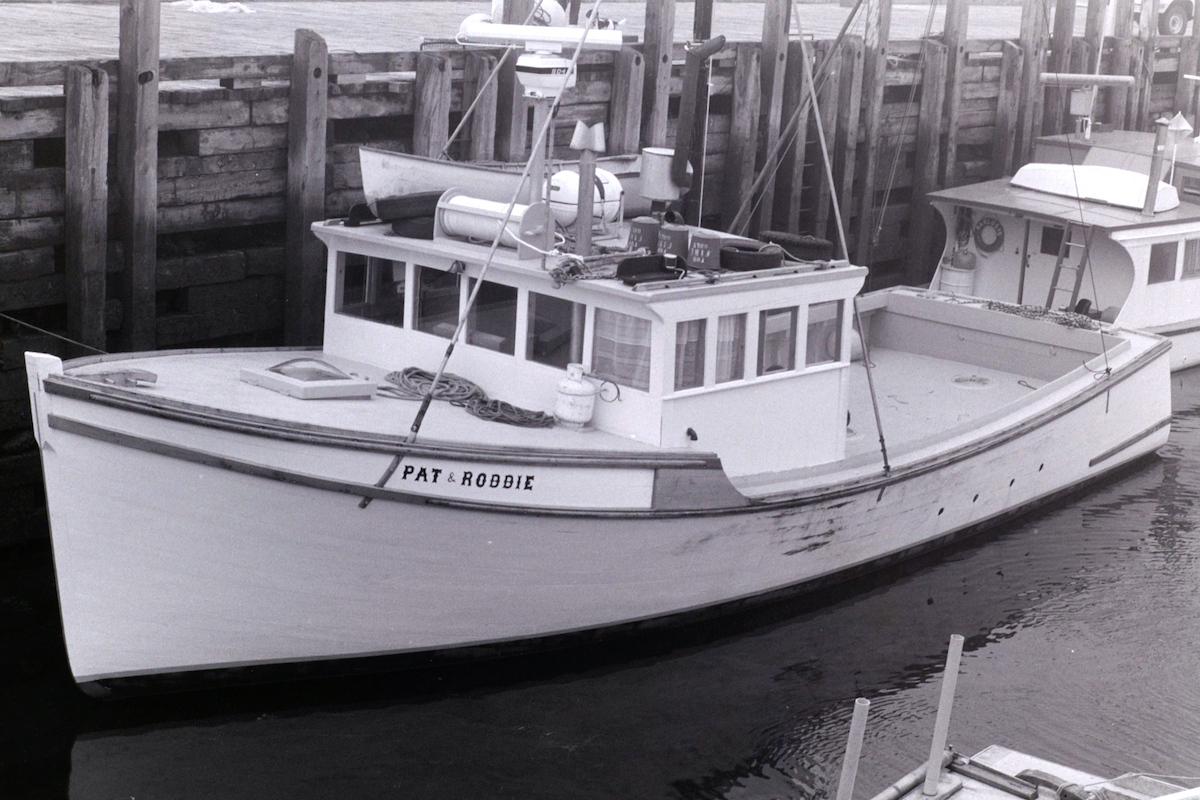
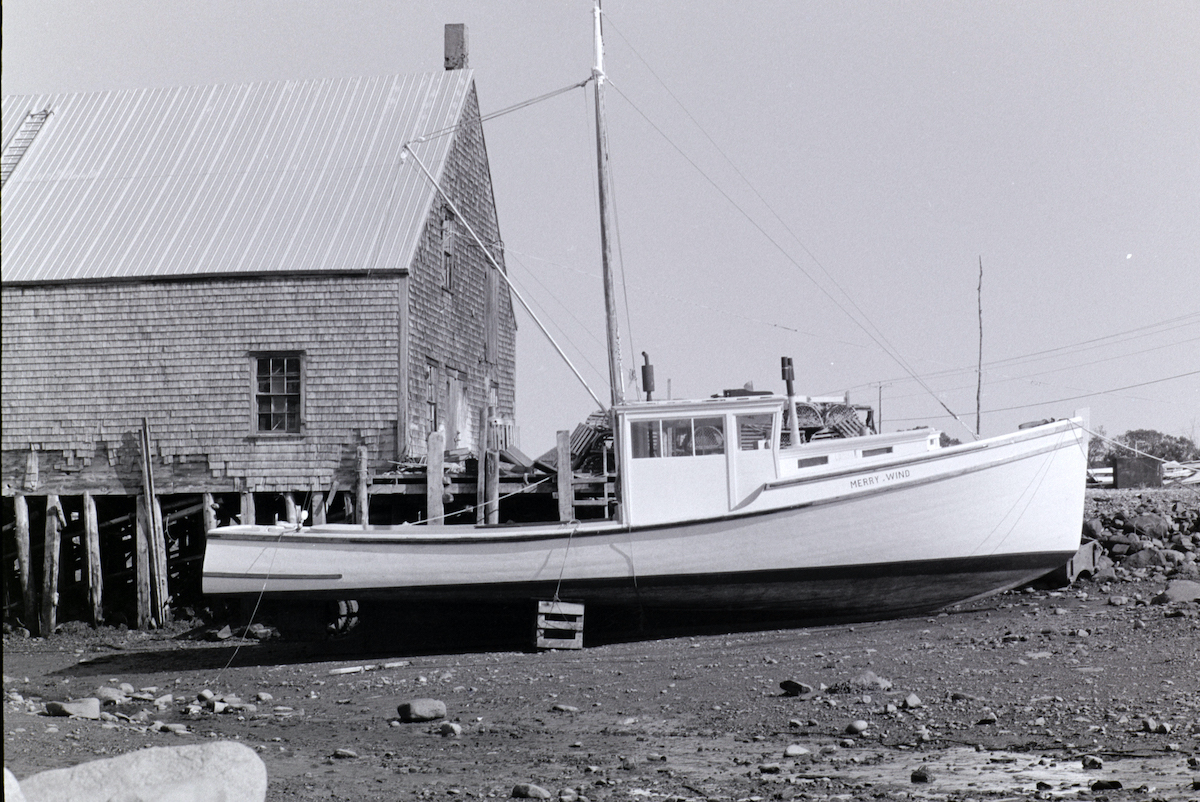
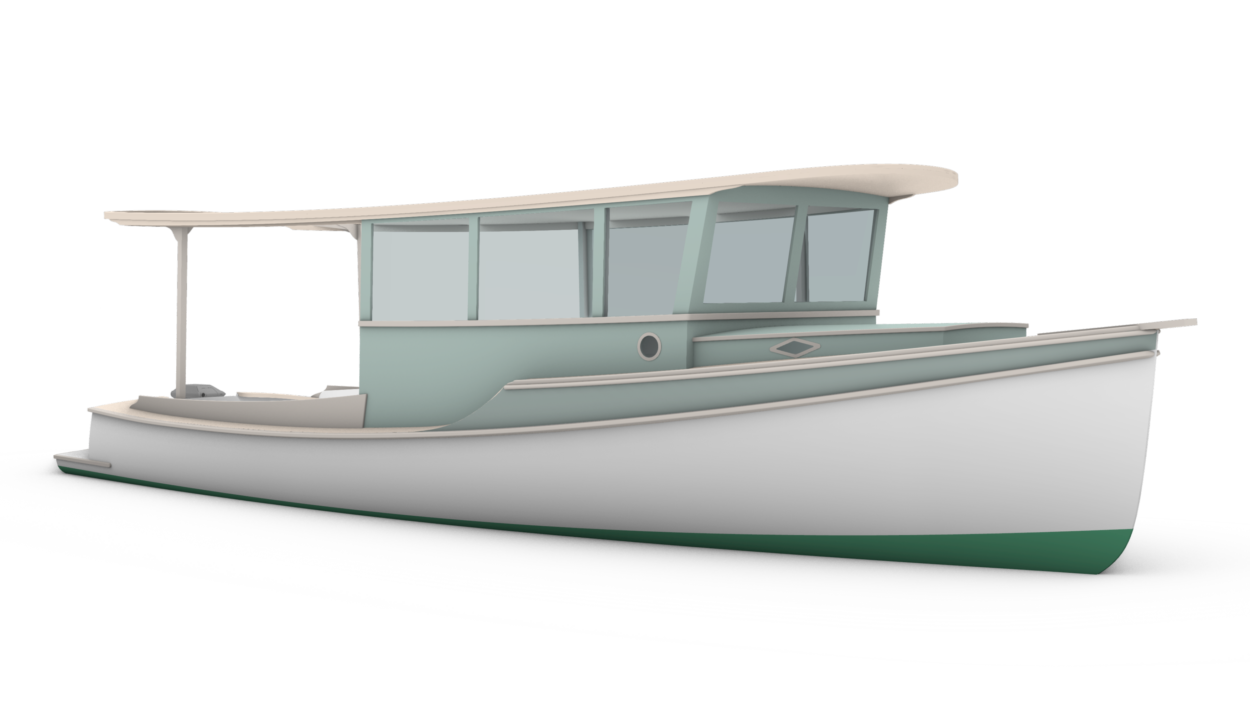
    NOVI GIRL is my little version of the traditional Nova Scotia Cape Island lobster boat, commonly referred to as Novi boats along the Downeast coast. These differed from the typical Maine lobster boats in being relatively low-powered displacement speed boats with greater carrying power. They were developed for the winter lobster season in the Canadian Maritimes, and had a reputation for standing up to the dangerous North Atlantic conditions their owners had to face. A high bow, raised foredeck, cutaway forefoot, and less immersed transom give these boat their legendary sea keeping ability. A huge self bailing cockpit was the rule.

    Engine noise has always been a major consideration in my designs. If I have to listen to the racket of internal combustion, I’d like to get there more quickly than I could in a displacement speed boat, and turn the damned thing off. That philosophy has generated a series of narrow, light displacement designs, often powered by relatively quiet four stroke outboard motors in wells. Such were my considerations during the petroleum age.

    But all indicators are that the era of fossil fuel is coming to an end. The cost and destruction associated with climate change become more apparent each day. I hope and believe that we have already reached the tipping point that will lead to the end of heedless fossil fuel consumption. Electric power offers a different path – a more efficient and much quieter one. But even if the energy itself promises to be less expensive, at least for the foreseeable future, the batteries that store that power will be much more expensive than the fossil fuel tanks we have grown up with.

    NOVI GIRL was conceived with electric power in mind. With her tucked-up transom, speeds below hull speed will be much more efficient than on a typical modern power boat.

    Cheating hull speed is usually considered the Holy Grail of low powered boats, but requires a very light hull with narrow beam. Another approach is to simply slow down and enjoy the peace and quiet. Once you make the decision to slow down a bit, it opens up the possibility for more beam, and the penalty for extra displacement is much reduced.

    Photo: Maynard Bray
    Photo: Maynard Bray

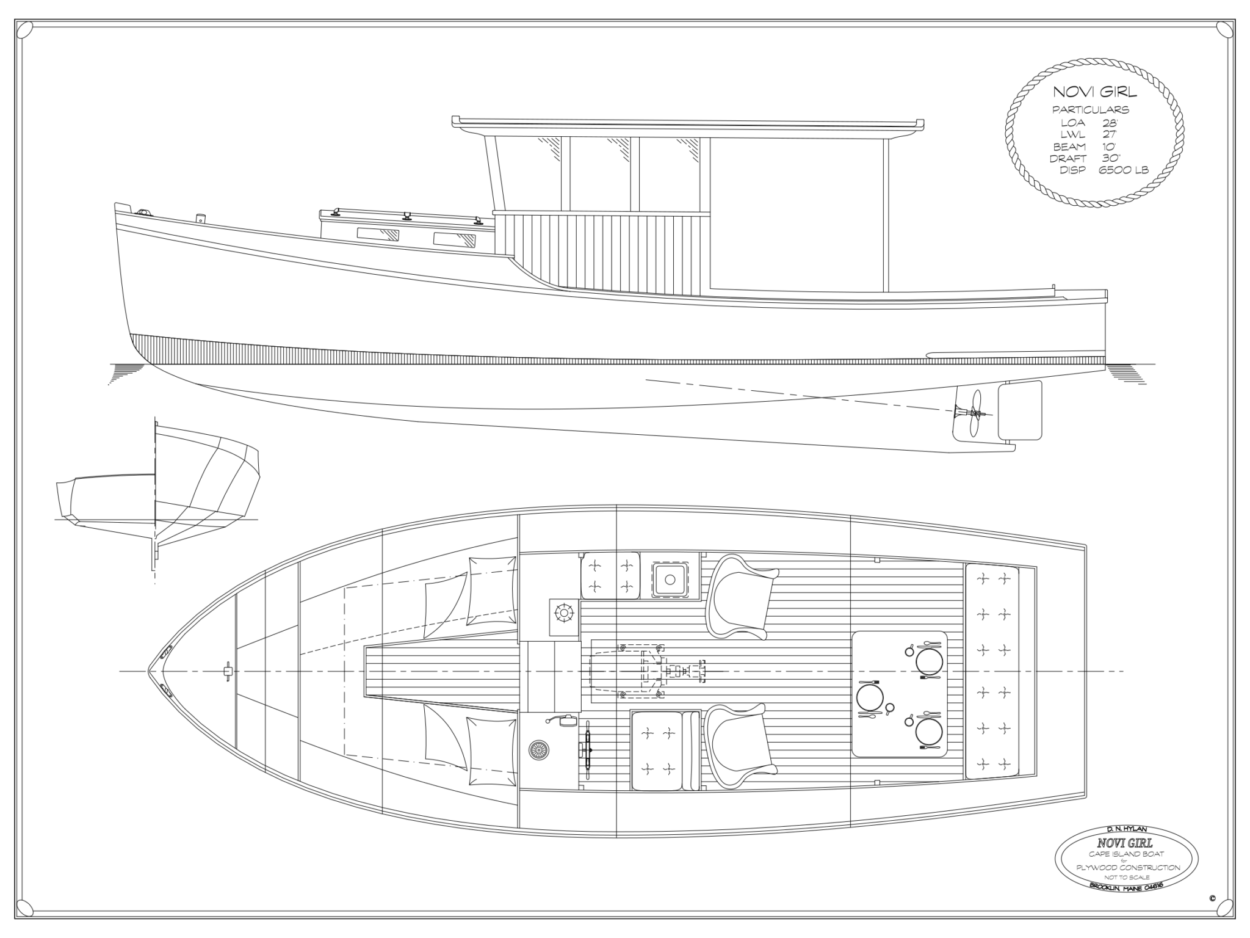
    As you step into NOVI GIRL’s cockpit you’ll be impressed by how much space a beamy boat can deliver. There’s room to seat six for dinner, gathered around a real table! Going forward into the pilothouse, there’s the galley to starboard where cook can enjoy the scenery, and the helm station to port. Stepping below, there is the head to starboard, best enclosed by a curtain, and storage to port. Further forward, there is a pair of bunks with a big storage bin just aft of the chain locker.

    Freeboard aft is quite low, making it easy to climb into the cockpit from a skiff. Side decks are wide for secure trips forward. The bow sweeps up dramatically, with the raised sheer giving a comforting bulwark and a forward well for anchor work.

    I think of NOVI GIRL as a cruiser for a couple or young family. A toddler could bunk down in the storage bin at the foot of the berths, while older kids could camp in the cockpit. Side curtains could enclose the back or the standing shelter, and a winter back could extend the cruising season.

    A boat like NOVI GIRL is for people who enjoy the voyage as much as the destination. You’ll find that you can cover a lot of coastline at 6.5 knots. The quietness allows an experience akin to sailing, with the advantage of a more predictable schedule. Of course a small diesel is also a possibility for NOVI GIRL – twenty five horsepower is about all her hull can effectively use. But a diesel is much taller, and will require a box above the sole. And then there is that noise! Even with the best sound deadening technology, a diesel power plant will never be peaceful or clean.

    An amateur builder with some skill an a good dose of perseverance can pull off a project like NOVI GIRL. Her hull uses a double-chine construction that allows for a smoother entry and less resistance than a single chine could give, and on such a beamy boat, it helps reduce the quickness of the roll period. Her construction is mostly glued plywood, but the upper hull panel uses tongue & groove strips to allow a more shapely flare-to-tumblehome transition to the topsides.

    At this point, NOVI GIRL is just another one of my “dream sketches” with the plans developed just enough to provide proof of concept. Finished plans will have to wait for someone to sign a construction contract, or a groundswell of demand.

    -Doug Hylan